
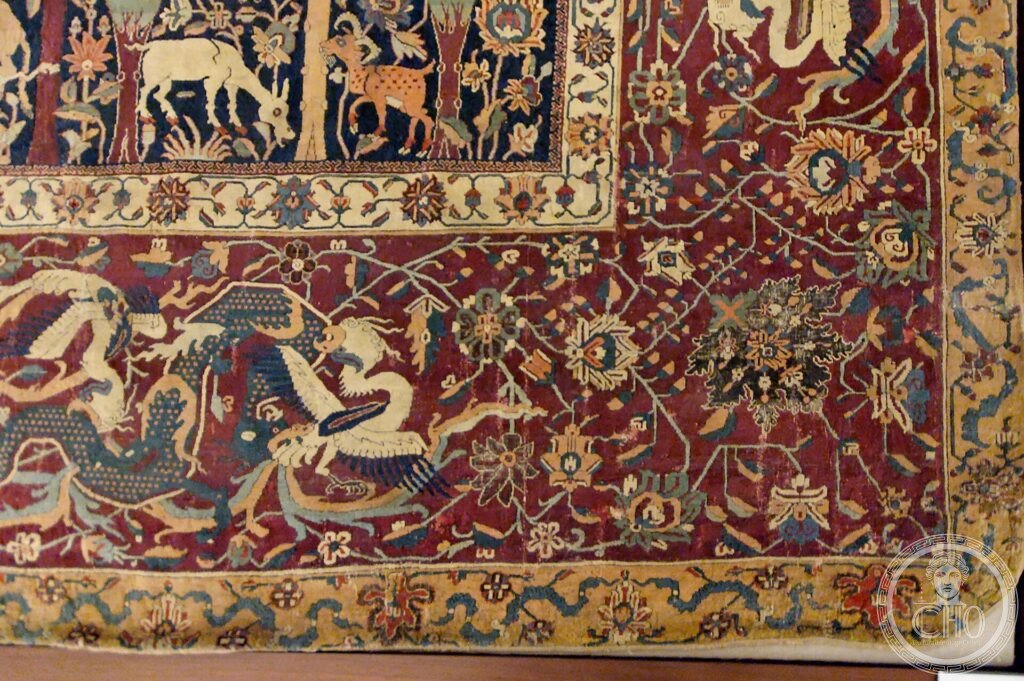
For centuries, Persian weavers have crafted carpets that embody the artistic, commercial, and domestic life of Iran. From royal court manufactories to nomadic tribes, this textile tradition blends utility with symbolic meaning, natural materials with intricate hand techniques, and regional identity with cross-cultural influence.
At a glance
Persian carpet weaving is a textile art practiced across Iran, from major urban centers like Kashan, Tabriz, and Isfahan to remote villages and nomadic encampments. Weavers produce hand-knotted pile carpets, flat-woven textiles (Kilim and Soumak), and embroidered cloths (Suzani) using wool, silk, and other fibers. The practice serves both domestic needs and international markets, and remains central to Iranian cultural identity and economic life.
Origins & history
Carpet weaving is deeply rooted in Persian culture and Iranian art, with tradition maintained across nomadic tribes, village workshops, and royal manufactories simultaneously. The Safavid court manufactories of Isfahan, active in the sixteenth century, elevated the practice to an artistic pinnacle, renowned for elaborate colors and refined designs that set standards for centuries to come. These patterns and traditions persisted through successive Persian dynasties until the last royal house of Iran.
The craft experienced significant disruption in the nineteenth century when synthetic dyes were introduced, undermining the use of traditional natural dyes. Political instability and commercial pressures have periodically caused decline, yet urban centers like Tabriz played crucial roles in reviving and sustaining the tradition through periods of hardship.
The practice
Weavers work at both stationary looms in workshops and portable looms in nomadic camps, using hand-tying techniques refined over generations. In larger manufactories, designers create pre-planned, intricate patterns; nomadic and village weavers often work from memory and tradition, producing bolder designs considered the most authentic expressions of Persian carpet art. The most recognizable type from village tradition is the Gabbeh rug.
Materials vary by region and purpose. High-quality wool, silk, and natural dyes—derived from plants and minerals—characterize the finest pieces. Town centers like Kashan, Tabriz, Kerman, Neyshabour, Mashhad, Nain, and Qom each developed distinctive techniques, color palettes, and pattern vocabularies. Modern production increasingly revives traditional natural dyes and tribal patterns while also embracing contemporary designs, all executed in centuries-old hand techniques.
Cultural significance
Persian carpets embody the history, aesthetics, and identity of Iran and its diverse peoples—reflecting both Ottoman influence and the legacy of successive empires. Each carpet functions as a historical document, with patterns, colors, and weaving styles encoding information about the weaver’s region, tribe, social status, and era.
Economically, the trade has been vital to Iran for centuries and remains so today. Culturally, carpet weaving demonstrates the resilience of traditional knowledge: despite modernization and external pressures, weavers have revived endangered techniques and reasserted the value of natural materials and ancestral patterns.
Key facts
- Primary country: Iran
- Anchor heartland: Kashan (coordinates: 33.97829, 51.42725)
- Other major weaving centers: Tabriz, Kerman, Ravar, Neyshabour, Mashhad, Isfahan, Nain, Qom
- Main textile types: pile-woven carpets, Kilim, Soumak, Suzani embroidery
- UNESCO Intangible Cultural Heritage inscription: 2010 (Traditional Skills of Carpet Weaving in Kashan, reference 00383)
Where to experience it
Kashan, in central Iran, is the heartland of this living practice and home to master weavers and workshops where traditional techniques are still taught and practiced. Visitors to the region encounter working looms, dye houses, and the visual vocabulary of Persian carpet art. Other major centers—Tabriz, Isfahan, and others listed above—each offer distinct regional styles and opportunities to observe weaving in progress and purchase directly from artisans.
Sources & resources
- Persian carpet — Wikipedia
- Traditional Skills of Carpet Weaving in Kashan — UNESCO Intangible Cultural Heritage
- Cultural Heritage Online
Find it on the map
See this place and what’s around it →📷 Become a Cultural Heritage Online photographer
Share your photos of places: they stay published under your name as the author. The more they're seen, the more you get noticed — and soon a contest will reward the most appreciated photos.
Log in or sign up free to add a photo