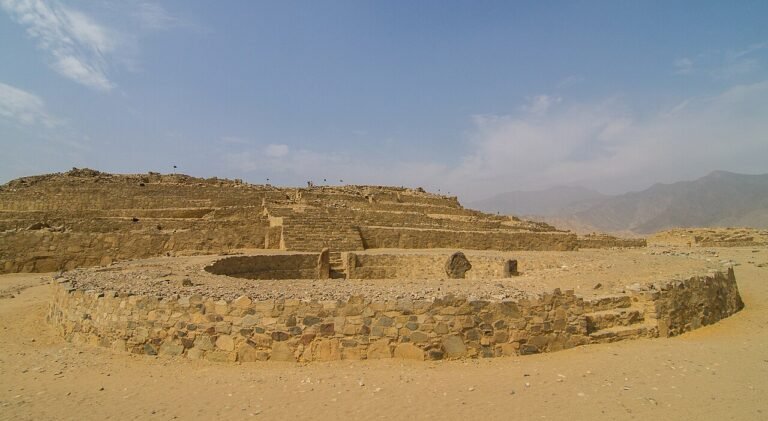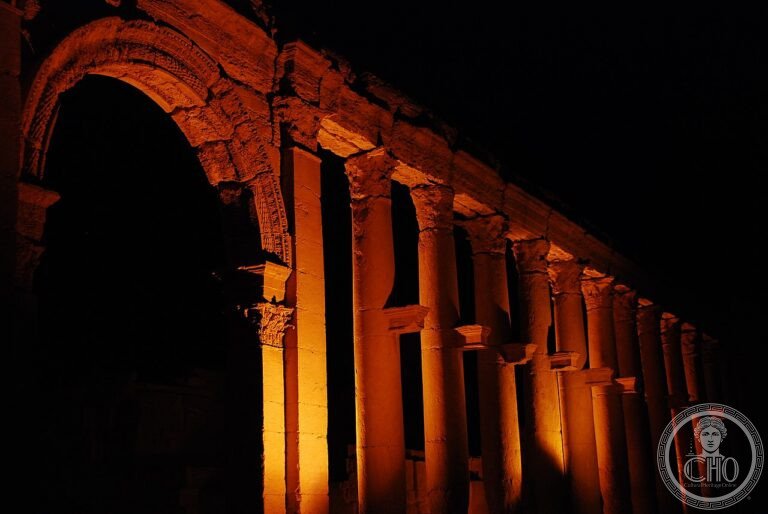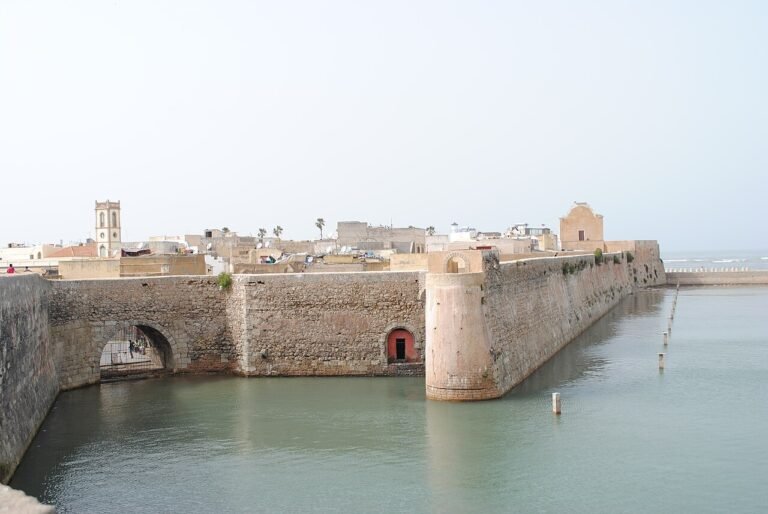
Everyone carries the same short World Heritage List in their head: Machu Picchu, the Taj Mahal, the Pyramids, Petra, the Great Wall. A few dozen sites absorb almost all the attention, the visitors and the photographs. The actual List is more than 1,200 sites long, and the difference between the famous handful and the overlooked majority is not simply fame. When you try to document all of it, the sites that resist coverage turn out to share the same few structural traits. They are the long tail of world heritage, and they are overlooked for reasons that have nothing to do with what they are worth.
How we found the pattern
Cultural Heritage Online catalogues more than 16,750 GPS-verified heritage places across over 6,500 cities. Building a catalogue at that scale eventually forces an uncomfortable exercise: cross-referencing your own coverage against the full UNESCO World Heritage List, site by site, to see what you have missed. We did that in July 2026, matching every inscribed property against our directory. The sites that had gone undocumented longest were not scattered at random. Three structural categories accounted for most of them — and the same three categories are the ones that mainstream travel and heritage writing tends to skip. What follows is a portrait of those categories, not a ranking; the counts describe the List itself, which anyone can check against UNESCO’s own records.
The sites no single country owns
More than forty World Heritage properties are shared across national borders — inscribed jointly by two or more states. They are, editorially, orphans. No national tourism board builds a campaign around a site it only half-owns, and no single culture ministry treats it as a flagship.
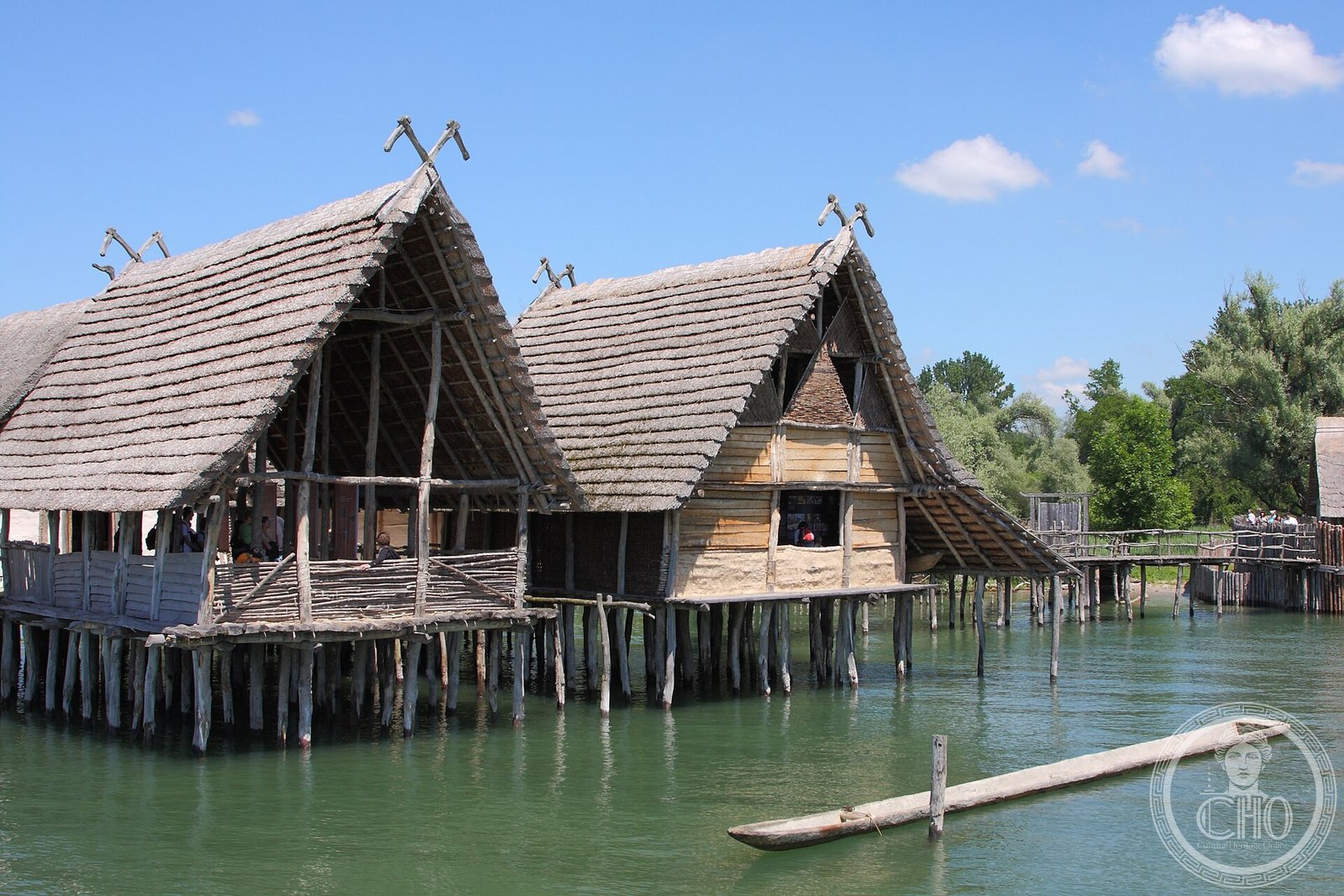
The extreme case is the Ancient and Primeval Beech Forests of the Carpathians and Other Regions of Europe, a single listing that now stretches across eighteen countries, from the Balkans to Belgium. It is one of the largest transnational properties in the world, and almost nobody can name it. The prehistoric pile dwellings around the Alps gather 111 archaeological sites across six countries — Austria, France, Germany, Italy, Slovenia and Switzerland — most of them submerged in lakes and invisible to any visitor. The Inca road system, the Qhapaq Ñan, runs through six South American nations at once. Each of these is a masterpiece of the List. Each is a marketing problem no country volunteered to solve.
The serial sites where fame goes to one stone
The second category is the serial property: a single inscription made up of many separate components, sometimes hundreds. The visitor “sees” the site by seeing its one famous piece, and the rest stay dark.
The numbers are startling once you look. Rock Art of the Mediterranean Basin on the Iberian Peninsula is a single listing that bundles more than 750 individual sites across eastern Spain. The Belfries of Belgium and France gather more than fifty towers under one inscription; the Struve Geodetic Arc, the Great Spa Towns of Europe, Le Corbusier’s scattered buildings — all are single “sites” made of many. A tourist ticks the box at one belfry, one spa town, one chapel, and moves on, while the coherence that earned the listing — the pattern across all of them — is exactly what never gets written up. Serial sites are designed to be understood as a set, and almost always consumed as a fragment.
The heritage of work
The third category is industrial heritage, and it is the most systematically under-romanticised. The World Heritage List protects the places where Europe and the world actually made their living: the Zollverein coal mine in Germany, the Falun copper mine in Sweden, the Cornwall and West Devon mining landscape, the Van Nelle tobacco and coffee factory in Rotterdam, the slate landscape of northwest Wales, the mercury mines of Almadén and Idrija shared between Spain and Slovenia. In our cross-reference, more than twenty inscribed properties were industrial sites — mines, canals, mills, mountain railways — and they were among the last we reached.
The reason is not obscure. Cathedrals and palaces come pre-loaded with the vocabulary of beauty; a lead-silver-zinc mine does not. Yet these are often the sites most at risk. Romania’s Roșia Montană mining landscape was inscribed directly onto the List of World Heritage in Danger. Industrial heritage is where the story of ordinary work is kept, and it is precisely the heritage that struggles hardest for a paragraph.
Why the long tail matters
None of this is an argument against Machu Picchu. It is an argument about attention. The famous sites are famous partly because they are single, national, monumental and photogenic — and the sites that lack those four traits fall out of the conversation regardless of their significance. A shared forest, a hundred lake villages, a copper mine: these are the parts of the human record that the market for heritage writing quietly leaves out.
Mapping the long tail is slow, unglamorous work, and it is the reason a catalogue exists. Over the past year we have been closing our own gap against the List, one place card at a time — sources, coordinates, access notes — with a deliberate bias toward the sites nobody else was documenting. The famous handful will always be fine. The other thousand need someone to write the first page.
Where to start
We are glad to share our working data and methodology with researchers and journalists on request — including the list of transnational, serial and industrial properties behind this piece and how we assembled it. Explore the World Heritage sites already in our directory, or get in touch.
Sources
- UNESCO World Heritage Centre, World Heritage List — whc.unesco.org/en/list (site totals, transnational and serial property definitions, component counts)
- UNESCO, Ancient and Primeval Beech Forests of the Carpathians and Other Regions of Europe — inscription and country count
- UNESCO, Prehistoric Pile Dwellings around the Alps; Qhapaq Ñan, Andean Road System; Rock Art of the Mediterranean Basin on the Iberian Peninsula; Belfries of Belgium and France — component and country counts
- UNESCO, List of World Heritage in Danger — Roșia Montană Mining Landscape
- CHO catalogue cross-reference against Wikidata P757 (UNESCO World Heritage property identifier), July 2026