
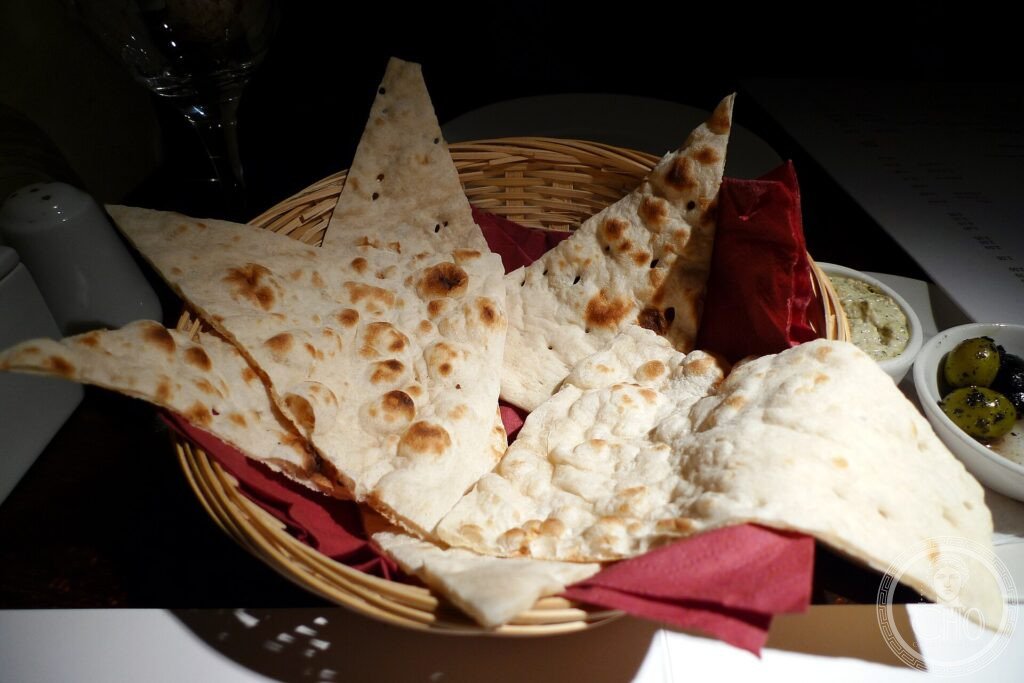
A thin, soft flatbread baked in a clay tandoor or on a griddle, lavash is both daily sustenance and communal tradition in Armenia. Prepared in large batches, often by women working together, this ancient bread embodies cultural identity across the South Caucasus and West Asia.
In UNESCO’s words
Lavash is a traditional thin bread that forms an integral part of Armenian cuisine. Its preparation is typically undertaken by a small group of women, and requires great effort, coordination, experience and special skills. A simple dough made of wheat flour and water is kneaded and formed into balls, which are then rolled into thin layers and stretched over a special oval cushion that is then slapped against the wall of a traditional conical clay oven. After thirty seconds to a minute, the baked bread is pulled from the oven wall. Lavash is commonly served rolled around local cheeses, greens or meats, and can be preserved for up to six months. It plays a ritual role in weddings, where it is placed on the shoulders of newlyweds to bring fertility and prosperity. The group work in baking lavash strengthens family, community and social ties. Young girls usually act as aides in the process, gradually becoming more involved as they gain experience. Men are also involved through the practices of making cushions and building ovens, and pass on their skills to students and apprentices as a necessary step in preserving the vitality and viability of lavash making.
Official description, UNESCO Intangible Cultural Heritage List — Lavash, the preparation, meaning and appearance of traditional bread as an expression of culture in Armenia
At a glance
Lavash is a traditional thin bread made from wheat flour and water that holds a central place in Armenian cuisine. Women prepare it in coordinated groups, requiring considerable skill and effort. The bread is served fresh, rolled around local cheeses, greens or meats, and can be dried and preserved for up to six months.
Origins & history
The official description does not detail the origins or historical development of lavash. It identifies lavash as a traditional element of Armenian culture passed down through generations, with skills transmitted from experienced bakers to apprentices and young girls learning through participation.
The practice
Small groups of women knead a simple dough of wheat flour and water into balls, then roll and stretch each piece over a special oval cushion. The cushion is slapped against the interior wall of a traditional conical clay oven. The bread bakes in thirty seconds to a minute before being pulled from the wall. Men contribute by making the cushions and building the ovens. Young girls assist and gradually take on greater responsibility as they develop experience and skill.
Cultural significance
Lavash strengthens family, community and social ties through the collaborative work of preparation. It plays a ritual role in weddings, where it is placed on the shoulders of newlyweds to bring fertility and prosperity. The intergenerational transmission of skills—from experienced women to young girls, and from men to apprentices—is essential to preserving the vitality and viability of the tradition itself.
Key facts
- Country: Armenia
- Inscribed: 2014
- UNESCO list: Representative List of the Intangible Cultural Heritage of Humanity
- UNESCO reference: 00985
- UNESCO vocabulary: Bread; Food preparation
- Map: not shown — UNESCO’s official description of this element names no locality, and a living tradition is practised across a community, not at one address.
Where to experience it
Lavash remains central to Armenian culinary practice and community life. The tradition is kept alive in family kitchens, local bakeries, and restaurants where women gather to prepare the bread using time-honoured techniques. Visitors can observe the practice during everyday baking, at markets, and especially at weddings, where lavash holds ritual significance. The preparation brings together multiple generations—young girls learning alongside experienced women while men contribute by crafting the special cushions and building traditional clay ovens. Through these collective efforts, Armenian communities sustain the knowledge and social bonds that lavash baking creates.
Sources & resources
- UNESCO — official element page: Lavash, the preparation, meaning and appearance of traditional bread as an expression of culture in Armenia
- UNESCO — open data record: Intangible Heritage List, reference 00985
- UNESCO — official video: UNESCO film on this element — embedded on this page
- UNESCO — official photograph: Lavash — Harutyun Marutyan, 2013
- Reference — Wikipedia (secondary): Lavash — consulted as a secondary reference, not as confirmation
- Cultural Heritage Online: Our archive and city guides

Sources
- S1 — Goldstein, Darra, ed. The Oxford Companion to Sugar and Sweets. Oxford University Press, 2015. / Petrosian, Irina, and David Underwood. Armenian Food: Fact, Fiction & Folklore. Yerkir Publishing, 2006. ISBN 978-1-4116-9865-9.
- S2 — Redgate, Anne Elizabeth. The Armenians. Wiley-Blackwell, 2000. ISBN 978-0-631-22037-4.
Spotted an error? Write to editorial@culturalheritageonline.com and we correct it the same day.