
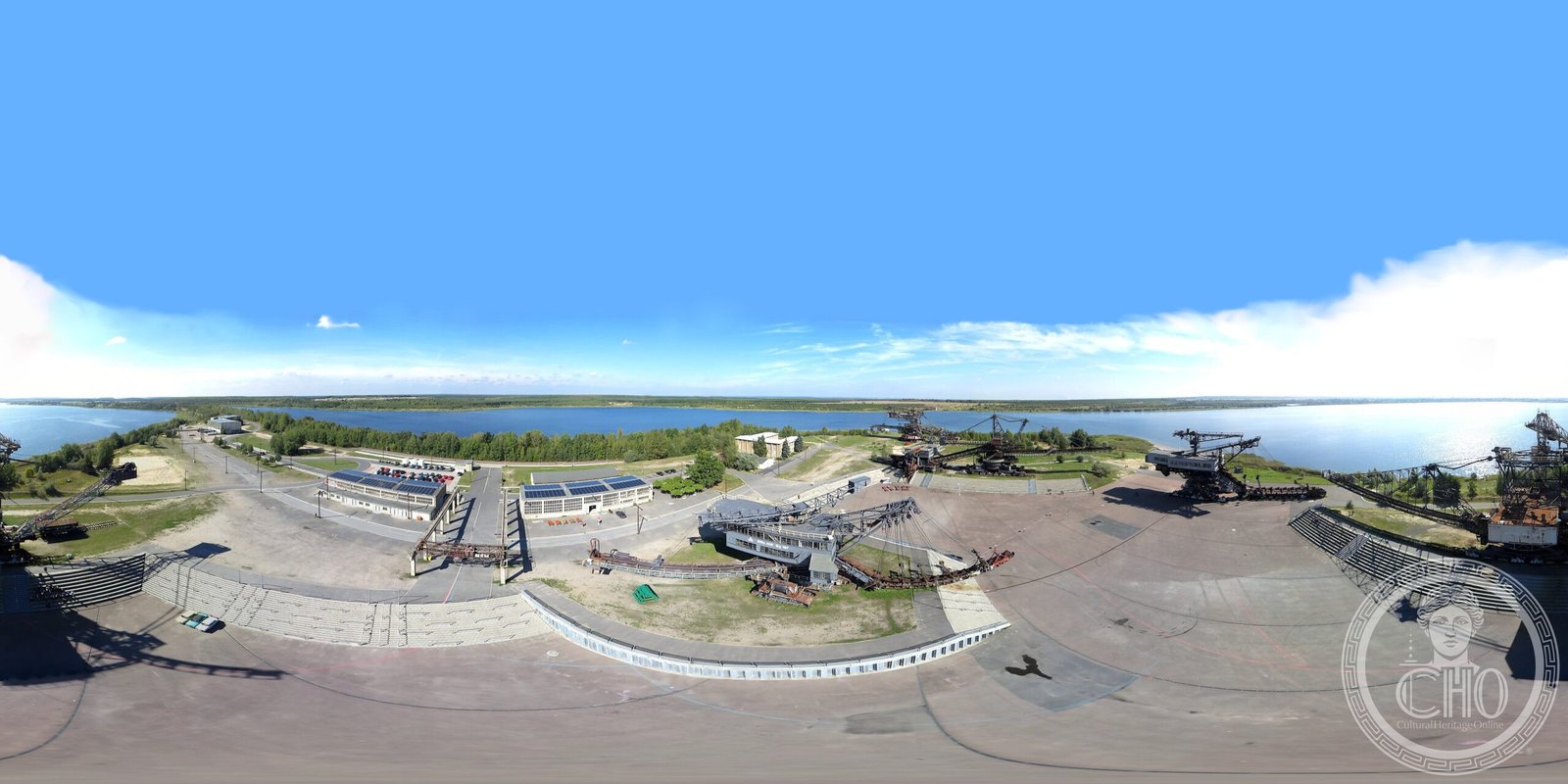
An open-air museum of colossal industrial machinery, Ferropolis transforms decommissioned mid-20th-century mining equipment into a landscape-scale artwork and cultural venue.
At a glance
Ferropolis—literally “the city of iron”—occupies a former opencast mine between Wittenberg and Dessau. Its massive exhibit pieces can reach 30 meters high and 120 meters long, with some weighing nearly 2,000 tons. The site functions as both permanent museum and dynamic event space.
History
The museum was established on the site of an abandoned opencast lignite mine in the former East Germany. The industrial machines on display date from the mid-20th century, when large-scale mining and manufacturing dominated the region’s economy.
What you see
The collection comprises towering excavators, draglines, and other mining equipment that functioned as working machines before becoming sculptural installations. Their monumental scale and industrial geometry create an imposing landscape. The site’s open-pit geography frames these machines against sky and horizon.
Cultural significance
Ferropolis exemplifies how industrial heritage can be repurposed for contemporary cultural life. It documents the technological ambitions and labor history of 20th-century industry while serving as a versatile venue for diverse artistic expressions. The juxtaposition of heavy machinery with performance creates conceptual and atmospheric tension.
Key facts
- Country: Germany
- City: Gräfenhainichen
- Coordinates: 51.76°N, 12.45°E
- Largest machines: up to 30 m high, 120 m long, weighing up to 1,980 tons
Practical information & getting there
Ferropolis hosts major cultural events including the Splash! Festival, Melt! Festival, and the annual “Ferropolis in Flammen” celebration. The venue also stages opera performances and automotive events. Check the official website for current exhibitions, event schedules, and visitor information.
Sources & resources
Find it on the map
See this place and what’s around it →📷 Become a Cultural Heritage Online photographer
Share your photos of places: they stay published under your name as the author. The more they're seen, the more you get noticed — and soon a contest will reward the most appreciated photos.
Log in or sign up free to add a photo