
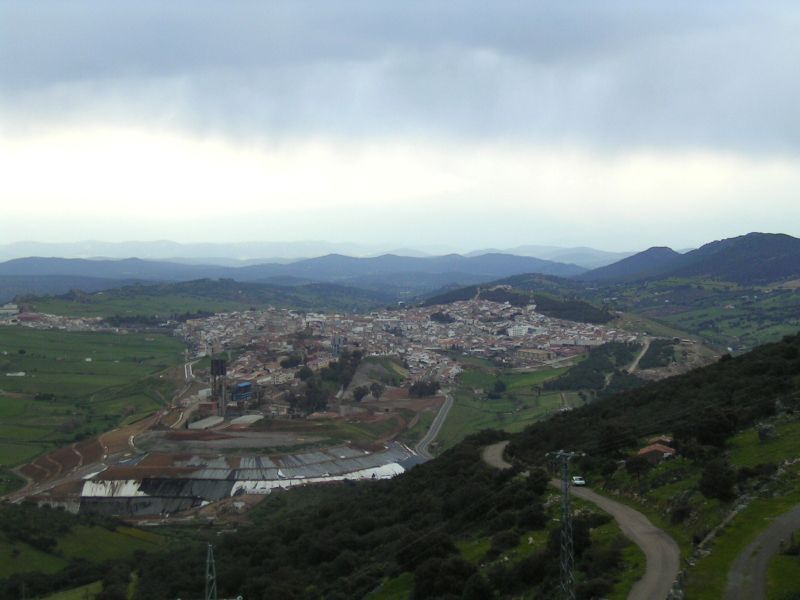
The world’s greatest source of mercury, this Spanish mining town in the Sierra Morena has yielded a quarter-million metric tons of liquid mercury over two millennia, shaping global commerce and industry at tremendous human cost.
At a glance
Almadén is a municipality in Ciudad Real province, Castile-La Mancha, situated 589 metres above sea level in the Sierra Morena range. Its name derives from the Arabic al-maʻdin, meaning ‘the mine’—a fitting etymology for a settlement whose identity has been bound to mineral extraction since antiquity.
History
Roman settlers first recognised the mercury deposits here. The Moors subsequently developed the mines during their occupation, only to lose them when Christian forces under Alfonso VII captured the town in 1151. The Crown granted mining rights to the Knights of the Order of Calatrava, establishing a feudal mining enterprise that would persist for centuries.
Approximately 250,000 metric tons of mercury were extracted over 2,000 years. This staggering output came at grave human cost: the mines systematically employed penal labourers, enslaved people, and prisoners of war—a legacy of exploitation intrinsic to the site’s industrial history.
European mercury mining regulations ended production in 2002. Six years later, the mine reopened to visitors, allowing public access to the first underground level, 50 metres below the surface.
What you see
The mine itself constitutes the primary structure of interest—a vast network of subterranean passages revealing centuries of extraction technique and industrial organisation. Visitors descend to the first accessible level, experiencing the scale and conditions of this historic operation.
Cultural significance
Almadén’s mercury shaped global industry and science for two thousand years, yet its story is inseparable from labour exploitation and environmental toxicity. In 2012, UNESCO recognised this complexity by designating Almadén and Idrija (Slovenia) joint World Heritage Sites under the theme ‘Heritage of Mercury’—acknowledging both the mines’ historical importance and their troubling human and ecological legacies.
Key facts
- Location: Almadén, Ciudad Real province, Spain
- Coordinates: 38°46′N, 4°49′W
- Elevation: 589 metres (1,932 feet)
- Production: c. 250,000 metric tons of mercury over 2,000 years
- Closure: 2002 (European mining prohibition)
- Public access: Opened 2006; visitors reach 50 metres underground
- UNESCO World Heritage: Designated 2012 (‘Heritage of Mercury’)
Practical information & getting there
The Almadén mine is open to the public. You can visit the first underground level. For current opening hours, admission fees, and detailed access information, consult local tourism resources before visiting, as conditions and schedules may change seasonally.
Sources & resources
Find it on the map
See this place and what’s around it →
📷 Become a Cultural Heritage Online photographer
Share your photos of places: they stay published under your name as the author. The more they're seen, the more you get noticed — and soon a contest will reward the most appreciated photos.
Log in or sign up free to add a photo