

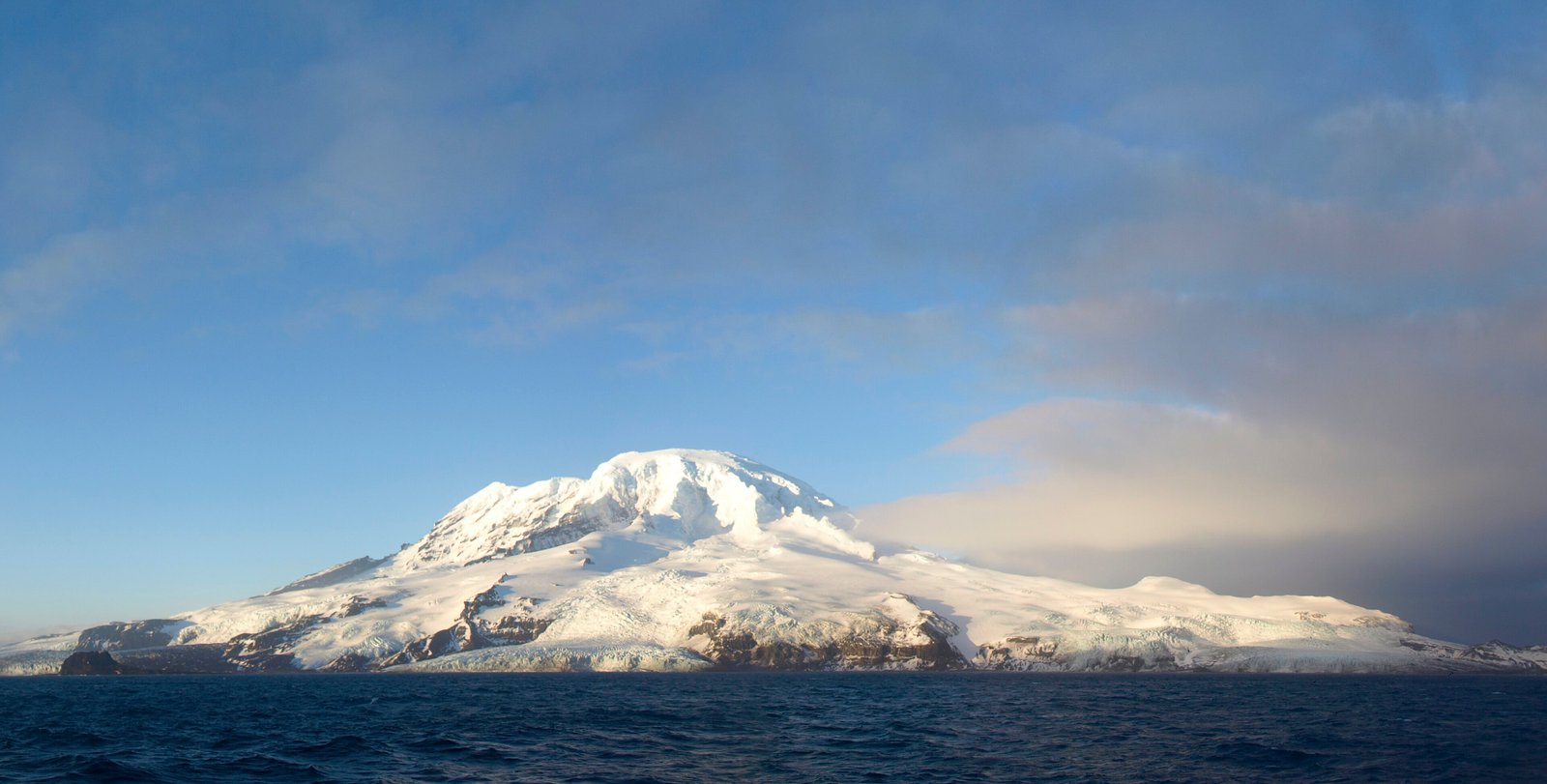
A remote volcanic archipelago in the sub-Antarctic, home to Australia’s only active volcanoes and nearly a quarter of the world’s macaroni penguins.
At a glance
Heard Island and the McDonald Islands form an Australian external territory roughly 4,000 kilometres south-west of mainland Australia and 1,700 kilometres north of Antarctica. Discovered in the mid-19th century, this volcanic landscape is among the most isolated places on Earth. The territory remains uninhabited today, designated a nature reserve and UNESCO World Heritage Site.
History
European discovery came in the 1850s. Sealers occupied Heard Island until 1882, extracting resources from these remote waters. The United Kingdom initially claimed the territory, transferring it to Australia in 1947.
Between 1947 and 1955, the Australian National Antarctic Research Expeditions (ANARE) maintained a research station on the island. Since its closure, scientific and private expeditions have visited occasionally. The Australian Antarctic Division now manages the islands as a protected site.
What you see
Heard Island is dominated by Big Ben, a stratovolcano crowned by Mawson Peak—Australia’s highest point outside the Antarctic Territory. About 70 percent of the island lies perpetually under glaciers, with vegetation claiming just 5 percent of the landscape.
Mawson Peak remains volcanically active, regularly emitting steam and vapour, occasionally releasing lava flows. The McDonald Islands, situated 43 kilometres to the west, comprise smaller volcanic formations; only two recorded human landings have occurred there. Extreme conditions define both archipelagos: fierce winds, sub-zero temperatures, and relentless precipitation.
Cultural significance
These islands represent a living laboratory of sub-Antarctic ecosystems and volcanic processes. Heard Island contains approximately 20 percent of the world’s macaroni penguin population—more than one million breeding pairs—alongside eastern rockhopper, gentoo, and king penguins.
The archipelago supports large colonies of elephant seals and Antarctic fur seals, and serves as a breeding ground for at least 15 seabird species, including the Heard Island cormorant found nowhere else. Recent decades have brought rapid glacial retreat and environmental shifts, marking the islands as a sentinel site for climate change impacts in the Southern Ocean.
Key facts
- Country: Australia
- Location: Southern Indian Ocean, approximately 4,000 km south-west of mainland Australia
- Coordinates: 53.1°S, 73.52°E
- UNESCO World Heritage Site: Yes
- Status: Nature reserve; uninhabited external territory
- Highest point: Mawson Peak (volcanic cone on Big Ben)
Practical information & getting there
The territory is one of Earth’s least accessible locations. No regular transport services operate to the islands; access is limited to occasional scientific expeditions and charter voyages. The Australian Antarctic Division manages all visits and research activities.
The harsh climate and remote position make independent travel infeasible. Interested researchers should contact the Australian Antarctic Division regarding expedition opportunities. Commercial fishing vessels operate in surrounding waters under Australian regulation.
Sources & resources
Find it on the map
See this place and what’s around it →📷 Become a Cultural Heritage Online photographer
Share your photos of places: they stay published under your name as the author. The more they're seen, the more you get noticed — and soon a contest will reward the most appreciated photos.
Log in or sign up free to add a photo