
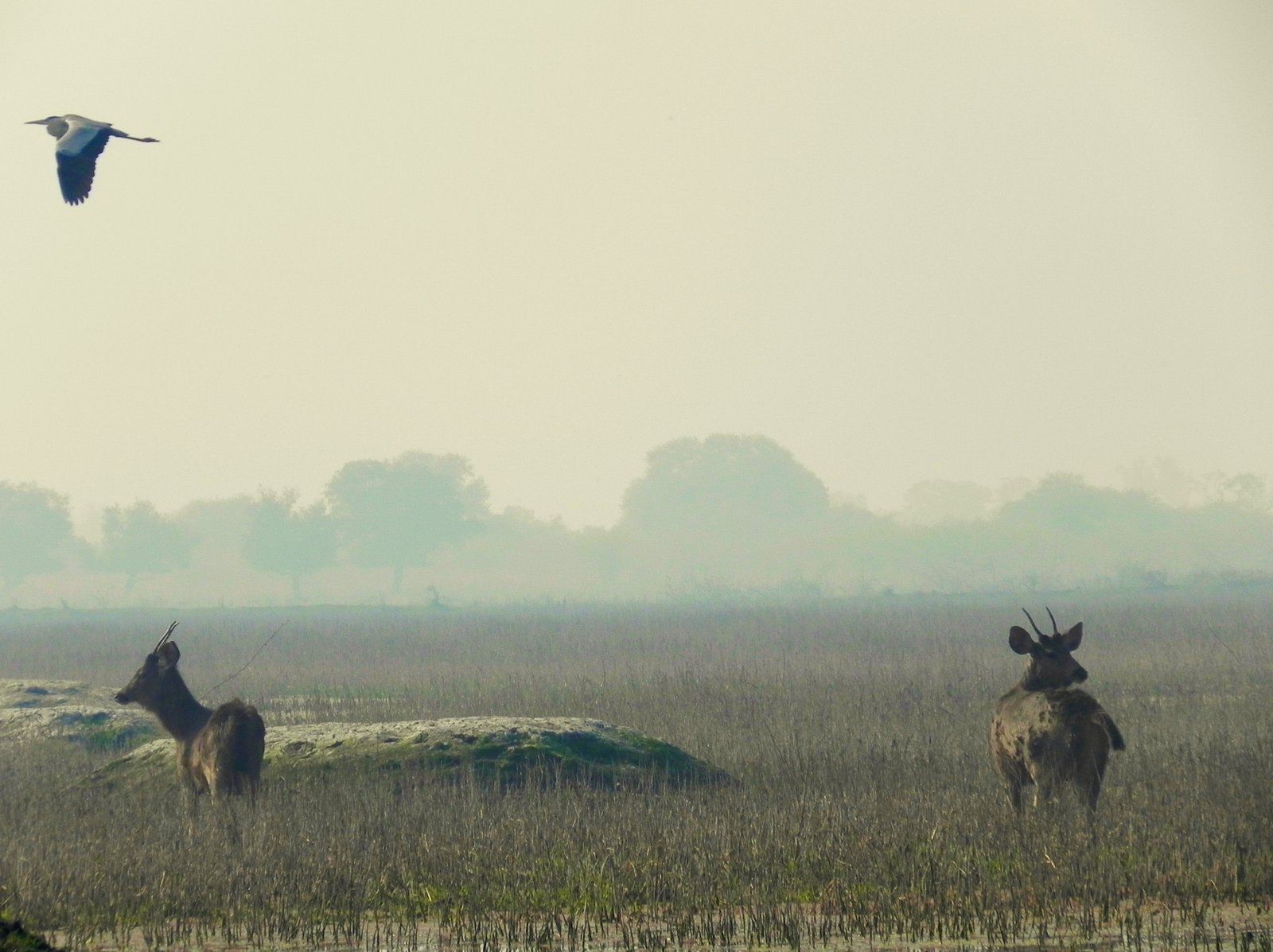
A wetland sanctuary of exceptional avian diversity, where over 400 bird species congregate each winter as they migrate south from Eurasia. Locals call it Ghana—a mosaic of grasslands, swamps and seasonal waters where desert meets tropics.
At a glance
Keoladeo protects 29 square kilometres of regulated wetland in eastern Rajasthan. The reserve serves multiple purposes: a global refuge for migratory birds, a natural flood barrier for nearby settlements, and a source of pasture and water for local livestock. Its location at the ecological intersection of arid and tropical zones generates remarkable biodiversity across species far beyond birds.
History
The area was developed as a duck shooting reserve in 1899 by the administrator of Bharatpur State, then gradually transformed into a conservation site. Ornithologist Salim Ali’s efforts led to its designation as Bharatpur Bird Sanctuary in 1956. It gained protected status in 1971 and was formally established as Keoladeo National Park on 10 March 1982. UNESCO recognition followed in 1985, acknowledging its global significance for avian conservation.
What you see
The park is a natural mosaic of dry grasslands, woodlands, swamps and seasonal wetlands rather than a single structure. Water channels and embankments create the managed wetland environment essential to the reserve’s function. Visitors encounter open water habitats and reed beds interspersed with drier terrain, creating distinct zones for different species.
Cultural significance
Keoladeo represents a rare example of successful conversion from extractive use (hunting) to conservation. Its protection safeguards critical flyways for birds traversing between Central Asia and the Indian subcontinent. The park demonstrates how wetland management can simultaneously serve wildlife, local communities and flood mitigation—a model of integrated landscape stewardship.
Key facts
- UNESCO World Heritage Site, 1985
- Area: 29 square kilometres (11 square miles)
- Avian species documented: over 400
- Fish species: at least 20
- Reptile and amphibian species: 70
- Mammalian species: 50
- Lepidopteran species: over 60 unique
- Invertebrate species: over 1,000
- Plant species: nearly 400
- Coordinates: 27.166667°N, 77.516667°E
Practical information & getting there
The park lies near Bharatpur in Rajasthan, accessible by road from Delhi and other major centres. Best visiting season is October to February, when migratory birds arrive in greatest numbers. Check locally for current access conditions and any seasonal restrictions on entry or photography.
Sources & resources
Find it on the map
See this place and what’s around it →📷 Become a Cultural Heritage Online photographer
Share your photos of places: they stay published under your name as the author. The more they're seen, the more you get noticed — and soon a contest will reward the most appreciated photos.
Log in or sign up free to add a photo