
A sprawling sultanate city of baked-brick mosques, mausoleums and public structures built during Bengal’s golden age, now a UNESCO-protected ensemble of extraordinary Islamic architecture.
At a glance
Bagerhat, historically known as Khalifatabad, rose as a mint town during the Bengal Sultanate. The site contains 360 religious and civic structures across its landscape, with more than 50 surviving buildings representing one of the largest concentrations of 15th-century sultanate-era mosques in Bangladesh.
History
The city was built under the governorship of Ulugh Khan Jahan, a Turkic military officer appointed by Sultan Mahmud Shah to administer the Sundarbans region. Development flourished during this period as Bagerhat became both a spiritual and administrative center of the Bengal Sultanate.
For centuries, dense vegetation obscured the structures from view, effectively hiding the city from the modern world until excavation and restoration work revealed its extraordinary architectural heritage. The site was inscribed as a UNESCO World Heritage Site in 1983 under Criterion (iv) for exemplifying a significant stage in human architectural history.
What you see
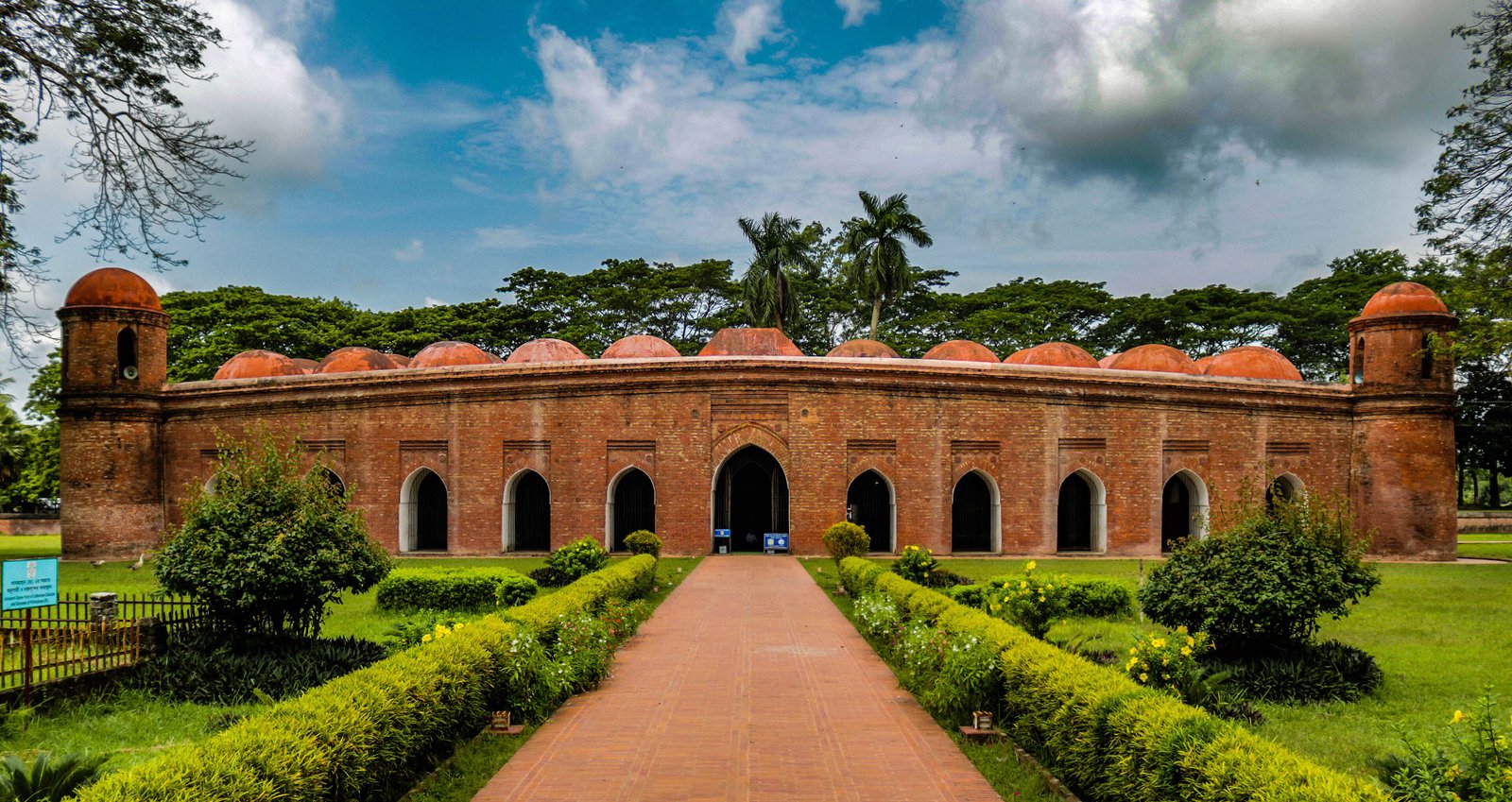
The Sixty Dome Mosque stands as the largest and most prominent structure, distinguished by 60 pillars supporting 77 domes. Other major mosques include the Singar Mosque, Nine Dome Mosque, Bibi Begni Mosque, and Ronvijoypur Mosque.
The buildings employ the local Bengal Sultanate variant of Indo-Islamic architecture, sometimes termed the ‘Khan Jahan Style.’ Characteristic features include baked-brick construction, terracotta ornamental work, and arabesque decoration. Bridges, water tanks, and roads complete the urban plan.
Cultural significance
Bagerhat represents a distinctive moment in South Asian Islamic architecture, when sultanate patrons synthesized Persian, Central Asian and local Bengali building traditions. The density and variety of structures demonstrate the wealth and ambition of 15th-century Bengal, while the artisan expertise evident in terracotta work and dome construction reflects sophisticated craft knowledge.
Key facts
- UNESCO World Heritage Site (inscribed 1983)
- Location: Bagerhat District, Bangladesh
- Coordinates: 22.661°N, 89.759°E
- Period: 15th century (Bengal Sultanate)
- Contains: 360 mosques, mausoleums, bridges, water tanks and public buildings
Practical information & getting there
The site occupies a large area in Bagerhat District. Many structures remain partially restored, and vegetation management continues. Access and visiting hours vary by season and local conditions; consult the Bangladesh Ministry of Cultural Affairs or UNESCO World Heritage Centre for current information before planning a visit.
Sources & resources
Find it on the map
See this place and what’s around it →📷 Become a Cultural Heritage Online photographer
Share your photos of places: they stay published under your name as the author. The more they're seen, the more you get noticed — and soon a contest will reward the most appreciated photos.
Log in or sign up free to add a photoDo you manage this place?
This page is read by travellers and heritage enthusiasts who find it on Google. Keep it accurate — and make it work for you. Free for non-profit heritage institutions.