

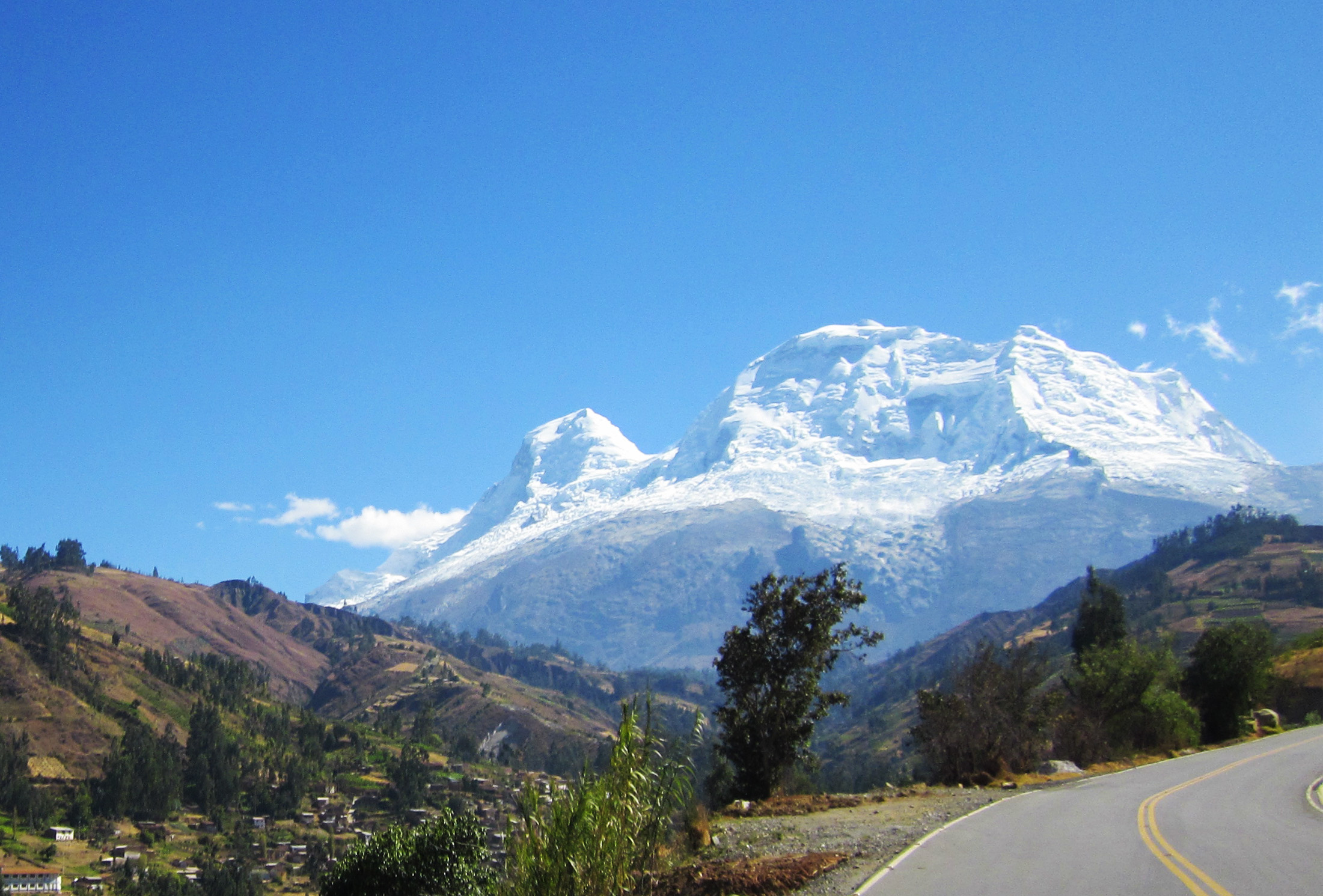
A vast alpine wilderness protecting the world’s highest tropical mountain range, where glaciers feed both the Pacific and Atlantic oceans.
At a glance
Huascarán National Park encompasses 340,000 hectares across the Cordillera Blanca in Peru’s central Andes. The park stretches approximately 150 kilometers north to south, averaging 25 kilometers in width. UNESCO recognized it as a World Heritage Site in 1985, acknowledging its exceptional geological and ecological significance.
History
Established to protect the Cordillera Blanca—the world’s highest tropical mountain range—the park was designated a World Heritage Site in 1985. Today it is managed by SERNANP (Servicio Nacional de Áreas Naturales Protegidas), Peru’s national protected areas authority.
What you see
The park’s landscape is defined by dramatic alpine topography, with glaciated peaks and deep valleys. The western slopes drain toward the Pacific via the Santa River, while eastern slopes feed the Marañón River system toward the Amazon and Atlantic. Vegetation ranges from high-altitude grasses to Polylepis trees and flowering Buddleja species.
Cultural significance
Huascarán is renowned among mountaineers worldwide and represents a critical biodiversity hotspot for tropical high-altitude ecosystems. The park protects endangered species including spectacled bears, Andean condors, vicunas, and tarucas. The Queen of the Andes flower—a spectacular giant bromeliad—exemplifies the region’s unique flora adapted to extreme elevation.
Key facts
- Location: Ancash region, central Peru
- Area: 340,000 hectares (840,000 acres)
- Coordinates: −9.4°, −77.4°
- UNESCO World Heritage Site: 1985
- Managing authority: SERNANP
- Distinctive feature: World’s highest tropical mountain range
Practical information & getting there
The park is located in Ancash, in the Peruvian Andes. Access points include routes from the city of Huaraz. Mountaineering expeditions, trekking, and alpine tourism are major activities. For current conditions, visiting hours, permits, and guided services, consult SERNANP’s official website.
Sources & resources
Find it on the map
See this place and what’s around it →📷 Become a Cultural Heritage Online photographer
Share your photos of places: they stay published under your name as the author. The more they're seen, the more you get noticed — and soon a contest will reward the most appreciated photos.
Log in or sign up free to add a photo