
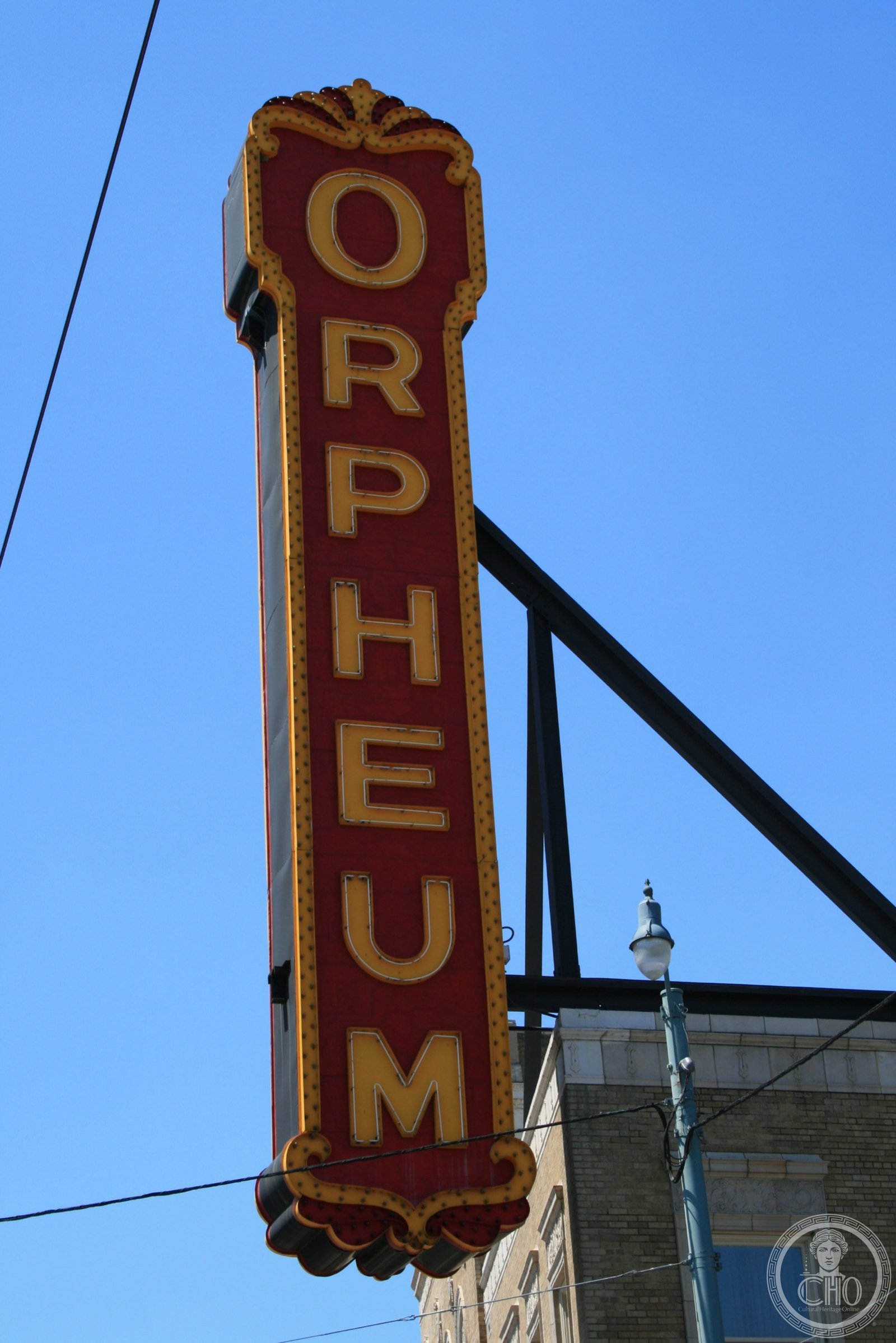
One of the grandest surviving movie palaces in the American South, the Memphis Orpheum opened in 1928 with an interior of crystal chandeliers, gilded ornament, and the theatrical splendor that transformed a night at the cinema into an event — and has been preserved and returned to full operation as Memphis’s premier historic performing arts venue.
At a glance
The Orpheum Theatre at 203 South Main Street in downtown Memphis was rebuilt and opened in 1928 on the site of an earlier theater. With approximately 2,400 seats, a lobby of baroque ornament, and a crystal chandelier that became one of Memphis’s most recognized cultural symbols, the Orpheum represents the pinnacle of the American movie palace concept — buildings designed not merely to screen films but to create a total environment of luxury and fantasy. It is a National Historic Landmark and is operated by the Memphis Development Foundation.
Key facts
- Address: 203 South Main Street, Memphis, TN 38103
- Opened: 1928
- Style: Atmospheric / Grand movie palace (Baroque/Art Deco)
- Capacity: approx. 2,400 seats
- National Historic Landmark: Yes
- Current use: Memphis Development Foundation — Broadway tours, concerts, film screenings
- Chandelier: Historic crystal chandelier, one of the theater’s signature features
History
The history of entertainment on South Main Street in Memphis reaches back to the late 19th century, when the city’s commercial and cultural life was concentrated in the blocks immediately south of the bluffs above the Mississippi River. The site of the current Orpheum hosted earlier theatrical venues before the 1928 building — which was constructed as part of the Orpheum Circuit’s national expansion — established the defining presence that the theater retains today.
When the 1928 Orpheum opened it was among the most lavish theaters in the South — a building designed to make its audience feel that they were entering a world apart from the ordinary. The lobby’s gilded surfaces, the auditorium’s crystal chandelier and ornamental plasterwork, and the scale of the seating area all communicated a standard of luxury that was both aspirational and democratic: the price of a movie ticket purchased access to surroundings that rivaled the finest private interiors.
The Orpheum was designated a National Historic Landmark. It closed as a movie palace in the 1970s and was saved from demolition by a preservation campaign that ultimately restored it to use as a performing arts venue. The Memphis Development Foundation, which operates the theater, has maintained the restoration and invested in the building’s continued life as the centerpiece of the South Main Historic Arts District.
What you see
The Orpheum’s South Main Street facade is organized around the vertical emphasis of its illuminated marquee and sign — the kind of kinetic architectural element that made the American movie palace visible from blocks away and that still reads, in any light, as an invitation. The entrance lobby sets the register for the interior: ornamental plasterwork, gilded surfaces, and the combination of scale and detail that characterizes the grand theatrical spaces of the 1920s.
In the auditorium, the crystal chandelier is the dominant visual element — a fixture whose scale (it has been described as weighing over a ton) makes it both a practical source of light and an object of wonder in its own right. The walls carry gilded ornamental panels; the proscenium arch frames the stage with theatrical presence. Sitting in the Orpheum, particularly for an evening performance when the house is full and the chandelier lit, one understands why the movie palace concept captured the imagination of generations of American audiences.
Practical information
- Current programming: Broadway touring productions, Memphis Symphony Orchestra, special film screenings, private events
- Tickets: Available through the Orpheum’s box office and major ticket platforms
- Tours: Backstage and historic tours available on select dates; check the theater’s official calendar
- South Main district: The theater anchors the South Main Historic Arts District with galleries, restaurants, and studios
Getting there
The Orpheum Theatre is in downtown Memphis at 203 South Main Street, in the South Main Historic Arts District. Memphis International Airport (MEM) is about 10 miles southeast. The MATA (Memphis Area Transit Authority) trolley on Main Street runs directly in front of the theater and connects to the broader downtown area. Beale Street (music district) is four blocks north. The Mississippi Riverfront is three blocks west.
Nearby
- National Civil Rights Museum — Lorraine Motel, two blocks east on Mulberry Street; one of the most important civil rights museums in the United States
- Sterick Building (1930) — Art Deco skyscraper, six blocks north on Third Street
- Beale Street Historic District — birthplace of the blues, four blocks north
Sources
- Wikipedia, “Orpheum Theatre (Memphis)” — opening date, capacity, NHL designation, chandelier
- National Historic Landmark nomination — architectural and cultural significance
- Memphis Development Foundation — operational history and restoration documentation
- Historic American Buildings Survey (HABS) — architectural records
Find it on the map
See this place and what’s around it →Record researched and written by Luigi De Marchi for Cultural Heritage Online, 2026.
📷 Become a Cultural Heritage Online photographer
Share your photos of places: they stay published under your name as the author. The more they're seen, the more you get noticed — and soon a contest will reward the most appreciated photos.
Log in or sign up free to add a photoIs this page about you?
This page is read by travellers and heritage enthusiasts who find it on Google. Tell us how you are connected to this place and we will take it from there.