
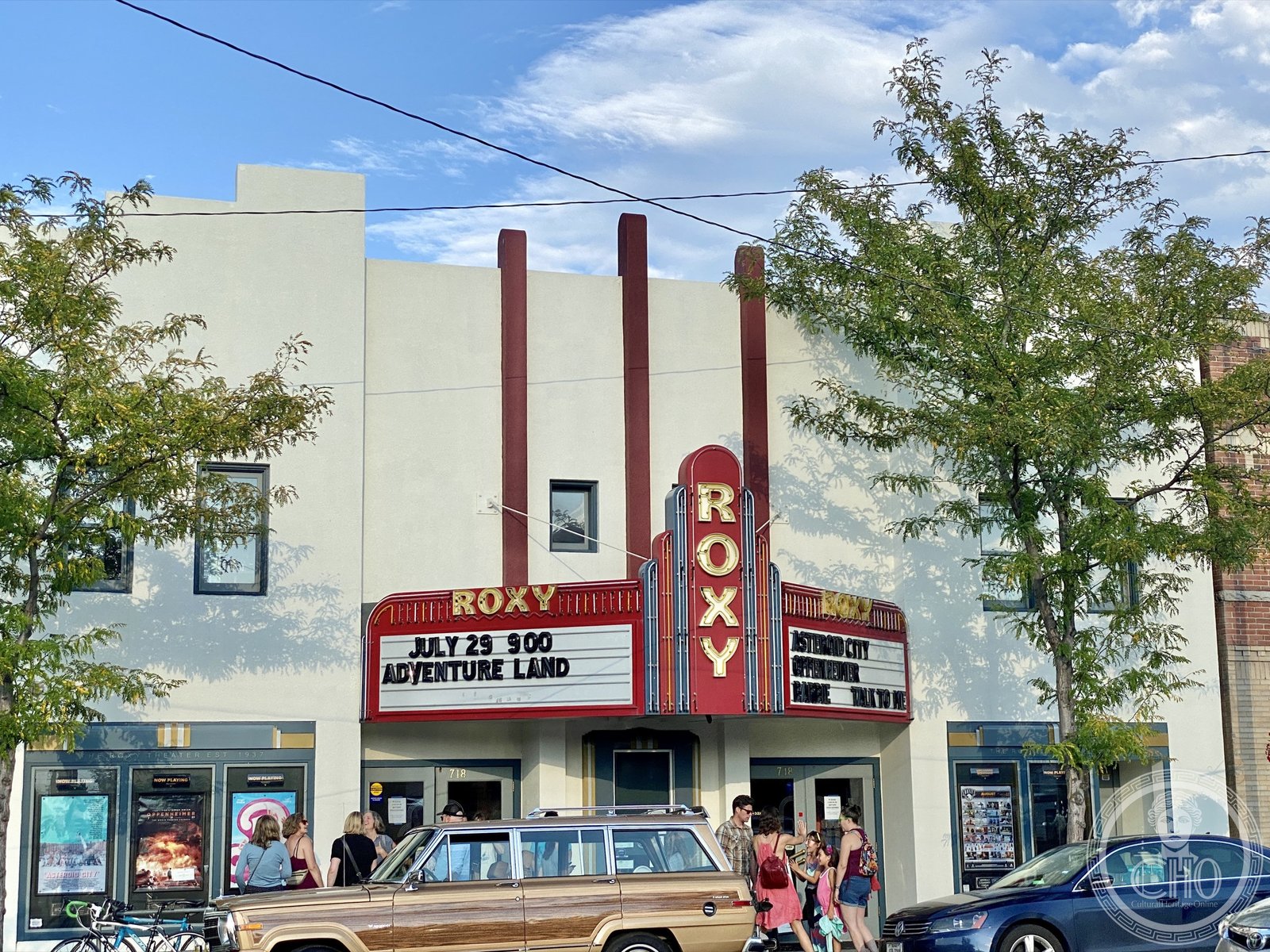
Missoula’s Art Deco neighborhood cinema on Higgins Avenue, where the mountain west’s taste for storytelling found a permanent address and the streamlined vocabulary of 1930s design met the practical demands of a frontier city still close to its timber and railroad origins.
At a glance
The Roxy Theater stands on South Higgins Avenue in Missoula, Montana, a compact Art Deco cinema built in the 1930s that has served the city through successive waves of cultural change — from the Hollywood studio system’s golden age through the rise of multiplex competition and into a contemporary era of independent programming and live performance. Its simple geometric facade, typical of the Streamline Moderne sensibility that reached even the most remote American cities by the mid-1930s, speaks to the ambition of Missoula’s commercial corridor at a time when the city was establishing itself as the cultural and commercial hub of western Montana.
Key facts
- Address: Higgins Avenue, Missoula, MT 59801
- Built: c.1930s
- Style: Art Deco / Streamline Moderne
- Current use: Independent cinema and arts venue
- GPS: 46.8559° N, 114.0053° W
- Setting: Clark Fork River valley, University of Montana campus nearby
History
Missoula in the 1930s was at the junction of railroads that made it the gateway to western Montana’s timber, agricultural, and tourist economies. The Northern Pacific Railway, which had selected Missoula as a division point decades earlier, brought both workers and travelers; the University of Montana, established in 1893 on the south bank of the Clark Fork, gave the city an educated permanent population with appetite for culture. A neighborhood cinema on Higgins Avenue, the main commercial artery connecting the university district to the downtown, would have had a ready audience from opening day.
The theater was designed in the Art Deco style then propagating across American commercial streets — a vocabulary absorbed from the 1925 Paris Exposition Internationale des Arts Décoratifs, filtered through Hollywood set designers and architectural trade publications into the hands of local builders who had never visited France but recognized the commercial appeal of modernity. Streamlined lettering above the entrance, geometric ornament in the facade panels, and the confident horizontal banding characteristic of the Moderne idiom all placed the Roxy in the same aesthetic lineage as theaters being built simultaneously in Chicago, Los Angeles, and a thousand other American cities.
The Roxy has operated as an independent cinema showing repertory, foreign, and documentary films, a programming identity that aligns with Missoula’s literary and environmental culture — the city that produced novelist Norman Maclean’s world of fly fishing and wilderness has always found audiences for stories told with depth and patience.
What you see
The Roxy’s facade is an exercise in the democratic Art Deco: no grand colonnades or gilded lobby, but a precise application of geometric ornament — stepped parapet, vertical sign tower, horizontal moldings in contrasting materials — that gave a modest neighborhood cinema the visual authority of a civic building. The proportions are compact by the standards of the great downtown palaces, but the design intelligence is the same: a facade that signals entertainment and pleasure to the pedestrian approaching on Higgins Avenue.
Inside, the intimate scale of a neighborhood house is preserved. The auditorium seats a fraction of what a downtown palace would have held, but that compression has become an asset in the era of single-screen programming: every seat in the house has a strong relationship to the screen, and the room’s acoustic properties reward attentive listening. The building’s survival into the present as a working cinema, rather than a converted retail space or parking lot, makes it one of the more complete examples of 1930s neighborhood theater culture in the mountain west.
Practical information
- Access: Public screenings and live performances; check local listings for schedule
- Season: Year-round programming
- Duration: Film screenings typically 1.5–3 hours; live events vary
- Parking: Street parking on Higgins Avenue and surrounding blocks; University District parking on evenings and weekends
Getting there
Missoula Montana Airport (MSO) is approximately 3 miles west of downtown, served by flights from Seattle, Salt Lake City, Denver, Phoenix, and other hubs. The theater is walkable from the University of Montana campus, which borders the Clark Fork River about half a mile south. Amtrak’s Empire Builder (Chicago to Seattle/Portland) stops at Missoula station, making it accessible by train from both coasts. By road, US Highway 93 bisects the city north–south through Higgins Avenue, and I-90 provides east–west access from Seattle (approximately 490 miles west) and Billings (approximately 345 miles east).
Nearby
- University of Montana — half a mile south on Higgins Avenue; the Montana Museum of Art and Culture on campus holds regional art collections
- Clark Fork River — running trails and the Caras Park riverside park, less than 10 minutes on foot from the theater
- Glacier National Park — approximately 120 miles north via US-93 and US-2; the park’s Going-to-the-Sun Road is among the most scenic drives in the United States
- Rattlesnake Wilderness — immediately north of the city; trailheads accessible within 15 minutes of downtown Missoula
Sources
- Montana Historic Property Record — Missoula County historic surveys
- University of Montana Mansfield Library — Missoula history collections
- Wikimedia Commons — Roxy Theater, Higgins Avenue, Missoula, MT (CC BY-SA 2.0, w_lemay)
- Amtrak Empire Builder route information — amtrak.com
- National Park Service — Glacier National Park official site
Find it on the map
See this place and what’s around it →📷 Become a Cultural Heritage Online photographer
Share your photos of places: they stay published under your name as the author. The more they're seen, the more you get noticed — and soon a contest will reward the most appreciated photos.
Log in or sign up free to add a photoIs this page about you?
This page is read by travellers and heritage enthusiasts who find it on Google. Tell us how you are connected to this place and we will take it from there.