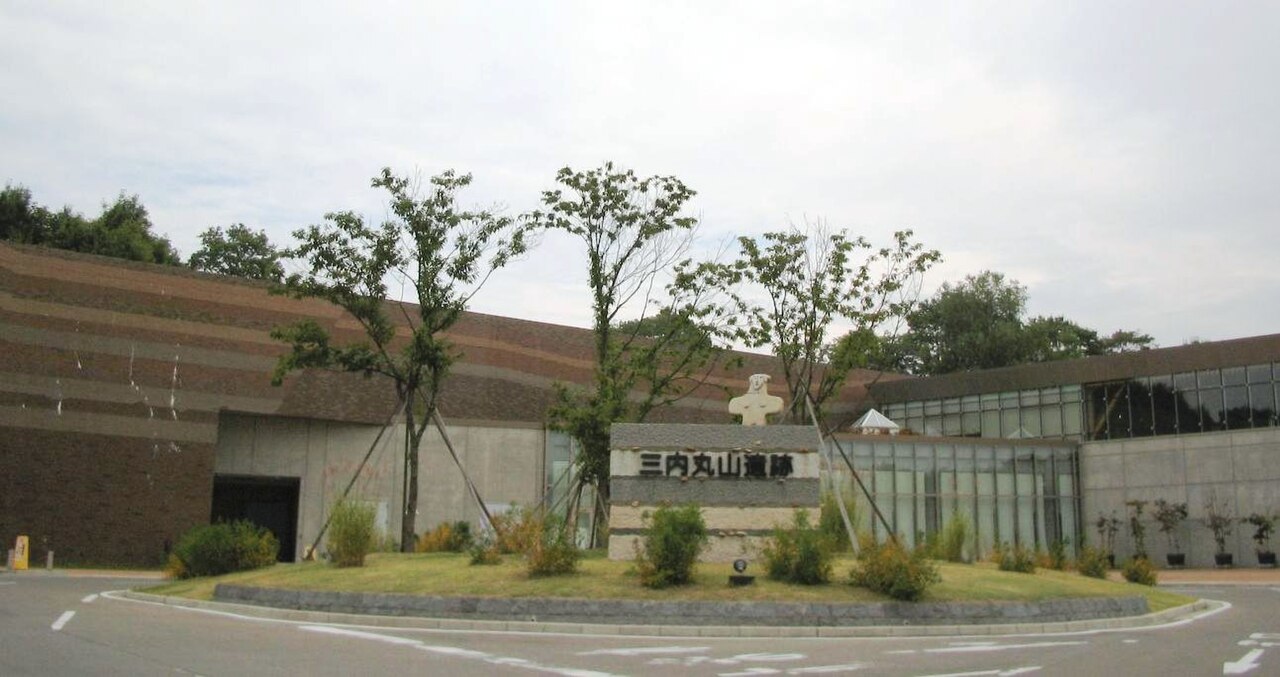
Six World Heritage properties lie within 400 kilometres of the Jomon Prehistoric Sites in Northern Japan: Shirakami-Sanchi (34 km), the Sites of Japan’s Meiji Industrial Revolution (103 km), Hiraizumi (134 km), Shiretoko (288 km), the Sado Island Gold Mines (300 km) and the Shrines and Temples of Nikko (390 km). The Jomon properties themselves, inscribed in 2021, are a serial cultural listing of 17 archaeological sites that record more than 10,000 years of sedentary hunter-fisher-gatherer life.
The World Heritage sites within reach of the Jomon sites
The distances below are straight lines between the reference points that UNESCO publishes for each property, measured to the nearest component of a serial site. They tell you what is close. They do not tell you how long the road takes, which depends on the season and the route.
| Site | Country | Distance | Inscribed | Type |
|---|---|---|---|---|
| Shirakami-Sanchi | Japan | 34 km | 1993 | Natural |
| Sites of Japan’s Meiji Industrial Revolution: Iron and Steel, Shipbuilding and Coal Mining | Japan | 103 km | 2015 | Cultural |
| Hiraizumi – Temples, Gardens and Archaeological Sites Representing the Buddhist Pure Land | Japan | 134 km | 2011 | Cultural |
| Shiretoko | Japan | 288 km | 2005 | Natural |
| Sado Island Gold Mines | Japan | 300 km | 2024 | Cultural |
| Shrines and Temples of Nikko | Japan | 390 km | 1999 | Cultural |
Read together, the nearest sites mark two very different ways of living in northern Japan. The Jomon properties preserve a society that fed itself for millennia without farming, while the Meiji Industrial Revolution sites record Japan’s rapid shift to iron, steel and shipbuilding from the middle of the 19th century. Between them in time sits Hiraizumi, a Buddhist administrative centre of the 11th and 12th centuries that rivalled Kyoto. Shirakami-Sanchi, just 34 km away, protects the same cool-temperate beech forest environment that supplied the Jomon people with nuts and timber.
Sedentism without agriculture
The Jomon people began to settle in one place about 15,000 years ago. The first sign was pottery; later came more permanent dwellings, ritual sites and the year-round use of nearby resources. What makes the sites exceptional is that this sedentary life continued for more than 10,000 years, from about 13,000 BCE to 400 BCE, without the communities ever adopting an agrarian way of life. They adapted to warming and cooling climates and to the marine transgressions and regressions that came with them, but they did not significantly alter the land as farming societies did.
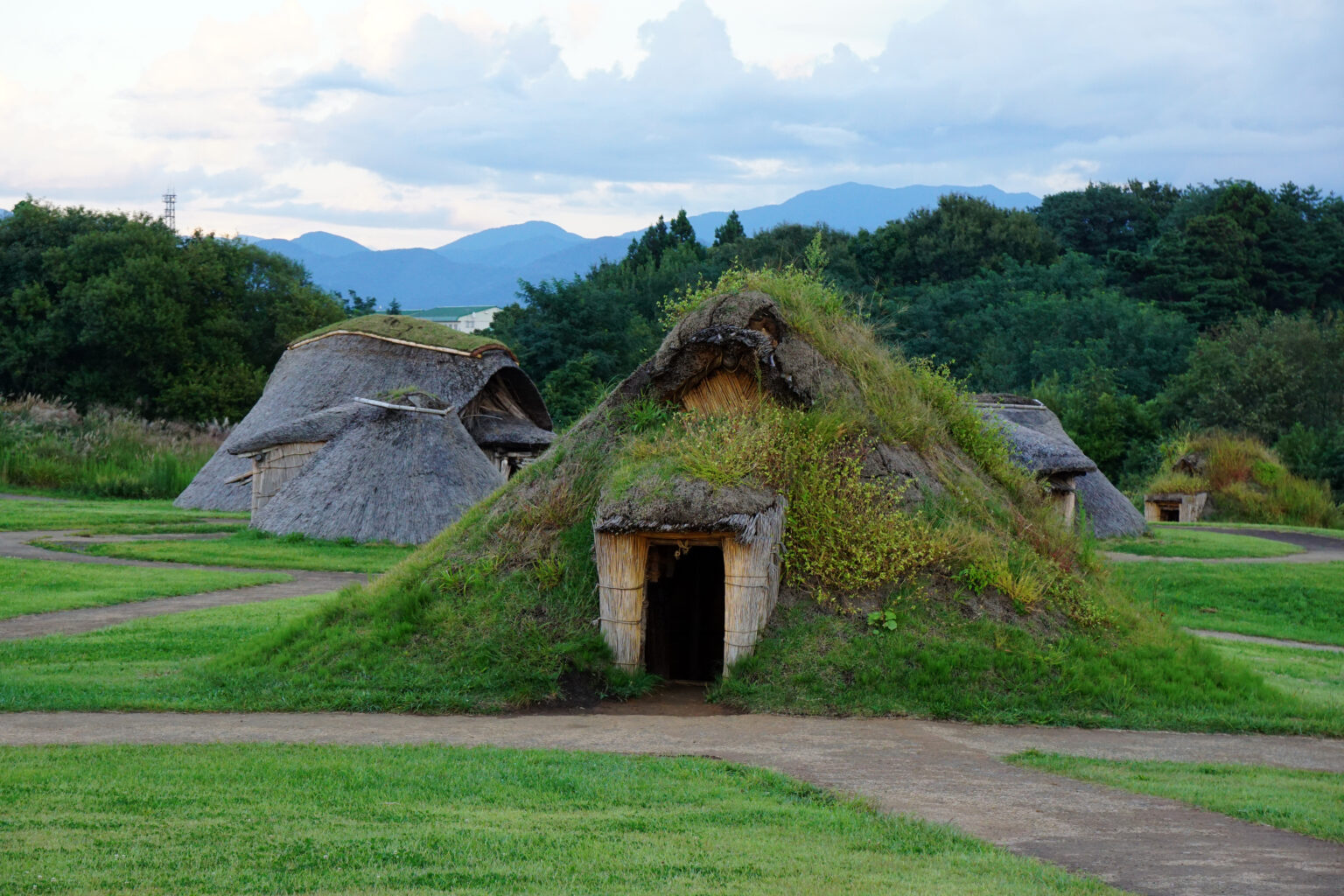
This long record forced archaeologists to rethink a once-common assumption: that mobile hunter-gatherers and sedentary agriculturalists are mutually exclusive stages of human social evolution. The Jomon culture shows that a settled, complex society could be built on hunting, fishing and gathering alone.
A landscape of settlements, burials and stone circles
The serial property spreads across southern Hokkaido and northern Tohoku, in Hokkaido, Aomori, Iwate and Akita prefectures. The 17 components sit in mountains, hills, plains and lowlands, beside inner bays, lakes and rivers. The distribution reflects deliberate choices: settlements were placed near rivers where fish swam upstream, near tidelands where brackish shellfish could be gathered, and near stands of nut-bearing trees where nuts and berries could be collected.
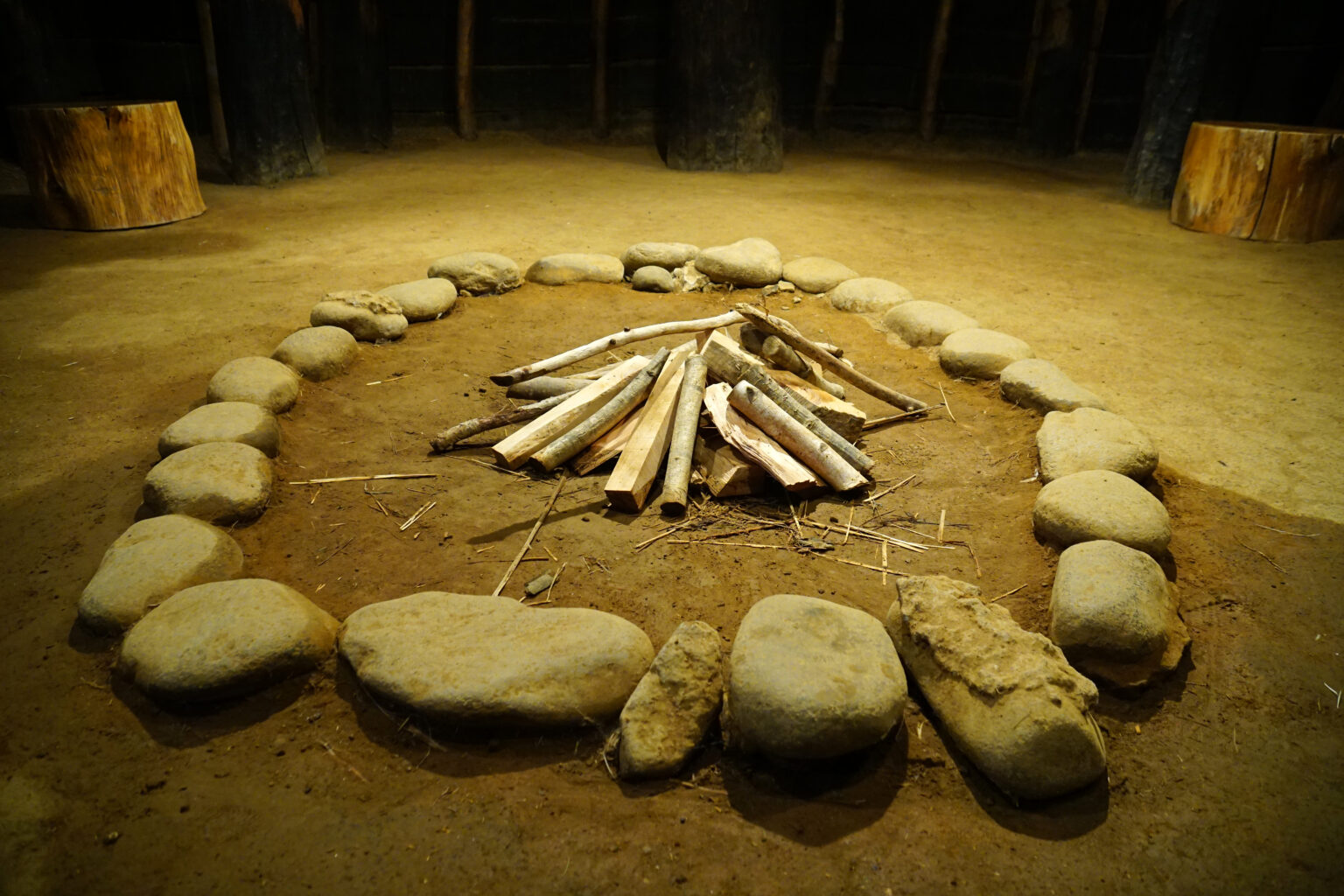
The sites record a sequence of settlement forms that runs from the emergence of sedentism to its maturity. Early stages include the appearance of separate residential and burial areas. Later stages show diversified settlement facilities, hub settlements with ritual places, and finally the separation of ritual centres and cemeteries from settlements. Large stone circles, some reaching diameters of more than 50 metres, survive above ground as the most visible monuments of this process.
Most excavated features have been recorded and then reburied under a protective layer of soil, with a root screen added to prevent root intrusion. What visitors see at many sites are the life-size interpretive models built by local authorities to explain features that must remain buried.
The material culture of Jomon spirituality
Spiritual life began early in the period. The Jomon people made graves, ritual deposits, artificial earthen mounds and stone circles that were probably used for rituals and ceremonies, creating a social bond across generations and between settlements. That spirituality was also made tangible in objects: lacquered pots, clay tablets bearing the impressions of feet, and the goggle-eyed dogu figurines that have become the best-known Jomon artefacts.
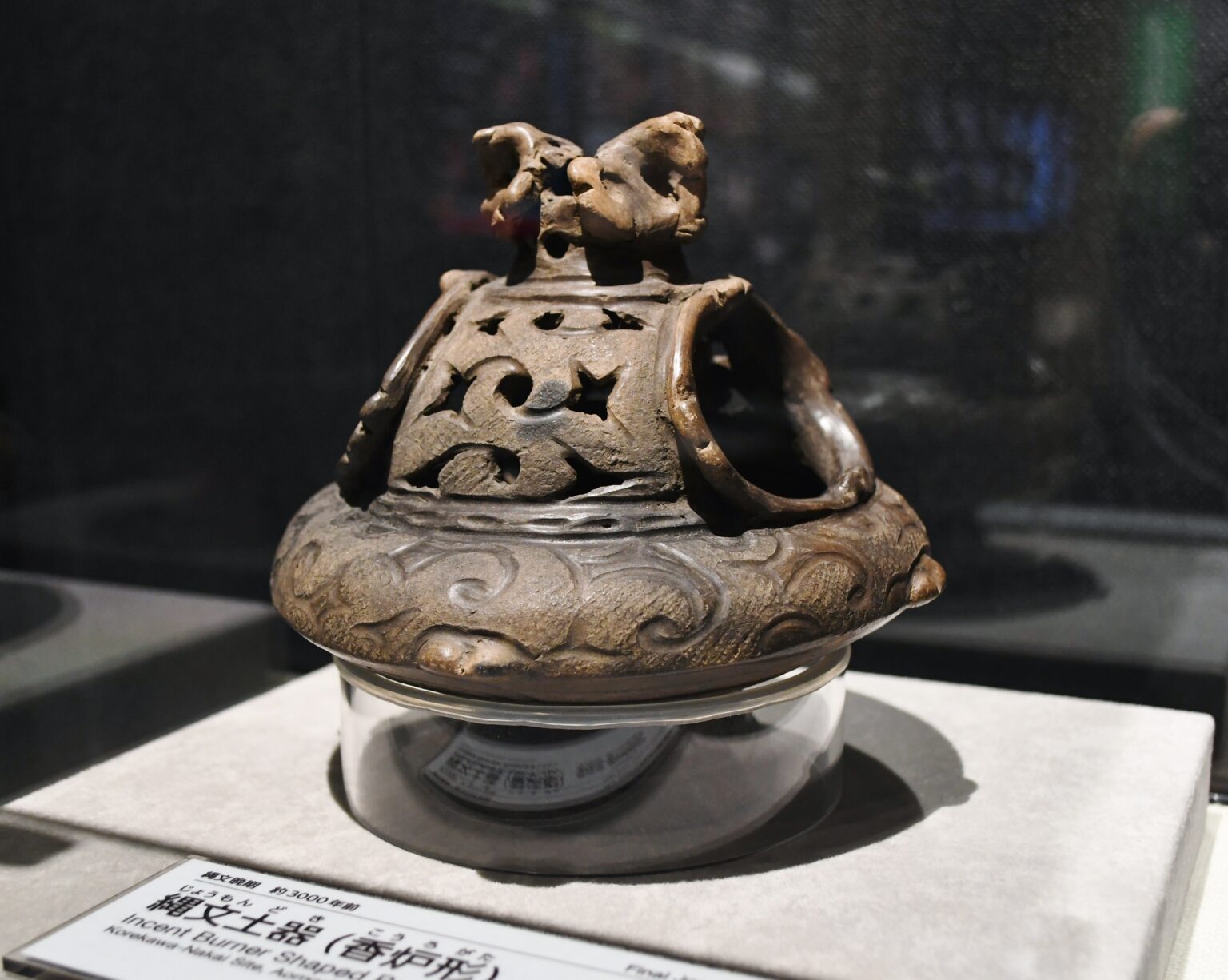
Pottery was central from the start. Fragments found at the Odai Yamamoto component site have been carbon dated to about 13,000 BCE, making them among the oldest known in the world and thousands of years earlier than pottery in Europe or the Near East. The name “Jomon” itself comes from the cord-markings that characterise typical earthenware of the period, though the earliest Odai Yamamoto fragments have no patterning.
Frequently Asked Questions
Which UNESCO World Heritage sites are near the Jomon Prehistoric Sites in Northern Japan?
Shirakami-Sanchi is 34 km away in a straight line, the Sites of Japan’s Meiji Industrial Revolution 103 km and Hiraizumi 134 km. Further out are Shiretoko (288 km), the Sado Island Gold Mines (300 km) and the Shrines and Temples of Nikko (390 km).
When were the Jomon Prehistoric Sites inscribed on the World Heritage List?
In 2021, under criteria (iii) and (v): for exceptional testimony to a rare prehistoric sedentary hunter-fisher-gatherer society with a complex spiritual culture, and for an outstanding example of settlement and land-use from the emergence to the maturity of sedentism.
How many sites make up the Jomon World Heritage property?
Seventeen archaeological sites, spread across the southern part of Hokkaido Island and the northern Tohoku region in Hokkaido, Aomori, Iwate and Akita prefectures. Six component parts are in Hokkaido and the remainder in northern Honshu.
What are the goggle-eyed dogu figurines?
Clay figurines found at Jomon sites that probably had a ritual or ceremonial function. UNESCO describes them as among the tangible expressions of Jomon spirituality, alongside lacquered pots and clay tablets with the impression of feet.
Sources
- UNESCO World Heritage Centre — Jomon Prehistoric Sites in Northern Japan (inscribed 2021). https://whc.unesco.org/en/list/1632/
- UNESCO World Heritage Centre — Shirakami-Sanchi (inscribed 1993). https://whc.unesco.org/en/list/663/
- UNESCO World Heritage Centre — Sites of Japan’s Meiji Industrial Revolution: Iron and Steel, Shipbuilding and Coal Mining (inscribed 2015). https://whc.unesco.org/en/list/1484/
- UNESCO World Heritage Centre — Hiraizumi – Temples, Gardens and Archaeological Sites Representing the Buddhist Pure Land (inscribed 2011). https://whc.unesco.org/en/list/1277/
- Official website — World Heritage Jomon Prehistoric Sites in Northern Japan. https://jomon-japan.jp/en/
- Official website — Summary of each archaeological site, Jomon Japan. https://jomon-japan.jp/en/visit/summary-of-each-archaeological-site
Spotted an error? Write to [email protected] and we correct it the same day.