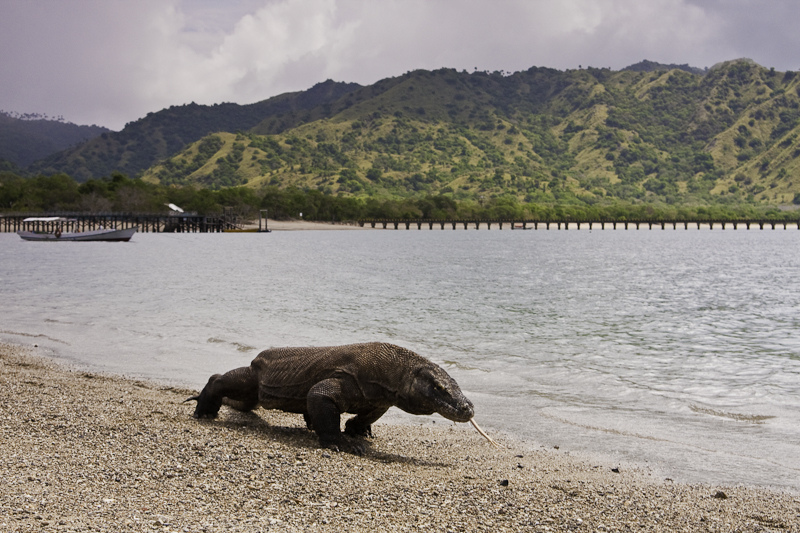
Komodo National Park has no World Heritage neighbours in the usual sense. The nearest inscribed property is the Cultural Landscape of Bali Province, 451 km away in a straight line, and the next, Sangiran in central Java, is 963 km off. The park itself is a group of volcanic islands between Sumbawa and Flores, listed in 1991 for its scenery and for the Komodo dragon, the largest living lizard.
The nearest World Heritage sites, and how far they really are
These are the closest properties on UNESCO’s list, not close ones. The distances are straight lines between the reference points UNESCO publishes for each property, not road, ferry or flight times. Every Indonesian site below lies on another island, so any real journey crosses open water.
| Site | Country | Distance | Inscribed | Type |
|---|---|---|---|---|
| Cultural Landscape of Bali Province: the Subak System | Indonesia | 451 km | 2012 | Cultural |
| Sangiran Early Man Site | Indonesia | 963 km | 1996 | Cultural |
| Prambanan Temple Compounds | Indonesia | 994 km | 1991 | Cultural |
| The Cosmological Axis of Yogyakarta and its Historic Landmarks | Indonesia | 1,008 km | 2023 | Cultural |
| Borobudur Temple Compounds | Indonesia | 1,025 km | 1991 | Cultural |
| Murujuga Cultural Landscape | Australia | 1,371 km | 2025 | Cultural |
Komodo is the only natural property in the table; the other five are cultural. What they share is Indonesia’s long human story, from the one and a half million years of habitation at Sangiran to the Buddhist and Hindu monuments of Java and the water temples of Bali. Komodo records the other half of the story: the natural history of a region UNESCO places on the dividing line between Australian and Sunda ecosystems.
Why does a lizard justify a World Heritage listing?
UNESCO inscribed Komodo under two natural criteria, (vii) for scenery and (x) for biodiversity. The scenery argument is contrast: dry savannah hillsides, pockets of thorny green vegetation, white beaches and blue water over coral, a counterpoint to the lush forests most people associate with Indonesia.
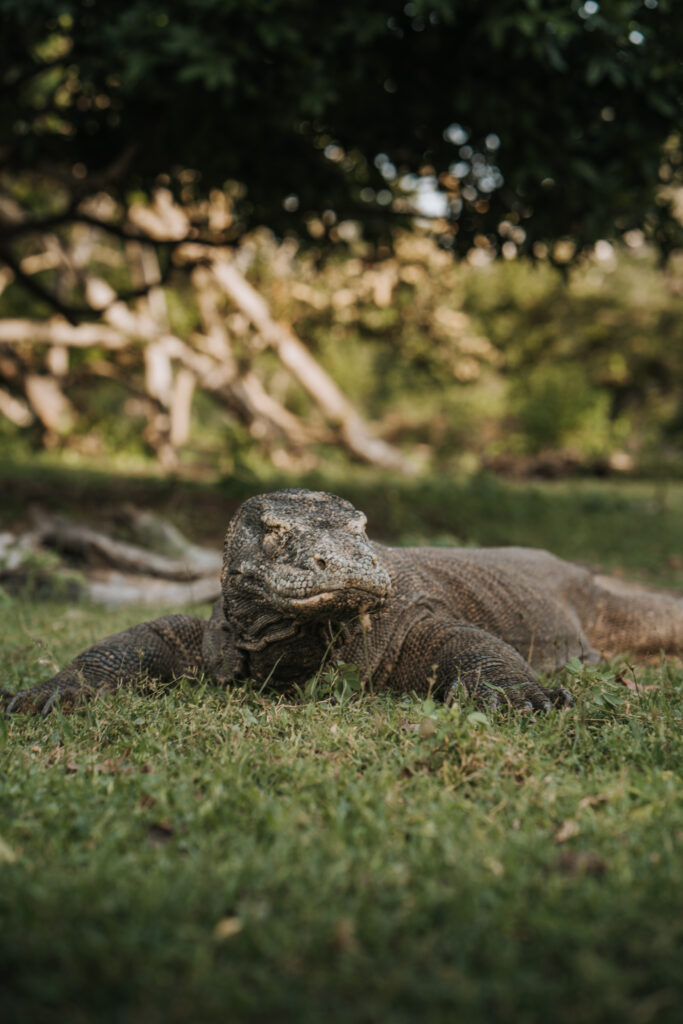
The biodiversity argument rests on Varanus komodoensis. UNESCO describes it as the largest and heaviest of the world’s lizards, averaging two to three metres in length, and the last representative of a relic population of large lizards that once lived across Indonesia and Australia. The wild population is estimated at around 5,700 individuals, spread over Komodo, Rinca, Gili Motong and some coastal regions of western and northern Flores.
The park is geologically restless too. It lies at the juncture of two continental plates, which UNESCO calls the “shatter belt” of the Wallacea region. Its three main islands, Rinca, Komodo and Padar, and the many smaller ones are all of volcanic origin.
What else lives in the park, on land and under the water?
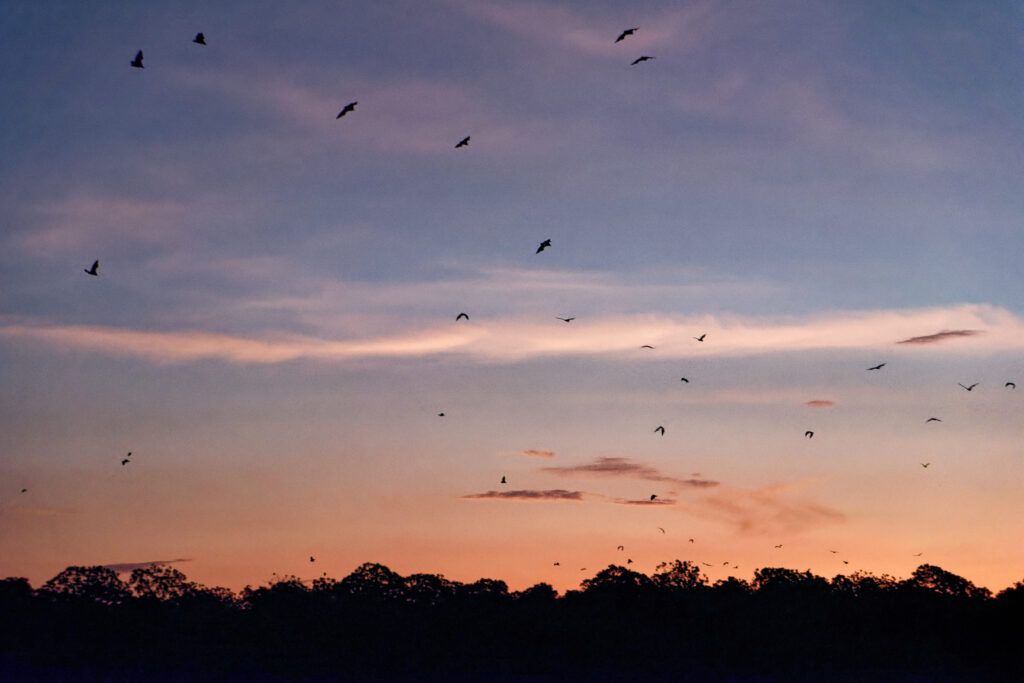
The dragon dominates the story, but UNESCO’s list of the park’s other residents is specific. On land it records seven terrestrial mammal species, among them an endemic rat (Rattus rintjanus) and the crab-eating macaque, and 72 bird species, including the lesser sulphur-crested cockatoo and the orange-footed scrub fowl.
The sea is just as notable. UNESCO says the fringing coral reefs are diverse and luxuriant, thanks to clear water, strong sunlight and rapid exchange of nutrient-rich water from deeper parts of the archipelago. Marine mammals include the blue whale and the sperm whale, ten species of dolphin and the dugong, along with five species of sea turtle. Those same strong currents are what draw the larger animals in.
Is the park in good health today?
The picture is mixed, and the sources are candid about it. UNESCO’s text names illegal fishing and poaching as the main threats and describes patrols on land and at sea. National protection dates back to 1938, with a ministerial decree in March 1980 creating a 72,000 ha national park, later extended to 219,322 ha in 1984.
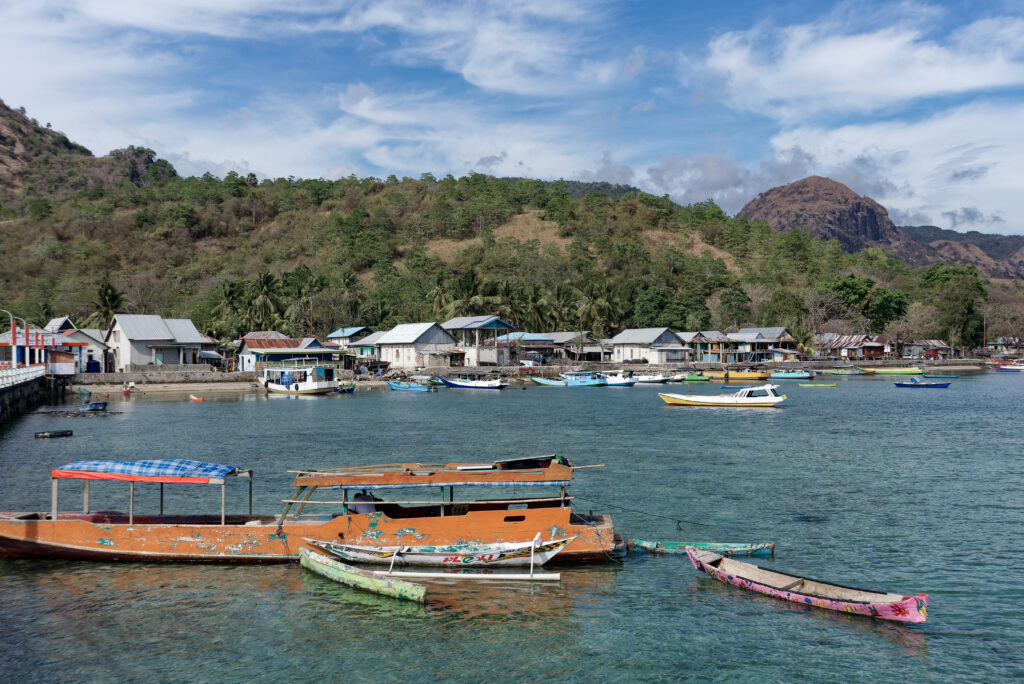
IUCN’s World Heritage Outlook, finalised on 11 October 2025, rates the conservation outlook as “significant concern”. The Komodo dragon was listed as Endangered on the IUCN Red List in 2021, yet the Outlook notes its population status has been stable since 2018 with patrolling in place. The main worry now is planned tourism expansion, and the 25-year management plan expired in 2025, which the assessors call a chance to review threats and plan afresh.
Frequently Asked Questions
Which UNESCO World Heritage sites are near Komodo National Park?
None is truly close. The nearest is the Cultural Landscape of Bali Province, 451 km away in a straight line, followed by Sangiran (963 km) and Prambanan (994 km) in Java. All are on other islands, so reaching them means crossing water.
Is the Komodo dragon endangered?
Yes. The IUCN World Heritage Outlook states that the Komodo dragon was listed as Endangered on the IUCN Red List in 2021. The same assessment adds that the dragon’s population status within the park has remained stable since 2018, with monitoring and patrolling in place.
How many Komodo dragons are there in the park?
UNESCO gives an estimated population of around 5,700 individuals. They live on the islands of Komodo, Rinca and Gili Motong, plus some coastal regions of western and northern Flores. UNESCO notes that the park holds the majority of the world’s areas where wild dragons still exist.
When did Komodo National Park become a World Heritage site?
It was inscribed in 1991 under criteria (vii) and (x), for its scenery and its biodiversity. The park covers 219,322 hectares of islands and sea. It was first declared a national park in March 1980, covering 72,000 hectares.
Sources
- UNESCO World Heritage Centre, Komodo National Park (inscribed 1991). https://whc.unesco.org/en/list/609/
- IUCN World Heritage Outlook, Komodo National Park, 2025 assessment. https://worldheritageoutlook.iucn.org/explore-sites/komodo-national-park
- UNESCO World Heritage Centre, Cultural Landscape of Bali Province: the Subak System (inscribed 2012). https://whc.unesco.org/en/list/1194/
- UNESCO World Heritage Centre, Sangiran Early Man Site (inscribed 1996). https://whc.unesco.org/en/list/593/
- UNESCO World Heritage Centre, Murujuga Cultural Landscape (inscribed 2025). https://whc.unesco.org/en/list/1709/
Spotted an error? Write to the editors and we correct it the same day.