Nigeria has two UNESCO World Heritage Sites accessible from Abuja: the Osun-Osogbo Sacred Grove, a Yoruba forest sanctuary 250 km south, and the Sukur Cultural Landscape, a mountain chiefdom of iron-smelting terraces 500 km northeast. From Cultural Heritage Online.
Osun-Osogbo Sacred Grove 250 km south — 3.5 hr by road
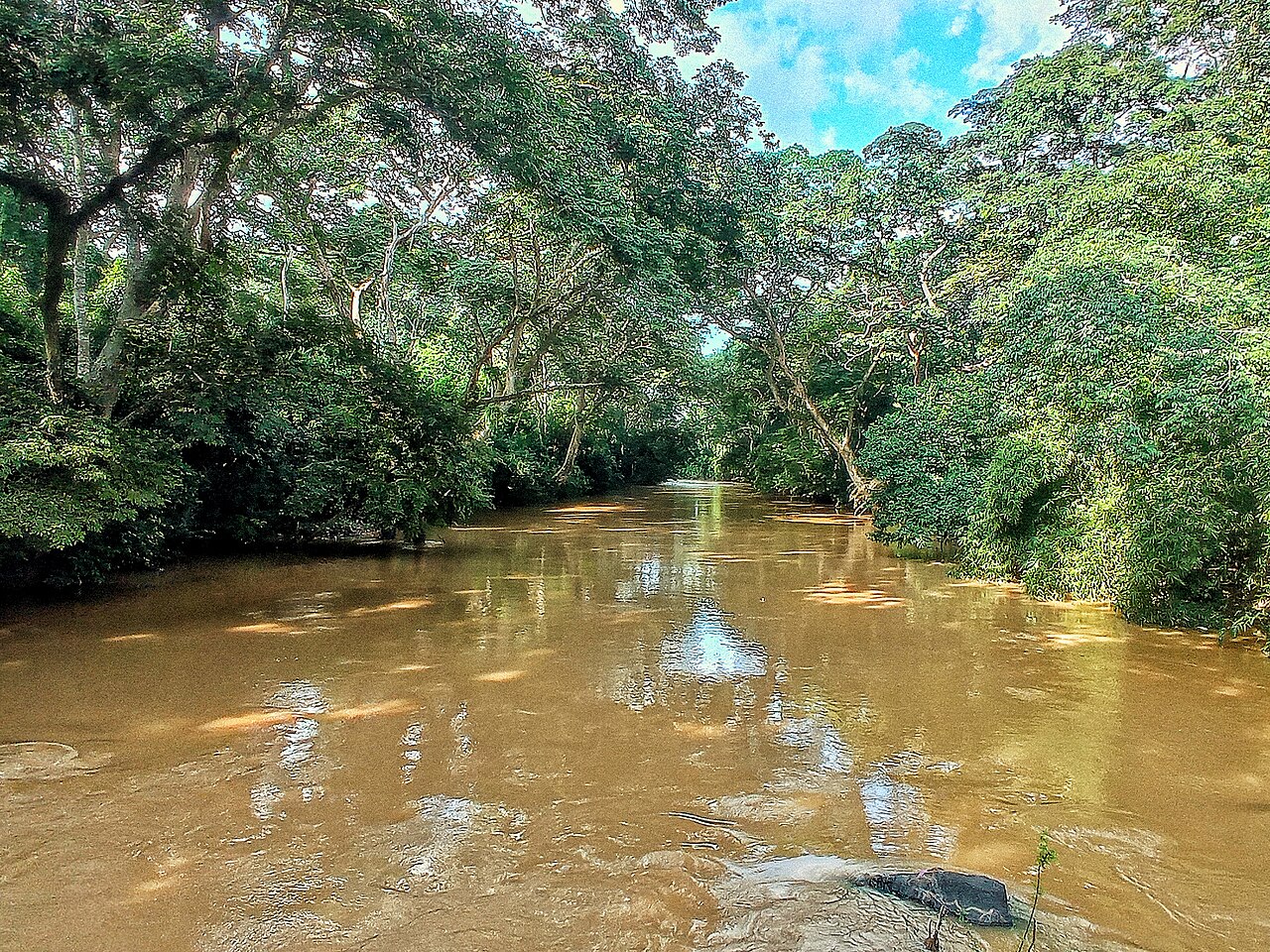
The Osun-Osogbo Sacred Grove occupies approximately 75 hectares of forest along the Osun River at the edge of Osogbo, the capital of Osun State. It is one of the last surviving examples of the sacred groves (igbo orisha) that once surrounded all major Yoruba cities: dense forest areas dedicated to the worship of orishas (Yoruba spiritual beings), left uncleared while the urban settlements expanded around them. The Osun grove is dedicated to Osun, the Yoruba orisha of fertility, water, and women’s concerns, and has been a pilgrimage site for over four centuries.
The grove contains approximately forty shrines and sculptures, several sanctuaries, two suspension bridges over the Osun River, and a royal palace. Many of the sculptures were created or restored in the 1950s through 1990s by the Austrian-born artist Suzanne Wenger (also known as Adunni Olorisa), who came to Osogbo in 1950, converted to the Yoruba spiritual tradition, and spent the remainder of her life (she died in 2009 at age 93) commissioning and co-creating sculptural works in the grove with local artists. The Wenger-era sculptures, made from cement and iron, represent orishas and mythological figures in a style that merges Yoruba iconography with modernist form; they have become integral to the site’s spiritual and aesthetic identity.
The annual Osun-Osogbo Festival, held over two weeks in August, draws hundreds of thousands of pilgrims and visitors from Nigeria and across the Yoruba diaspora worldwide. The climax of the festival is a procession to the river led by the Arugba (the chosen virgin who carries the sacrificial calabash) and the Ataoja (the traditional chief of Osogbo). The festival is a living expression of the Yoruba spiritual tradition and one of the most significant annual religious gatherings in West Africa. UNESCO inscribed the grove in 2005.
Getting there: From Abuja, drive south on the Abuja-Lokoja-Ibadan Expressway (A2/A121) via Lokoja and Oshogbo — approximately 250 km, 3.5–4 hours. Regular intercity buses connect Abuja and Osogbo. Allow: 3–4 hours at the grove; plan a full day with travel. Best for: Yoruba cultural heritage visitors; religious and spiritual landscape travellers; visitors during August for the annual festival.
Sukur Cultural Landscape 500 km northeast — 7 hr by road
The Sukur Cultural Landscape in Adamawa State, northeastern Nigeria, was the first African Cultural Landscape to be inscribed on the UNESCO World Heritage List (1999). Perched on a rocky plateau at approximately 1,000 metres elevation in the Mandara Mountains near the Cameroon border, the Sukur chiefdom encompasses a palace, terraced fields covering the hillsides, a network of ancient paths paved with iron slag, forges, and the remnants of an iron-smelting industry that made Sukur a regional centre of metallurgy and trade for centuries.
The landscape is described as a cultural landscape because it is not a monument or archaeological site but a continuously inhabited human settlement that has maintained its traditional social structure, architecture, and land use into the present. The Hidi (chief) of Sukur continues to reside in the palace and perform traditional functions. The terraces on the Sukur massif, maintained by hand without mechanisation, produce millet and sorghum using farming methods documented over several centuries. The iron-smelting tradition has largely ceased, but the physical remnants of the furnaces and the iron-slag-paved paths remain in place as integrated elements of the living landscape.
Getting there: From Abuja, drive northeast via Keffi, Lafia, and Yola (Adamawa State capital) to the Madagali area — approximately 500 km, 7–8 hours. 4WD required for the ascent to Sukur. Allow: Overnight stay in the area necessary; the ascent and exploration of the landscape requires a full day. Best for: Cultural landscape and African heritage specialists; adventurous travellers.
Frequently Asked Questions
How many UNESCO World Heritage Sites does Nigeria have?
Two: the Osun-Osogbo Sacred Grove (inscribed 2005) and the Sukur Cultural Landscape (inscribed 1999). Both are in regions accessible from Abuja, though at considerable distance — 250 km south (Osogbo) and 500 km northeast (Sukur). Nigeria has a Tentative List with additional proposed sites including Sungbo’s Eredo earthwork and Ife’s sacred groves.
Who was Suzanne Wenger and why is she significant for the Osun-Osogbo Grove?
Suzanne Wenger (1915–2009) was an Austrian-born artist who arrived in Nigeria in 1950, converted to the Yoruba spiritual tradition, and spent the rest of her life working in Osogbo. She became known as Adunni Olorisa and, from the late 1950s onward, commissioned and co-created cement and iron sculptures in the sacred grove with Yoruba artists. Her work is considered a significant contribution to contemporary African religious art and is now integral to the grove’s inscribed heritage value.
What is the Osun-Osogbo Festival and when does it take place?
The Osun-Osogbo Festival is an annual Yoruba spiritual gathering held over two weeks in August in Osogbo, Osun State. It centres on the worship of Osun, the Yoruba orisha of fertility and water. The climax is a procession to the sacred grove and the river led by the Arugba (the virgin who carries the sacrificial calabash) and the Ataoja of Osogbo. The festival draws hundreds of thousands of pilgrims and is the largest annual Yoruba religious gathering.
Why is Sukur called a cultural landscape rather than an archaeological site?
Because it is a continuously inhabited, functioning human settlement, not an abandoned site. The Sukur chiefdom on the Mandara Mountains plateau has maintained its traditional social structure (with a resident Hidi, or chief), agricultural terraces still actively farmed, and traditional paths still in use. UNESCO classifies it as a cultural landscape — a category that recognises the combined work of nature and human culture over time — rather than a ruins site or monument.
Sources
- S1 — Falola, Toyin, and Matthew M. Heaton. A History of Nigeria. Cambridge University Press, 2008. ISBN 978-0-521-68157-5.
- S2 — Blier, Suzanne Preston. Royal Arts of Africa: The Majesty of Form. Harry N. Abrams, 1998. ISBN 978-0-8109-2705-6.
Spotted an error? Write to editorial@culturalheritageonline.com and we correct it the same day.