

The landscape of bubbles: chalk, vines, and 250 km of cellars
The Champagne wine region of northeastern France is, at first sight, an unremarkable landscape: low chalk hills rolling under wide skies, covered with rows of vines that turn gold in October. Below the surface, however, lies one of the largest human-made underground environments in Europe: 250 km of chalk tunnels and cellars (crayères) excavated beneath Reims and Épernay, where 200 million bottles of champagne rest in temperature-controlled darkness at 10–12°C, ageing on their lees in the method devised three centuries ago. The UNESCO inscription connects these cellars to the hillsides above and the grand maisons of the avenue — a vertical landscape of terroir, technology, and tradition.
UNESCO inscription: the complete champagne landscape
Inscribed in 2015, the “Champagne Hillsides, Houses and Cellars” (Coteaux, Maisons et Caves de Champagne) was recognised for the exceptional integration of three elements: the Coteaux champenois (the chalk hillside vineyards, particularly the historic slopes of Hautvillers, Aÿ, and Mareuil-sur-Aÿ); the Avenue de Champagne and Fort Chabrol in Épernay (the grand boulevard lined with champagne house headquarters, with 100 km of cellars beneath it); and the hillsides, avenue, and chalk crayères of Saint-Nicaise in Reims. The three components together form the complete story of how champagne is made, aged, and marketed.
Dom Pérignon and the invention of the method
The Benedictine monk Dom Pierre Pérignon (1638–1715), cellar master at the Abbey of Hautvillers overlooking the Marne valley, is credited with systematising the production of sparkling wine in the late 17th century. His contributions included the use of cork stoppers to trap carbon dioxide, the blending of grapes from different vineyards to create consistent house styles, and the recognition that certain hillside exposures consistently produced superior grapes. The Abbey of Hautvillers, still standing on its hill above the vine-covered slopes, marks the beginning of the modern champagne industry.
The Avenue de Champagne: the most expensive street in France
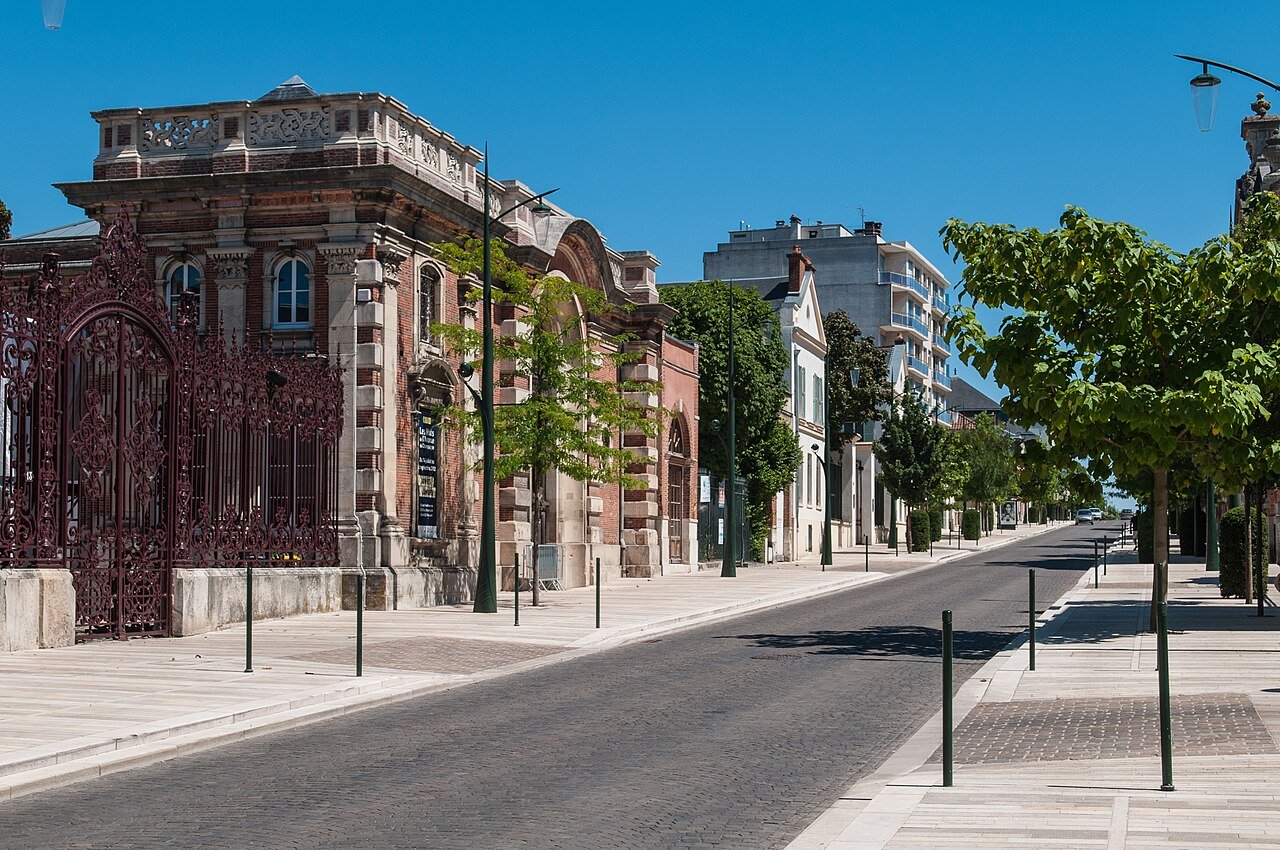
Épernay’s Avenue de Champagne is a single kilometre of 19th-century French architecture — the neo-classical and neo-Renaissance headquarters of Moët & Chandon, Perrier-Jouët, Pol Roger, Mercier, and a dozen other champagne houses. Each building stands above a network of cellars extending for kilometres beneath the town and the surrounding vineyards. Moët & Chandon alone has 28 km of cellars holding 90 million bottles; the entire Avenue is estimated to sit above 100 km of underground passages containing over 200 million bottles ageing at any given time.
The chalk geology: why here and nowhere else
The Champagne appellation’s geographical boundaries are defined not by tradition or politics but by geology: the presence of Cretaceous chalk (belemnite chalk, 70–80 million years old) beneath a thin layer of topsoil. The chalk serves as both substratum and regulator: it drains freely, preventing waterlogging; it reflects light and warmth upward to the vines; it releases minerals that contribute to the wine’s characteristic “chalky” minerality; and it maintains a constant underground temperature ideal for ageing. Move 10 km outside the appellation boundaries and the geology changes — and with it, the possibility of making genuine champagne.
The méthode champenoise: from still wine to bubbles
Champagne production requires two fermentations. The first, conducted in tank or barrel, produces a still base wine of moderate alcohol. The second — triggered by adding sugar and yeast before sealing the bottle — produces carbon dioxide trapped in solution, creating the characteristic mousse and the fine persistent bubbles. The lees (dead yeast cells) remain in the bottle for a minimum of 15 months (36 months for vintage champagne) and their autolysis contributes the biscuity, brioche-like complexity that distinguishes champagne from other sparkling wines. The méthode champenoise may only legally be named on bottles made within the Champagne appellation.
The three grape varieties: Chardonnay, Pinot Noir, Pinot Meunier
Champagne is made from three grape varieties, each contributing different qualities. Chardonnay provides freshness, citrus character, and aging potential; it dominates the Côte des Blancs south of Épernay and produces the “Blanc de Blancs” style. Pinot Noir contributes body, red fruit character, and structure; it dominates the Montagne de Reims plateau. Pinot Meunier is the workhorse variety of the Marne valley, contributing fruit and approachability in youth. The art of champagne making lies largely in blending these three varieties — and up to 60 reserve vintages from previous years — to create a consistent house style year after year.
Visiting the Champagne UNESCO landscape
Reims is 45 minutes from Paris by TGV; Épernay is 40 minutes from Paris by direct train. The Avenue de Champagne maisons (Moët, Mercier, Castellane) offer guided tours including cellars and tastings; advance booking is recommended year-round and essential in summer. The Maison du Tourisme in Épernay coordinates the “Route Touristique du Champagne,” a 200 km marked driving route through the vineyards. The best time to visit for the landscape is late September–mid-October, when the vendange (harvest) is underway and the hillsides are golden.
Find it on the map
See this place and what’s around it →
📷 Become a Cultural Heritage Online photographer
Share your photos of places: they stay published under your name as the author. The more they're seen, the more you get noticed — and soon a contest will reward the most appreciated photos.
Log in or sign up free to add a photo