The nearest UNESCO World Heritage Site to Novosibirsk is the Golden Mountains of Altai, a vast protected landscape inscribed in 1998 for its extraordinary altitudinal diversity — from semi-arid steppe to glaciated peaks — and its populations of snow leopard and Altai argali. The drive south along the Chuysky Trakt is itself one of the great road journeys in Asia. From Cultural Heritage Online.
Golden Mountains of Altai (1998) 350–700 km from Novosibirsk · 4.5–10 hr by road
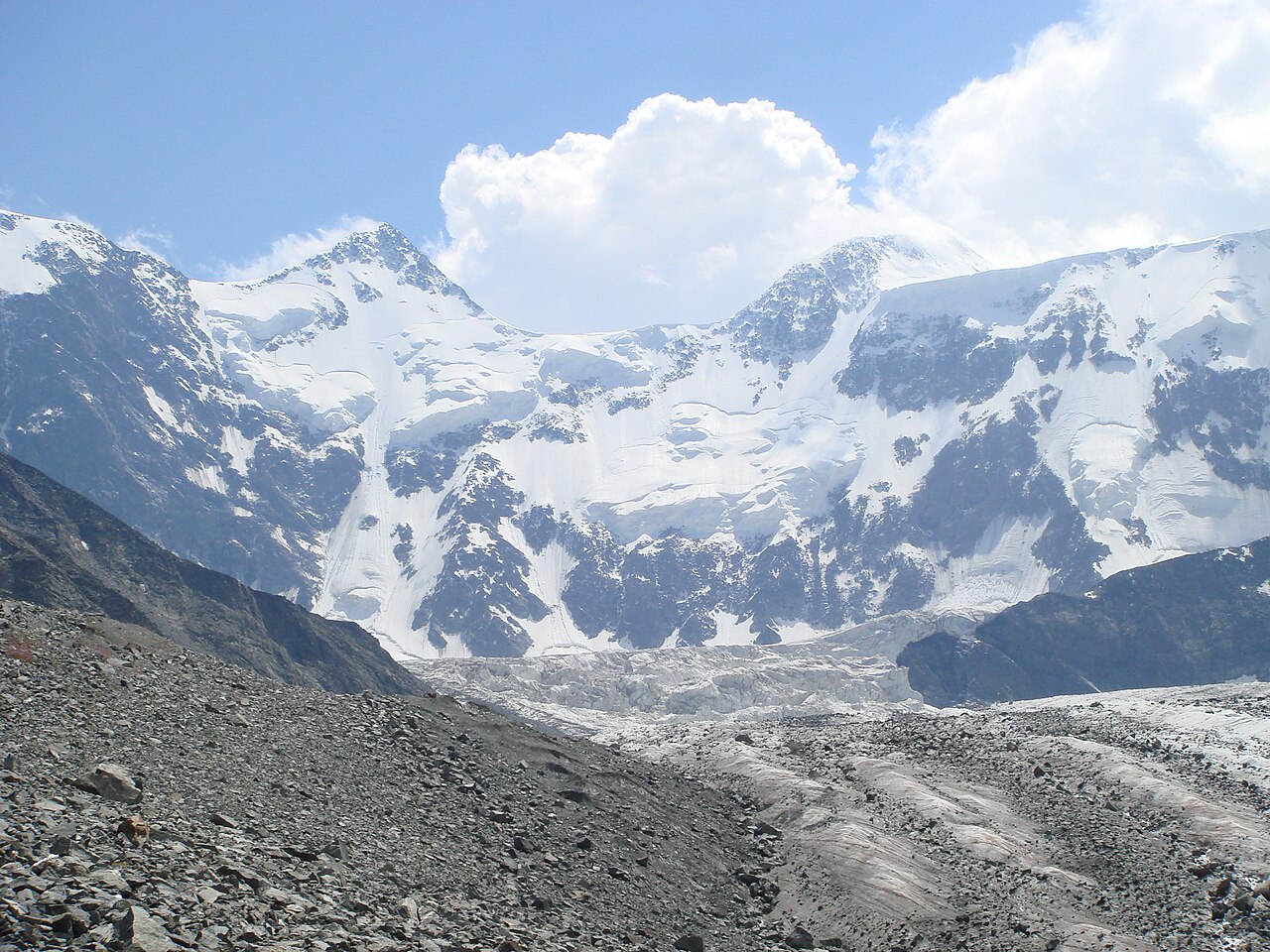
The Golden Mountains of Altai is not a single park but a constellation of three protected areas in the Altai Republic: the Altaisky Biosphere Reserve in the east, the Katunsky Biosphere Reserve centred on Mount Belukha (4,506 m, the highest point in Siberia), and the Ukok Quiet Zone on the remote plateau near the Mongolian and Chinese borders. Together they were inscribed in 1998 for showcasing one of the most complete altitudinal sequences on earth — from feather-grass steppe through cedar and fir taiga to subalpine meadow and permanent ice — compressed within a single mountain system.
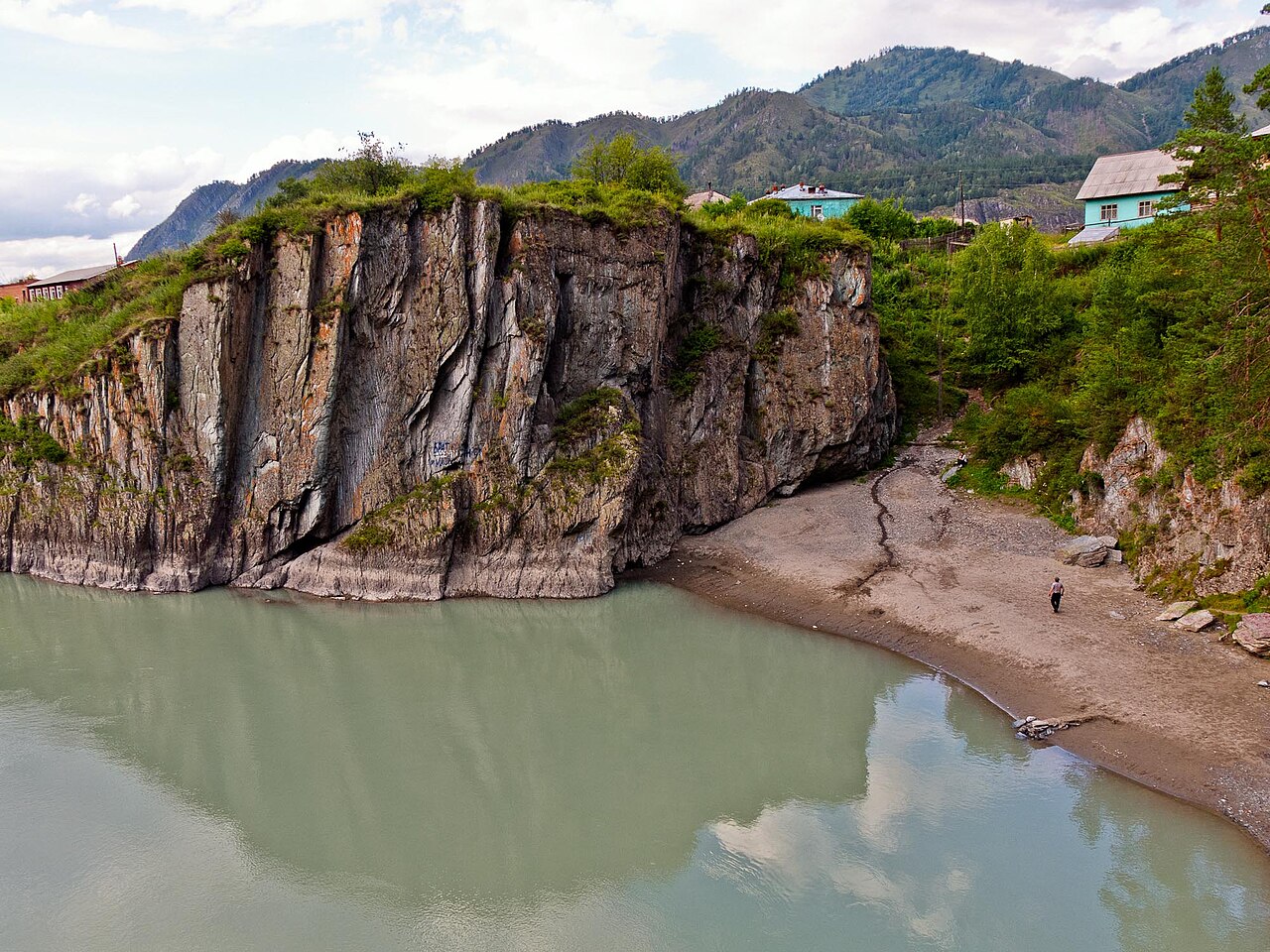
The ecological argument for inscription rests as much on what lives here as on what grows. Snow leopards cross the high passes above 2,500 metres; Altai argali, the world’s largest wild sheep, graze the open scree slopes; golden eagles ride thermals above the glaciated cirques. The Katun River rises from the Gebler Glacier on Belukha’s flanks and cuts 700 kilometres northwest before joining the Ob, its colour shifting from milky aquamarine in spring to deep green by August. Rafting the upper Katun between Tyungur and Ust-Koksa is one of the standard ways to move through the inscribed zone without a high-clearance vehicle.
The road corridor connecting Novosibirsk to the inscribed areas is the M52, known historically as the Chuysky Trakt. It runs south from the city through Biysk — the practical gateway, 350 km and roughly 4.5 hours away — then continues through Gorno-Altaisk and up the Katun valley. The section between Ongudai and Aktash, where the valley narrows and cliff faces overhang the tarmac, appears on several lists of the world’s most scenic highways. From Aktash, a rougher track leads southeast toward the Ukok Plateau, an additional 250 km requiring genuine off-road capability.
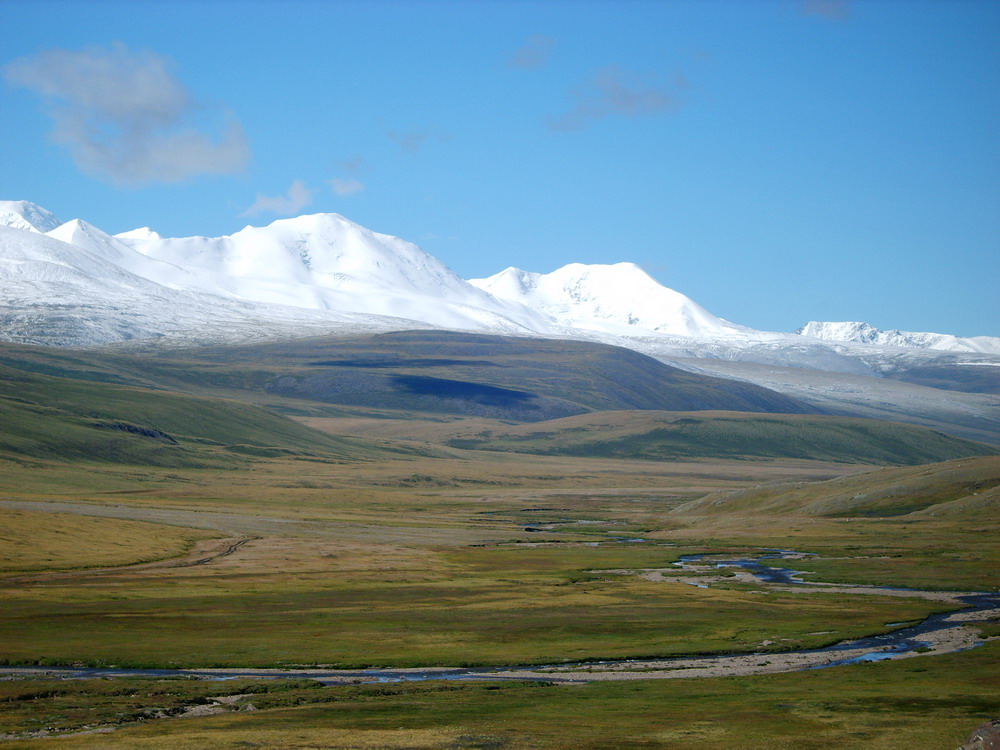
The Ukok Plateau sits at 2,200 metres above sea level and is almost entirely treeless — a cold, windswept tableland that feels more Central Asian steppe than Siberian mountain. In 1993 archaeologists from the Novosibirsk Institute of Archaeology excavated a 2,500-year-old burial kurgan and found the naturally frozen body of a young Pazyryk woman, tattooed and dressed for burial, now kept at the Anokhin National Museum in Gorno-Altaisk. Local Altai people call her Ak-Kadyn, the White Lady, and regard the plateau as sacred ground; access to the Quiet Zone requires a permit from the republic’s nature protection agency.
Getting there: Drive or take a bus from Novosibirsk to Biysk (350 km, 4.5 hr), then continue south on the M52 through Gorno-Altaisk. For Katunsky Reserve and Belukha, base yourself at Tyungur (580 km from Novosibirsk, ~8 hr). For the Ukok Plateau, continue to Kosh-Agach and hire a 4WD locally; expect a full day from Novosibirsk. Marshrutka buses run Novosibirsk–Gorno-Altaisk daily. Allow: Minimum 3 days for the Katun valley; 5–7 days to reach the Ukok Plateau. Best for: Hikers, rafters, photographers, and travellers with a strong interest in Scythian archaeology.
Frequently Asked Questions
How many UNESCO World Heritage Sites are near Novosibirsk?
There is one UNESCO World Heritage Site accessible from Novosibirsk: the Golden Mountains of Altai, inscribed in 1998. It encompasses three protected areas — the Altaisky Biosphere Reserve, the Katunsky Biosphere Reserve, and the Ukok Quiet Zone — distributed across the Altai Republic southeast of the city.
How do you get from Novosibirsk to the Golden Mountains of Altai?
The standard route is the M52 highway (Chuysky Trakt) south from Novosibirsk. The gateway city of Biysk is 350 km away and reachable in about 4.5 hours by car or by daily bus. From Biysk, continue through Gorno-Altaisk into the Katun valley. Most travellers base themselves at Chemal or Ust-Sema for accessible hiking, or at Tyungur for approaches to Mount Belukha. Reaching the Ukok Plateau requires an additional day of off-road driving from Kosh-Agach.
What is the best season to visit the Altai mountains from Novosibirsk?
July and August are the warmest and most accessible months, with wildflowers on the alpine meadows and rafting conditions on the Katun at their best. June brings snow-melt floods on some tracks. September offers spectacular colour — larches turn gold, crowds thin — but high passes may close to non-4WD vehicles by mid-month. The Ukok Plateau is effectively inaccessible from November to May.
Who was the Altai Princess found on the Ukok Plateau?
In 1993, archaeologists from the Siberian Branch of the Russian Academy of Sciences in Novosibirsk excavated a burial mound on the Ukok Plateau and recovered the mummified remains of a young Pazyryk woman, approximately 25 years old, who died around the 5th century BC. Her skin preserved elaborate tattoos of fantastical animals — deer, griffins, and snow leopards — among the finest examples of Scythian body art ever found. Known as the Ice Maiden or Ak-Kadyn (White Lady) in the Altai language, she is displayed at the Anokhin National Museum in Gorno-Altaisk. Indigenous Altai communities consider her reburial a matter of cultural justice, and the site remains a point of ongoing dialogue between archaeologists and local authorities.