

Cities within cities: the béguinage phenomenon
Beginning in the 12th century, a new form of female religious community appeared across the Low Countries: the béguinage (begijnhof). Unlike nuns, béguines took no permanent vows and were free to leave. They lived together in enclosed urban settlements — miniature towns with their own church, gardens, and gates — pursuing a life of prayer, work, and communal care. Thirteen of the finest Flemish examples now carry UNESCO recognition.
UNESCO inscription: thirteen beguinages as one site
Inscribed in 1998, the Flemish Béguinages are celebrated as an outstanding example of a type of settlement that arose from a uniquely medieval movement of women who wished to live a devout life outside the strict structures of conventional monasticism. The thirteen inscribed sites span Bruges, Ghent, Leuven, Mechelen, Diest, Tongeren, and several smaller Flemish towns.
Architecture of quietude: brick, canals, and inner courts
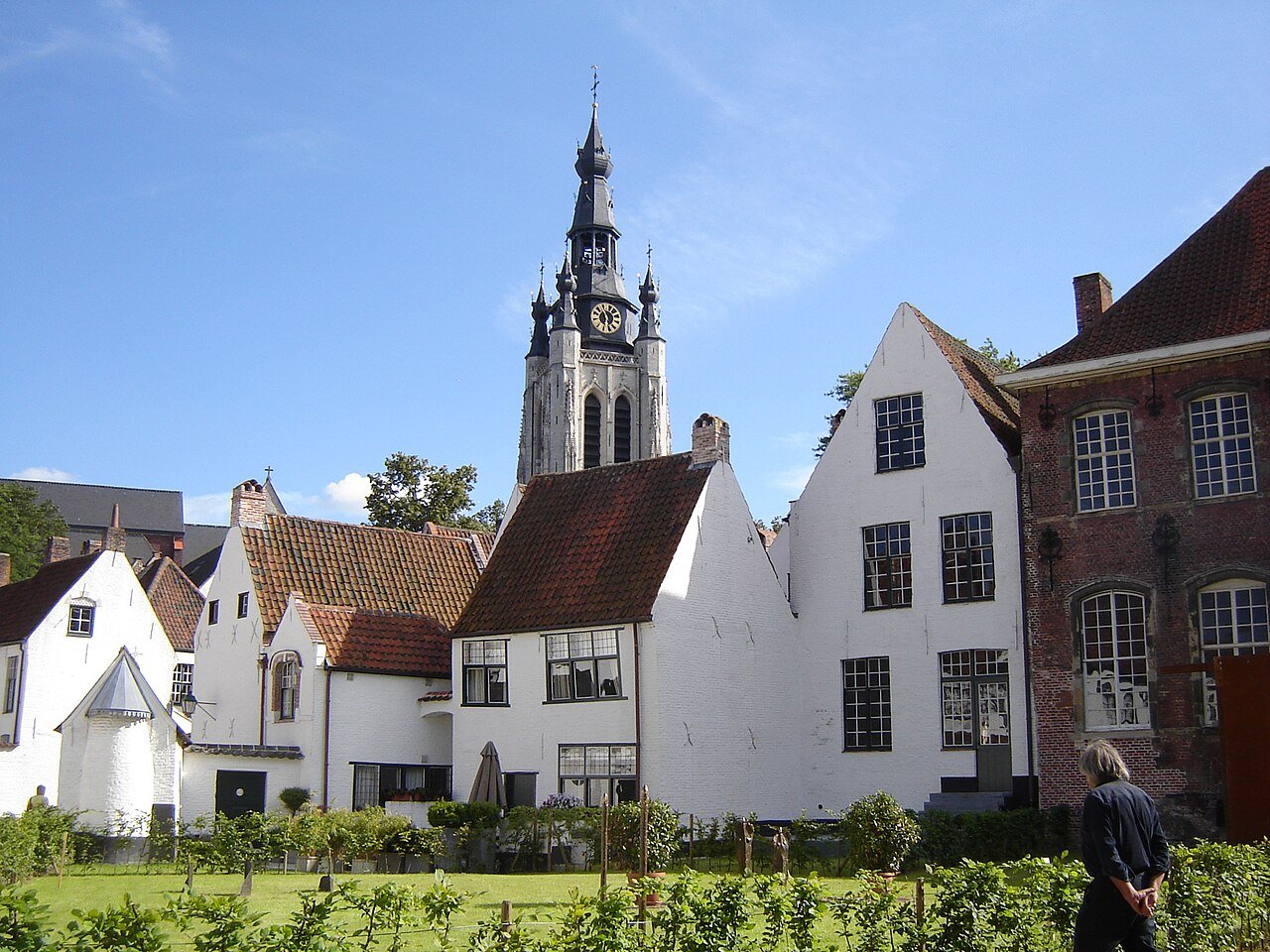
Each béguinage is organised around a central green or canal, surrounded by rows of small brick houses with white-framed windows. The streets are cobbled and narrow; the gate separating the béguinage from the city is always closed at night. Entering a béguinage today produces an immediate sense of separation from the urban world — exactly as it was designed to do.
The Béguinage of Bruges: the most celebrated example
The Grand Béguinage of Bruges (Princely Béguinage Ten Wijngaarde, founded 1245) is perhaps the most visited in the world. A UNESCO-inscribed complex of whitewashed houses around a central green on the banks of a canal, it sheltered up to 400 béguines at its peak in the 17th century. Today it houses a community of Benedictine nuns who maintain the tradition of enclosed community life.
The movement: between piety and freedom
The béguine movement represented a radical option for medieval women. Avoiding the costly dowries required by convents, béguines supported themselves through textile work, nursing, and education. They were spiritually innovative — producing mystics such as Mechthild of Magdeburg and Hadewijch of Antwerp — and periodically suspect to Church authorities who could not easily categorise them.
From Bruges to Leuven: diversity within a tradition
Each of the thirteen inscribed béguinages has its own character. The Grand Béguinage of Leuven (a UNESCO site in its own right, restored in the 1960s by Raymond Lemaire) contains over 70 houses spread through winding lanes. The béguinage of Mechelen preserves a complete 17th-century baroque façade. Together they form a rich mosaic of the tradition across six centuries.
Living heritage: the community continues
While the last true béguines died in the 20th century, most of the thirteen béguinages remain inhabited — by religious sisters, university students, or private residents — and their urban fabric is carefully maintained. The béguinage church in each site continues to hold services. Entry to most béguinage precincts is free; the inner gardens are open to quiet visitors.
A medieval women’s movement rediscovered
The béguine movement has experienced a remarkable revival of scholarly and popular interest since the 1990s. Historians now recognise it as one of the most significant expressions of lay female religiosity in European history. The thirteen Flemish béguinages preserve the physical memory of a movement that shaped the spiritual and social landscape of the medieval Low Countries for over four centuries.
Find it on the map
See this place and what’s around it →📷 Become a Cultural Heritage Online photographer
Share your photos of places: they stay published under your name as the author. The more they're seen, the more you get noticed — and soon a contest will reward the most appreciated photos.
Log in or sign up free to add a photo