
Mindanao’s Mountain Ark
Rising abruptly from the Davao Gulf coast to a summit at 1,637 metres, the Mount Hamiguitan Range in Davao Oriental Province (eastern Mindanao) packs an extraordinary range of ecosystems into a compact area of just under 16,000 hectares. Inscribed on the UNESCO World Heritage List in 2014 as a natural site, it is celebrated above all for its extreme concentration of endemic species — organisms found nowhere else on the planet — and for protecting some of the Philippines’ most endangered wildlife within a single contiguous and intact mountain landscape.
Altitudinal Zonation
Mount Hamiguitan’s ecosystems are arranged in distinct altitudinal zones that compress an entire spectrum of tropical habitats into a vertical journey of less than ten kilometres. The lowest zone, from sea level to about 420 metres, is dominated by agro-forest and secondary growth where local communities maintain small farms and orchards. Above this lies the dipterocarp forest belt, then the montane mossy forest, and finally the signature habitat of Hamiguitan: the pygmy forest above 1,100 metres, where thin, acidic soil forces trees to grow as miniaturised, gnarled dwarfs no taller than a person, their trunks draped in thick cushions of moss.
Pitcher Plants — The Stars of Hamiguitan
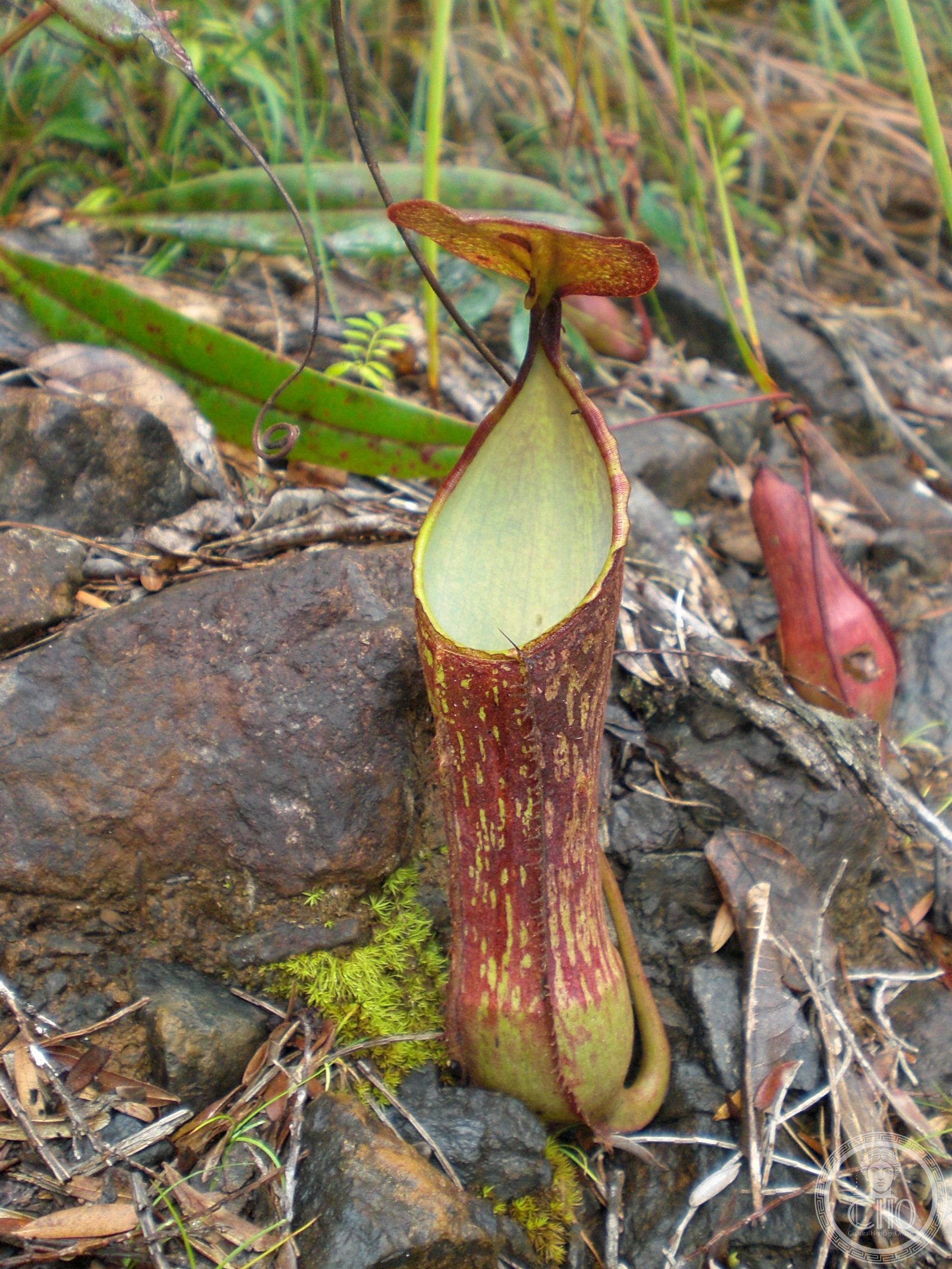
The pygmy forest of Mount Hamiguitan is globally famous for its extraordinary diversity of Nepenthes pitcher plants. The mountain harbours eight endemic species of Nepenthes — including the recently described Nepenthes hamiguitan, Nepenthes peltata, and Nepenthes leonardoi — representing one of the highest concentrations of endemic Nepenthes in any single locality in the world. These carnivorous plants supplement nutrients scarce in the poor acidic soil by trapping and digesting insects, spiders, and occasionally small vertebrates in their fluid-filled pitchers. Their presence gives the pygmy forest an otherworldly, primordial atmosphere.
The Philippine Eagle
The Philippine eagle (Pithecophaga jefferyi), one of the world’s largest, most powerful, and most endangered raptors, is among the flagship species protected within the sanctuary. With a wingspan exceeding two metres and a striking crest of brown and white feathers, it is the national bird of the Philippines, where fewer than 800 individuals survive in the wild. Mount Hamiguitan’s intact forest provides essential nesting and hunting habitat, and the species has been confirmed breeding within the sanctuary’s boundaries. The eagle’s presence is considered a key indicator of forest health and is central to the site’s conservation value.
Herpetofauna and Invertebrate Diversity
Beyond its botanical wonders and the Philippine eagle, Mount Hamiguitan is a hotspot for reptiles and amphibians. The sanctuary protects 26 species of reptiles, including the Philippine flying lizard (Draco spp.) and several endemic skinks, as well as 20 amphibian species many of which remain undescribed. Invertebrate surveys have revealed extraordinary richness in beetles, butterflies, and moths, with new species still being formally named from Hamiguitan specimens. This taxonomic frontier status underlines how much biodiversity in Mindanao’s mountains remains incompletely known, and how critical protected areas are for preserving species before they are even discovered by science.
Indigenous Communities and Buffer Zones
The Mount Hamiguitan Range Wildlife Sanctuary is surrounded by a buffer zone inhabited by members of the Mandaya people, one of Mindanao’s indigenous cultural communities, who have lived in the foothills and coastal lowlands of Davao Oriental for centuries. The Mandaya maintain traditional land-use practices, spiritual connections to the mountain, and detailed ecological knowledge of local plant and animal species. Protected area management integrates Mandaya community consultation and employs local residents as park rangers and guides, recognising that long-term conservation depends on the social and economic well-being of the communities who live alongside the sanctuary.
UNESCO Inscription and Threats
Mount Hamiguitan was inscribed as a UNESCO World Heritage Site in 2014 under natural criteria recognising its outstanding biodiversity, endemism, and ecological integrity. The primary threats identified at inscription included illegal logging in the buffer zone, small-scale mining claims on the sanctuary periphery, collection of pitcher plants and orchids for the horticultural trade, and the long-term pressure of agricultural encroachment from rapidly growing lowland communities. Climate change poses an additional emerging threat: the narrow altitudinal band occupied by the pygmy forest and its endemic species leaves little scope for upward habitat migration as temperatures rise.
Visiting the Sanctuary
Mount Hamiguitan is accessible from the municipality of San Isidro in Davao Oriental, approximately four to five hours by road from Davao City. Day hikes within the lower forest zone are possible with a registered local guide; the full ascent to the pygmy forest requires an overnight permit and prior coordination with the Protected Area Management Board. The best season for visiting is March through May, when rainfall is lowest and the trails are most manageable. Visitor numbers are intentionally kept small to minimise disturbance to wildlife, and advance booking through the PAMB office in San Isidro is strongly recommended.
Find it on the map
See this place and what’s around it →📷 Become a Cultural Heritage Online photographer
Share your photos of places: they stay published under your name as the author. The more they're seen, the more you get noticed — and soon a contest will reward the most appreciated photos.
Log in or sign up free to add a photo