Uruguay has three UNESCO World Heritage Sites, each one registering a different layer of the country’s past: Portuguese colonial urbanism on the Río de la Plata, an industrial complex that once fed Victorian Britain, and a twentieth-century brick church that quietly redefined structural engineering across Latin America. A small list, but a richly varied one. From Cultural Heritage Online.
Why Uruguay’s list looks the way it does
Uruguay is one of South America’s smaller nations, and its UNESCO tally reflects both its compact geography and the character of its historical development. The country was shaped by two colonial powers — Portugal and Spain — who contested its territory for most of the seventeenth and eighteenth centuries, leaving a built environment that rarely fits neatly into either tradition. That layered colonial inheritance, combined with Uruguay’s role in the industrial-age beef trade and a twentieth century that produced genuinely inventive architects and engineers, has given the list its current shape: three cultural sites, no natural inscriptions, no mixed designations.
All three sites are recognised under UNESCO’s cultural criteria, and each addresses a different period. Taken together they cover roughly three hundred and fifty years of history, from a fortified Portuguese trading post to a modernist church completed in 1960. For a national list of only three entries, the chronological spread is remarkable.
The first inscriptions
Uruguay’s entry onto the World Heritage map came in 1995, when a single property was inscribed at the 19th session of the World Heritage Committee in Berlin:
- Historic Quarter of the City of Colonia del Sacramento (1995) — the entire barrio histórico of a Portuguese colonial town founded in 1680, recognised for the fusion of Portuguese and Spanish urban influences that accumulated across nearly three centuries of rival occupation.
That first and for a long time only inscription meant Uruguay spent two full decades with a single World Heritage property. The second site, the Fray Bentos industrial landscape, was not added until 2015 — a gap of twenty years that underscores how selective Uruguay’s nominations have been. Rather than building a large list quickly, the country has advanced properties that are genuinely distinctive on a global scale.
The most visited — and the alternatives
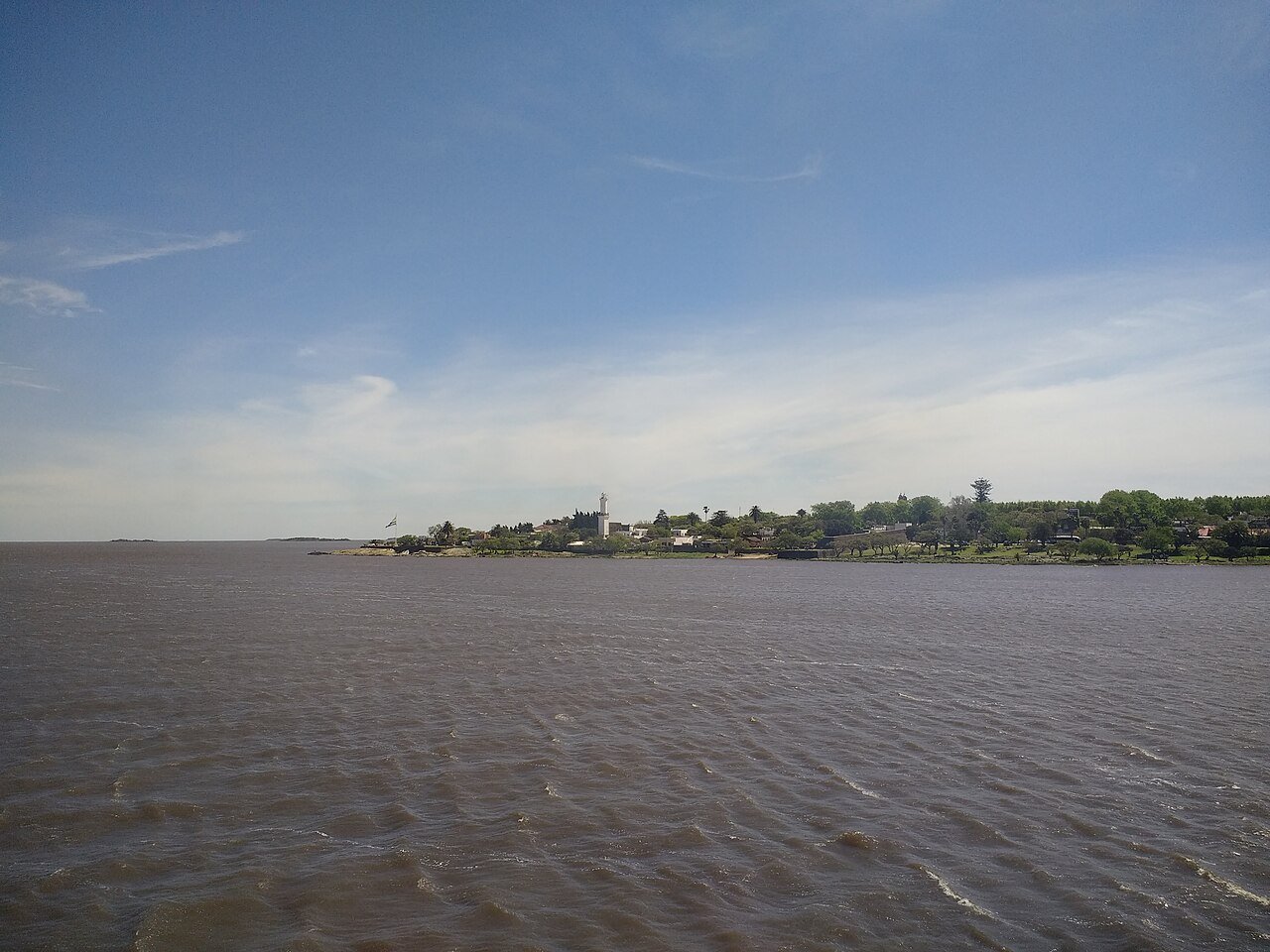
Colonia del Sacramento draws the majority of visitors, and with good reason. Its cobbled streets, whitewashed walls, and intact Portuguese-era lighthouse sit within easy reach of Montevideo and Buenos Aires by ferry. The barrio histórico is compact enough to walk in an afternoon, which has made it one of the most-visited heritage destinations on the Río de la Plata. What the crowds sometimes obscure is the precise reason for inscription: the town preserves a rare example of an urban fabric shaped by two competing colonial systems, neither of which ever fully erased what came before it.
The two other inscribed properties are far less visited and deserve closer attention. The Fray Bentos Industrial Landscape, inscribed in 2015, centres on the former meat-packing complex along the Uruguay River that began as Liebig’s Extract of Meat Company in 1859 and eventually operated as the Anglo Meat Packing Plant. At its peak it exported corned beef and bouillon cubes to tables across Europe, and the surviving machinery, worker housing, and port infrastructure constitute one of the most complete industrial heritage ensembles in South America. The Church of Atlántida (2021), by engineer Eladio Dieste, is a single building in a small coastal town — but its exposed brick Gaussian vaults and thin-shelled barrel vault construction solved structural problems that had defeated reinforced concrete, and its inscription recognised Dieste as a figure of global architectural importance.
Natural and shared sites
Uruguay currently has no natural or mixed UNESCO World Heritage Sites. Its entire list of three properties falls under cultural criteria, which means the country’s extensive coastal wetlands, Cuchilla Grande hill ranges, and the palm savannahs of Rocha — all of which appear on Uruguay’s tentative list in various forms — have not yet reached inscription. The country maintains six properties on that tentative list, so natural or mixed sites may eventually be added, but as of 2026 the national list remains exclusively cultural.
Uruguay also has no transnational or serial inscriptions currently on the World Heritage List. The Church of Atlántida inscription was a standalone nomination, as were both earlier properties. This sets Uruguay apart from several of its neighbours, where serial nominations grouping Jesuit missions or pre-Columbian routes across multiple countries have become a common strategy for achieving inscription.
How to find them
Uruguay’s three World Heritage sites are geographically spread across the country’s southern and western reaches. Colonia del Sacramento sits on the Río de la Plata roughly 180 kilometres west of Montevideo. Fray Bentos lies further northwest along the Uruguay River, near the Argentine border. The Church of Atlántida is on the Atlantic coast east of Montevideo, in the municipality of Canelones — a short drive from the capital but rarely included in standard itineraries.
Uruguay’s World Heritage sites sit alongside thousands of other places on CHO’s interactive map, with GPS and sourced editorial history for each. See also our guides to Italy’s and France’s UNESCO sites, and our piece on cultural travel beyond mass tourism.
Frequently Asked Questions
How many UNESCO World Heritage Sites does Uruguay have?
Uruguay has three UNESCO World Heritage Sites, all of them cultural. They are the Historic Quarter of the City of Colonia del Sacramento (1995), the Fray Bentos Industrial Landscape (2015), and the work of engineer Eladio Dieste: Church of Atlántida (2021). The country has no natural or mixed inscriptions.
What was Uruguay’s first UNESCO World Heritage Site?
Uruguay’s first World Heritage inscription was the Historic Quarter of the City of Colonia del Sacramento, designated in 1995 at the 19th session of the World Heritage Committee in Berlin. The Portuguese colonial town was founded in 1680 and is recognised for its exceptional blend of Portuguese and Spanish urban heritage.
What is the most recently inscribed UNESCO site in Uruguay?
The most recent inscription is the Church of Atlántida (formally listed as “The work of engineer Eladio Dieste: Church of Atlántida”), added to the World Heritage List in 2021. The building is celebrated for its innovative use of reinforced brick and Gaussian vault construction, which made it a landmark of twentieth-century structural engineering.
Does Uruguay have any natural UNESCO World Heritage Sites?
No. As of 2026, all three of Uruguay’s World Heritage Sites are classified as cultural properties. The country does maintain several natural and landscape areas on its tentative list for potential future nomination, but none has yet been inscribed.
Sources used in this article
- UNESCO — State Party Uruguay — World Heritage list.
- UNESCO — Uruguay: World Heritage Sites.
- CHO magazine — What is a World Heritage Site?
- CHO — Interactive map of heritage sites.
Sources
- S1 — Finch, M. H. J. A Political Economy of Uruguay Since 1870. Macmillan, 1981. ISBN 978-0-333-28913-6.
- S2 — Bethell, Leslie, ed. The Cambridge History of Latin America, Vol. 5. Cambridge University Press, 1986. ISBN 978-0-521-24517-3.
Spotted an error? Write to editorial@culturalheritageonline.com and we correct it the same day.