El Salvador has one UNESCO World Heritage Site — and the story of how a buried Mayan village came to hold that distinction alone tells you a great deal about the country’s layered, underappreciated past. From Cultural Heritage Online.
Why El Salvador’s list looks the way it does
El Salvador ratified the UNESCO World Heritage Convention in 1991, becoming eligible for inscription the following year. Given its small geographic footprint — the smallest country in Central America by area — and the density of its pre-Columbian settlements, the brevity of its World Heritage list might seem surprising. It reflects not a shortage of significant places but the long queue of candidates on the country’s tentative list, six properties deep, including an active volcanic landscape, a colonial urban site, and a significant wetland system.
The UNESCO process is methodical by design, and countries with limited conservation infrastructure often move through it slowly. El Salvador’s single inscription nevertheless carries considerable international weight. Scholars regard it as one of the most informative archaeological windows into ordinary Mayan life anywhere in the Americas — a status its more famous neighbours in Mexico and Guatemala do not easily replicate.
The first inscription
El Salvador’s sole World Heritage Site was inscribed in 1993:
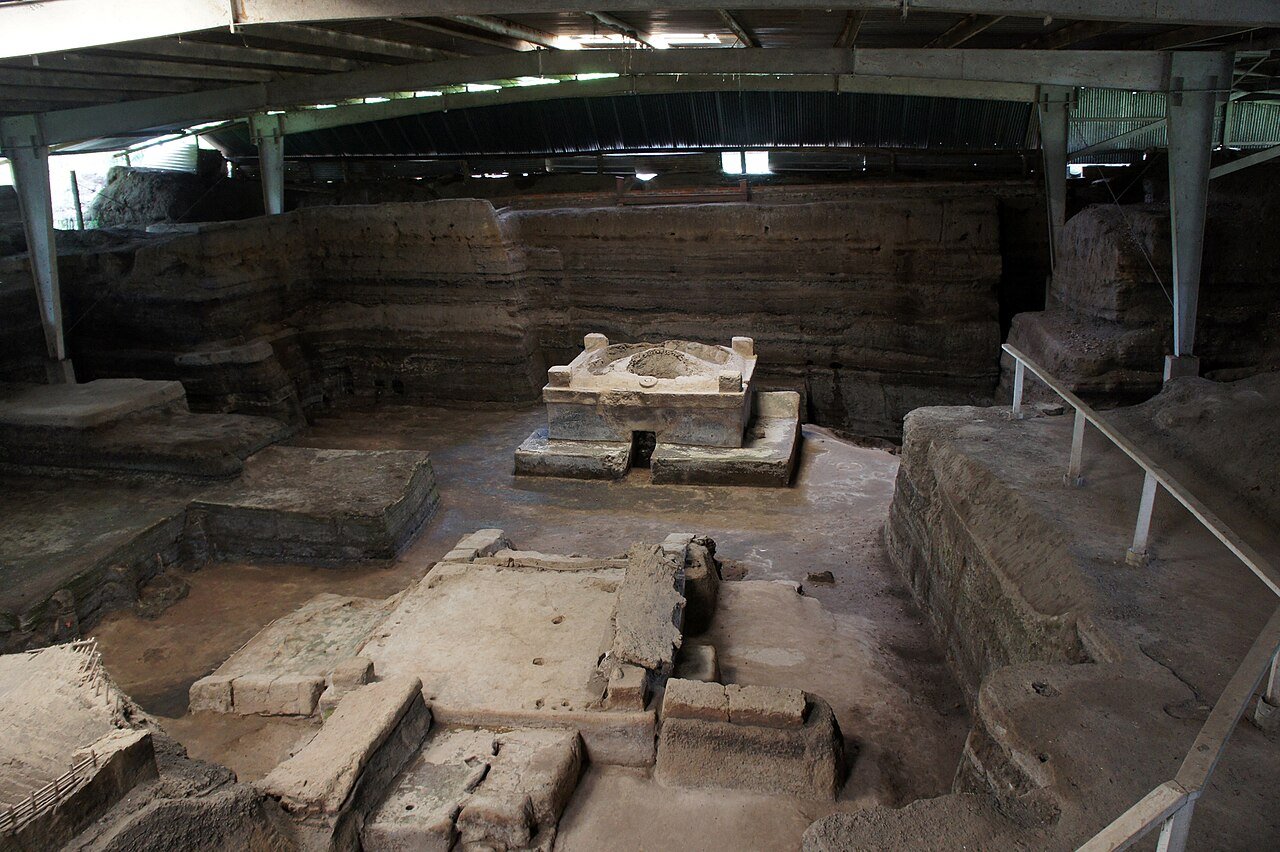
- Joya de Cerén Archaeological Site (1993) — a pre-Hispanic farming community in the La Libertad Department, buried under volcanic ash around AD 600 following the eruption of the Laguna Caldera volcano.
The site was added under criteria (iii) and (iv), recognising its exceptional testimony to pre-Columbian Mayan agricultural society and its outstanding illustration of a significant stage in human history. No other inscription has followed in the three decades since, though several candidates remain under active consideration at the national level.
The most visited — and the alternatives
Joya de Cerén draws visitors who arrive expecting a Central American Pompeii and leave with something more nuanced. The comparison to Pompeii is accurate in its mechanics — sudden volcanic burial, exceptional preservation — but the social register is entirely different. Where Pompeii preserves the monumental fabric of a Roman city, Joya de Cerén preserves the intimate domestic world of Mayan commoners: cooking pots still on hearths, stored grain, cultivated garden beds, and the outlines of a community that had no warning before the ash fell. That granularity of everyday life is what makes the site scientifically rare.
Travellers looking to extend their itinerary beyond the inscribed site will find the tentative list suggestive. Chalchuapa, near the Guatemalan border, holds one of El Salvador’s largest pre-Columbian ceremonial complexes, including the stepped pyramid of Tazumal. Ciudad Vieja, outside Suchitoto, is the partially excavated remains of the first Spanish capital of El Salvador, abandoned in 1545. Cacaopera, in the eastern highlands, is associated with the Kakawira people and contains colonial-era religious architecture built over indigenous sacred ground — a layering of histories that recurs throughout the region.
Natural and shared sites
El Salvador currently has no natural sites on the World Heritage List. The Gulf of Fonseca — a three-country bay shared with Honduras and Nicaragua — appears on the country’s tentative list and would, if inscribed, likely become a transnational serial nomination given its shared geography. El Imposible National Park, in the Apaneca-Ilamatepec mountain range, protects one of the last significant tracts of Pacific slope forest in Central America and has been proposed for inscription since 1992; its ecosystems include endemic species found nowhere else in the country.
Lake Güija, straddling the border with Guatemala, is another cross-border candidate whose inscription would require coordinated nomination. These pending cases illustrate a pattern common across Central America: the region’s most ecologically significant landscapes rarely respect national boundaries, making the political and administrative work of World Heritage nomination as demanding as the conservation work itself.
How to find them
Joya de Cerén lies roughly 35 kilometres west of San Salvador, near the town of San Juan Opico. The site is managed by the Salvadoran Secretariat of Culture and is open to visitors year-round, with an on-site museum housing artefacts recovered during excavations. Access by road is straightforward, and the site is often combined with a visit to the nearby San Andrés archaeological park, itself on El Salvador’s tentative World Heritage list.
The tentative properties — Chalchuapa, Ciudad Vieja, El Imposible, Lake Güija, the Gulf of Fonseca, and Cacaopera — are distributed across the country and represent the full range of El Salvador’s heritage typologies, from pre-Columbian ceremonial centres to colonial urbanism to biodiversity corridors. None is yet inscribed, but all are accessible and well worth including in a heritage itinerary.
El Salvador’s World Heritage sites sit alongside thousands of other places on CHO’s interactive map, with GPS and sourced editorial history for each. See also our guides to Italy’s and France’s UNESCO sites, and our piece on cultural travel beyond mass tourism.
Frequently Asked Questions
How many UNESCO World Heritage Sites does El Salvador have?
El Salvador has one UNESCO World Heritage Site: the Joya de Cerén Archaeological Site, inscribed in 1993. The country maintains six additional properties on its tentative list, including Chalchuapa, Ciudad Vieja, and El Imposible National Park, which are under consideration for future nomination.
What was El Salvador’s first UNESCO World Heritage Site?
Joya de Cerén, inscribed in 1993, is both El Salvador’s first and only World Heritage Site. The site is a pre-Columbian Mayan farming community preserved under volcanic ash from around AD 600, offering unusually detailed evidence of everyday agricultural life in ancient Central America.
Does El Salvador have any natural UNESCO World Heritage Sites?
No. El Salvador currently has no natural sites on the World Heritage List. Two natural candidates — El Imposible National Park and the Gulf of Fonseca — appear on the country’s tentative list and have been proposed since 1992, but neither has yet advanced to formal nomination.
What makes Joya de Cerén archaeologically significant?
Joya de Cerén is considered exceptional because it preserves the domestic life of ordinary Mayan farmers rather than elite or ceremonial contexts. Volcanic ash buried the village so rapidly around AD 600 that food, tools, and cultivated gardens were sealed in place, giving archaeologists a level of detail about pre-Hispanic rural society that is almost without parallel in the Americas.
Sources used in this article
- UNESCO — State Party El Salvador — World Heritage list.
- UNESCO — El Salvador: World Heritage Sites.
- CHO magazine — What is a World Heritage Site?
- CHO — Interactive map of heritage sites.