
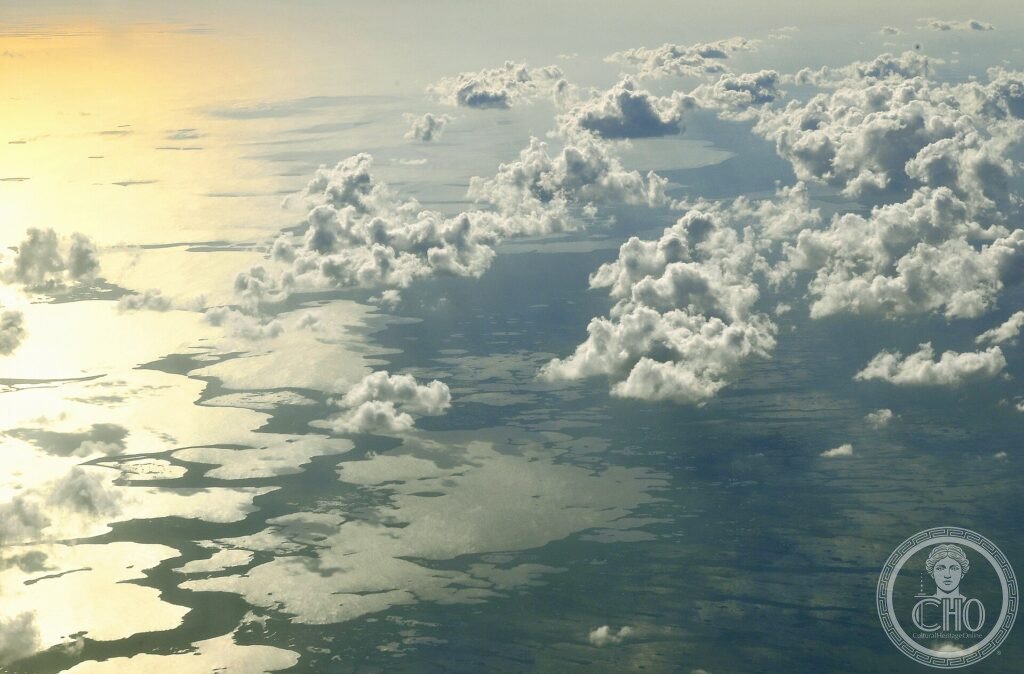
Non è una palude qualsiasi, ma un fiume lentissimo e immenso: una distesa d’acqua larga decine di chilometri che scorre impercettibilmente verso il mare attraverso praterie di carice. Le Everglades della Florida sono un ecosistema unico, rifugio di alligatori, coccodrilli, lamantini e della rara pantera della Florida.
At a glance
Everglades National Park, at the southern tip of Florida, protects the heart of a vast, slow-moving wetland often called a “river of grass” — a sheet of water, tens of kilometres wide and only centimetres deep, creeping through sawgrass prairies, tree islands, cypress swamps and mangroves toward the sea. This unique subtropical ecosystem is a refuge for alligators and crocodiles, manatees, wading birds and the rare Florida panther. It was inscribed by UNESCO in 1979.
Key facts
- UNESCO: World Heritage since 1979 (Everglades National Park)
- “River of grass”: a vast, shallow, slow-moving sheet of water
- Sawgrass prairies: the signature open wetland of the park
- Alligators and crocodiles: one of the few places with both
- Rare wildlife: manatees, wood storks and the Florida panther
- Mangroves: the largest mangrove system in the Americas at its coast
History
The Everglades are fed by water flowing south from Lake Okeechobee across the flat Florida peninsula, a unique “river of grass” recognised in the 20th century thanks in part to the writer and campaigner Marjory Stoneman Douglas. Drainage and development in the 20th century cut off and polluted much of this flow, shrinking and damaging the wetland.
Everglades National Park was created in 1947 to protect the southern part of the system for its living wildlife and ecosystems rather than its scenery, and it was inscribed by UNESCO in 1979. Long under threat from altered water flow, pollution and invasive species, it has spent periods on the List of World Heritage in Danger, and a vast restoration effort is now under way.
What you see
Boardwalks, trails and tram and boat tours let visitors into the wetland: the Anhinga Trail teeming with alligators and birds, the sawgrass prairies stretching to the horizon, cypress domes, and the mangrove coast and Florida Bay where manatees and crocodiles live. Wading birds and, very rarely, a panther may be seen.
The vision of the watery grassland reaching to the sky, alive with wildlife, is the experience of the Everglades.
Practical information
- Park: several entrances; boardwalks, trails and boat tours
- Best time: the dry season (December–April), when wildlife gathers
- Time needed: a day or more
- Note: bring insect protection; summers are hot and buggy
Getting there
Everglades National Park is at the southern tip of Florida, USA, with main entrances near Homestead (south-west of Miami) and at Shark Valley and Everglades City. GPS: 25.32° N, 80.93° W.
Nearby
- Miami — the great city to the north-east
- Florida Keys — the island chain to the south
- Big Cypress — the national preserve adjoining to the north
Sources
- UNESCO World Heritage Centre — “Everglades National Park” (ref. 76)
- U.S. National Park Service — official body
- Encyclopaedia Britannica — Everglades
Find it on the map
See this place and what’s around it →📷 Become a Cultural Heritage Online photographer
Share your photos of places: they stay published under your name as the author. The more they're seen, the more you get noticed — and soon a contest will reward the most appreciated photos.
Log in or sign up free to add a photo