
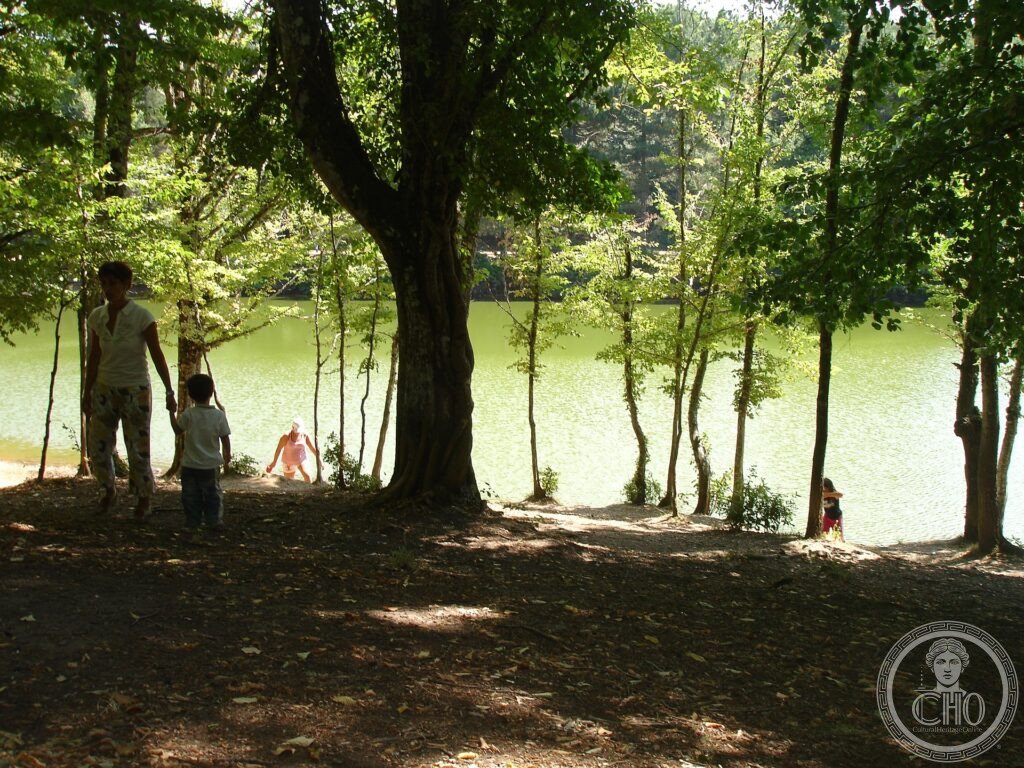
Ci sono boschi in Italia dove nessuna mano è mai intervenuta: faggi che cadono e marciscono dove cadono, alberi di cinque secoli, silenzi più vecchi di Roma. Nel 2017 l’UNESCO li ha riconosciuti patrimonio dell’umanità — dal cuore inviolato di Sasso Fratino, in Romagna, al laghetto della Foresta Umbra, sul Gargano.
At a glance
The Italian old-growth beech forests are a cluster of primeval woodlands scattered along the Apennines and across the Gargano, inscribed by UNESCO in 2017 as Italy’s share of a vast transnational property — the Ancient and Primeval Beech Forests of the Carpathians and Other Regions of Europe, which spans dozens of forests across many European countries. They are Italy’s first purely natural World Heritage site. Left untouched for centuries, they show how beech recolonised Europe after the last Ice Age, and how a forest behaves when no one manages it: fallen trunks left to decay, trees more than five hundred years old, an unbroken ecological cycle.
Key facts
- Inscribed: 7 July 2017 (UNESCO 41st session, Krakow); Italy’s first natural World Heritage site
- Part of: the transnational serial site “Ancient and Primeval Beech Forests of the Carpathians and Other Regions of Europe” (begun 2007, extended across many countries)
- Italian components: Sasso Fratino (Foreste Casentinesi, Emilia-Romagna/Toscana), Foresta Umbra (Gargano, Puglia), Valle Cervara and Val Fondillo (Abruzzo, Lazio e Molise NP), Monte Cimino and Monte Raschio (Lazio), Cozzo Ferriero (Pollino, Basilicata)
- Criterion: IX — outstanding ongoing ecological and biological processes
- Valle Cervara: among the oldest beech forests in Europe, with trees over 500 years old
- Sasso Fratino: a strict nature reserve since 1959, never logged
About the forests
After the last glaciation, beech (Fagus sylvatica) spread from a handful of refuges to dominate the mountains of temperate Europe — one of the great natural colonisations of the continent. The forests recognised here are the rare patches that escaped the axe: untouched or near-untouched stands where the full cycle of growth, death and regeneration still runs on its own. UNESCO values them not for a single tree or view but for that living process, protected under natural criterion IX.
Italy entered the transnational property in 2017 with a set of components from the Apennines and the Gargano. Sasso Fratino, in the Foreste Casentinesi, has been a strict reserve since 1959 and is one of the most intact primeval forests in the country. In the Abruzzo, Lazio and Molise National Park, the beechwood of Valle Cervara holds some of the oldest beech trees in Europe, several past five centuries. On the Gargano, the Foresta Umbra is the most accessible of the group, a deep upland wood with its famous spring-fed pond.
What you see
These are not gardens but working ecosystems. In an old-growth beech stand the canopy is high and even, the floor open and shaded, and the most striking feature is the dead wood: standing snags and fallen trunks left to rot, feeding fungi, insects and woodpeckers in a way that managed woodland never allows. At the Foresta Umbra, marked trails lead through towering beech and into clearings around the laghetto; at Sasso Fratino, access is restricted to guided study visits precisely so the forest stays undisturbed. The seasons transform them — the spring green, the autumn copper — but the real spectacle is the age and silence.
Practical information
- Visiting: each component lies inside a national or regional park; the Foresta Umbra (Gargano) has a visitor centre, marked trails and the laghetto
- Sasso Fratino: a strict reserve — access only on guided scientific visits; check the Foreste Casentinesi NP
- Footwear: proper hiking shoes; some forests are at altitude and cool even in summer
- Time needed: half a day for a forest walk
Getting there
The Foresta Umbra is in the Gargano (province of Foggia, Puglia), reached by road from Monte Sant’Angelo, Vico del Gargano or Vieste. Other components are reached through their own parks: the Foreste Casentinesi between Tuscany and Romagna, Valle Cervara in the Abruzzo park. GPS (Foresta Umbra): 41.8147° N, 16.1206° E.
Nearby
- Monte Sant’Angelo — the Longobard sanctuary of San Michele (UNESCO), above the Foresta Umbra
- Vieste and the Gargano coast — sea stacks, beaches and the Tremiti Islands
- Foreste Casentinesi — the national park around Sasso Fratino, with the sanctuary of La Verna and the Camaldoli hermitage
Sources
- Faggete Vetuste — official network of the Italian component sites (faggetevetuste.it)
- Parco Nazionale del Pollino — UNESCO beech forests / Cozzo Ferriero
- Italia.it (ENIT) — Italy’s ancient beech forests
- UNESCO World Heritage Centre — “Ancient and Primeval Beech Forests of the Carpathians and Other Regions of Europe”
Find it on the map
See this place and what’s around it →📷 Become a Cultural Heritage Online photographer
Share your photos of places: they stay published under your name as the author. The more they're seen, the more you get noticed — and soon a contest will reward the most appreciated photos.
Log in or sign up free to add a photo