
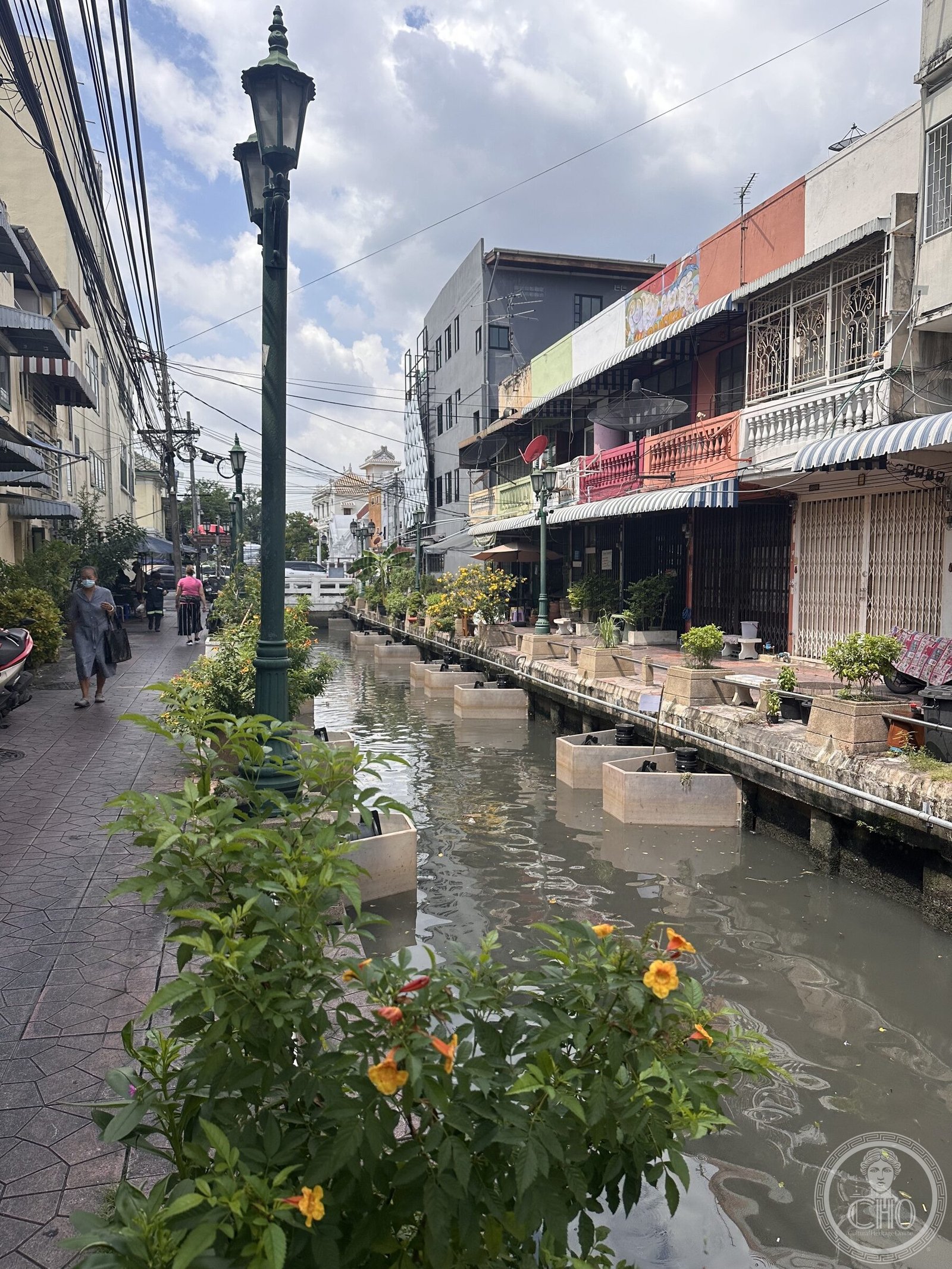
The Rattanakosin quarter is the beating historical heart of Bangkok — where Art Deco theatres, gilded temple spires, and two-century-old river markets occupy the same island founded by Rama I in 1782.
At a glance
Ko Rattanakosin — the island formed by the Chao Phraya River and a network of canals — contains the densest concentration of historic architecture in Thailand. Royal temples built in the Rattanakosin style (Thai-European hybrid, with Italian-influenced pavilions and gilded Siamese spires) stand within walking distance of 1930s Art Deco theatres, Portuguese colonial churches, and the open-air market stalls of Wang Lang. The area rewards visitors who ignore the rush to tick off individual monuments and instead let the quarter reveal its layered centuries at street pace.
Key facts
- Founded: 1782 by King Phutthayotfa Chulalok (Rama I), first monarch of the Chakri dynasty
- Style: Rattanakosin (Thai-European hybrid), with Art Deco additions of the 1920s–1940s
- Anchor sites: Grand Palace, Wat Pho, Wat Arun, Wat Saket, Chalermkrung Royal Theatre
- Chalermkrung Royal Theatre: 1933, first air-conditioned public building in Thailand, Art Deco interior intact
- Best season: November–February (cool season, 25–32 °C)
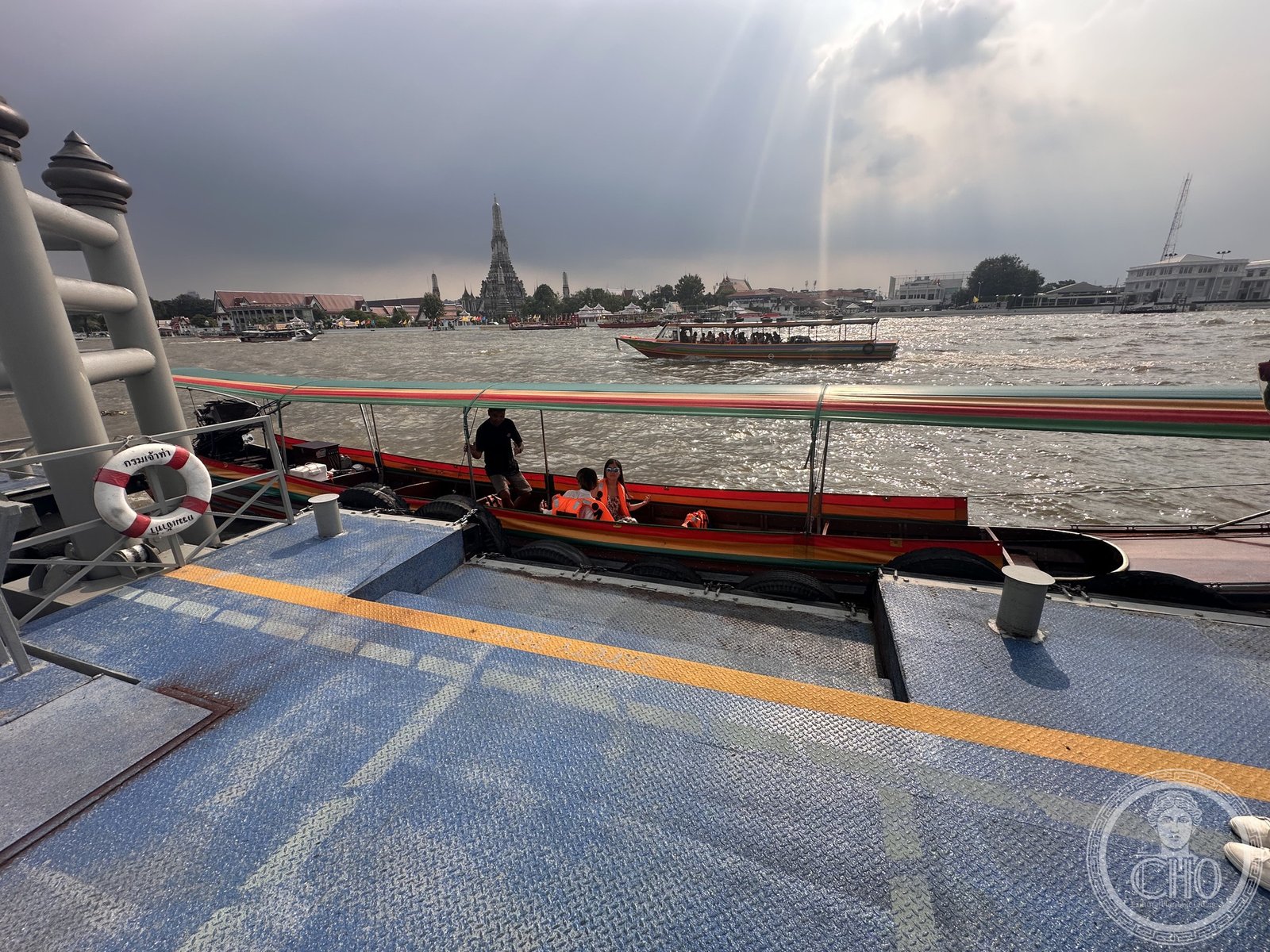
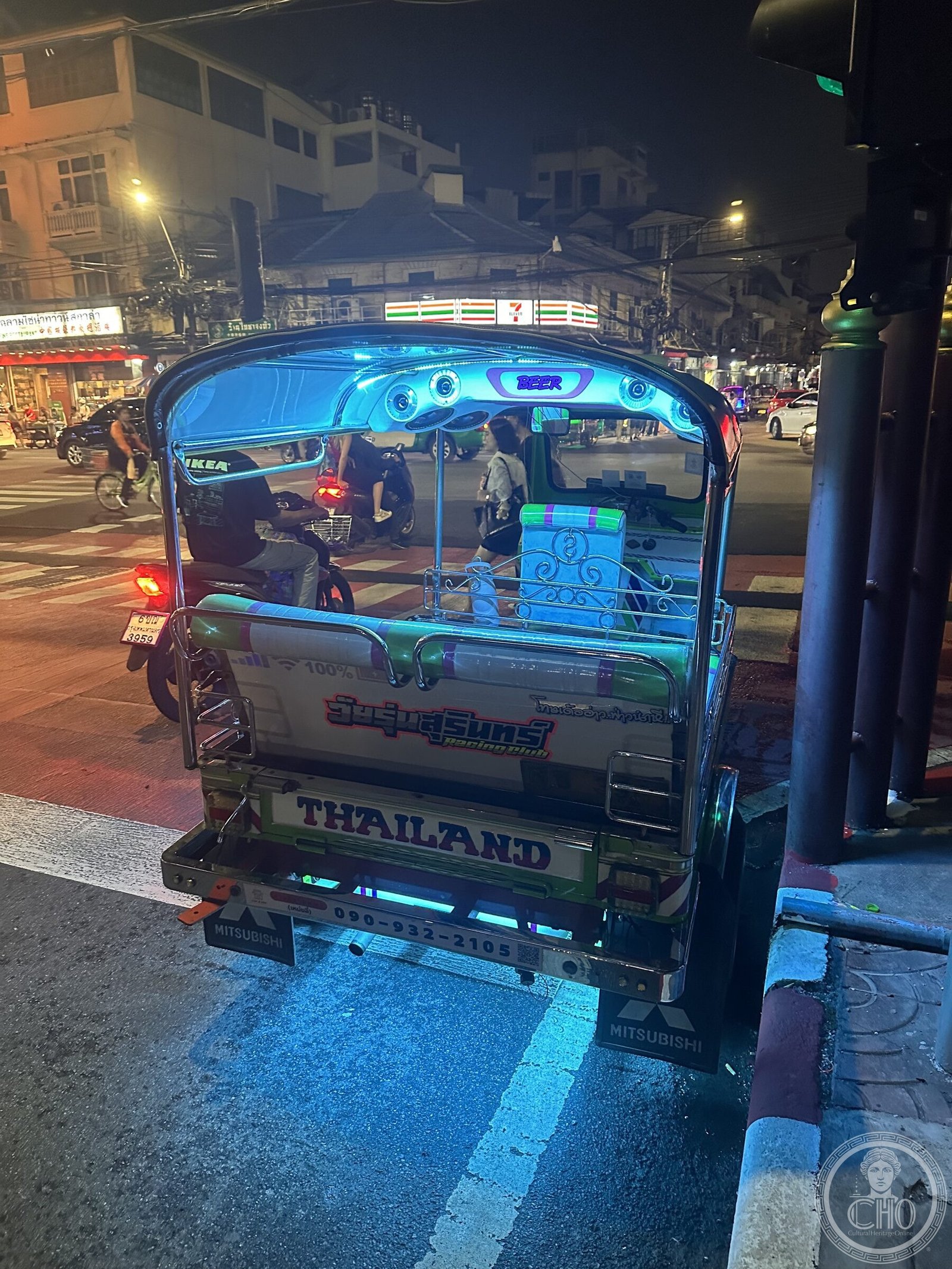
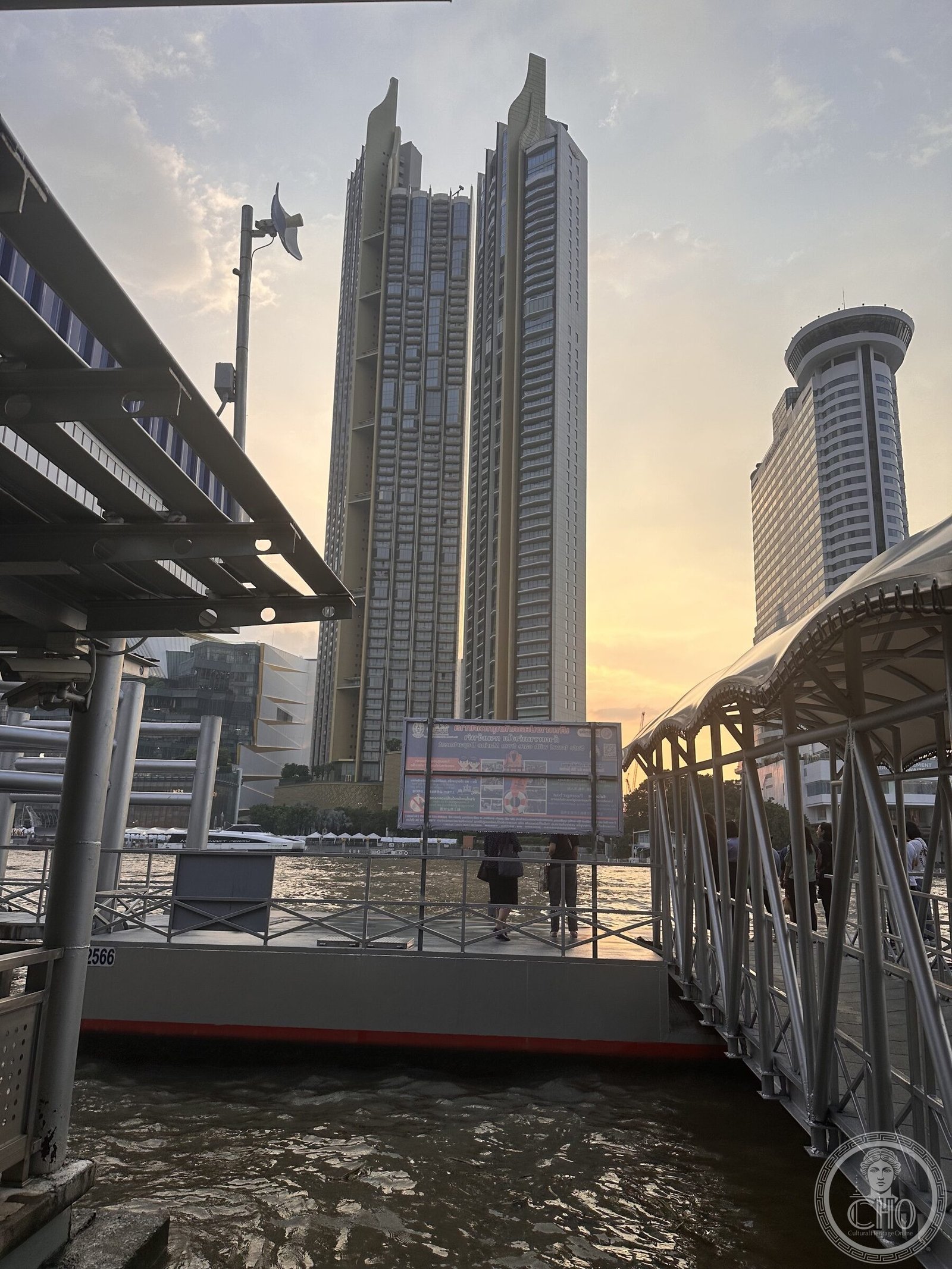
- Getting around: Chao Phraya express boat + walking; tuk-tuks cover the last mile
History
When Chakri dynasty founder Rama I moved the capital from Thonburi across the river in 1782, he modelled Rattanakosin Island on the former capital Ayutthaya. A grid of canals — many now filled in — defined the royal and monastic core, while Chinese merchants settled the district to the south that became today’s Chinatown. The island’s boundaries were drawn in part by the strategic bend of the Chao Phraya, which made the site naturally defensible.
During the Fifth Reign (1868–1910), King Chulalongkorn (Rama V) initiated a European-style modernisation programme that brought broad boulevards, neoclassical government buildings, and the first paved roads to the island. Architects from Italy and the Netherlands worked alongside Thai craftsmen to produce the hybrid Rattanakosin style visible in the surviving government buildings along Ratchadamnoen Avenue.
The 1930s added the Chalermkrung Royal Theatre (1933), commissioned by Rama VII as a symbol of Thailand’s engagement with modernity. Built in an American Art Deco style, it was the country’s first purpose-built cinema and the first air-conditioned public building in the kingdom. The Second World War largely spared Rattanakosin, and the quarter retains an unusual density of pre-war fabric across nearly 250 years of layers.
What you see
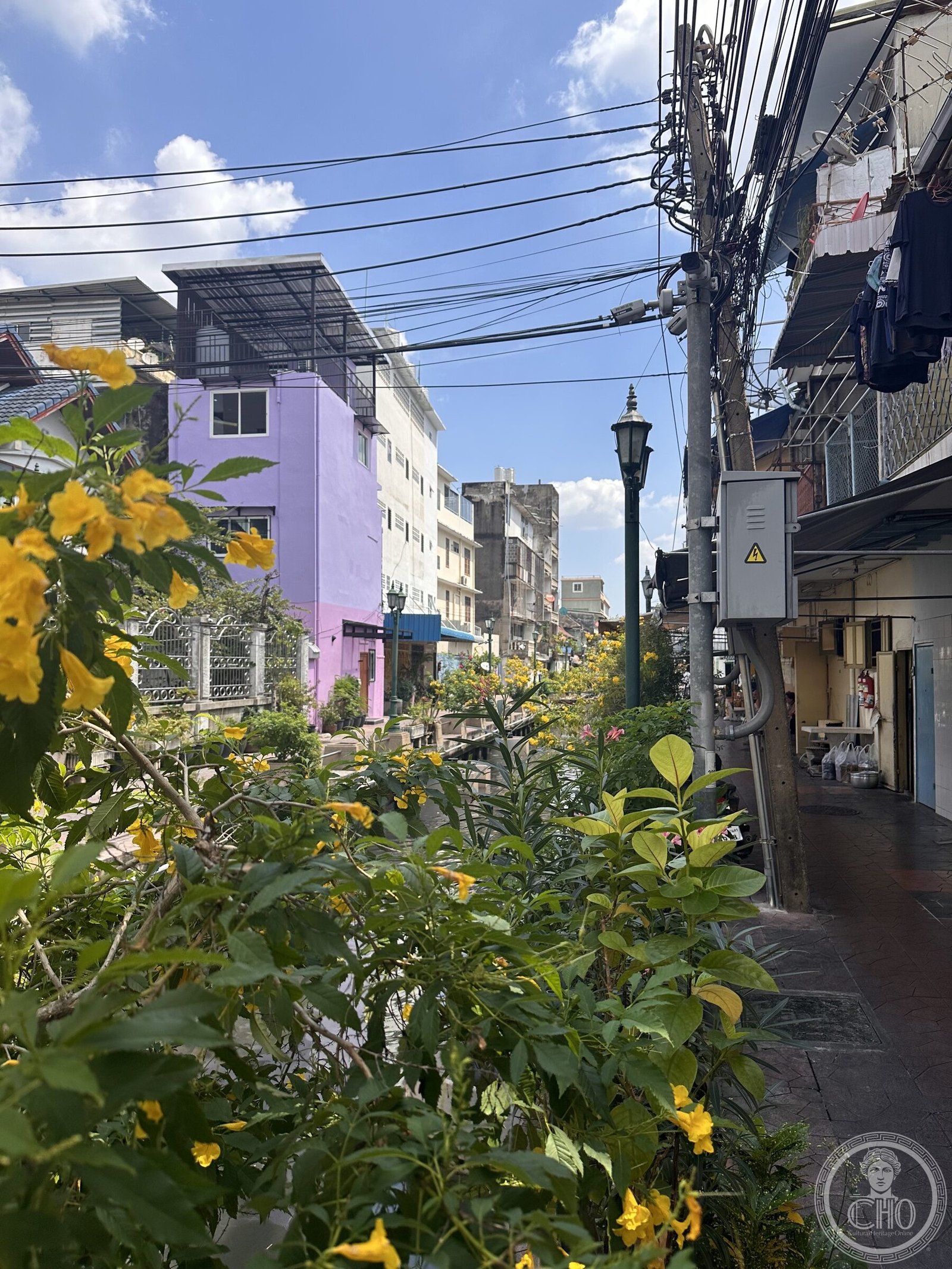
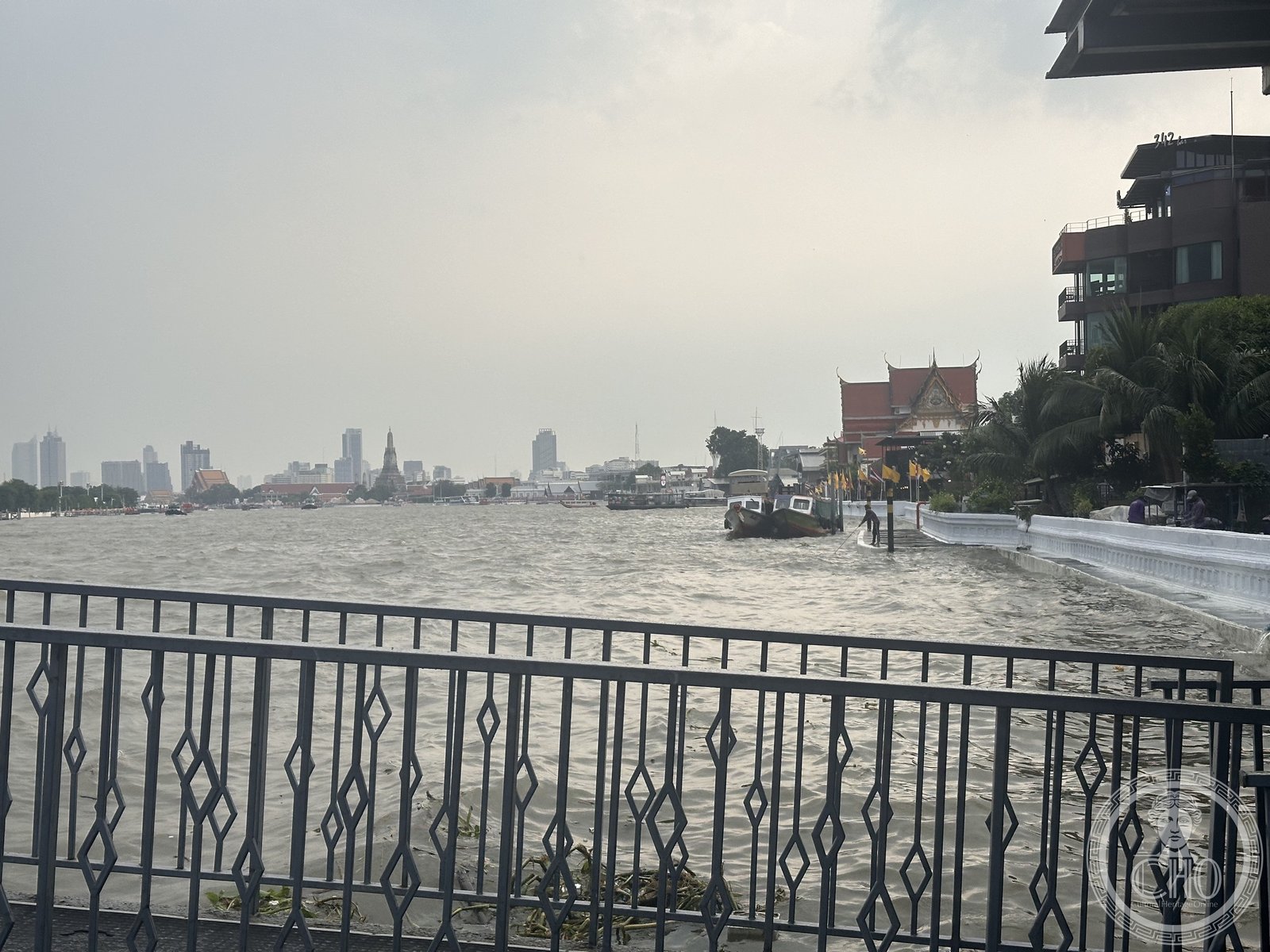
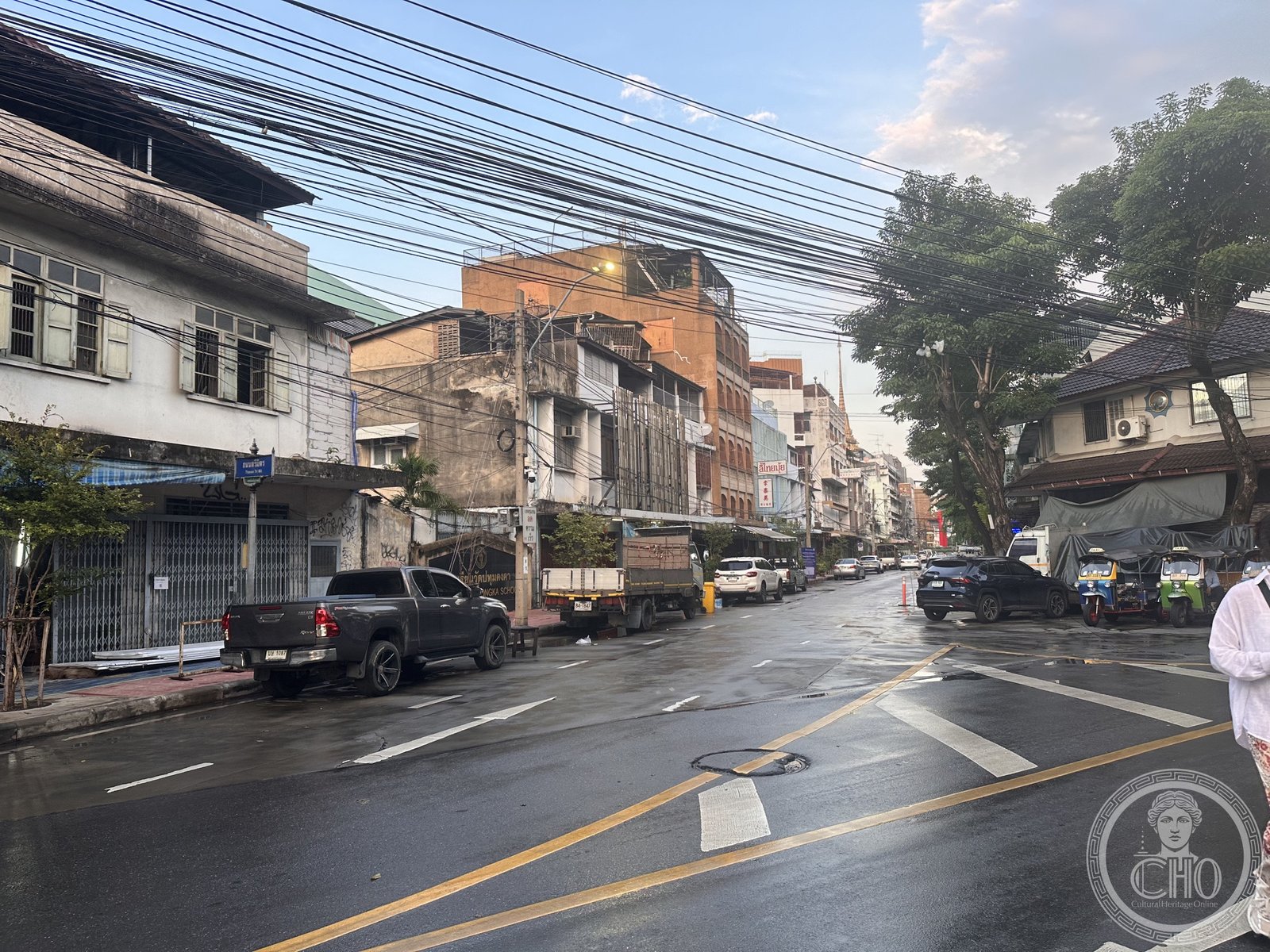
The quarter discloses itself in layers. At street level, Rattanakosin-era facades — white stucco, gilded spires, multi-tiered rooflines — alternate with the biscuit-coloured Art Deco frontage of 1930s shophouses and government offices. The Chalermkrung Royal Theatre’s stepped interior and its original Thai-modern fittings survive almost intact behind a facade that still bears the theatre’s name in gilded letterforms. At the riverside, Wat Arun’s central Khmer prang rises 82 metres above the Chao Phraya, its surface set with fragments of Chinese porcelain that shift colour as the sun moves.
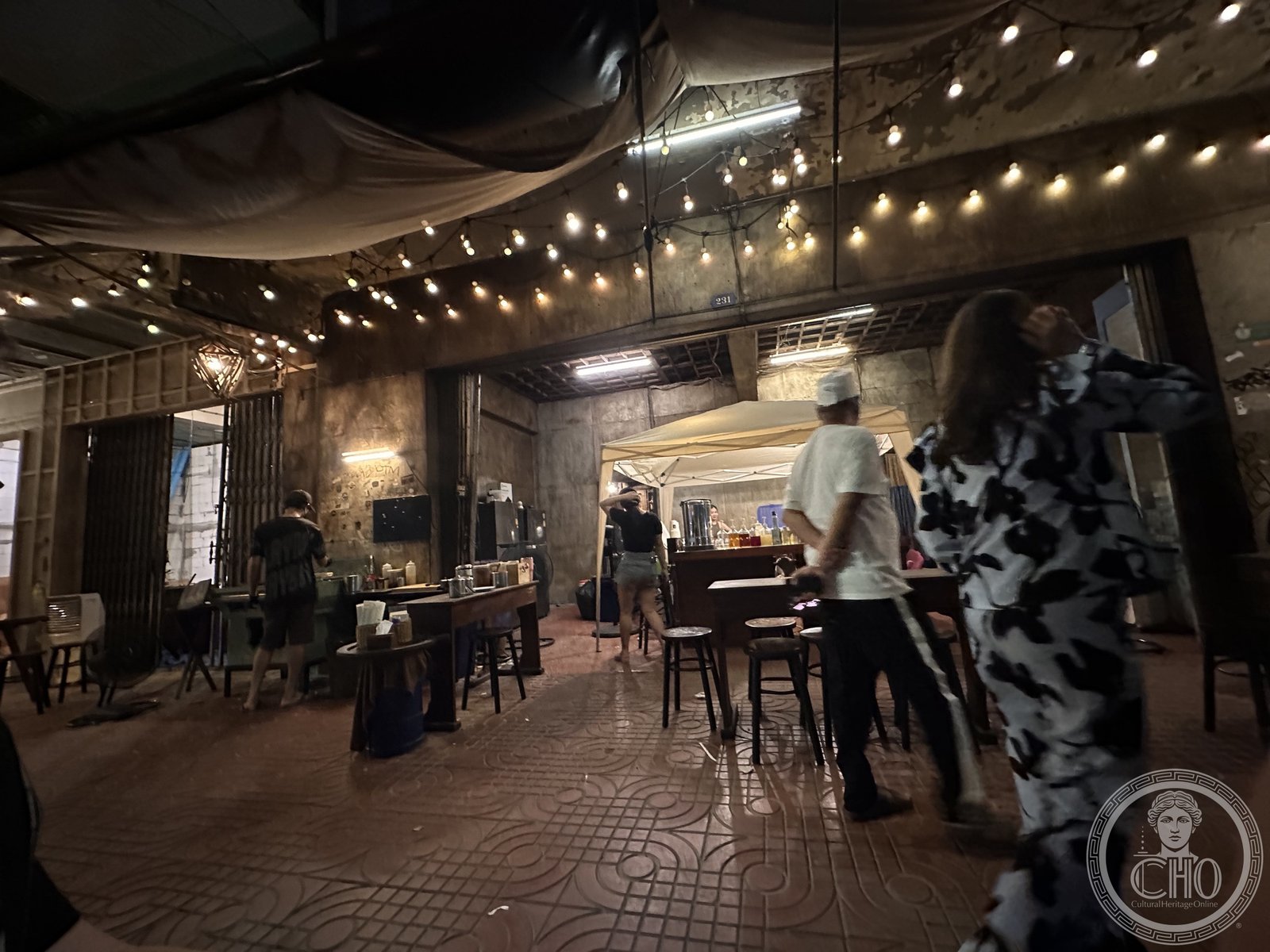
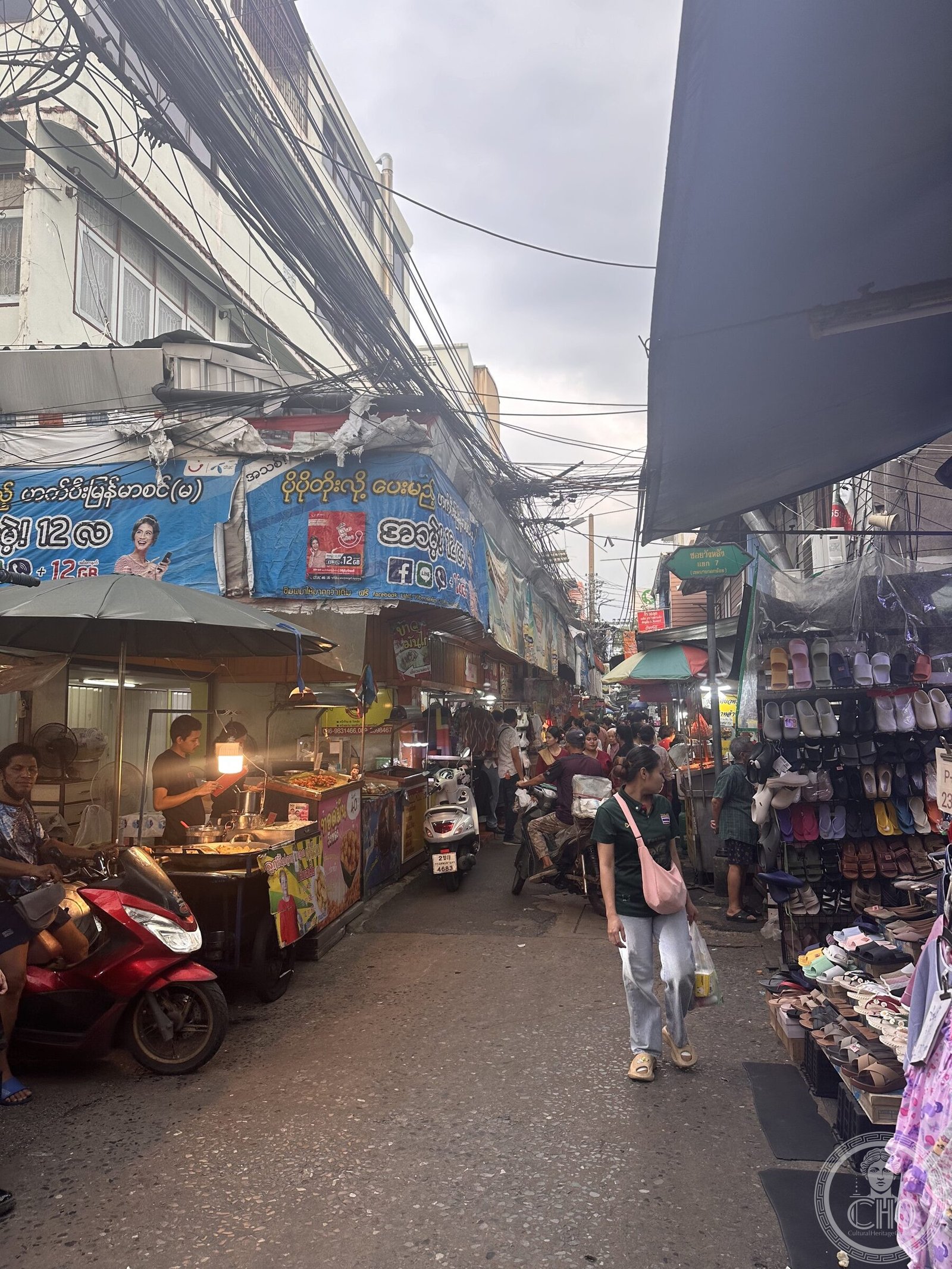
To the north, Wat Saket’s Golden Mount — an artificial hill topped by a gilded chedi — offers the best panoramic view of the entire historic core, from the Grand Palace spires to the industrial wharves downstream. Below, the Wang Lang riverside market has been selling produce, amulets, and cooked food to temple visitors and hospital workers since the nineteenth century, its corrugated roofs and wooden stalls an almost unaltered document of a pre-tourist Bangkok.
Practical information
- Temples: 08:00–17:00 generally; Grand Palace 08:30–15:30
- Dress code: cover knees and shoulders at all temples; sarongs available for loan at the Grand Palace gate
- Heat: intense March–May; carry water and plan rest stops
- Estimated time: full day for the quarter; 2 hours for a single major site
- Footwear: remove shoes at every temple threshold; slip-on sandals are practical
- Admission: Grand Palace and Wat Pho charge entry; Wat Saket and Wat Arun are modest fee; Chalermkrung by performance schedule
Getting there
BTS (Skytrain) Saphan Taksin station connects to the Chao Phraya express boat; take the orange or blue flag line to Chang Pier (Tha Chang, N9), 5 minutes walk to the Grand Palace. From Suvarnabhumi Airport: Airport Rail Link to Phaya Thai (30 min), then taxi (20 min). From Don Mueang: taxi 50–70 minutes depending on traffic. Tuk-tuks and khlong (canal) boats cover the quarter efficiently; the MRT Blue Line extension opened Sanam Chai station in 2019, two minutes walk from Wat Pho.
Nearby
- Wat Pho — Temple of the Reclining Buddha, 5 minutes on foot from the Grand Palace
- Wat Arun — Temple of Dawn, short Chao Phraya ferry crossing
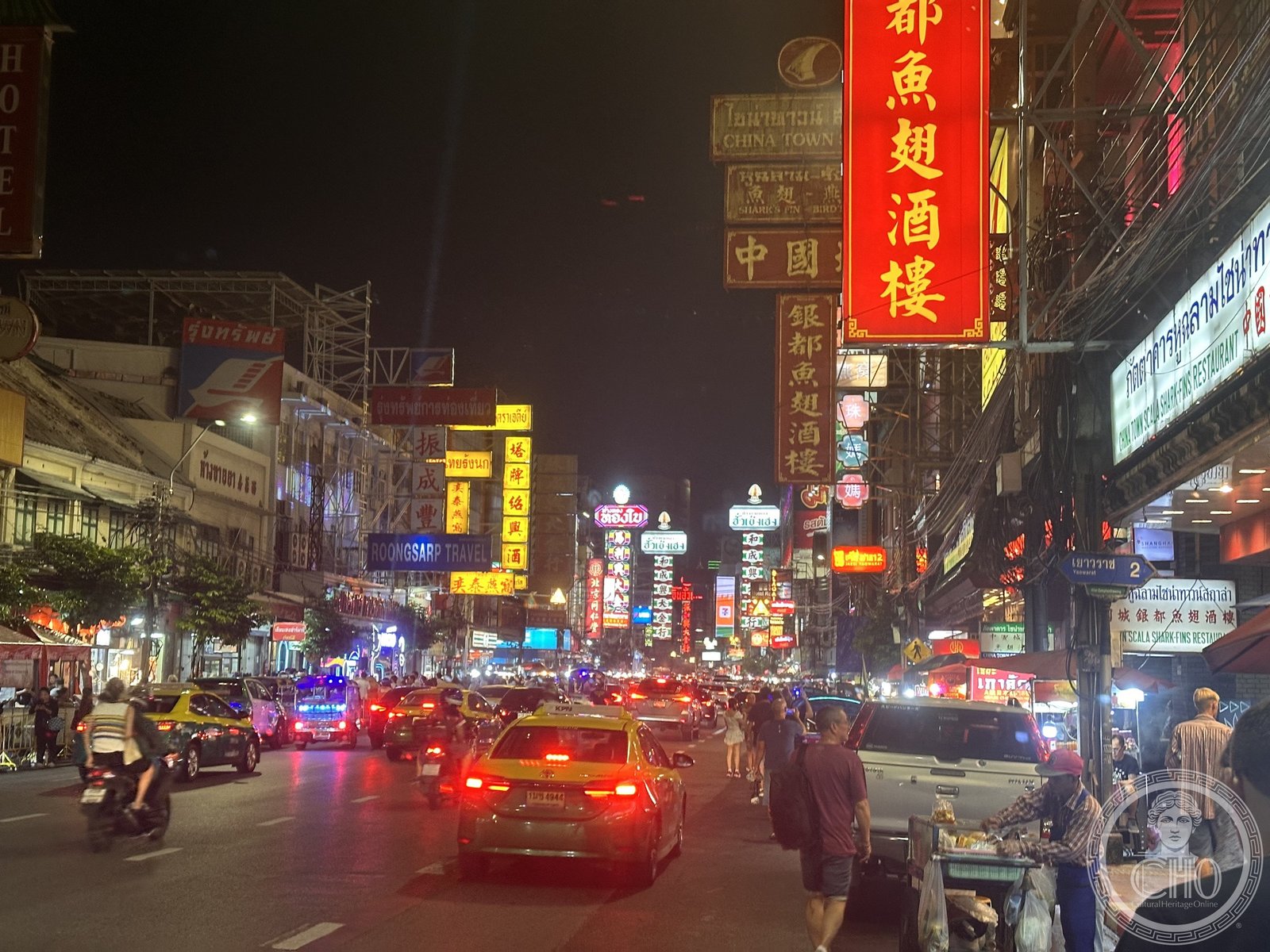
- Bangkok’s Chinatown — Art Deco shophouses and night market, 15 minutes by tuk-tuk
- National Museum Bangkok — largest museum in Southeast Asia, adjacent to the Grand Palace
Sources
- Fine Arts Department of Thailand. “Conservation of Historic Rattanakosin.” Bangkok, 2005.
- King Prajadhipok’s Institute. Chalermkrung Royal Theatre historical archive, Bangkok.
- Askew, Marc. “Bangkok: Place, Practice and Representation.” Routledge, 2002.
- Tourism Authority of Thailand. Official Bangkok Heritage Trail guide.
Gallery
Photographs by Luigi De Marchi.
Find it on the map
See this place and what’s around it →📷 Become a Cultural Heritage Online photographer
Share your photos of places: they stay published under your name as the author. The more they're seen, the more you get noticed — and soon a contest will reward the most appreciated photos.
Log in or sign up free to add a photo