
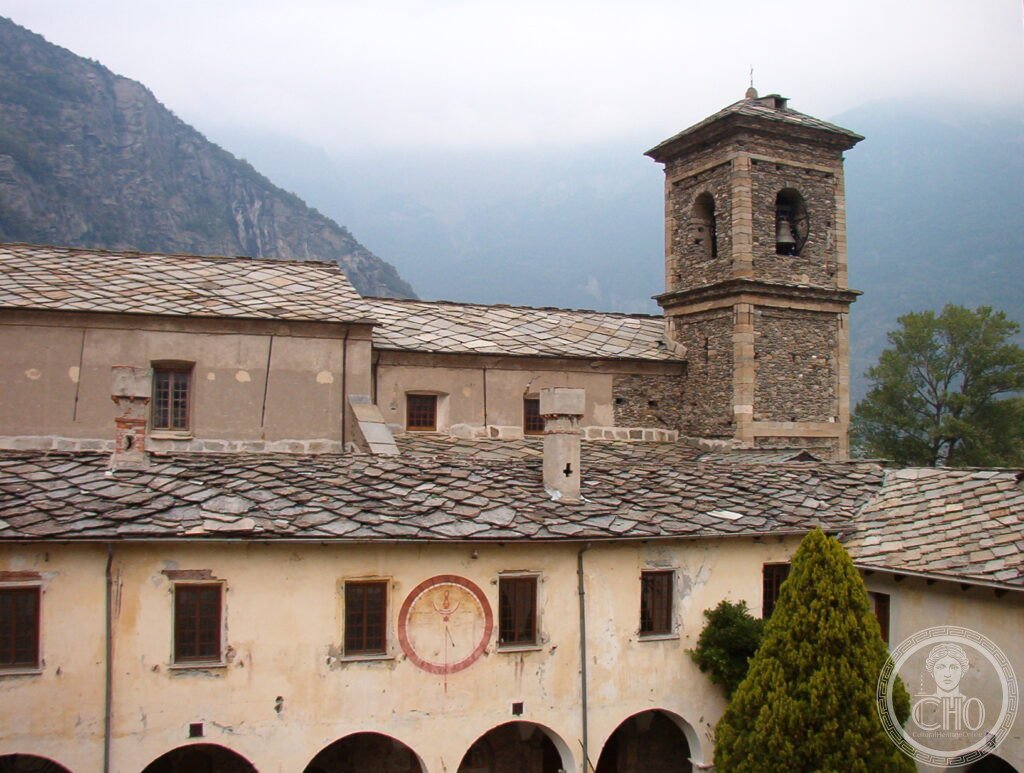
Abbazia di Novalesa (726 d.C.): il Monastero Carolingio al Moncenisio con i Più Antichi Affreschi del Piemonte
Nel 726 il nobiluomo franco Abbo fondò un monastero benedettino sul passo del Moncenisio, uno dei due valichi alpini più frequentati d'Europa. Cinquant'anni dopo Carlomagno vi si fermò di ritorno dalla conquista dell'Italia longobarda. Gli affreschi che decorano la Cappella di Sant'Eldrado raccontano questa storia in colori che hanno resistito a tredici secoli di valanghe, saccheggi saraceni e abbandono.
At a glance
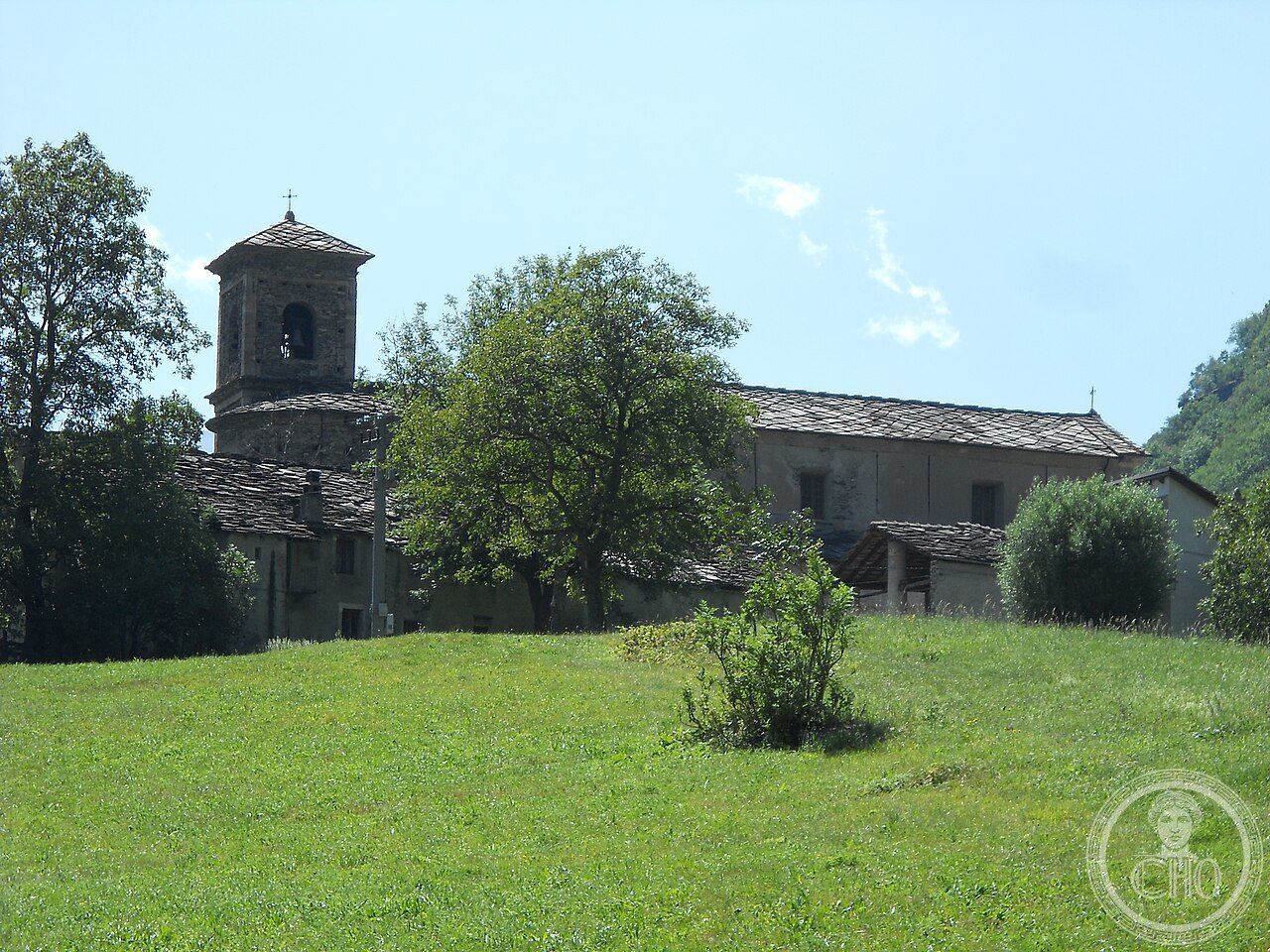
Novalesa Abbey stands in the narrow Cenischia valley at 885 m, at the foot of the Mont Cenis pass (2,081 m), in the Cottian Alps 55 km west of Turin. The abbey church, the four surviving chapels (San Michele, Sant'Eldrado, San Salvatore, and the Cappella dei Disciplinanti), and the Carolingian cloister form one of the most historically significant monastic ensembles in northern Italy. Founded in 726 by Abbo, a Frankish courtier, it served from the beginning as a hospice and transit monastery on the Roman road over the Mont Cenis — the direct route from France to Rome. Charlemagne stopped here in 773 on his way to defeat the Lombard king Desiderius; Pepin III had camped here before him. The Saracens destroyed it in 906; it was rebuilt by the Benedictines of Breme in the 10th century and gradually declined in the later Middle Ages. The 20th century saw a significant restoration and the return of an active Benedictine community.
Key facts
- Founded: 726 by Abbo (Frankish nobleman); Benedictine from the beginning; destroyed by Saracens 906; rebuilt 10th century; active community restored 20th century
- Chapel of Sant'Eldrado: the masterpiece; 11th-century frescoes (c. 1050–1100) showing the life of St Eldrado (9th-century abbot) and the story of Noah and Moses; the oldest Carolingian-style frescoes in Piedmont, in a surprisingly good state of conservation
- Via Francigena: the abbey is on the Via Francigena, the medieval pilgrimage route from Canterbury to Rome; pilgrims walking the route can stay at the abbey's pilgrim hospice (book in advance)
- Scriptorium: the 8th–9th century scriptorium of Novalesa produced important manuscripts, including the Chronicon Novaliciense, the abbey's own history written in the 11th century; copies of Virgil, Horace, and classical texts also produced here
- Charlemagne: passed through in 773 on his way to defeat the Lombard king; the abbey's chronicles record his visit and subsequent donations
- Today: active Benedictine community; open to visitors; pilgrim hospice; labora products (honey, jams, herbal preparations)
History
The foundation of Novalesa in 726 by Abbo — a wealthy Frankish nobleman who donated his entire estate to create the monastery — placed it at the junction of two major early-medieval routes: the Roman road over the Mont Cenis pass (now the SS25, still following the Roman alignment) and the Via Francigena, the pilgrimage route from Canterbury to Rome. The position gave it a strategic importance that attracted royal patronage: Charlemagne (773), Louis the Pious (814), and other Carolingian rulers stopped here, made donations, and sought the monks' prayers for their campaigns. The 8th–9th century saw the scriptorium produce important manuscripts; the chronicles record 6,000 volumes in the library at one point, an extraordinary figure for the early medieval period.
The Saracen raid of 906 dispersed the community; the monks fled with their manuscripts to Turin and later to Breme (Pavia). The site was eventually rebuilt by monks from Breme in the 10th century, and the surviving chapel frescoes (11th century) reflect this period of renaissance. The later medieval centuries saw the abbey decline as the Mont Cenis pass lost traffic to other routes and as the county of Savoy absorbed the surrounding territory; by the 15th century it had become a priory dependent on San Michele della Chiusa. The Savoy government suppressed it in 1798; restoration began in the 1930s under the care of the Benedictines, who gradually rebuilt the community and reopened the abbey to pilgrims and visitors.
What you see
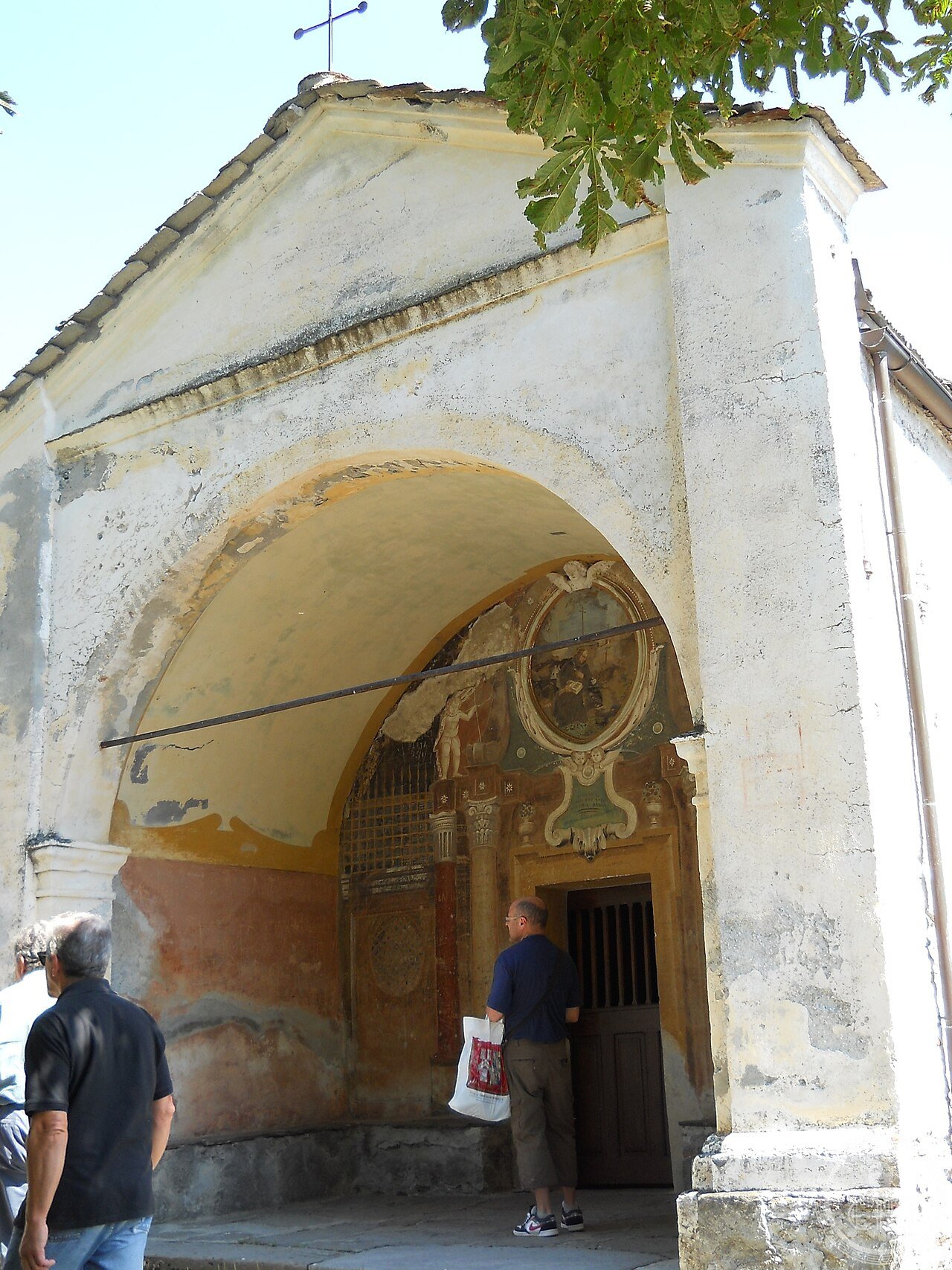
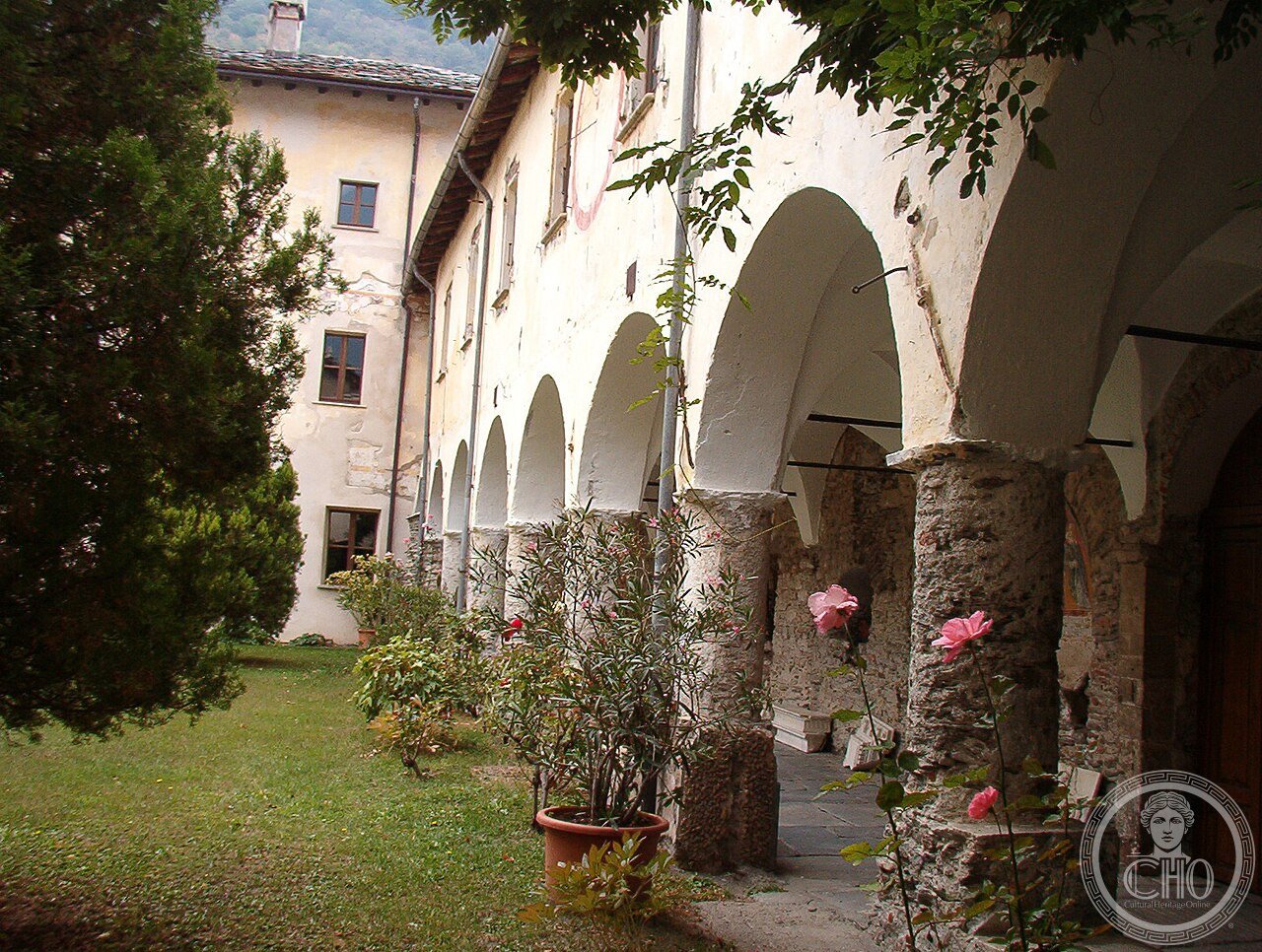
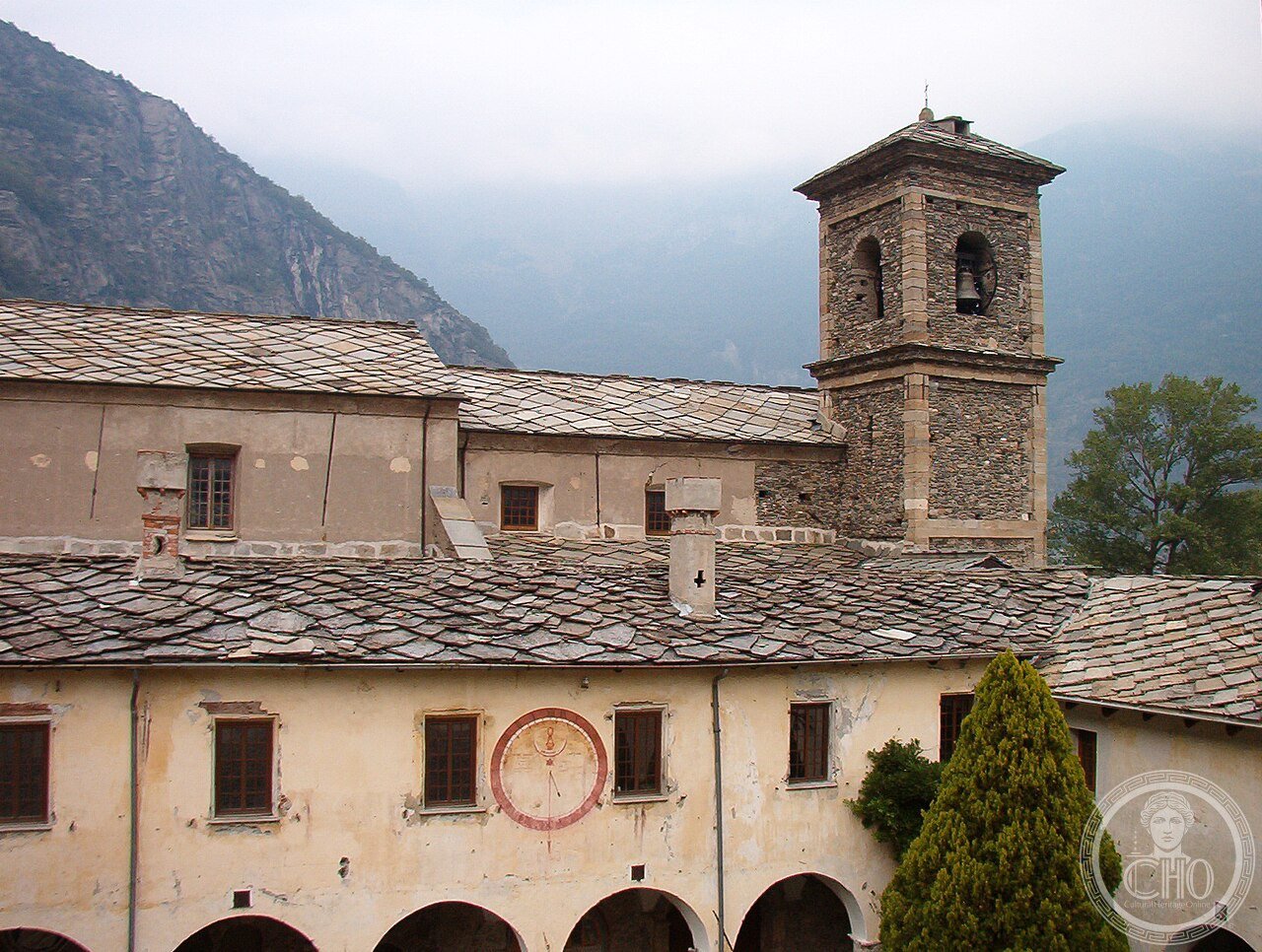
The abbey is entered through a gate into a complex of buildings around a central lawn, with the main church on the north side and the four chapels distributed around the enclosure. The church, largely rebuilt in the 18th century, is of secondary interest; the chapels are the reason to come. The Chapel of Sant'Eldrado (late 11th century) has two cycles of frescoes covering the apse and the upper walls: the life of Eldrado (the 9th-century abbot who expanded the abbey) in the apse, and Old Testament scenes (Noah, Moses, the Patriarchs) on the nave walls. The colours — ochre, red, and blue on a white ground — are still surprisingly vivid; the drawing style is hieratic and confident, in the tradition of Ottonian illuminated manuscripts translated into wall fresco. The Chapel of San Michele has Romanesque architecture; the Chapel of San Salvatore retains fragments of earlier fresco. The Carolingian cloister (largely reconstructed) gives the complex its meditative centre.
Practical information
- Opening hours: Tue–Sun 10:00–12:00 and 14:30–17:00; closed Monday; closed January
- Admission: free (donation for chapel visits)
- Pilgrim hospice: available for Via Francigena pilgrims; book in advance via abbazia.novalesa.it
- Time needed: 45 minutes to 1 hour
Getting there
By car from Turin (55 km west): A32 Autostrada dei Trafori to Susa, then SS25 (Via Monginevrina) toward Moncenisio; Novalesa is 7 km past Susa. No regular public transport (Susa has train connections from Turin; taxi or hire car needed for the last 7 km). GPS: 45.1750° N, 7.0000° E.
Nearby
- Susa — 7 km east; ancient Roman city; Arc of Augustus (8 BC); Roman amphitheatre; Romanesque cathedral; Porta Savoia (Roman gate)
- Sacra di San Michele — 35 km east; Romanesque-Gothic abbey on a cliff above the Val di Susa; one of the great pilgrimage sites of Piedmont; the model for Umberto Eco's Name of the Rose
- Mont Cenis pass — 15 km west; 2,081 m; lake reservoir (created 1967); the Roman and Carolingian road crosses the pass; France beyond
Sources
- Wikipedia — “Novalesa Abbey” (en.wikipedia.org/wiki/Novalesa_Abbey)
- Abbazia di Novalesa — abbazia.novalesa.it (official website)
- Cantino Wataghin, G., Novalesa: nuove testimonianze archeologiche, Turin 1992
Find it on the map
See this place and what’s around it →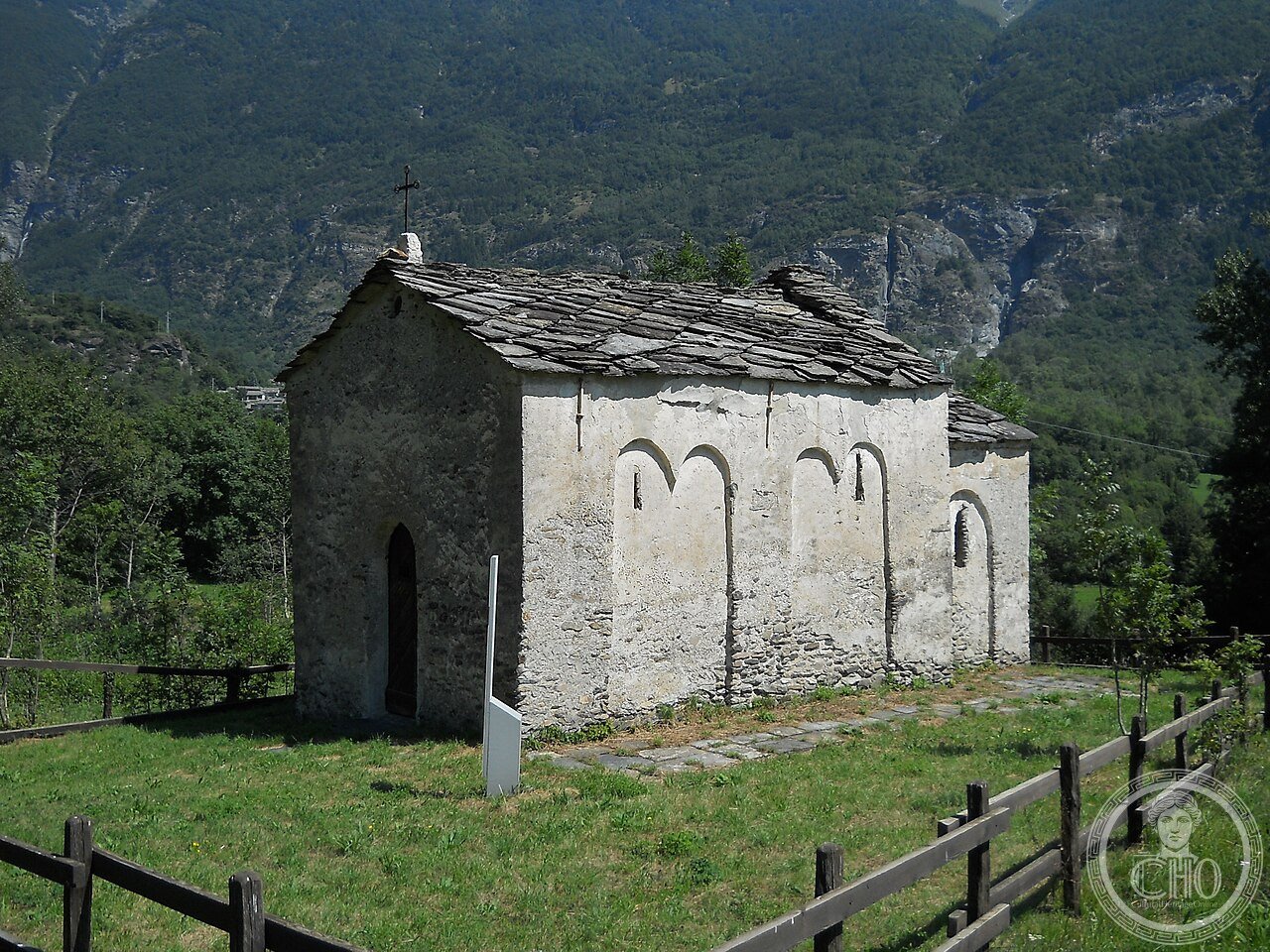
📷 Diventa un fotografo di Cultural Heritage Online
Condividi le tue foto dei luoghi: restano pubblicate con la tua firma come autore. Più vengono viste, più ti fai conoscere — e presto un concorso premierà le foto più apprezzate.
Accedi o registrati gratis per aggiungere una foto