
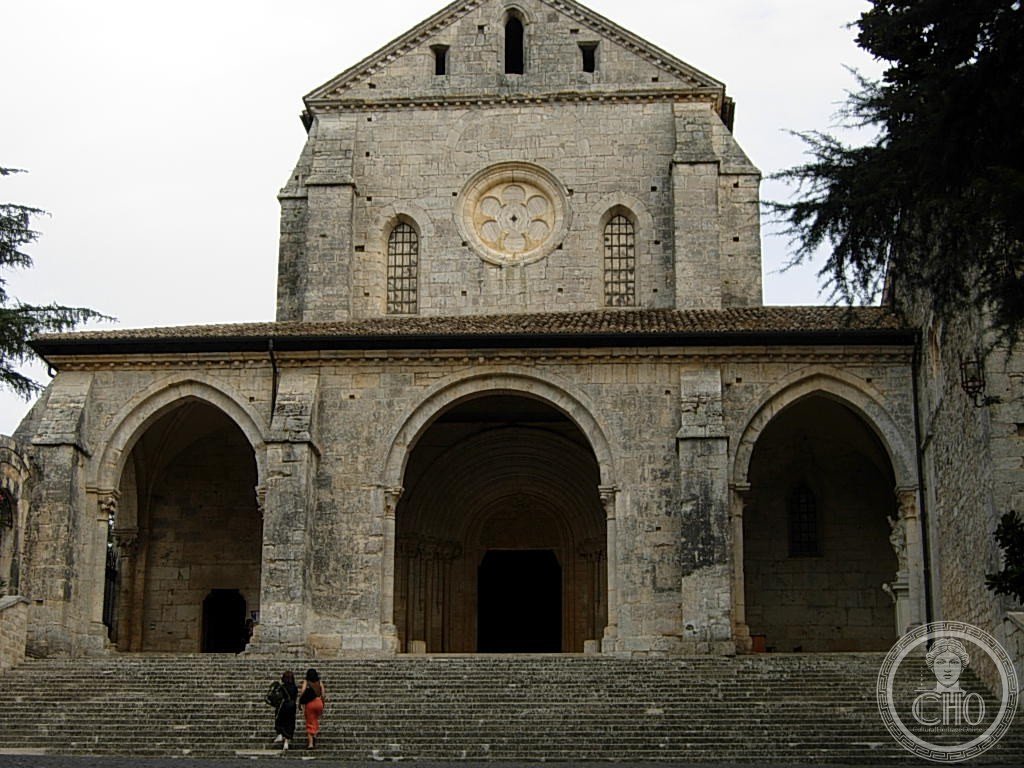
Casamari Abbey was consecrated by Pope Honorius III in person in 1217 — an extraordinary mark of favour that shows how far the Cistercians were then the dominant reforming force in the Church. The complex is almost intact, and its pharmacy of medicinal herbs still produces liqueurs and balms sold at the entrance.
At a glance
Casamari Abbey stands in the Liri valley near Veroli in southern Lazio, 110 km south-east of Rome. Cistercian monks from Morimond arrived at the site in 1152, taking over a Benedictine house that had existed since the 10th century; the present church was built between 1203 and 1217 and consecrated by Pope Honorius III on 14 September 1217. Together with Fossanova (consecrated 1208), Casamari is one of the two best-preserved examples of the French Cistercian Gothic in Italy — both follow the same Burgundian plan of Bernard of Clairvaux, with a three-nave church, squared-off east end, lantern at the crossing, and the strict prohibition on figurative ornament that defines Cistercian architecture from Burgundy to Scandinavia. The monastery is still inhabited by a community of Cistercian monks who maintain the church, the cloister, the refectory, and an extensive production of medicinal herbs, liqueurs and pharmaceutical products that has made the Casamari pharmacy one of the best-known in the Italian monastic tradition.
Key facts
- Founded: Cistercians arrived 1152 (from Morimond, Burgundy); church built 1203–1217.
- Consecrated: 14 September 1217 by Pope Honorius III in person.
- Plan: strict Cistercian Bernardine plan; three naves, squared east end, no towers, no figurative ornament; very close to companion Fossanova (1208).
- Refectory: 13th century; reading pulpit in the wall; rose window; one of the finest Cistercian refectories in Italy.
- Pharmacy: the monastic pharmacy produces liqueurs (Elixir di Casamari), herbal medicines and cosmetics from herbs grown in the monastic garden; available in the abbey shop.
- Today: active Cistercian community; church and cloister open to visitors; museum of sacred art on site.
History
The site at Casamari (“house of Mario”) was occupied by a Benedictine community from the early 10th century, under the patronage of the Counts of Tusculum. When the Cistercians arrived in 1152, they replaced the Benedictines and immediately began planning a new church in the Bernardine model. The 60-year gap between the Cistercians’ arrival and the start of construction (1203) reflects the practical reality of Cistercian building: the community first had to establish an agricultural base, drain the valley floor, build the utilitarian structures (dormitory, refectory, guesthouse), and raise the funds for a major stone church.
The consecration by Honorius III in 1217 was extraordinary: popes did not normally travel to consecrate provincial monasteries. It reflects the prestige that the Cistercians had accumulated by the early 13th century, when Bernard of Clairvaux’s successors were playing a central role in the Crusades, the struggle against the Cathars, and the reform of the secular clergy. After the 13th century, Casamari followed the general pattern of Italian Cistercian houses — periods of wealth and scholarship, periods of decline during the plagues and wars of the 14th and 15th centuries, Napoleonic suppression in 1810, return of the monks in 1826, and a 19th-century restoration that was relatively respectful of the medieval fabric.
What you see
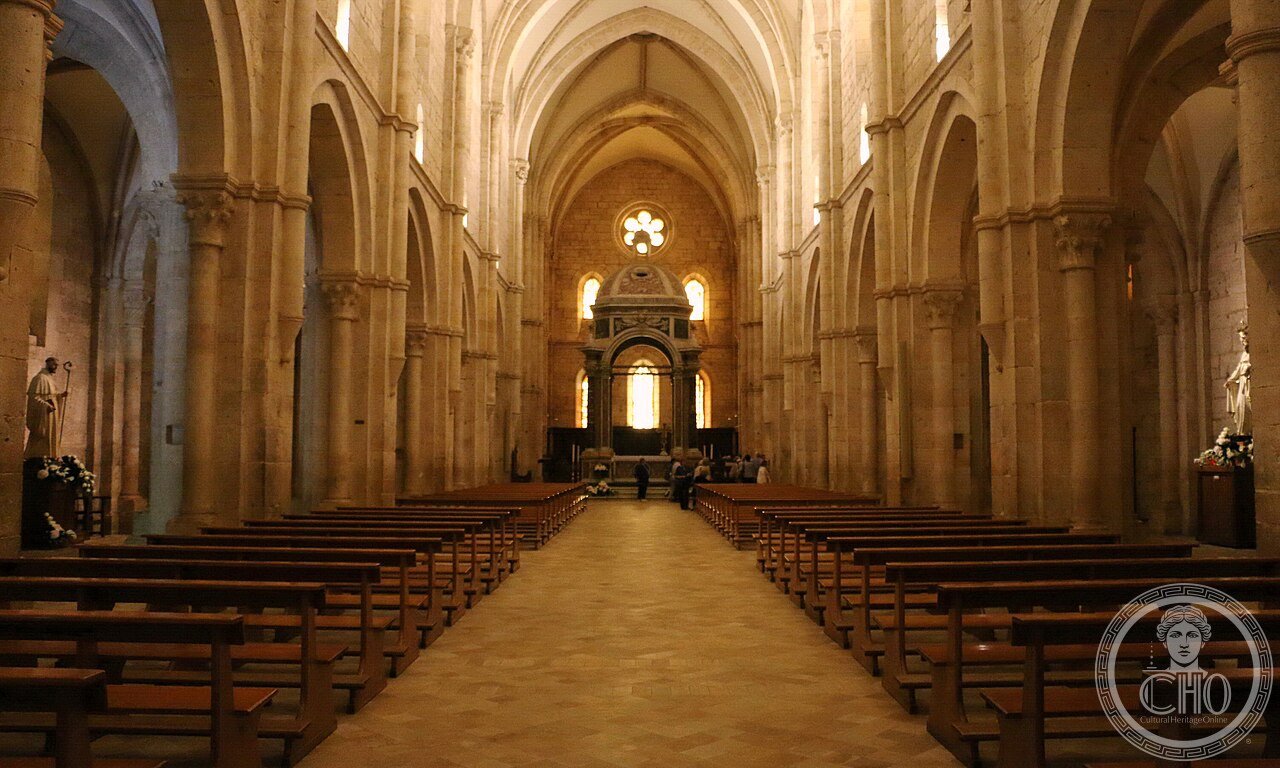
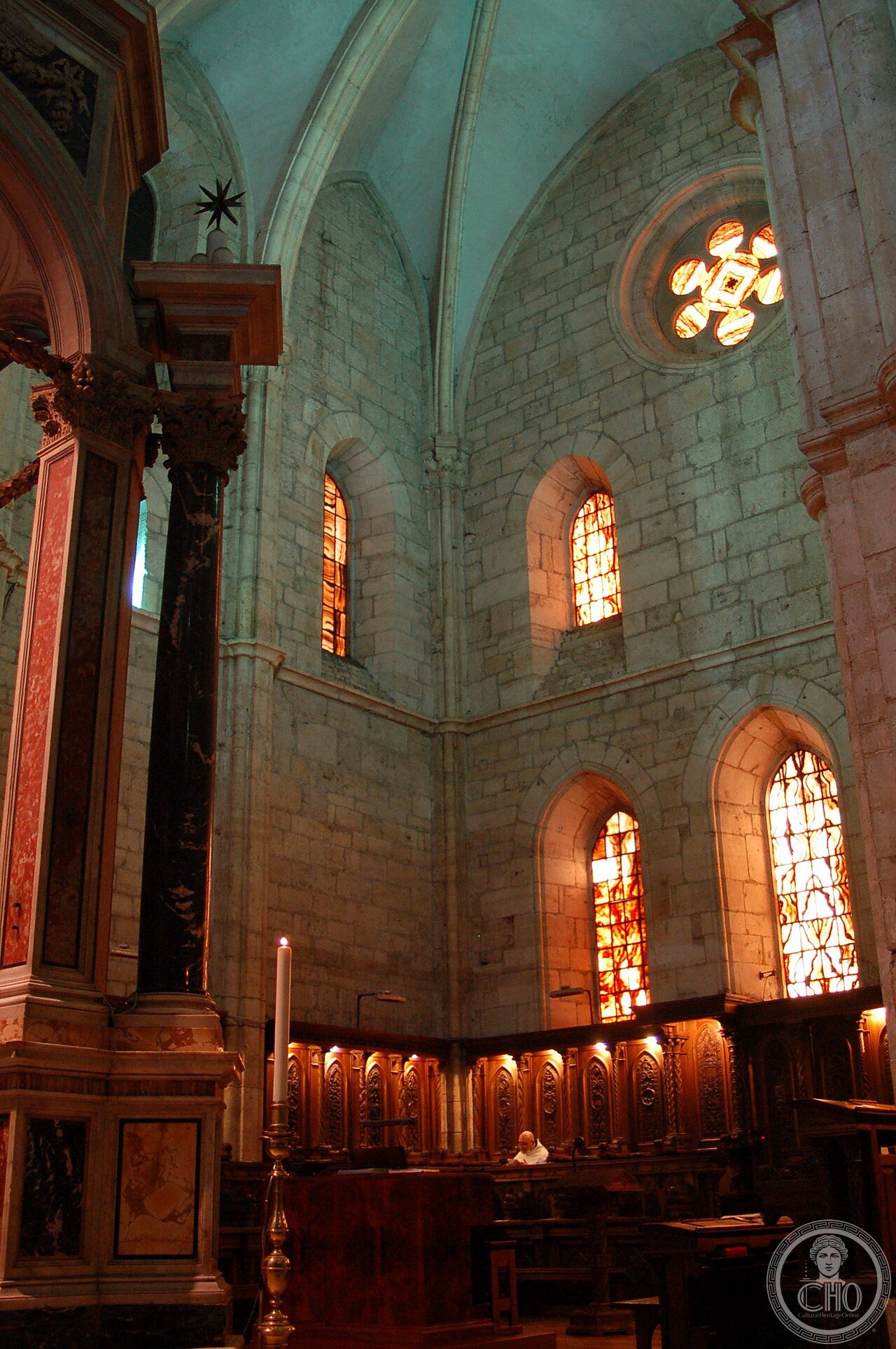
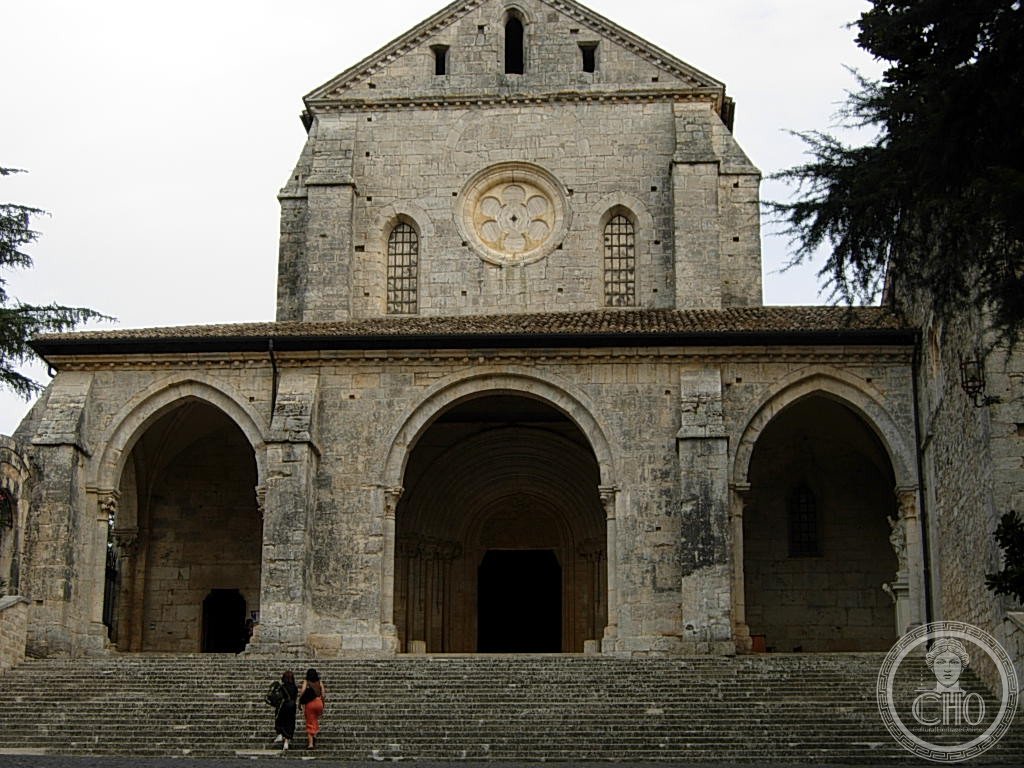
The approach to Casamari from the road gives a clear view of the three-part composition: the low, massive church facade with its pointed portal and rose window, the dormitory wing to the right, and the refectory range to the left — all in the same warm limestone that reads as almost white in strong sunlight. The church interior, like Fossanova, is a study in controlled austerity: pointed arches on rectangular piers, ribbed vaulting without ornament, lancet windows without coloured glass, the stone floor unbroken by carpets or furniture. The effect is of an interior that is empty in the most intentional way — empty to make room for the light and for the voices of the monks singing the Divine Office.
The cloister, with its alternating single and double columns in the transition from Romanesque to Gothic, leads to the refectory — one of the finest in Italy, with a reading pulpit built into the wall and a large rose window above the far end. The sacristy contains a small museum of Romanesque sculpture recovered during 19th-century restoration. The pharmacy and shop on the south side of the complex are worth a visit: the liqueurs, herbal preparations and cosmetics produced by the monks are genuinely excellent.
Practical information
- Opening hours: daily 09:00–12:30 and 15:00–18:00; check seasonal variations.
- Admission: free; voluntary donation requested.
- Pharmacy / shop: same hours as church; notable products include Elixir di Casamari and cosmetic preparations.
- Dress code: appropriate for an active monastery.
- Time needed: 1.5 hours for church, cloister and pharmacy.
Getting there
By car from Rome: A1 motorway south, exit Frosinone, then SS214 east to Veroli/Casamari. By bus from Frosinone (local Cotral bus to Veroli, then 5 km). GPS: 41.6594° N, 13.4814° E.
Nearby
- Abbazia di Fossanova — near-identical Cistercian church consecrated 1208 (9 years before Casamari), 40 km south-west; comparing the two is the best way to understand the Cistercian building formula.
- Veroli — medieval hilltown with Acropolis and early Christian basilica of Santa Salome, 5 km north.
- Montecassino — the Benedictine motherhouse, 30 km south, represents the tradition the Cistercians were reforming.
Sources
- Wikipedia — “Casamari Abbey” (en.wikipedia.org/wiki/Casamari_Abbey).
- Wolfgang Braunfels, Monasteries of Western Europe, Thames & Hudson, 1972.
- Abbazia di Casamari — official website (abbaziadicasamari.it).
Find it on the map
See this place and what’s around it →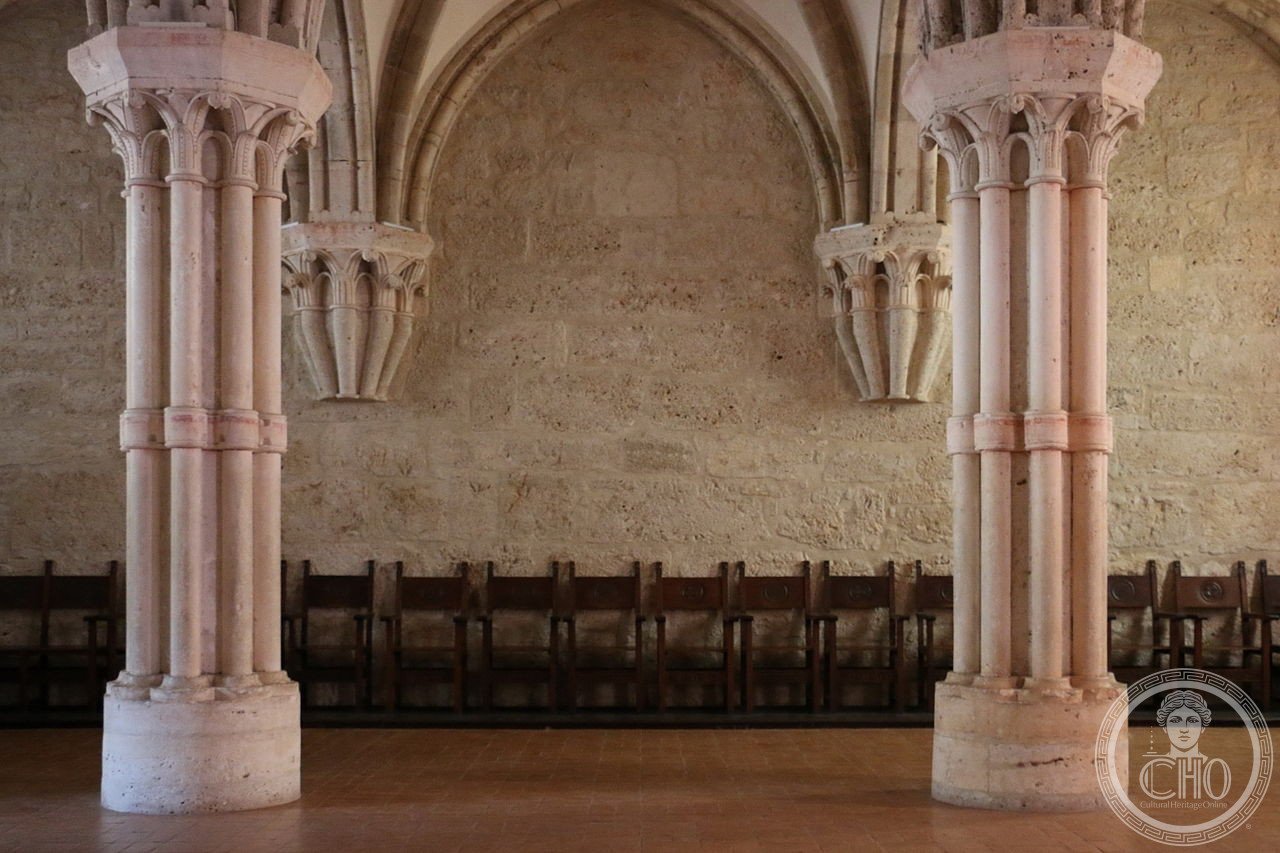
📷 Become a Cultural Heritage Online photographer
Share your photos of places: they stay published under your name as the author. The more they're seen, the more you get noticed — and soon a contest will reward the most appreciated photos.
Log in or sign up free to add a photoIs this page about you?
This page is read by travellers and heritage enthusiasts who find it on Google. Tell us how you are connected to this place and we will take it from there.