
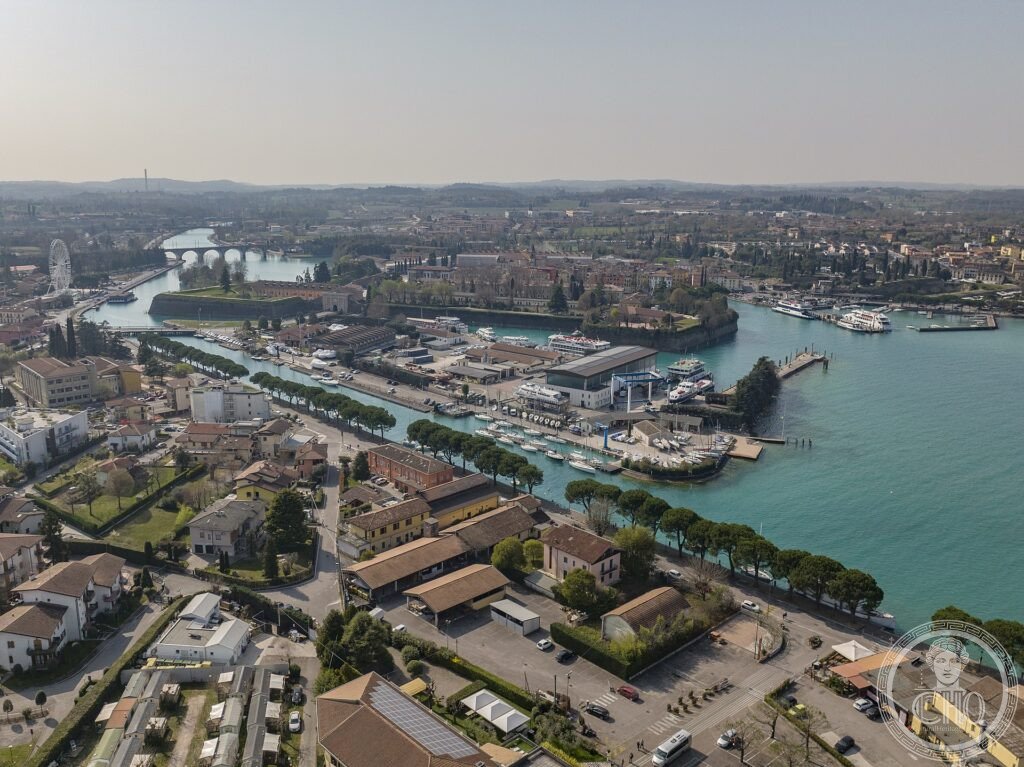
A fortress town that the Republic of Venice built on the island where the Mincio leaves Lake Garda, to control the southern lake — pentagonal, bastioned, and still intact after five centuries.
At a glance
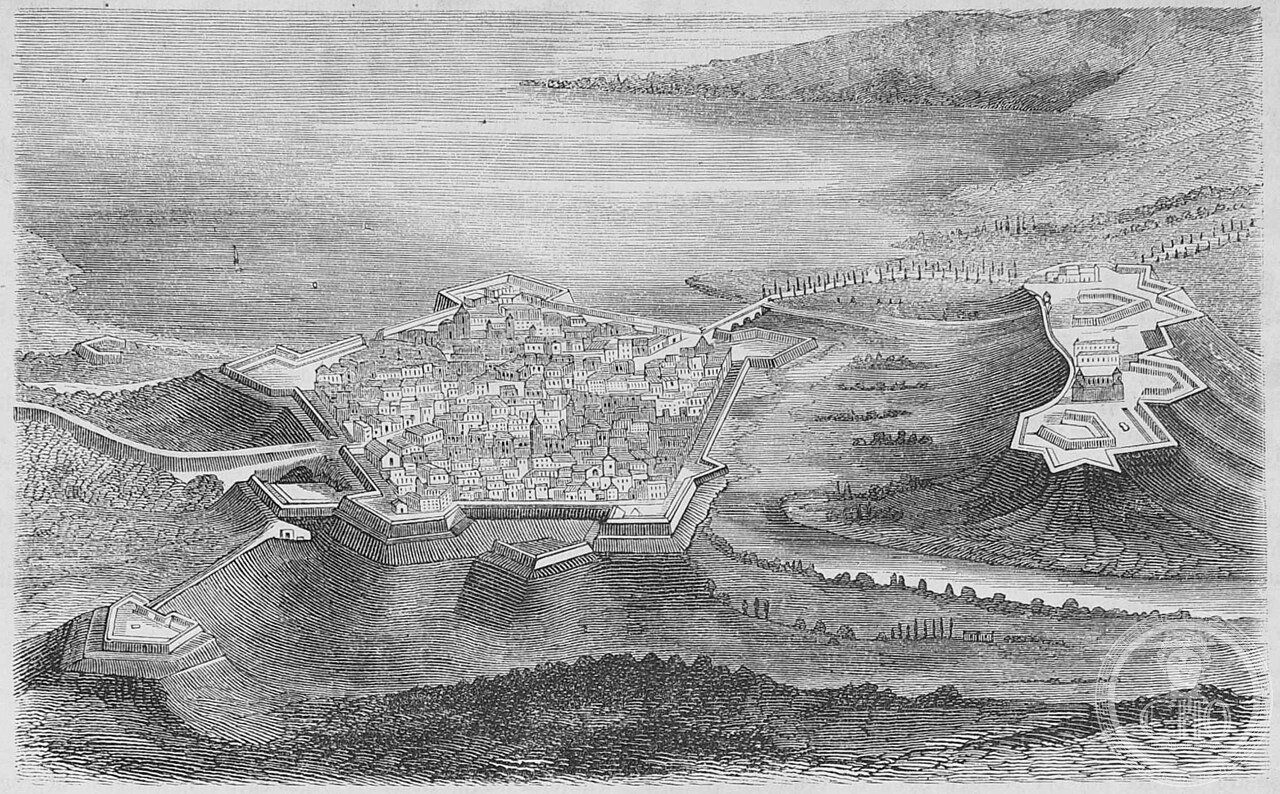
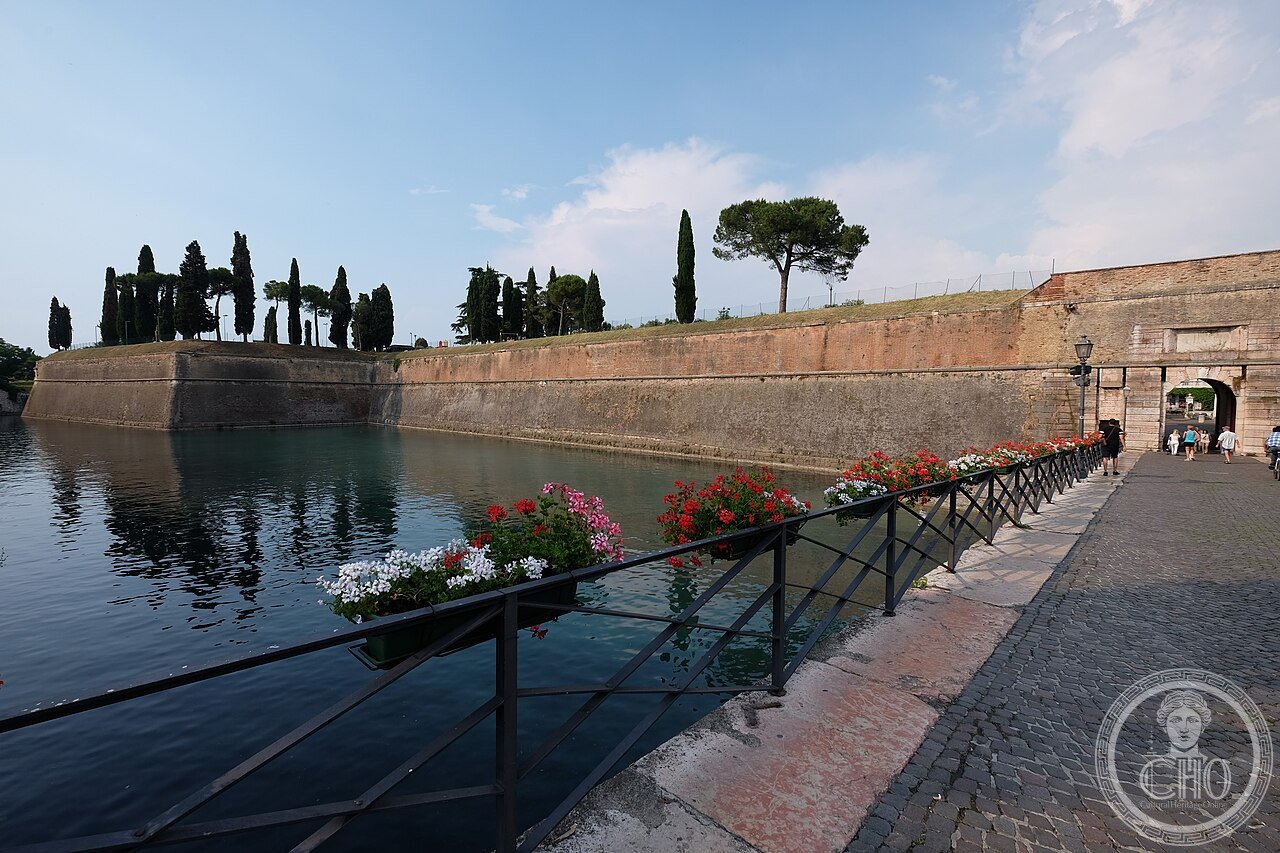
Peschiera del Garda sits on a small island where the Mincio river exits Lake Garda, a natural chokepoint that every power controlling northern Italy has fortified since Roman times. The Venetian walls visible today were built between the 15th and 17th centuries and represent one of the most complete examples of Renaissance military urbanism in Italy: a compact pentagonal ring of bastions encircles the entire old town, with the lake and the river acting as a natural moat. In 2017, UNESCO inscribed Peschiera as part of the “Venetian Works of Defence” alongside Bergamo, Palmanova, Zadar and Kotor — recognising the shared military-architectural language the Serenissima deployed across its dominions.
Key facts
- UNESCO inscription: 2017, “Venetian Works of Defence between the 15th and 17th Centuries,” ref. 1533rev
- Location: island at the southern tip of Lake Garda, at the source of the River Mincio
- Construction: Venetian military engineers, primarily 15th–17th century; partial reconstruction under Austrian rule (19th century)
- Plan: pentagonal bastioned circuit; five bastions, two gates (Porta Brescia, Porta Verona)
- Strategic role: key node in the Quadrilatero fortress system (with Mantova, Legnago, Verona) under Austrian rule 1815–1866
- Current use: historic town centre; military barracks (Caserma Ospedaletto) partially open to visitors
History
Roman Arilica occupied this island before the first millennium. Medieval communes and the Scaligeri lords of Verona all built defensive works here, but it was Venetian rule from 1405 onward that shaped the walls as they stand. The Republic invested heavily in Peschiera as the western anchor of its Stato da Terra: engineers redesigned the medieval circuit into an artillery-proof pentagon, reinforcing the bastions through the 16th century in response to the wars of the League of Cambrai.
After the fall of Venice in 1797, the fortress passed to France, then Austria. Under the Habsburgs, Peschiera became one of the four corners of the Quadrilatero — Austria’s forward defensive system in northern Italy — and the walls were strengthened once more for 19th-century artillery. The wars of Italian Unification made Peschiera famous: it fell to Garibaldi’s forces in 1859 after the Battle of San Martino, and became part of the Kingdom of Italy in 1866.
The UNESCO inscription in 2017 returned focus to the Renaissance Venetian core beneath the 19th-century additions, recognising the original engineering logic that made the fortifications so durable across five centuries.
What you see
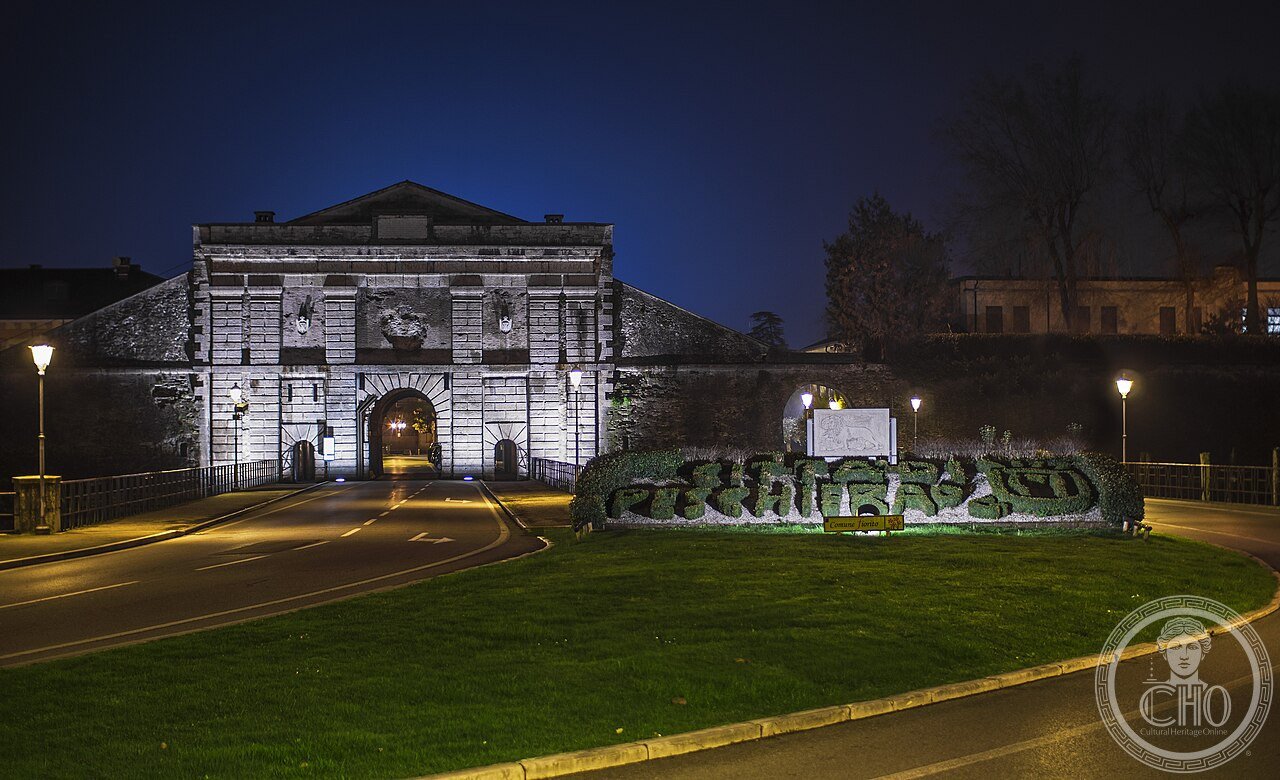
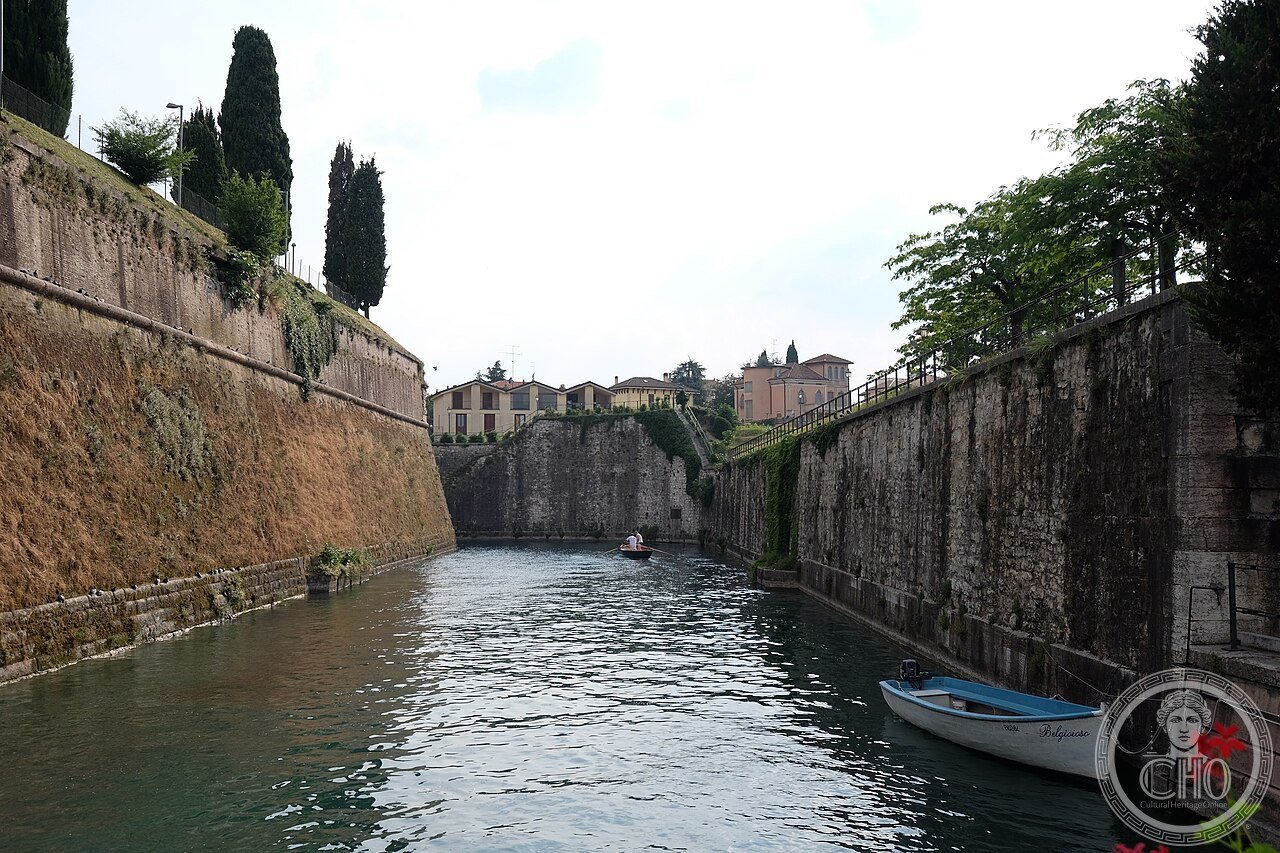
Entering through Porta Brescia or Porta Verona, the sensation is of stepping into a military urbanism that has been converted into a small Italian town: bar tables and gelaterie occupy ground floors that were once magazine storerooms, and laundry hangs above moat walks designed for musket fire. The bastions are best seen from the water: a boat trip on the Mincio canal shows the full pentagon rising from the lake, the masonry dark-streaked from five centuries of spray. The wall-walk is accessible and free; it circles the entire island in 30 minutes, offering views of Lake Garda to the north and the Mincio wetlands to the south.
The old town inside is characterised by a Venetian grid of porticoed streets, a small Duomo, and the 16th-century church of San Martino. The military architecture and the quiet domestic town have coexisted so completely that it takes a moment to register you are standing on one of Italy’s most intact Renaissance fortresses.
Practical information
- Wall walk: free and open daily; begins at either main gate
- Best season: spring (April–May) and autumn; summer is crowded with Garda tourists
- Time needed: 1–1.5 hours for walls + old town; half-day to include a boat trip
- Boat trips: regular ferries and tour boats depart from the lakeside dock, April–October
- Parking: outside the walls (no cars inside the fortified island)
Getting there
Peschiera del Garda station (Venezia–Milano main line) is 300 m from Porta Verona; frequent trains from Verona (20 min) and Brescia (30 min). By car: A4 motorway, exit Peschiera del Garda. From Verona airport (VRN), 25 km by car or taxi. GPS: 45.4383° N, 10.6875° E.
Nearby
- Lazise — medieval lakeside village with the oldest Venetian customs building in the Stato da Terra, 10 km north
- Sirmione — Scaligeri castle on a Garda peninsula, Roman spa ruins, 10 km west
- Mura Veneziane di Bergamo — companion UNESCO 2017 site, 70 km north-west
Sources
- UNESCO World Heritage List — “Venetian Works of Defence between the 15th and 17th Centuries,” ref. 1533rev (whc.unesco.org)
- Wikipedia — “Peschiera del Garda” (en.wikipedia.org/wiki/Peschiera_del_Garda)
- Touring Club Italiano — Guida d’Italia: Veneto
- Comune di Peschiera del Garda — Ufficio UNESCO
Find it on the map
See this place and what’s around it →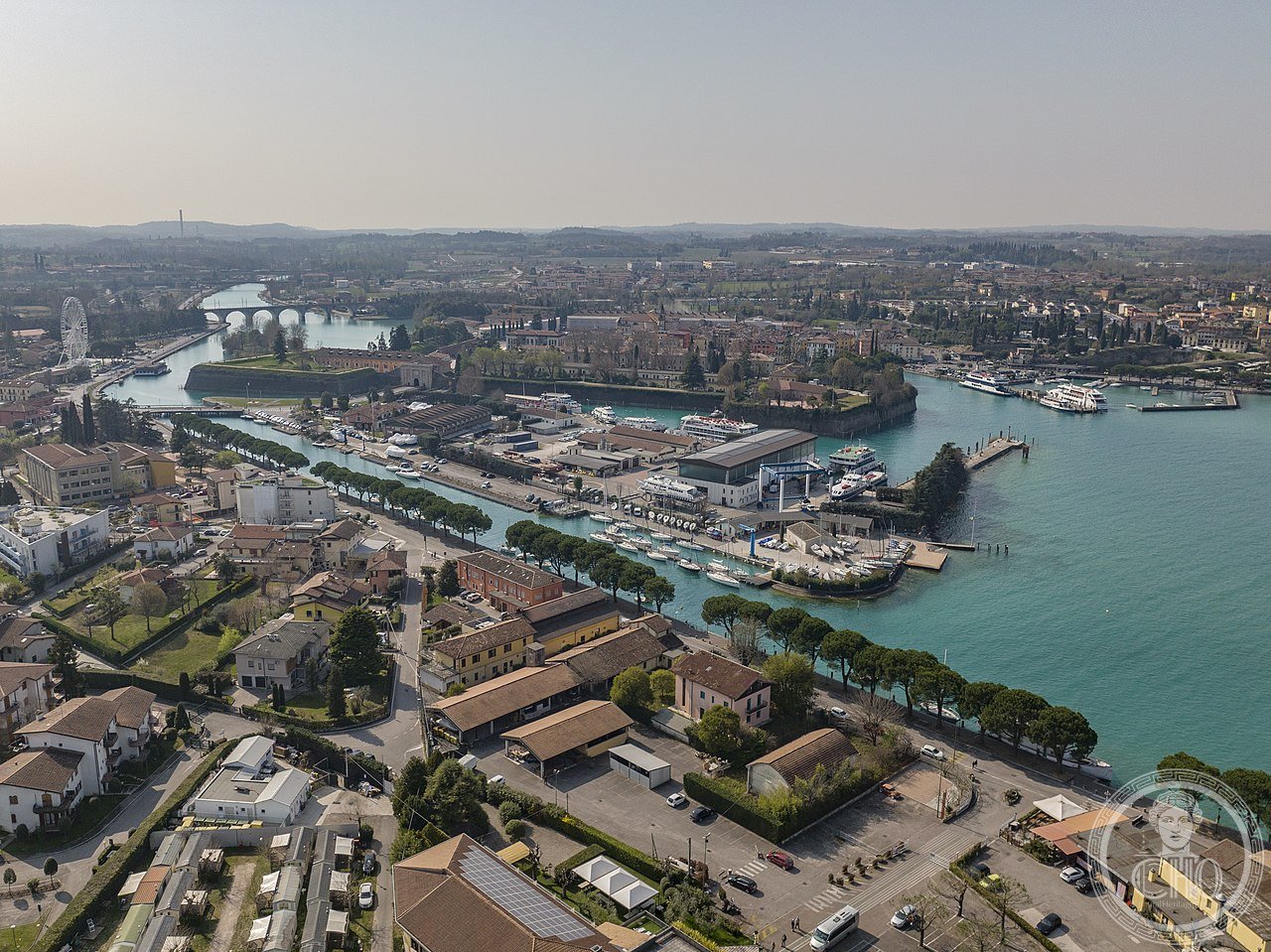
📷 Become a Cultural Heritage Online photographer
Share your photos of places: they stay published under your name as the author. The more they're seen, the more you get noticed — and soon a contest will reward the most appreciated photos.
Log in or sign up free to add a photo