
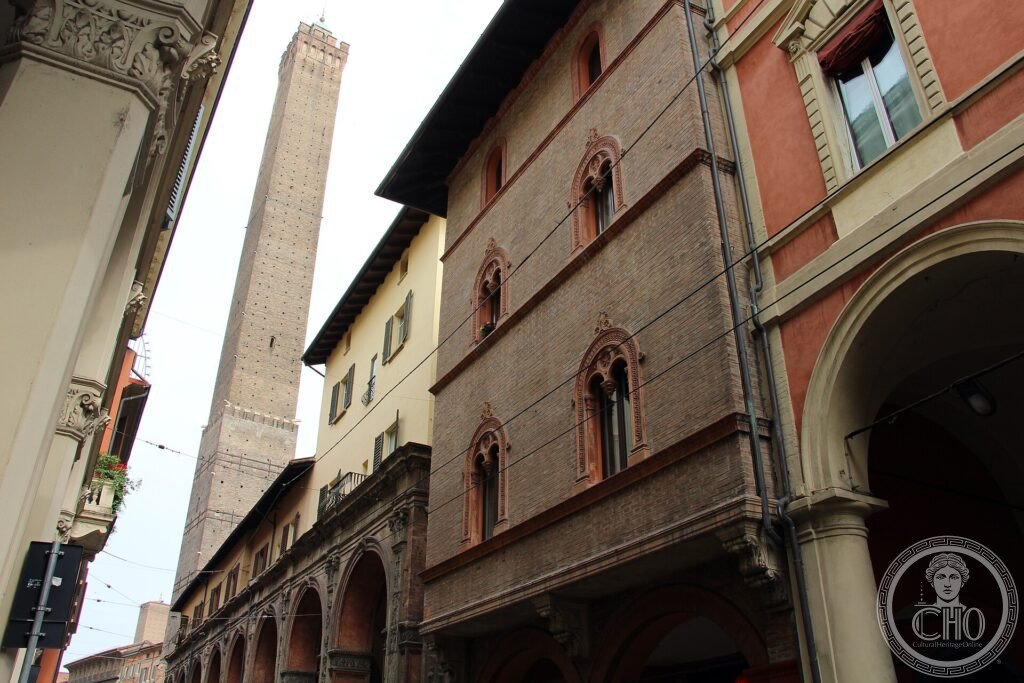
Le Due Torri di Bologna — the Asinelli tower (97.2 m, the tallest surviving medieval tower in Italy) and the Garisenda (48 m, leaning 3.2 degrees from vertical, shortened in 1351 because it was too dangerous) — are the most visible symbol of a city that in the 13th century had approximately 180 towers built by rival noble families as status symbols, power displays, and military fortifications, making it the “Manhattan of the Middle Ages,” a skyline that no other European city attempted on the same scale or density.
At a glance
Le Due Torri (Bologna; UNESCO 2021, ref. 1650 — inscribed as part of “The Porticoes of Bologna”) stand at the Croce di Piazza (the medieval crossroads of Via Emilia / Via San Vitale), the most important junction in the medieval city. They are not strictly porticoed buildings — but they are directly part of the UNESCO inscription as defining elements of Bologna’s historic urban landscape, which the WHC recognized as a unified whole including both the architectural typology (the portico) and the skyline it created. The Garisenda tower (the shorter, more dramatically leaning one) is famous from Dante’s Inferno (Canto XXXI, vv. 136-138) — the only building Dante described directly by comparing it to something real that his readers could visit: “Come la Garisenda pare al riguardare / sotto ‘l chinato, quando un nuvol vada / sovr’essa si, che ella incontro penda.”
Key facts
- Le 180 torri di Bologna medievale: At the height of the medieval period (13th century), Bologna had approximately 180 tower-houses (torri gentilizie — family towers) built by the noble and wealthy merchant families as expressions of power, prestige, and factional rivalry (the Guelph-Ghibelline struggles led to intensive tower-building in Italian cities); of these 180, only about 20 survive today; the towers were typically built within 10-15 years by the founding family and served as combined symbol of status, defensive strongpoint, storage facility, and workshop; the two surviving towers that define Bologna’s skyline (Asinelli and Garisenda) were built by the respective families of those names within approximately a decade of each other
- Torre degli Asinelli (97.2 m, 1109-1119): Built by the Asinelli family between 1109 and 1119; the tallest medieval tower in Italy open to the public; leans 2.23 degrees from vertical (223 cm offset at the top); 498 steps to the top; from the tower top at clear weather: the Apennines (south), Ferrara and the Po plain (north), Ravenna (east), Modena (west); the tower was confiscated by the Commune of Bologna in 1185 (during the power struggle between the nobility and the rising merchant class) and was used as the city prison until the 14th century, then as a watchtower, clock tower, and civic landmark; the external base has medieval storage arches that were later used as wine shops
- Torre Garisenda (48 m, orig. ~60 m, 1109-1119): Built by the Garisenda family; originally approximately 60 m tall; the lean was already dramatic in Dante’s time (ca. 1300); in 1351 the Commune reduced the height by 12 m because the lean was causing structural concerns; it now leans 3.22 degrees from vertical (322 cm offset), significantly more than the Leaning Tower of Pisa (3.97 degrees, but much taller); CLOSED to visitors since 2023 due to microcracking detected in the masonry; currently under structural monitoring
- UNESCO: 2021, rif. 1650
- GPS: 44.4941, 11.3474 — Google Maps (Le Due Torri, Piazza di Porta Ravegnana, Bologna)
History
The Asinelli and Garisenda towers were both built in approximately the same decade (1109-1119), by two rival families, on adjacent lots at the Croce di Piazza — the most commercially and strategically important crossroads in the medieval city. The competitive nature of the construction (both families were trying to build the tallest possible tower) and the fact that both were built in the same decade suggests a direct rivalry. The Garisenda family apparently began first but had structural problems (the lean began during construction, not after — the foundation soil was inadequate). The Commune of Bologna confiscated the Asinelli tower in 1185 and the Garisenda in the 13th century. Dante Alighieri visited Bologna twice (ca. 1287 and ca. 1302) and included a direct visual description of the Garisenda in the Inferno (Canto XXXI) — the only occasion in the Divine Comedy where Dante refers to a real contemporary building by name.
What you see
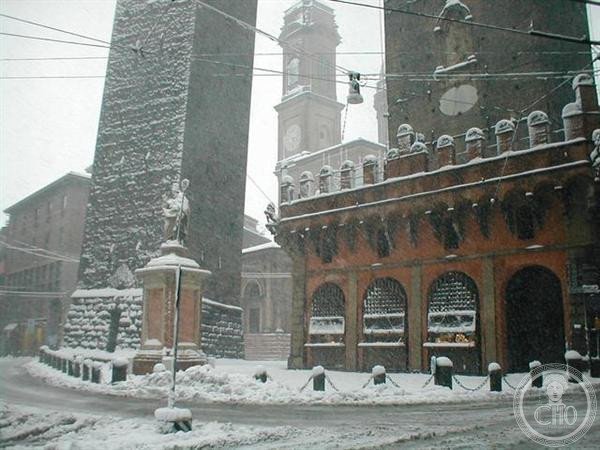
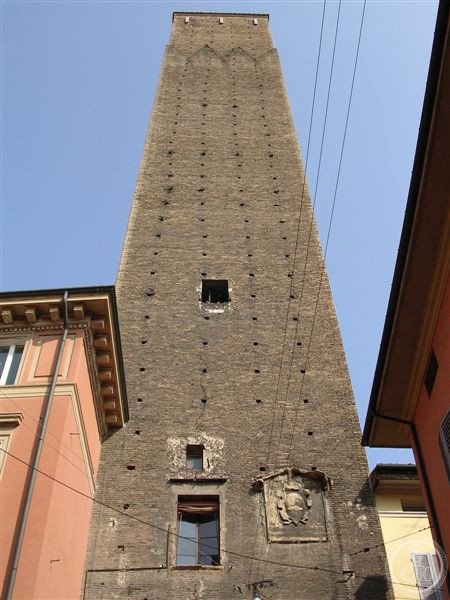
The Due Torri are visited at the Croce di Piazza (Piazza di Porta Ravegnana), where the Via Emilia / Via San Vitale intersection was Bologna’s medieval hub. The visit: the exterior (the essential experience — stand at the base of both towers and look straight up; the Garisenda lean is visible to the naked eye from street level; photograph both towers together from the Via Rizzoli portico, looking east); the Asinelli interior (timed entry, advance booking recommended in summer; 498 wooden steps with banisters and lighting; the staircase is narrow and steep — about 30-40 min round trip; the view from the top is the best urban panorama in Bologna); the Garisenda exterior only (closed since 2023 for structural monitoring — do not attempt to enter even if access appears possible). Note: The bas-relief of the Dante citation from Inferno XXXI is inscribed on the base of the Garisenda on the east face.
Gallery
Practical information
- Torre degli Asinelli: Piazza di Porta Ravegnana, Bologna; open daily 10:00-18:00 (winter), 09:30-20:00 (summer — check seasonally); admission ~€5-8 (sold online via ToB system); timed entry tickets recommended (queue can be 45+ min in summer without booking); 498 steps, no lift; not recommended for visitors with knee problems or severe vertigo (the stairs are steep, alternating wood planks and stone, with minimal handholds at the top sections). Photography permitted at top.
- Torre Garisenda: Closed since 2023 due to microcracking; estimated reopening unknown; check comune.bologna.it for current status. The exterior can be viewed from street level at any time.
Getting there
Le Due Torri, Bologna (BO), Emilia-Romagna. GPS 44.4941, 11.3474 — Piazza di Porta Ravegnana. 10 min walk from Bologna Stazione Centrale (south on Via dell’Indipendenza). 5 min walk from Piazza Maggiore (east via Via Rizzoli, under the porticoes). Adjacent to all major bus lines on Via Rizzoli. ZTL restricted by car; use Bologna Stazione Centrale or peripheral garages.
Nearby
- Piazza Maggiore — 300 m west via Via Rizzoli (under the porticoes); Bologna’s historic civic heart with San Petronio, Palazzo d’Accursio, and the Cassini meridian
- Museo Civico Medievale — 200 m north via Via Manzoni; the medieval art collection of Bologna in the Palazzo Ghisilardi (1484), with medieval armour, Jacopo della Quercia reliefs, Giambologna bronzes, and medieval tomb sculptures; one of the best medieval collections in Italy outside Florence
- Portici di Strada Maggiore — 300 m south-east; the longest continuous urban portico of medieval Bologna, stretching 850 m from Piazza di Porta Ravegnana to Via dei Mille; the most intact 13th-14th-century porticoed streetscape in the city
Sources
- UNESCO: whc.unesco.org/en/list/1650
- Wikipedia EN: Towers of Bologna
- Dante Alighieri: Inferno, Canto XXXI, vv. 136-138 (reference to Garisenda)
- Comune di Bologna: comune.bologna.it
Find it on the map
See this place and what’s around it →📷 Become a Cultural Heritage Online photographer
Share your photos of places: they stay published under your name as the author. The more they're seen, the more you get noticed — and soon a contest will reward the most appreciated photos.
Log in or sign up free to add a photoDo you manage this place?
This page is read by travellers and heritage enthusiasts who find it on Google. Keep it accurate — and make it work for you. Free for non-profit heritage institutions.