
Cappella Palatina e il Palermo Arabo-Normanno (1130-1194): i Mosaici Dorati Normanni, la Volta Muqarnas e il Sincretismo Islamo-Cristiano-Greco dei Re Ruggero (UNESCO 2015)
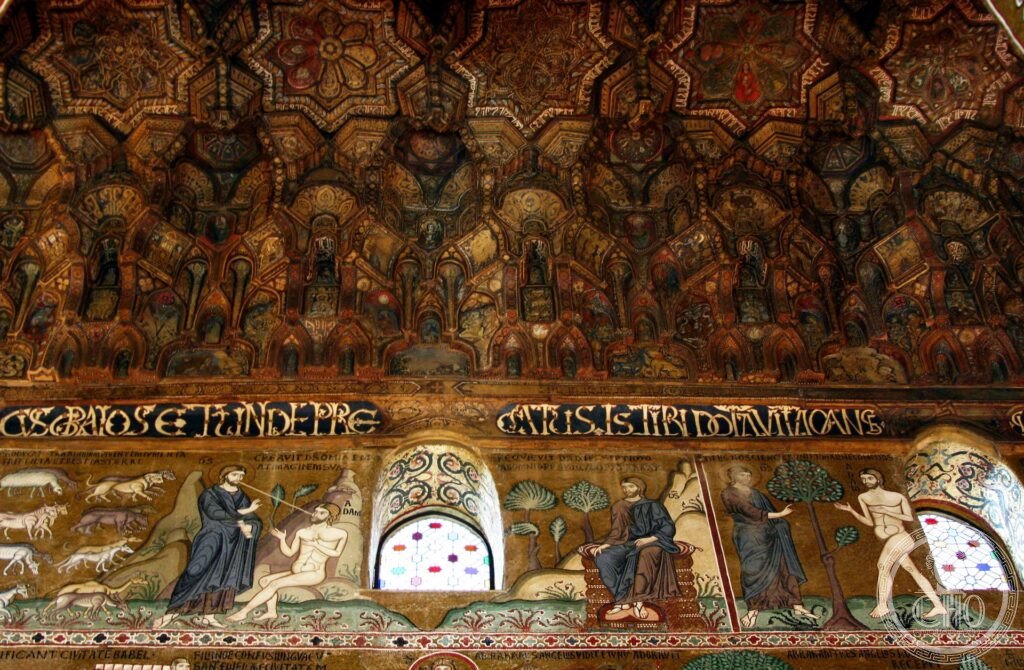
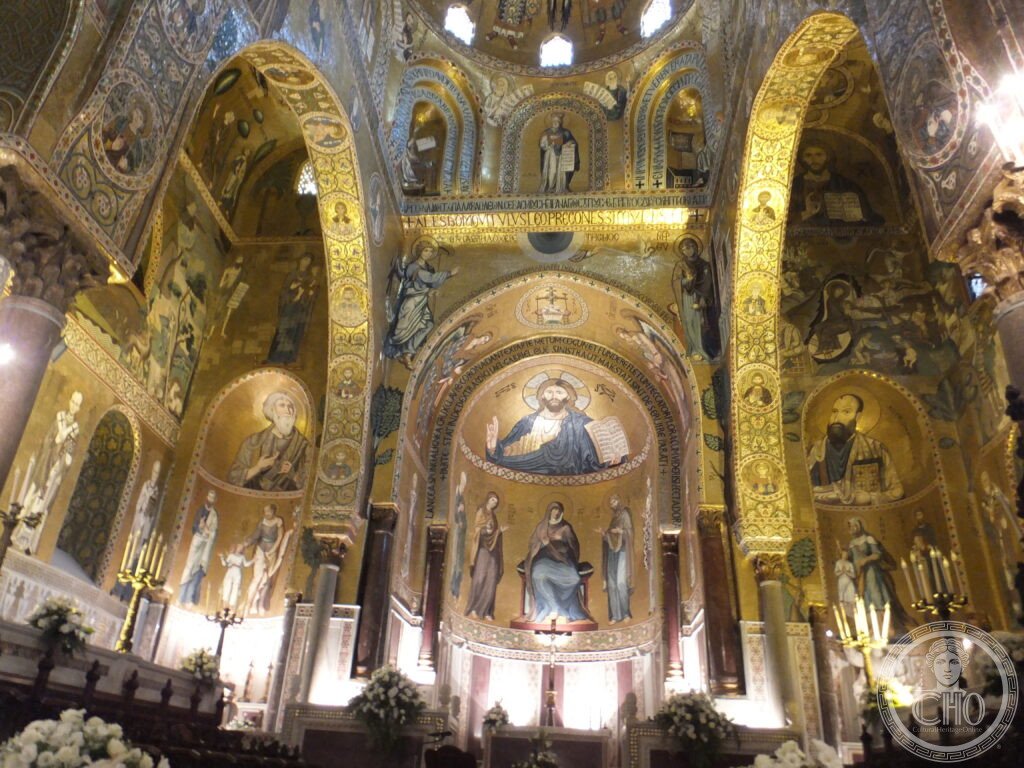
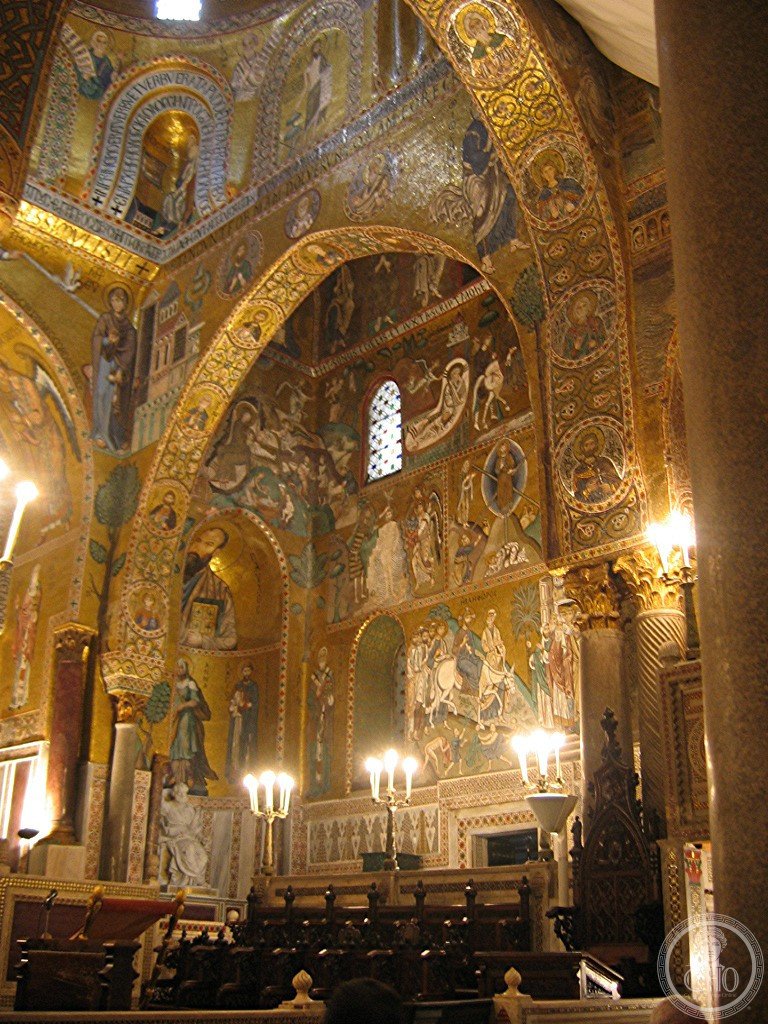
The Cappella Palatina — built 1132-1143 inside the Norman Royal Palace at Palermo by Roger II, first King of Sicily — contains the most concentrated display of Islamic-Byzantine-Norman artistic synthesis in the world: a wooden muqarnas ceiling (Islamic stalactite vaulting, unique in any Christian building) directly above a floor-to-ceiling programme of Greek-style gold mosaic (Byzantine artists from Constantinople) covering every surface of the nave and apse, including the Pantocrator in the dome and the narrative cycles from the Old and New Testament on the nave walls.
At a glance
Arab-Norman Palermo and the Cathedral Churches of Cefalù and Monreale (UNESCO 2015, ref. 1487) is a serial property covering nine architectural monuments from the Norman Kingdom of Sicily (1130-1194) distributed between Palermo, Cefalù, and Monreale: in Palermo — the Palazzo dei Normanni (with the Cappella Palatina and the Sala di Re Ruggero), the Cathedral of Palermo, San Giovanni degli Eremiti (the mosque-church hybrid with its red domes), Santa Maria dell’Ammiraglio/La Martorana (1143, Greek Orthodox mosaics), San Cataldo (1154-1161); the Cathedral of Cefalù (30 km east of Palermo, commissioned by Roger II in 1131, with the apse mosaic Pantocrator of c.1148, the finest in Sicily); and the Cathedral of Monreale (10 km south of Palermo, commissioned by William II in 1174-1189, the largest programme of 12th-century mosaic in the world: 6,340 m² of gold mosaic covering the entire interior).
Key facts
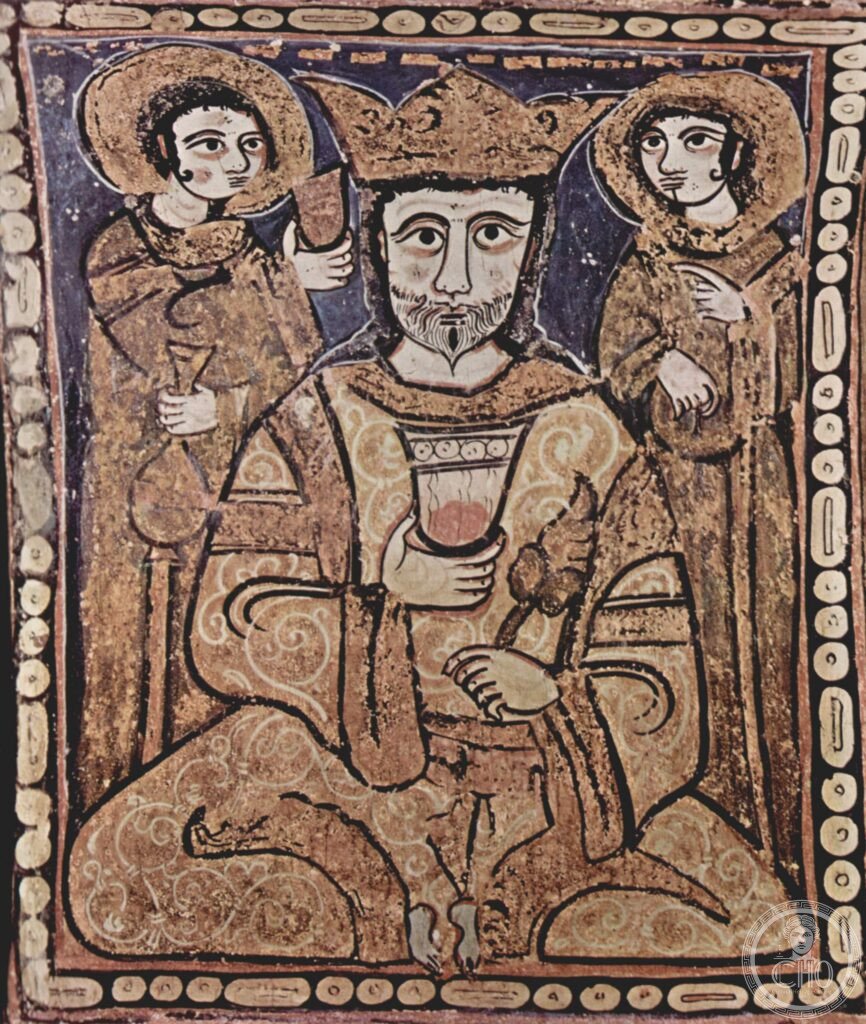
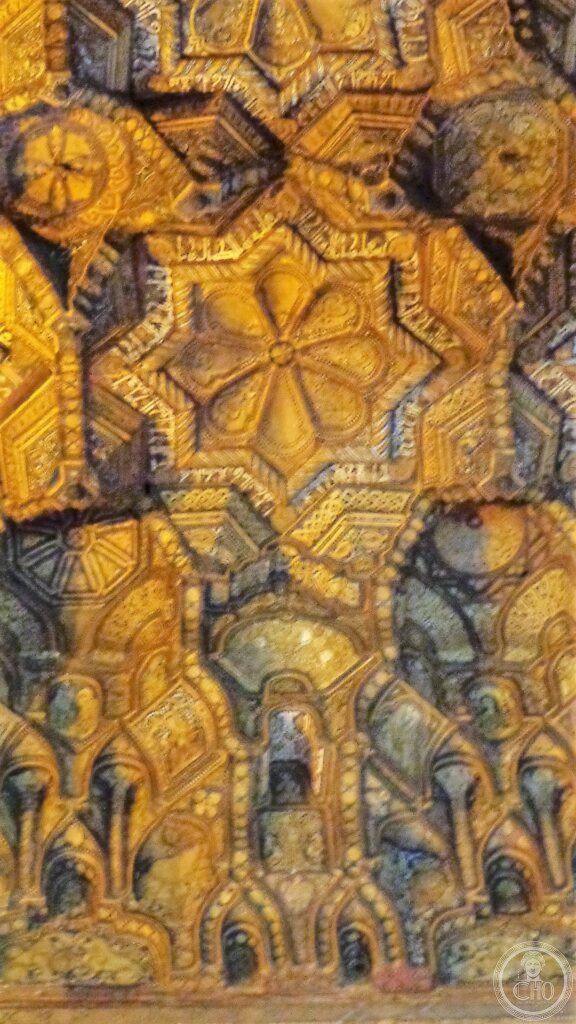
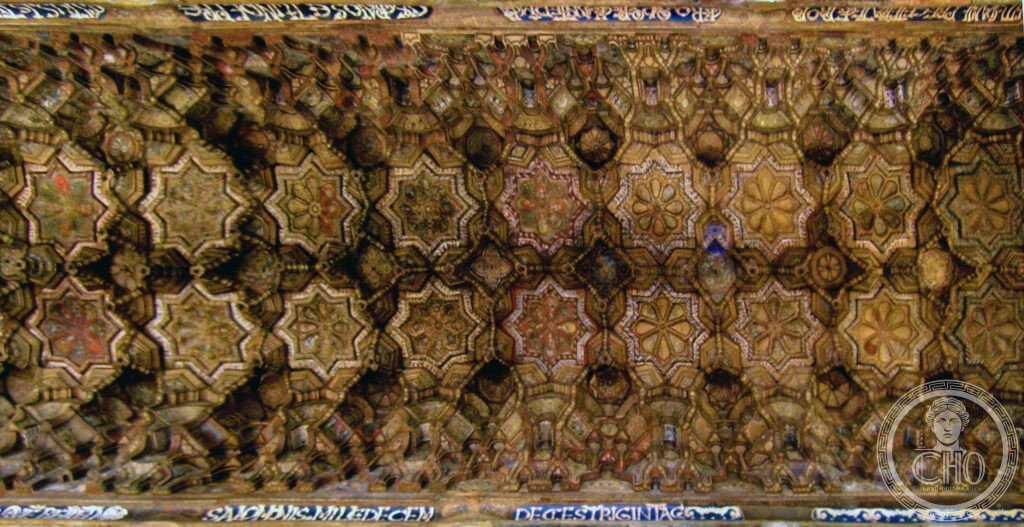
- The muqarnas ceiling (Cappella Palatina): The carved and painted wooden stalactite ceiling of the central nave of the Cappella Palatina is a muqarnas (an Islamic architectural form of 3D decorative vaulting made from stacked tiers of bracket-shaped units); it is the only large-scale muqarnas ceiling surviving in any Christian church in the world, and the largest surviving Fatimid-era muqarnas ceiling anywhere (all comparable ceilings in Egypt and North Africa have been destroyed or replaced). The painted decorations on the muqarnas cells include hunting scenes, court entertainments, drinkers, dancers, and animals in a purely Islamic pictorial idiom — completely incongruous in a Christian chapel except in the Norman Sicilian context, where the court painters were Muslim artisans whose idiom was accepted by the Norman kings as a sign of their cultural authority
- The gold mosaics: The Cappella Palatina mosaics (c.1143-1160s) were produced by Greek artists (probably from Constantinople) working in the Byzantine tradition of encaustic or gold-glass tessera mosaic; the Pantocrator (the enthroned Christ in Majesty) in the central dome, the Virgin Orans in the apse, and the New Testament narrative cycle on the nave walls follow Byzantine iconographic conventions exactly, including the inscriptions in Greek. The same artists (or their Sicilian pupils) produced the Cefalù Pantocrator (c.1148) and contributed to the Monreale programme (1180s-1190s)
- The Norman Kingdom of Sicily (1130-1194): One of the most culturally plural states in medieval Europe — the Hauteville Norman dynasty (originally from Normandy, they conquered southern Italy and Sicily from the Byzantine Empire and the Fatimid Caliphate of Sicily in the 1060s-1091) ruled over a population that was Arab-Muslim (still the majority in Sicily in 1130), Greek Orthodox (the pre-Islamic Sicilians), Latin-Catholic (the Norman settlers and clergy), and Jewish; the court at Palermo conducted affairs in Arabic, Greek, and Latin simultaneously; Roger II’s court geographer al-Idrisi produced the most accurate map of the world in the 12th century (the Tabula Rogeriana, 1154) for his Norman patron
- UNESCO: 2015, ref. 1487
- GPS: 38.1114, 13.3531 — Google Maps (Palazzo dei Normanni / Cappella Palatina)
History
The Arab-Norman artistic tradition in Sicily lasted approximately 60-70 years (c.1130-1200 CE) — the reign of Roger II (1130-1154), William I (1154-1166), and William II (1166-1189). The Norman conquest of Sicily from the Fatimid Caliphate was completed by Roger I in 1091; his son Roger II unified Sicily with the Norman possessions in southern Italy (Apulia, Calabria) and received a crown from Pope Honorius II in 1130, creating the Kingdom of Sicily. Roger II’s court at Palermo was genuinely multilingual and multicultural: he employed Muslim administrators and philosophers (including al-Idrisi, whose Tabula Rogeriana was completed at the Palermo court in 1154), Greek clergy and artists (the mosaics), and Norman/Latin knights and clergy. This synthesis was architecturally expressed in the buildings of the 1130s-1190s and came to an abrupt end with the death of William II in 1189 without heirs: the kingdom passed to the German Hohenstaufen (through William’s aunt Constance, wife of Emperor Henry VI), who ended the Arab-Norman multicultural court tradition. The buildings survived but the tradition died with the Norman line.
What you see
The Cappella Palatina (within the Palazzo dei Normanni, Piazza del Parlamento 1, Palermo) is the central monument of the inscription. The interior (25m long × 13m wide × 9m high nave) is covered from floor to apex with gold mosaic and muqarnas. Entering from the low narthex (where visitors' eyes adjust to the exterior light) and then stepping into the gilded nave produces an overwhelming immediate effect: the entire volume glows gold from reflected mosaic. The most important mosaic fields are the Pantocrator in the central dome (Christ in Majesty, the Byzantine standard iconographic type, c.1143), the apse with the enthroned Virgin and Child, and the nave walls with the Creation, Adam and Eve, Noah, and the New Testament narrative cycles (Annunciation, Baptism, Transfiguration, Entry into Jerusalem, Last Supper). The floor (opus sectile marble, geometric patterns in white, red, and green) and the columns (ancient antique marble, reused from pre-Norman structures in Sicily) complete the interior.
The other Palermo monuments of the inscription are within walking distance: San Giovanni degli Eremiti (Via dei Benedettini, 5-min walk from the Palazzo dei Normanni) with its distinctive red domes (the first mosque-church hybrid in the Norman buildings, built on a pre-Norman mosque foundation, c.1148); La Martorana/Santa Maria dell’Ammiraglio (Piazza Bellini, 15-min walk) with its 12th-century Greek mosaics including the famous portrait of Roger II receiving his crown from Christ (a direct Byzantine imperial formula applied to the Norman king, c.1143) and the foundation mosaic of George of Antioch (the Admiral/Ammiraglio who built the church, shown prostrate before the Virgin); San Cataldo (Piazza Bellini, adjacent to the Martorana) with its three red domes (1154-1161, exterior almost unaltered since the 12th century). The Cathedral of Palermo (Corso Vittorio Emanuele) is a later structure (12th-18th centuries) with a Norman apse (1185) and multiple additions including a Catalan Gothic porch and a Baroque cupola; it contains the porphyry sarcophagi of Roger II, William I, and Emperor Frederick II.
Gallery
Practical information
- Cappella Palatina and Sala di Re Ruggero (Palazzo dei Normanni): Piazza del Parlamento 1, Palermo; open Monday-Saturday 8:15-17:40, Sunday and holidays 8:15-13:00. Admission €18 (includes both spaces). The Sala di Re Ruggero (the 12th-century throne room in the Palazzo, with mosaic hunting scenes of peacocks, leopards, and lions in a purely Islamic/Byzantine hybrid idiom) is the most important room in the palace after the Cappella Palatina. Book online in advance to avoid queues, especially June-September.
- San Giovanni degli Eremiti: Via dei Benedettini 3; open Tuesday-Sunday 9:00-19:00 (Monday 9:00-13:00); admission ~€6. The red domes and the ruined cloister garden are the highlights.
- La Martorana + San Cataldo: Piazza Bellini; La Martorana open Monday-Saturday 9:30-12:00 and 15:00-17:30, Sunday 9:00-10:30; free. San Cataldo open daily 10:00-18:00; admission ~€2.50.
- Cefalù Cathedral (30 km east): Piazza del Duomo, Cefalù; open daily 8:00-13:00 and 15:30-19:30; admission ~€3 (includes cloister and treasury). The Pantocrator apse mosaic (c.1148) is the finest single mosaic in Sicily, and the best-preserved: the face of the Christ is particularly intense.
- Monreale Cathedral (10 km south of Palermo): Piazza Vittorio Emanuele, Monreale; open daily 8:30-12:30 and 14:00-17:00; admission ~€5 (cathedral) + ~€5 (cloister). The cloister (c.1174-1189) with its 228 twin columns (each with a unique carved capital) is one of the finest Romanesque cloisters in Italy.
Getting there
Palazzo dei Normanni / Cappella Palatina, Piazza del Parlamento 1, Palermo (PA), Sicilia. GPS 38.1114, 13.3531. By air: Palermo Falcone-Borsellino Airport (PMO), 30 km west; taxi ~€35 (45 min), Trinacria Express train (€5.90, 45 min, every 30 min) to Palermo Centrale, then bus/walk. By train: Palermo Centrale (high-speed from Rome, ~11h; Intercity from Naples, ~9h); the Palazzo dei Normanni is 1.5 km from Palermo Centrale (20-min walk or bus 109/225). By ferry: regular overnight ferries from Naples (10h), Civitavecchia (13h), Genoa (21h) to the Port of Palermo (500m from the historic centre).
Nearby
- Cattedrale di Cefalù — 30 km east (EN ss113 or Trenitalia, 40 min); the Pantocrator apse mosaic (c.1148) is the finest in Sicily; the cathedral is on the Piazza del Duomo with the ancient lavatoio and the medieval corso — Cefalù itself is a beautiful small coastal town worth half a day
- Cattedrale di Monreale — 10 km south-west of Palermo (frequent bus from Piazza Indipendenza); the largest Norman mosaic programme in the world (6,340 m² of gold mosaic covering the entire interior); the cloister (228 twin columns) is the finest Romanesque cloister in southern Italy
- Cattedrale di Agrigento e Valle dei Templi — 120 km south-east; the Greek temples (UNESCO 1997 ref.831) including the Temple of Concordia (c.440 BCE, one of the best-preserved Doric temples in the world, later converted to a church in the 5th century CE)
Sources
- UNESCO: whc.unesco.org/en/list/1487
- Wikipedia EN: Arab-Norman Palermo
- Demus, Otto: The Mosaics of Norman Sicily, Routledge, 1950 (repr. 2010)
- Johns, Jeremy: Arabic Administration in Norman Sicily: The Royal Dīwān, Cambridge University Press, 2002
- Fondazione Federico II: federicosecondo.org
Find it on the map
See this place and what’s around it →📷 Diventa un fotografo di Cultural Heritage Online
Condividi le tue foto dei luoghi: restano pubblicate con la tua firma come autore. Più vengono viste, più ti fai conoscere — e presto un concorso premierà le foto più apprezzate.
Accedi o registrati gratis per aggiungere una foto