
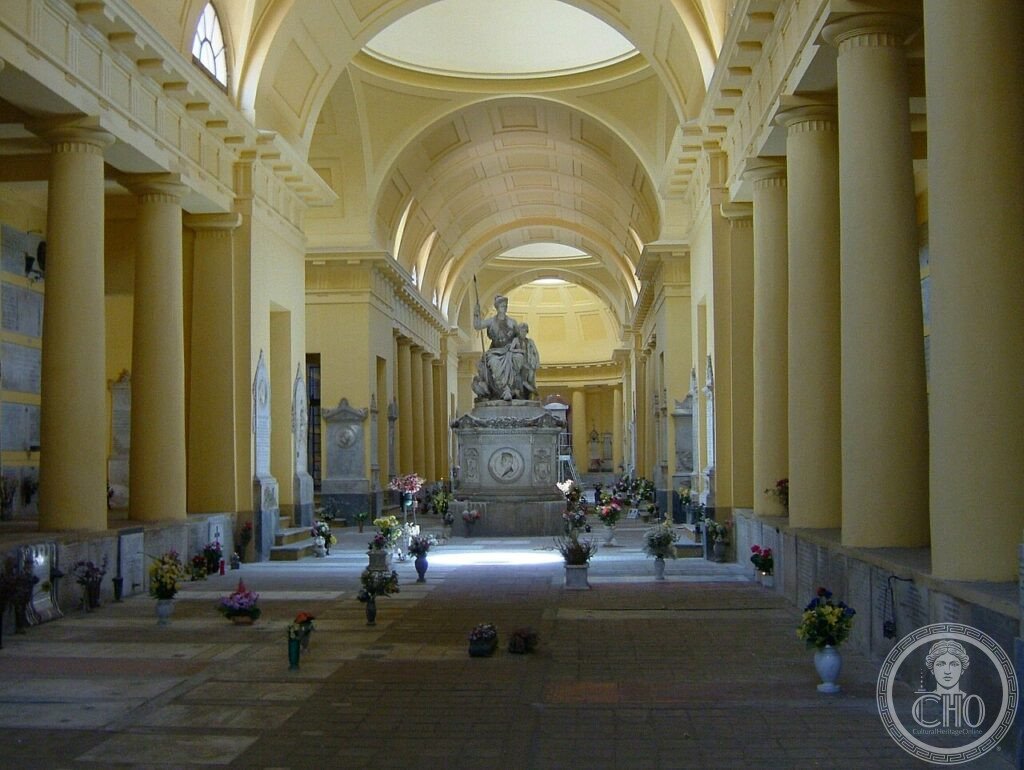
Napoleon’s decree of Saint-Cloud (1804) ordered that the dead be buried outside city walls and that cemeteries be monumental, dignified, and equal — ending the medieval church burial system in which rank determined proximity to the altar. The Certosa di Bologna, founded in 1801 in a suppressed Carthusian monastery, is the finest surviving example of a Napoleonic municipal cemetery in Italy: a city of the dead that reads as architecture, with neoclassical cloisters, columnariums, chapels by the leading Bolognese painters of the nineteenth century, and the tomb of Giorgio Morandi.
At a glance
The Certosa di Bologna is a monumental cemetery in the western outskirts of Bologna, founded in 1801 in the buildings of a former Carthusian monastery (the Certosa di San Girolamo di Casara, founded 1334) following the suppression of the monasteries by Napoleon in the Cisalpine Republic. When Napoleon issued the Edict of Saint-Cloud in 1804 — requiring all burials to be performed outside city walls in municipal cemeteries that were to be designed as monumental public spaces — the Certosa was already in operation and became the model for the organisation he prescribed. The cemetery has been expanded many times since 1801 and now covers approximately 17 hectares; the section still in use for burials is substantially larger than the original.
Key facts
- Foundation: 1801 (Certosa di San Girolamo, founded 1334, suppressed 1796); the first burial was in 1801; the cemetery was formally constituted as the Cimitero Municipale di Bologna in 1815
- Original buildings: The 14th-century Certosa cloister (Chiostro Maggiore), the church of San Girolamo, and the service buildings of the monastery were adapted as the first cemetery buildings
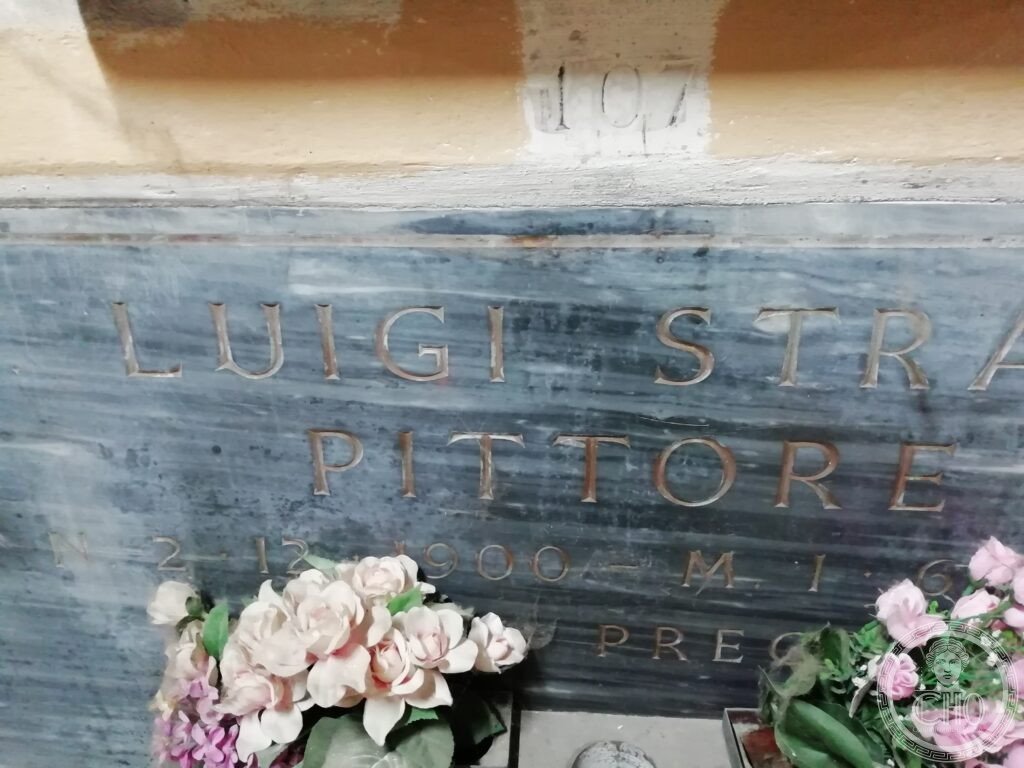
- Notable burials: Gioacchino Rossini (buried here 1868, later transferred to Santa Croce Florence 1887); Giorgio Morandi (1890–1964, the most important Italian painter of the 20th century, buried in the family tomb in Gallery VI); the Biagi family, the Pini family, the Romagnoli family of Bolognese merchants and industrialists
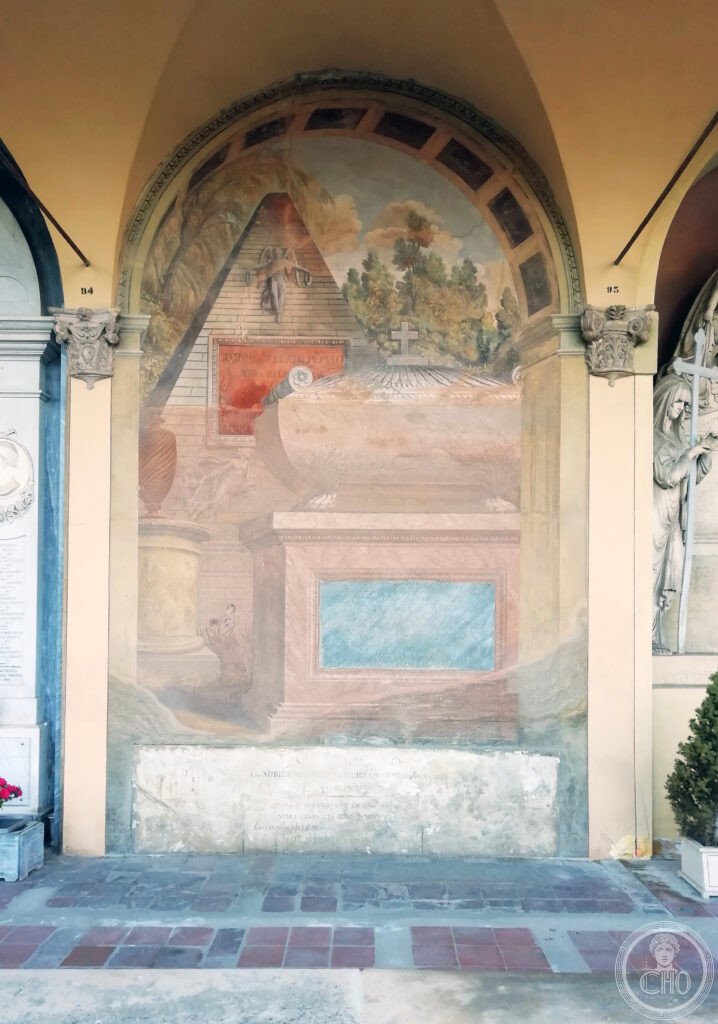
- Chapel decorations: Paintings and sculptures by Francesco Hayez (Pietà, 1829), Guercino (1591–1666, some transferred from Bolognese churches), Luigi Busi (XIX century), Adolfo De Carolis (XX century)
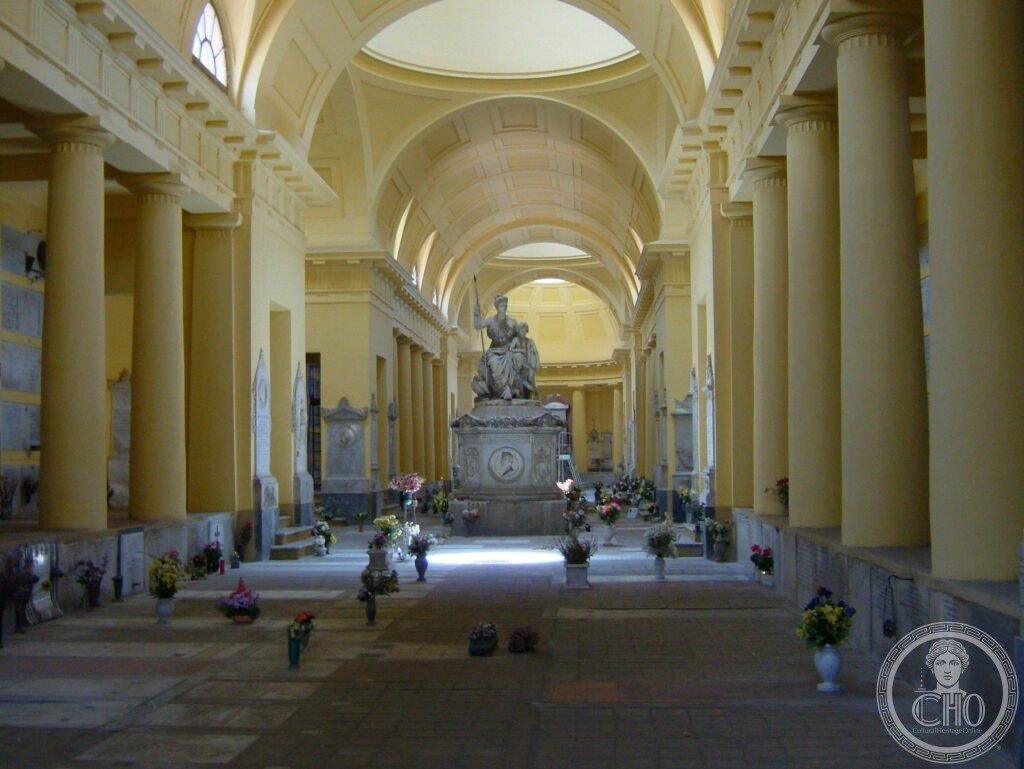
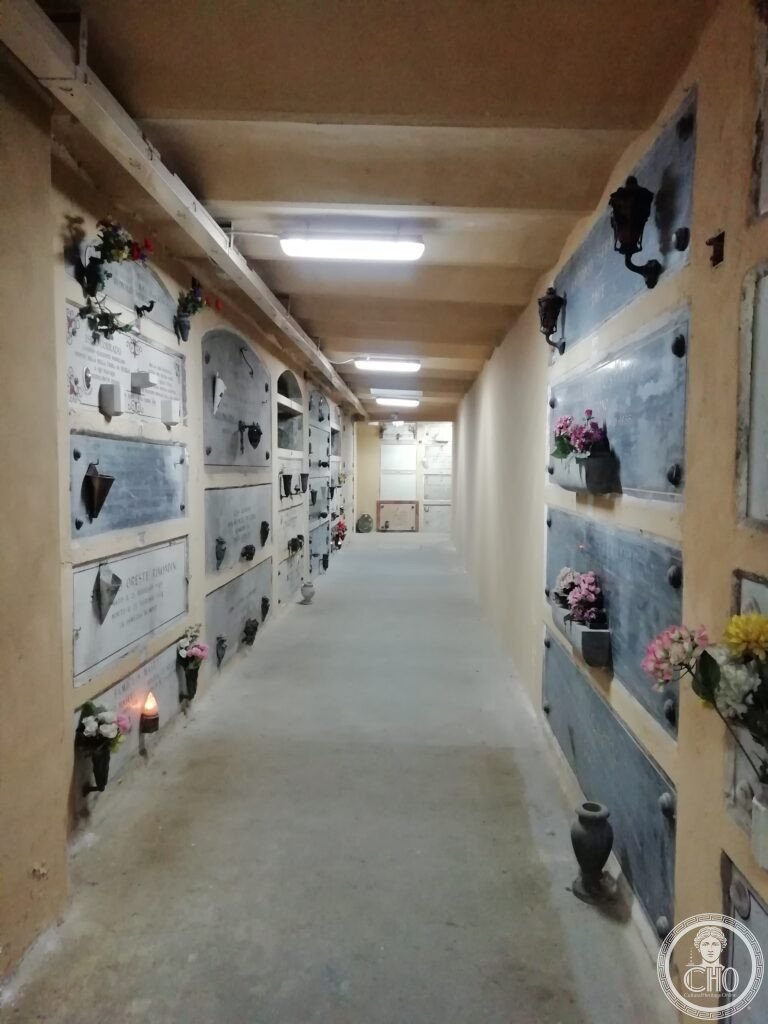
- Sala del Colombario (1865): The most spectacular single interior of the cemetery; a neoclassical colonnaded hall with individual marble niches on three levels; designed by Coriolano Monti
- GPS: 44.4998, 11.3104 — Google Maps
History
The suppression of the Carthusian monastery in 1796 and the subsequent conversion of its buildings into a municipal cemetery was part of the broader Napoleonic transformation of religious property in northern Italy. The Cistercians and Carthusians were among the first to lose their properties: their large, well-built complexes with enclosed gardens — exactly the spaces needed for a hygienic outdoor cemetery — were ideal for conversion. The Certosa of Bologna was the largest available complex in the city, and its conversion in 1801 preceded by three years the national Edict of Saint-Cloud (1804), which made the construction of monumental extra-mural cemeteries mandatory throughout the Napoleonic empire.
The cemetery was designed from the beginning as a monumental space — not merely a burial ground but a didactic public institution intended to instruct citizens on the meaning of civic life and death. The model was the Père Lachaise cemetery in Paris (opened 1804): a landscaped garden with monumental tombs, chapels, and funerary sculpture by living artists. Bologna’s version retained the Carthusian monastery as its core and expanded outward into a sequence of neoclassical colonnaded galleries, adding chapels decorated by the leading Bolognese and national painters and sculptors of the nineteenth century.
What you see
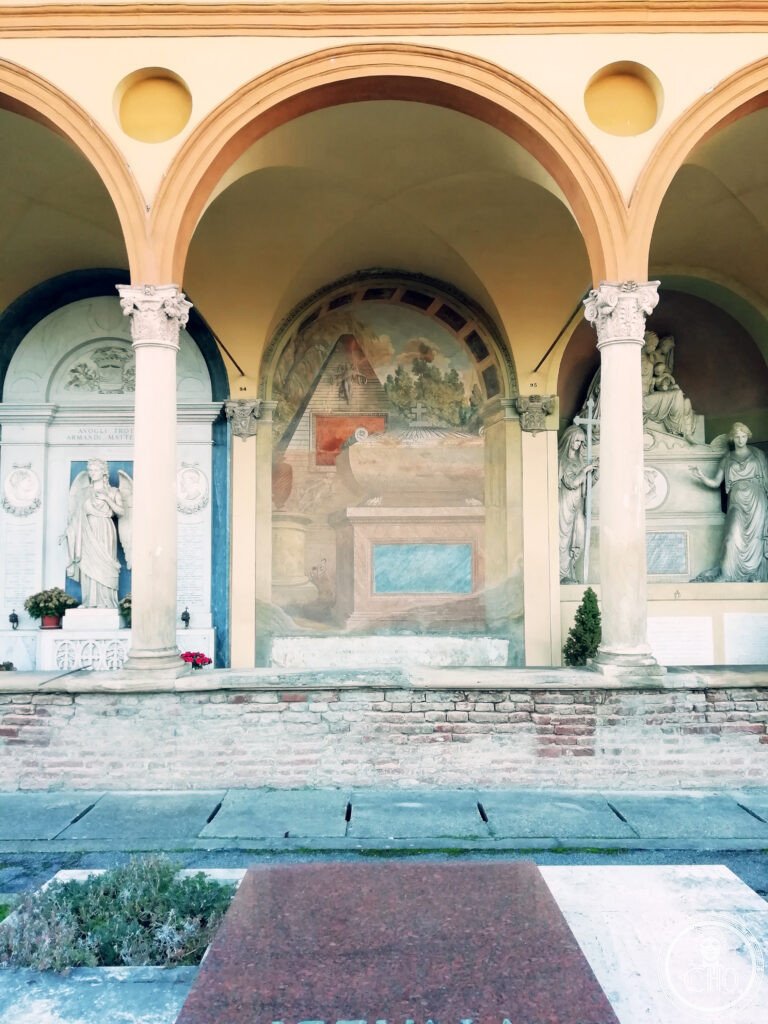
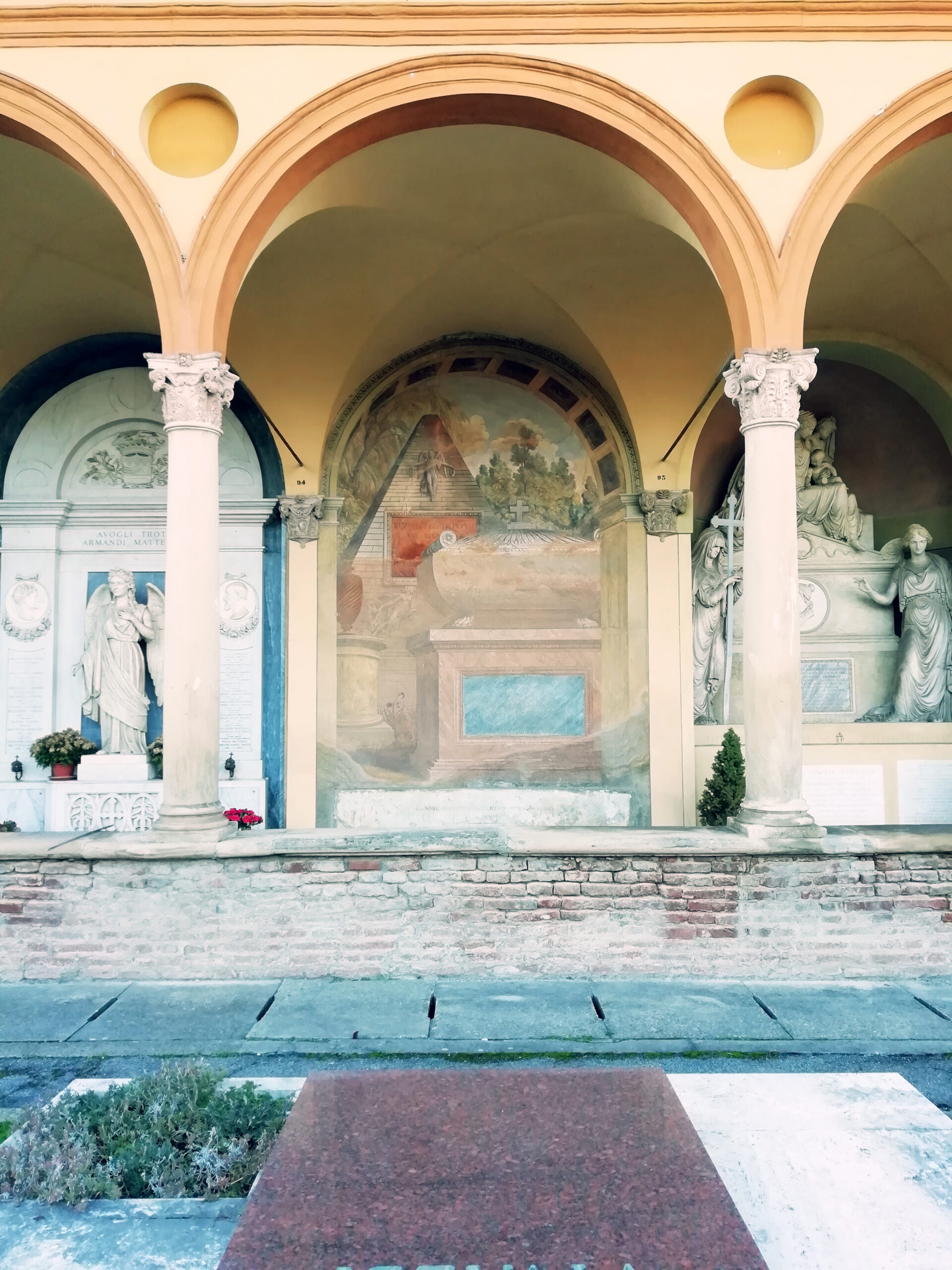
The entrance to the Certosa is from Via della Certosa, to the west of the city centre. The visit begins in the former monastery church (San Girolamo), now the chapel of the cemetery, with paintings by Guercino and other Bolognese artists transferred from suppressed churches. From the church, the route passes through the Chiostro Maggiore (the great Carthusian cloister, XIV century) and into the sequence of neoclassical colonnaded galleries that extend from the original monastery to the east and north.
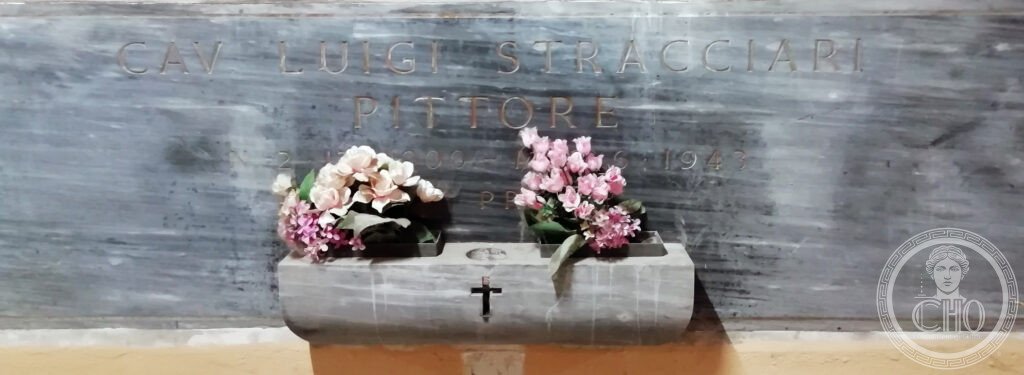
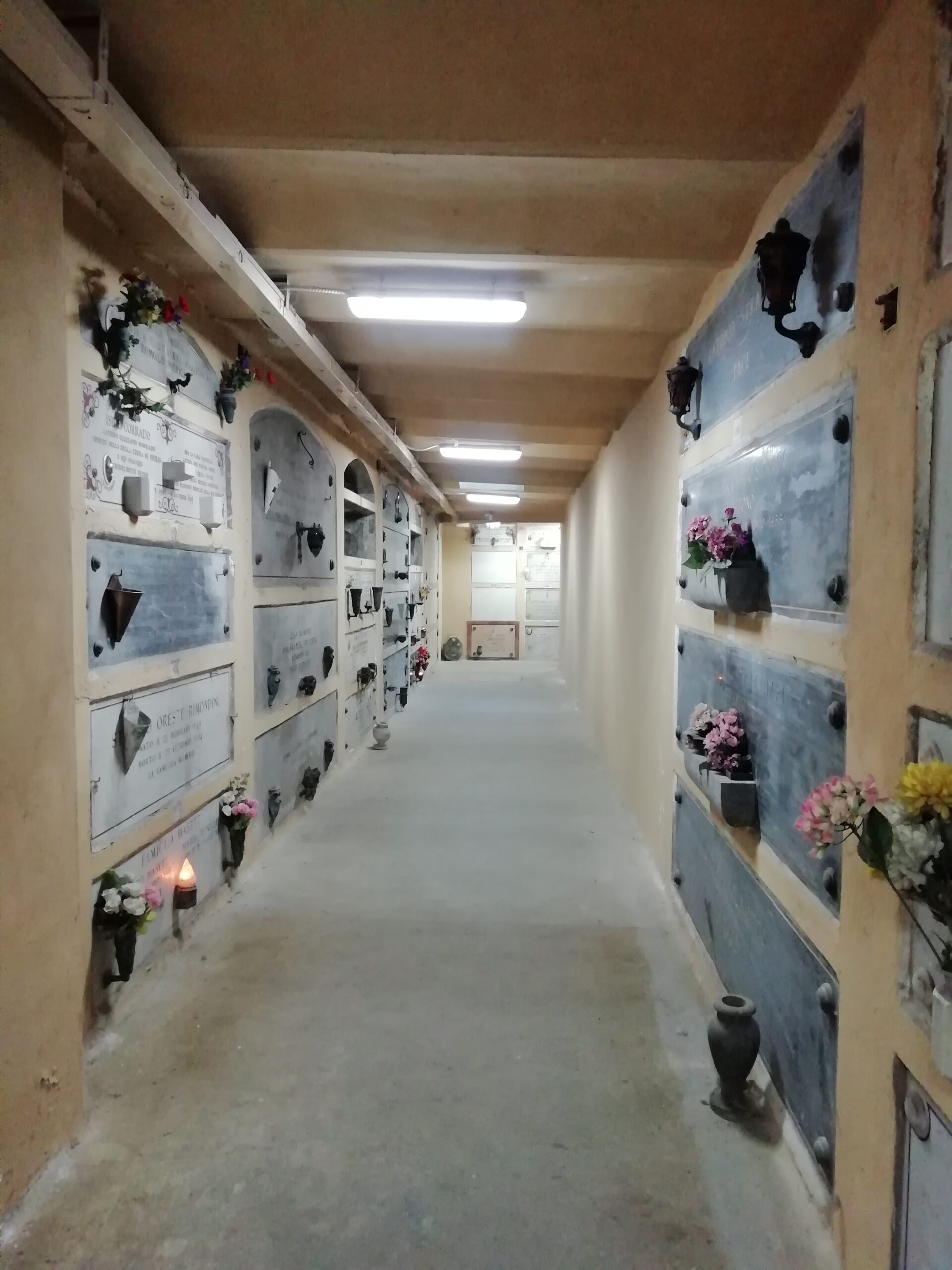
The Sala del Colombario (1865) is the architectural centrepiece: a long, high hall in pale stone with a continuous colonnade supporting three levels of marble niches, each containing an urn or a small plaque. The space is quiet and light-filled — an interior that reads as both storage and contemplation. The individual chapels scattered through the galleries contain the most important artistic works in the cemetery: Hayez’s Pietà, Busi’s Venere, and various portrait busts and allegorical sculptures by Bolognese artists of the 1820s–1880s. Giorgio Morandi’s tomb is in Gallery VI (marked on the cemetery map available at the entrance): a simple family tomb with a marble plaque, typically with a few flowers left by visitors.
Gallery
Practical information
- Opening: Monday–Saturday 8:30–17:30 (winter) / 8:30–18:30 (summer); Sunday and public holidays 9:00–18:00. Free admission.
- Guided tours: Free guided tours (Italian only) depart from the entrance on the first Sunday of the month at 10:30; other tours by appointment through the city cultural office (Settore Cultura del Comune di Bologna). English-language tours are available in spring and summer; check comune.bologna.it/istruzione-e-cultura.
- Duration: 1–1.5 hours for a visit to the main galleries and chapels. Allow extra time if visiting Morandi’s tomb or the original Carthusian buildings.
Getting there
Via della Certosa 18, Bologna. By bus: lines 14, 21 from Piazza Maggiore (direction Castelmaggiore or Bentivoglio) to “Certosa” stop (15 min). By car: Via della Certosa is accessible from Via Emilia Ponente or the tangenziale (ring road); parking outside the entrance (free). On foot from the historic centre: 35 minutes (2.5 km); not recommended unless combining with a bicycle ride.
Nearby
- Santuario della Madonna di San Luca — 5 km south; reached via the world’s longest portico (3.796 km, 666 arches, listed as UNESCO 2021 as part of the Porticoes of Bologna); the Baroque sanctuary (1723–1774) on the Colle della Guardia overlooks the city; the Madonna of San Luca is carried down the portico to Bologna Cathedral each May for a week
- Arciginnasio di Bologna — 2.5 km east in the historic centre; the first purpose-built university building in Europe (1563); Teatro Anatomico (1637); 6,000 heraldic stemmi
- Centro storico di Bologna — 3 km east; Piazza Maggiore, Fontana del Nettuno, Basilica di San Petronio, Palazzo d’Accursio, Due Torri; the most intact medieval city centre in Italy
Sources
- Wikipedia EN: Certosa di Bologna
- Comune di Bologna — Certosa: certosa.comune.bologna.it
- Lenzi, Deanna (ed.): La Certosa di Bologna: immortalità della memoria, Marsilio, 1998
Gallery


Find it on the map
See this place and what’s around it →📷 Become a Cultural Heritage Online photographer
Share your photos of places: they stay published under your name as the author. The more they're seen, the more you get noticed — and soon a contest will reward the most appreciated photos.
Log in or sign up free to add a photo