
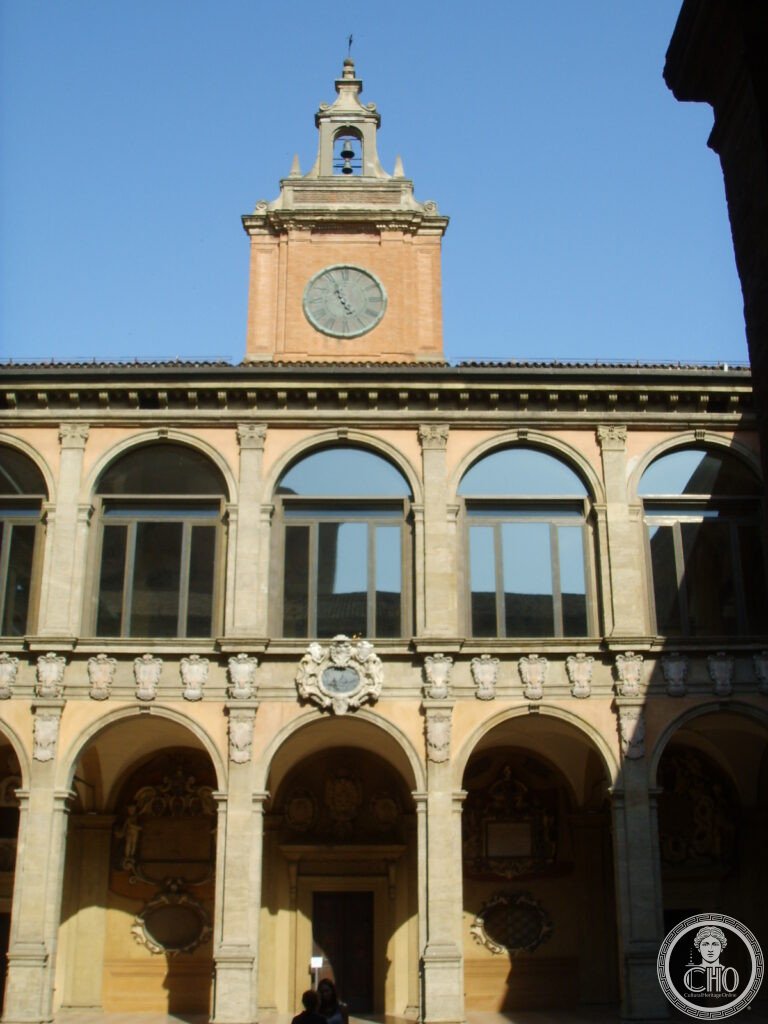
The first purpose-built university building in Europe — a double-loggia palace with 6,000 heraldic coats of arms covering every surface of its walls and ceilings, built in 1563 to house the entire University of Bologna (the oldest in the world, founded 1088) and still the most concentrated evidence in any single building of who studied there: senators, popes, doctors, nobles from across Europe whose families inscribed their arms on the walls while their sons attended lectures on law and medicine.
At a glance
The Archiginnasio (Arciginnasio di Bologna) is a sixteenth-century palace on the south side of Piazza Maggiore in Bologna, designed in 1563 by the architect Antonio Morandi (known as “il Terribilia”) at the commission of Cardinal Carlo Borromeo (then papal legate to Bologna) to house the entire University of Bologna in a single building — an unprecedented ambition, since no European university before 1563 had ever occupied a single purpose-built structure. The building housed the university from 1563 to 1803, when Napoleon moved the faculties to the Palazzo Poggi. From 1838, the building has been the Biblioteca Comunale dell’Archiginnasio, one of the most important public libraries in Italy (over 1 million volumes).
Key facts
- Construction: 1563; architect Antonio Morandi (“il Terribilia”); the building was completed in approximately one year — a remarkable speed that reflected the political urgency of demonstrating Bologna’s educational prestige to the Papal State
- Size: Two-storey double loggia around an internal courtyard; approximately 90 × 45 m footprint; two assembly halls (Sala dello Stabat Mater, Sala dello Studio di Legge) and the Teatro Anatomico
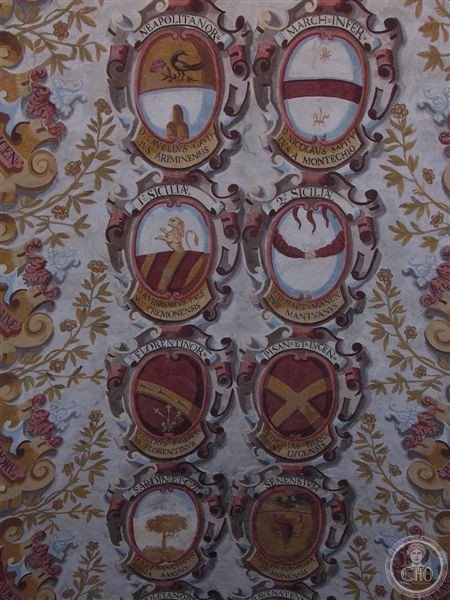
- Stemmi (heraldic coats of arms): Approximately 6,000 individual stone, terracotta, and stucco coats of arms covering the walls, pilasters, and ceilings of the loggie and corridors; the stemmi record the names, families, and origins of students and professors from 1563 to 1803
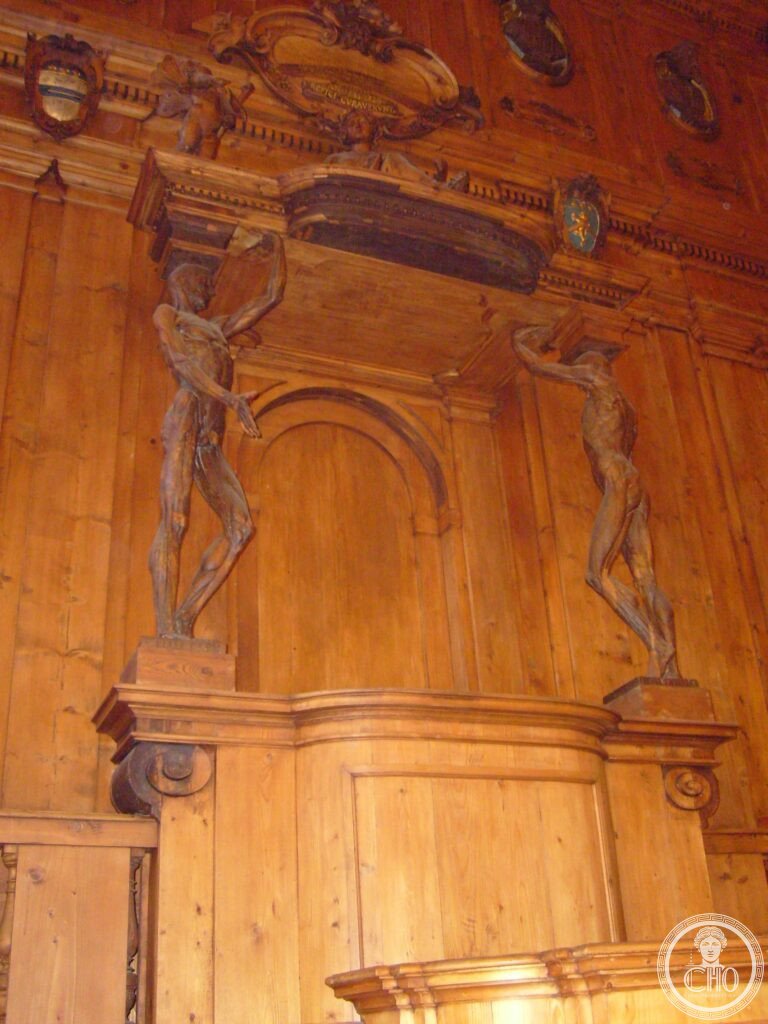
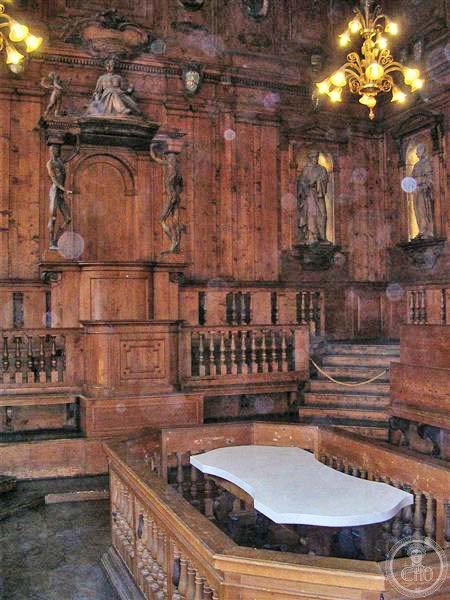
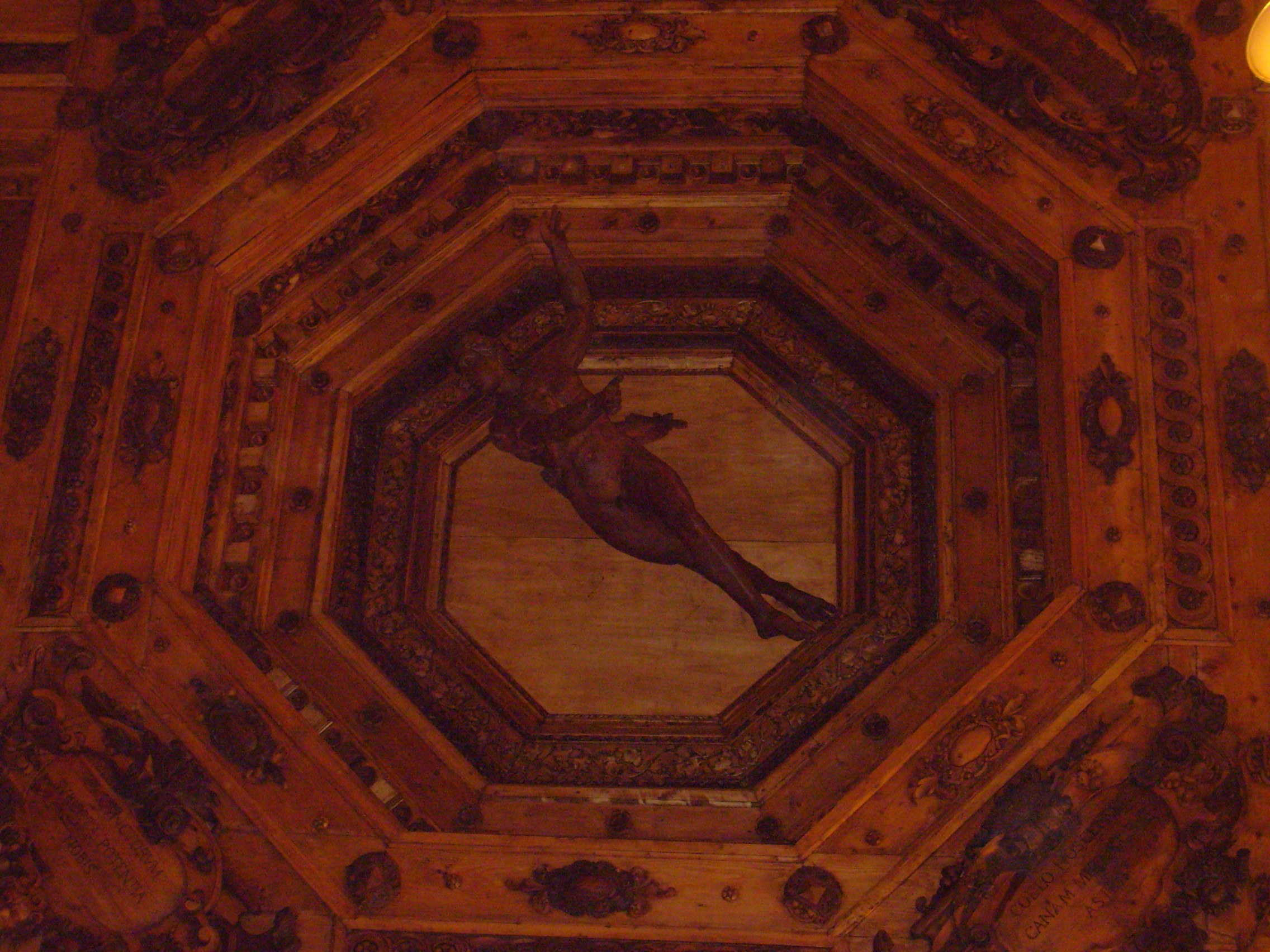
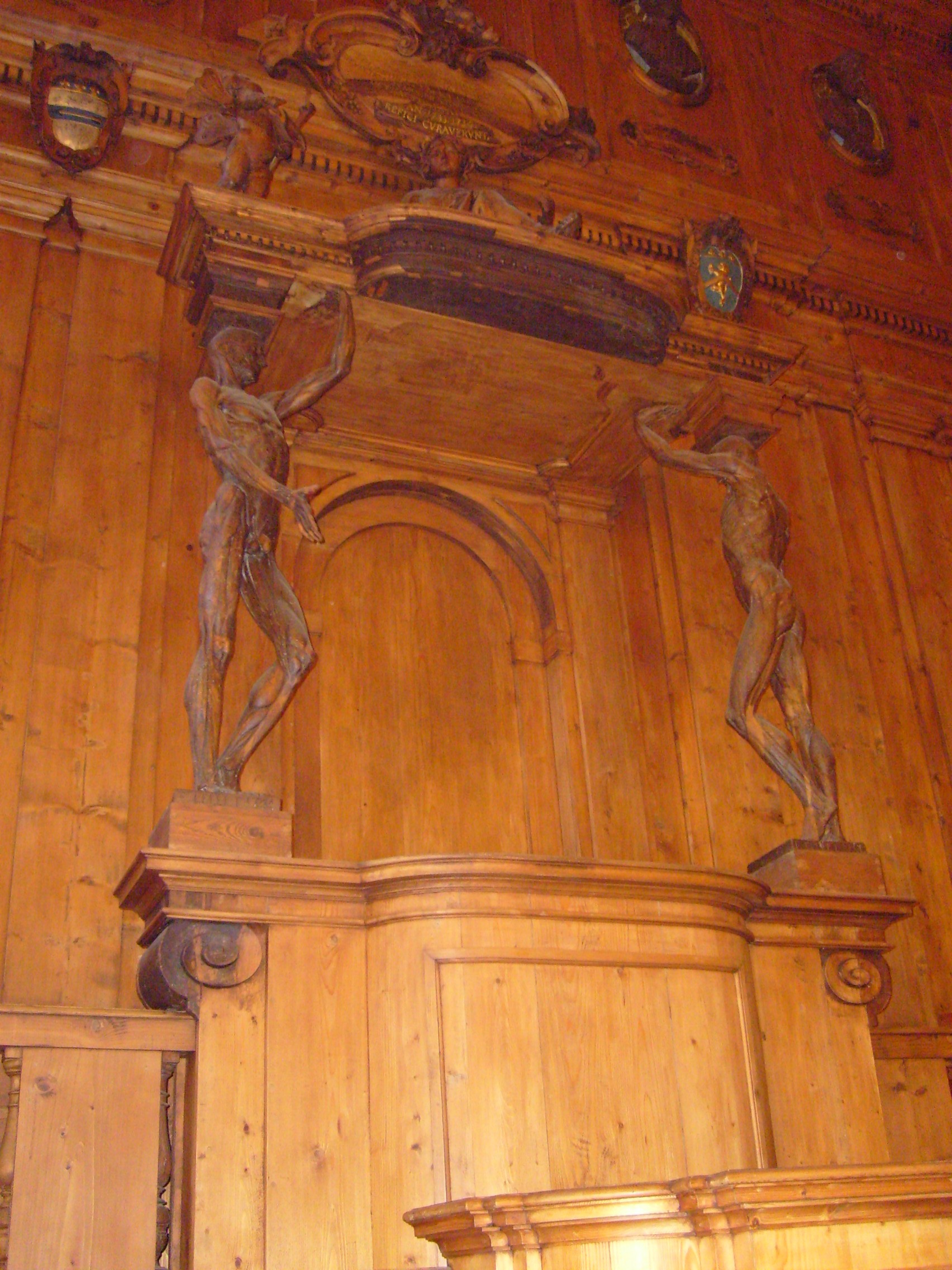
- Teatro Anatomico (1637): The anatomical theatre built by Antonio Paolucci; wood (spruce and fir); seats approximately 200; the lectern in the centre of the amphitheatre where the professor lectured is surmounted by two “Spellati” — flayed nude figures in carved cedar wood (Lorenzo Legnanino, 1734); the canopy above the professor’s chair was supported by two Angels of Fame; the theatre was partially destroyed by bombing in 1944 and restored in 1949–1950
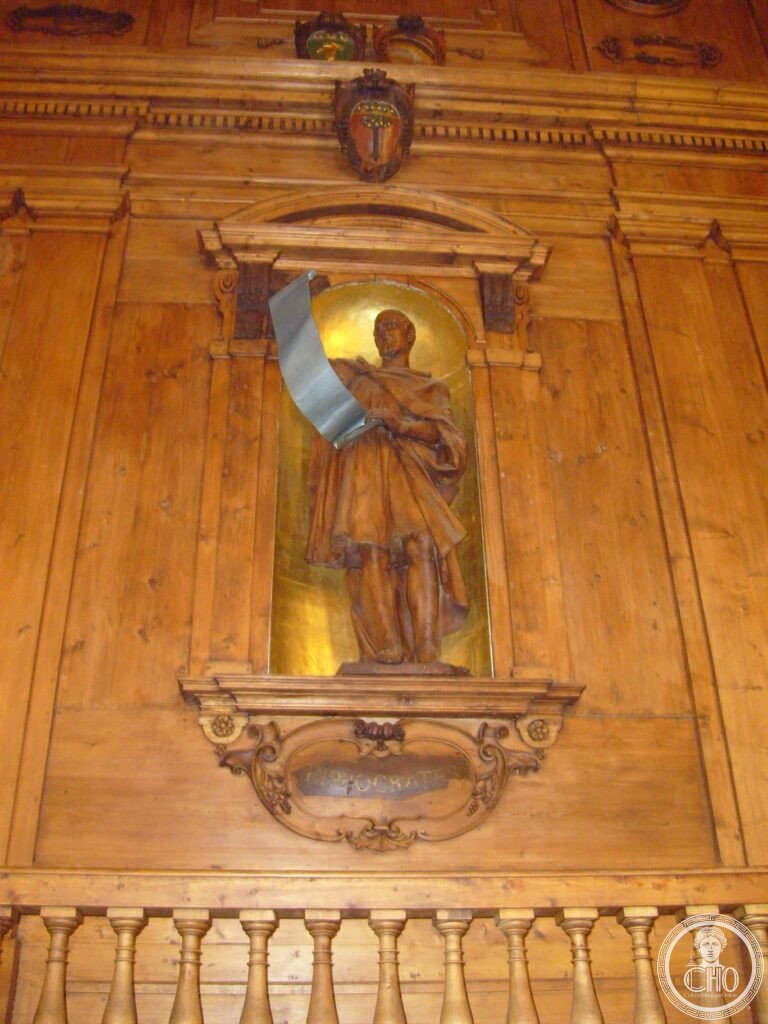
- Library: Biblioteca Comunale dell’Archiginnasio from 1838; over 1 million volumes; important manuscript collection; the Raccolta dei Ritratti (portrait gallery of famous professors)
- GPS: 44.4934, 11.3434 — Google Maps
History
The University of Bologna — traditionally dated to 1088, making it the oldest university in continuous operation in the world — had for five centuries been dispersed across the city: professors lectured in rented rooms, private houses, and churches; students lived in scattered boarding houses. By the mid-sixteenth century, this dispersal was increasingly problematic: competing with Padua and Pavia for students and prestige required a more visible, institutional presence. The commission to build the Archiginnasio came from Cardinal Carlo Borromeo (nephew of Pope Pius IV and future Archbishop of Milan), who served as papal legate to Bologna from 1560 to 1565. Borromeo commissioned the building specifically to consolidate the university’s presence in a single, monumental structure adjacent to Piazza Maggiore — the political and religious centre of the city.
The practice of inscribing heraldic stemmi on the walls began immediately in 1563 and continued uninterrupted until 1803 when the university moved. The stemmi are inscribed in stone (for the most distinguished graduates), painted on wood or leather, or moulded in terracotta; they record a student’s family name, origin, and (often) the year of attendance. The collection is effectively a social history of European education from 1563 to 1803: cardinals, senators, Holy Roman Emperors (the arms of Ferdinand II and Matthias appear), jurists from Spain and Portugal, medical students from Poland and Greece.
What you see
The external portico of the Archiginnasio (facing via dell’Archiginnasio and Piazza Galvani) is part of the portico system of central Bologna — 52 round arches in stone, with the main entrance in the centre. The courtyard inside is immediately recognisable for the density of stemmi: every pilaster, every spandrel, every section of wall between the windows carries coats of arms in stone and terracotta, in a palimpsest that makes reading the wall at first difficult (it requires stepping close and looking up). The ground-floor loggia gives access to the Biblioteca (reading rooms open to the public) and the Sala dello Stabat Mater (the concert hall, with Rossini’s Stabat Mater performed at its premiere here in 1842).
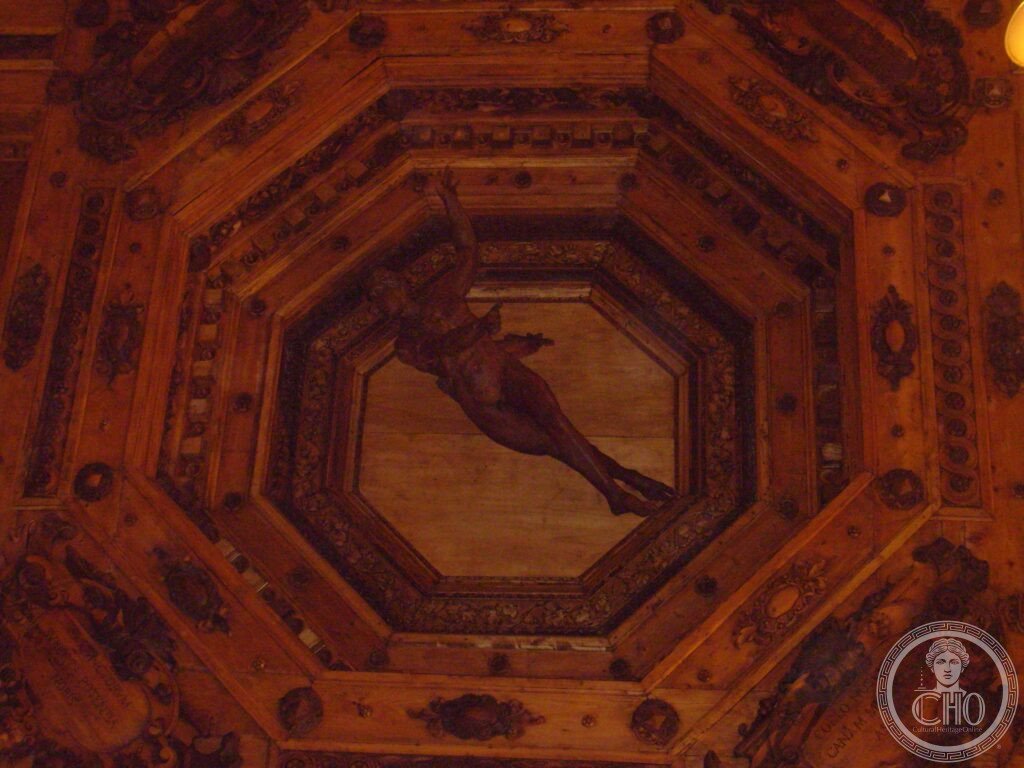
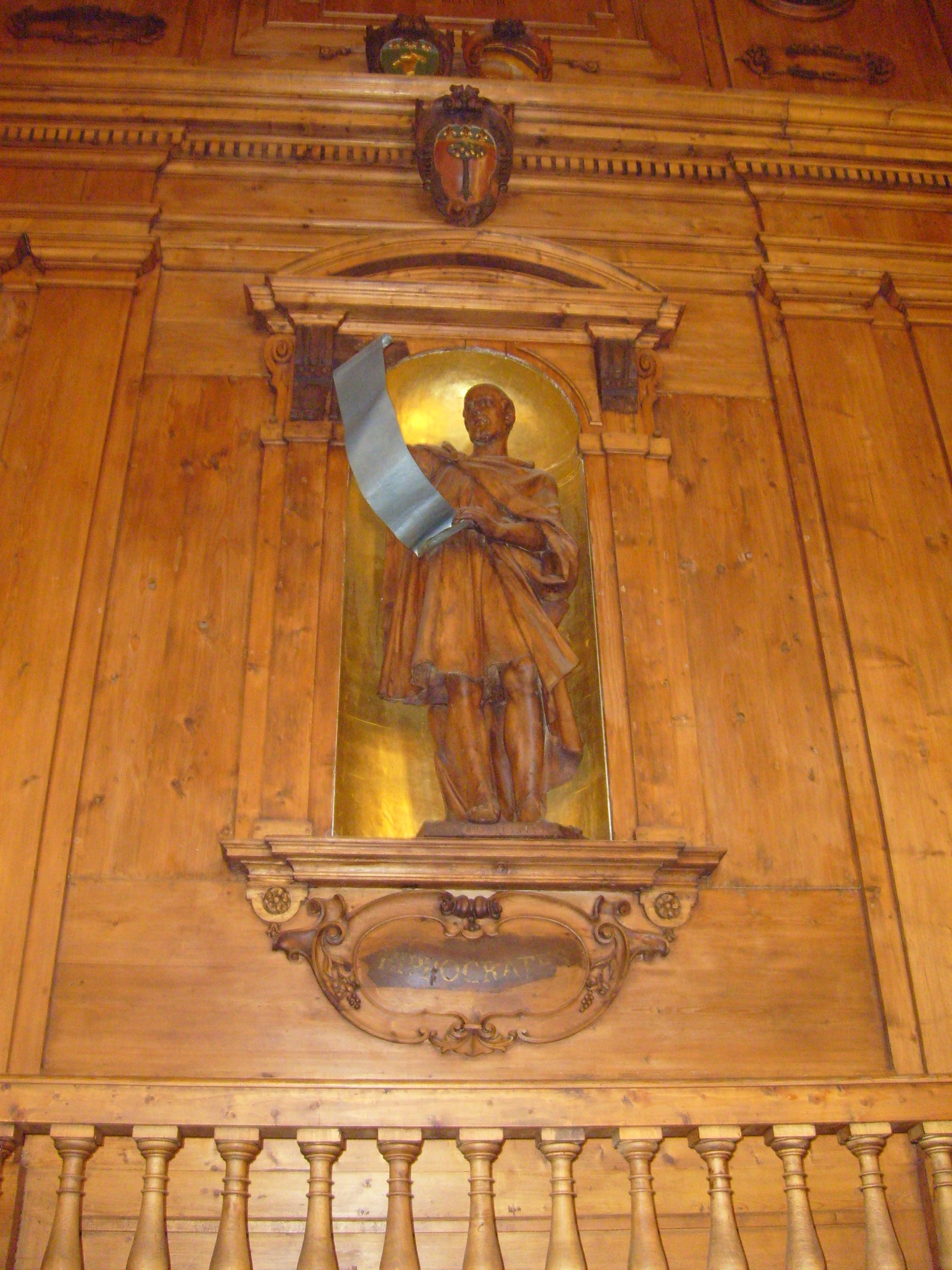
The Teatro Anatomico (on the ground floor, accessible via the courtyard) is the most extraordinary single room in Bologna: a small oval wooden amphitheatre (200 seats, steeply tiered), entirely in dark wood, with the demonstration table in the centre and the two “Spellati” (flayed cedar-wood figures) flanking the lecturer’s lectern. The room is lit from above by a lantern; the effect is of a seventeenth-century surgical amphitheatre preserved intact — an impression that is partially accurate (the woodwork is authentic early 18th-century) and partially illusory (the post-war restoration of 1949–50 was extensive).
Gallery
Practical information
- Biblioteca Comunale: Open Monday–Friday 9:00–19:00; Saturday 9:00–14:00. Free access to the reading rooms and the loggia. The manuscript collection and rare books require a reader’s pass (free; apply at the reference desk).
- Teatro Anatomico: Open Monday–Friday 10:00–18:00; Saturday 10:00–19:00; Sunday 10:00–14:00. Admission ~€3. Note: during exhibitions or concerts the theatre may be closed to casual visitors; check at the entrance.
- Duration: 45 minutes for the courtyard, loggia, and Teatro Anatomico combined. 2–3 hours if visiting the library reading rooms or the manuscript collection.
Getting there
Piazza Galvani 1, Bologna, Emilia-Romagna. In the historic centre, adjacent to Piazza Maggiore (50 m south). By train: Bologna Centrale station, 15 minutes on foot via Via Indipendenza and Via Rizzoli, or 5 minutes by bus (lines 11, 13, 14, 21 to Piazza Maggiore). By car: the historic centre is a ZTL zone; park at Staveco, Arena del Sole, or Fiera parking and take the bus. From Milan: 210 km, 1h by Freccia (Milano Centrale–Bologna Centrale).
Nearby
- Piazza Maggiore e Fontana del Nettuno — 50 m north; the main civic square of Bologna; the Palazzo d’Accursio (Comune, XIV–XVIII century); Giambologna’s Neptune fountain (1566, the most famous fountain in northern Italy outside Rome); the Basilica di San Petronio (begun 1390, the largest Gothic church in Italy by volume)
- Basilica di Santo Stefano — 400 m east; the “Sette Chiese” complex, a group of linked churches built on the site of an early Christian complex that incorporated a Roman temple; the courtyard of Pilate (IX century CE) and the Romanesque cloister are the most evocative spaces
- Due Torri (Torre degli Asinelli e Garisenda) — 300 m north-east; the two leaning medieval towers of Bologna (1109–1119); the Asinelli (97.2 m) is climbable (498 steps, open daily); the view of Bologna’s rooftops and the distant Apennines is exceptional
Sources
- Wikipedia EN: Archiginnasio of Bologna
- Biblioteca dell’Archiginnasio: archiginnasio.it
- Roversi, Giancarlo: L’Archiginnasio: il Palazzo, l’Università, la Biblioteca, Bologna, 1987
Gallery
Find it on the map
See this place and what’s around it →📷 Become a Cultural Heritage Online photographer
Share your photos of places: they stay published under your name as the author. The more they're seen, the more you get noticed — and soon a contest will reward the most appreciated photos.
Log in or sign up free to add a photoIs this page about you?
This page is read by travellers and heritage enthusiasts who find it on Google. Tell us how you are connected to this place and we will take it from there.