

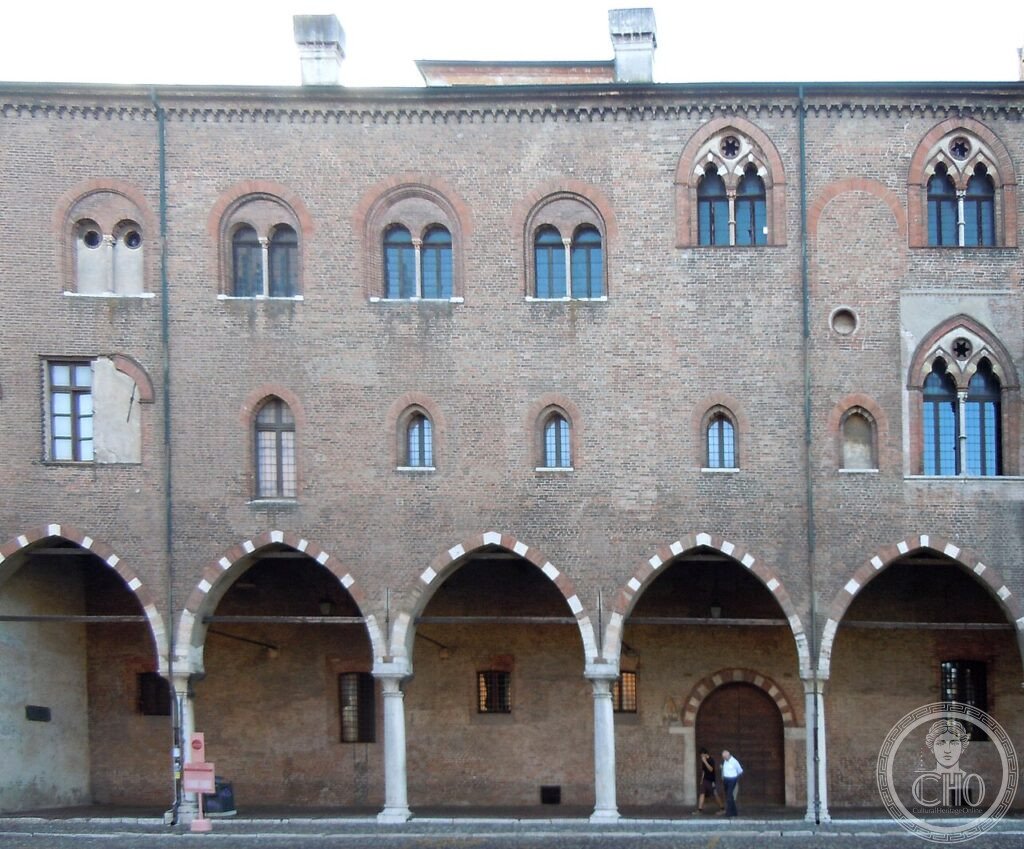
The residence of the Gonzaga dynasty for four centuries (1328–1707) — a palace complex occupying an entire city block in Mantua, with 500 rooms and 15 courtyards accumulated across two centuries of building — and within it, in a tower room called the Camera degli Sposi, the most important fresco cycle of the Italian fifteenth century: Andrea Mantegna’s complete transformation (1465–1474) of an architectural interior into an illusionistic space, where painted curtains, marble medallions, and a trompe-l’oeil oculus in the ceiling prefigure all of Baroque ceiling painting.
At a glance
The Palazzo Ducale of Mantua is a complex of buildings, courtyards, gardens, and connecting passages that covers approximately 35,000 square metres in the heart of Mantua — one of the largest palace complexes in Europe. It was the official residence of the Gonzaga dynasty, the lords (and later dukes) of Mantua from 1328 to 1707, whose patronage made Mantua one of the principal centres of Renaissance culture in northern Italy. The oldest part of the complex (the Magna Domus, Palazzo del Capitano, and the Bonacolsi tower) dates from the thirteenth and early fourteenth centuries; the major additions — the Castello di San Giorgio (1395), the Corte Nuova (1536, by Giulio Romano), and the connecting passages — were added over the following two centuries.
The palace is part of the UNESCO inscription “Mantua and Sabbioneta” (2008, ref. 1287).
Key facts
- Complex size: ~35,000 m² floor area; 500 rooms; 15 courtyards; separate garden (Giardino dei Semplici)
- Castello di San Giorgio: 1395; Bartolino da Novara; fortress integrated into the palace complex; the Camera degli Sposi is in the north-east tower
- Camera degli Sposi (Camera Picta): 1465–1474; Andrea Mantegna; the complete decoration of a tower room with illusionistic frescos showing the Gonzaga court; the oculus in the ceiling (painted sky, angels, and heads looking down) is the first fully illusionistic ceiling painting in European art
- Appartamento Isabella d’Este: early XVI century; the suite of rooms of the most famous of the Gonzaga court women; the studiolo (small study) is decorated with paintings by Mantegna, Leonardo, Perugino, Costa
- Sala degli Specchi: XVII century; mirrors, gilded stucco; used for concerts and theatrical performances
- UNESCO: 2008, ref. 1287 — “Mantua and Sabbioneta”
- GPS: 45.1578, 10.7925 — Google Maps
History
The Gonzaga family came to power in Mantua in 1328, when Luigi Gonzaga overthrew the Bonacolsi dynasty with Ghibelline support. The Gonzaga ruled Mantua for almost four centuries — first as lords (1328–1433), then as marquises (1433–1530), then as dukes (1530–1707) — through a combination of military condottiere service (the Gonzaga supplied generals to Venice, Milan, Naples, and the Empire) and brilliant cultural patronage that made their court a major centre of Renaissance culture.
The most important single commission of the dynasty’s cultural programme was the decoration of the Camera degli Sposi in the Castello di San Giorgio by Andrea Mantegna (1465–1474). Mantegna, who had been court painter in Mantua since 1460, was given an entire room in the north-east tower and asked to decorate it as a permanent record of Gonzaga magnificence. Over nine years, he covered all four walls and the ceiling with a continuous illusionistic programme showing the Marquis Ludovico II Gonzaga and his family receiving news (the scene on the north wall — Ludovico reading a letter, attended by his family, courtiers, and dog) and greeting the Holy Roman Emperor Frederick III and the future Pope Pius II (the scene on the west wall). The ceiling, with its painted oculus opening to a sky with putti and heads of ladies looking down, was the first illusionistic ceiling in European painting, predating Correggio’s (Parma, 1520s) by 60 years and all of the Baroque ceiling tradition by a century.
What you see
The palace visit begins at the Piazza Sordello entrance, where the thirteenth-century Magna Domus and Palazzo del Capitano form the oldest part of the complex visible from the outside. The tour route through the palace is extensive (approximately 2 km if all rooms are open) and changes according to conservation needs; check the current route at the entrance. The unmissable rooms are the Camera degli Sposi (book in advance — entry is timed and limited to 35 people per session) and the Appartamento Isabella d’Este (rooms of the early sixteenth century with important paintings).
The Camera degli Sposi (in the north-east tower of the Castello di San Giorgio, accessible from a separate entrance in the Piazza Castello): a room of approximately 8 × 8 metres, completely covered by Mantegna’s fresco. The north wall shows Ludovico II Gonzaga receiving a letter from his son Cardinal Francesco while holding court; the west wall shows the “meeting” scene of the Gonzaga with the Emperor and the future pope; the ceiling has the famous oculus. The sense of being inside a painted room — where the division between real architecture and illusionistic painting is deliberately ambiguous — is immediate and unmistakable.
Gallery
Practical information
- Museo di Palazzo Ducale: Open Tuesday–Sunday 9:00–17:30 (last entry 16:00); closed Monday. Admission ~€15. Combined ticket options available.
- Camera degli Sposi: Advanced booking mandatory (online or by phone); entry is timed, 35 people per session, 20 minutes inside. Book well in advance in spring and summer (April–August). Available separately from the main palace ticket (~€6.50 supplement).
- Appartamento Isabella d’Este: Included in the general ticket; occasionally closed for conservation; check current state before booking.
- Duration: 2–3 hours for the full palace; 45 minutes for the Camera degli Sposi visit only.
Getting there
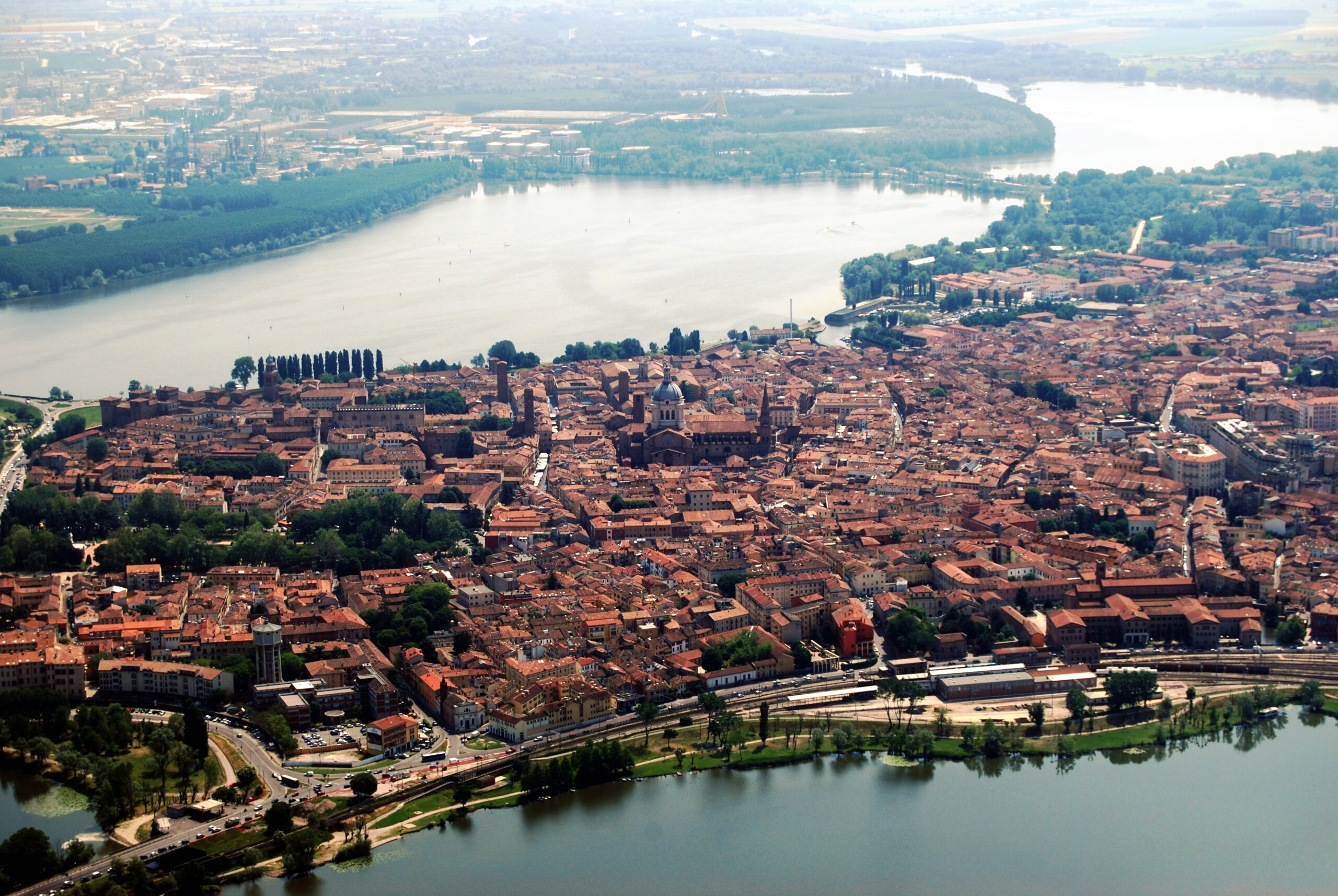
Piazza Sordello 40, Mantova. By train: Mantova station on the Verona–Mantova line (25 minutes from Verona; change at Peschiera or Villafranca for connections from Milan or Venice). The palace is 15 minutes on foot from the station (via Corso Vittorio Emanuele). By car: A22 exit Mantova Nord; follow the SS10 into the city; park at Piazzale Virgiliano or Piazza Sordello underground. From Milan: 160 km, 1h40. From Verona: 45 km, 45 min. From Venice: 130 km, 1h20. The city centre is navigable on foot; the Palazzo Ducale, Basilica di Sant’Andrea, and Palazzo Te (1.5 km south, by Giulio Romano) are the three principal monuments.
Nearby
- Palazzo Te — 1.5 km south; the suburban pleasure villa of the Gonzaga, designed by Giulio Romano (1524–1534); the Sala dei Giganti (Room of the Giants) is one of the most spectacular mannerist interiors in Italy: all four walls and the ceiling are painted as a continuous panorama of the Titans being crushed by rocks thrown by Jupiter, so that the illusion is total from any position in the room
- Sabbioneta — 30 km south-west; the ideal city built by Vespasiano Gonzaga (1554–1591) from scratch on a regular grid — the only surviving example of a complete Renaissance ideal city; UNESCO 2008 (same inscription as Mantova); the Teatro Olimpico (1588) is the oldest surviving purpose-built theatre in Europe
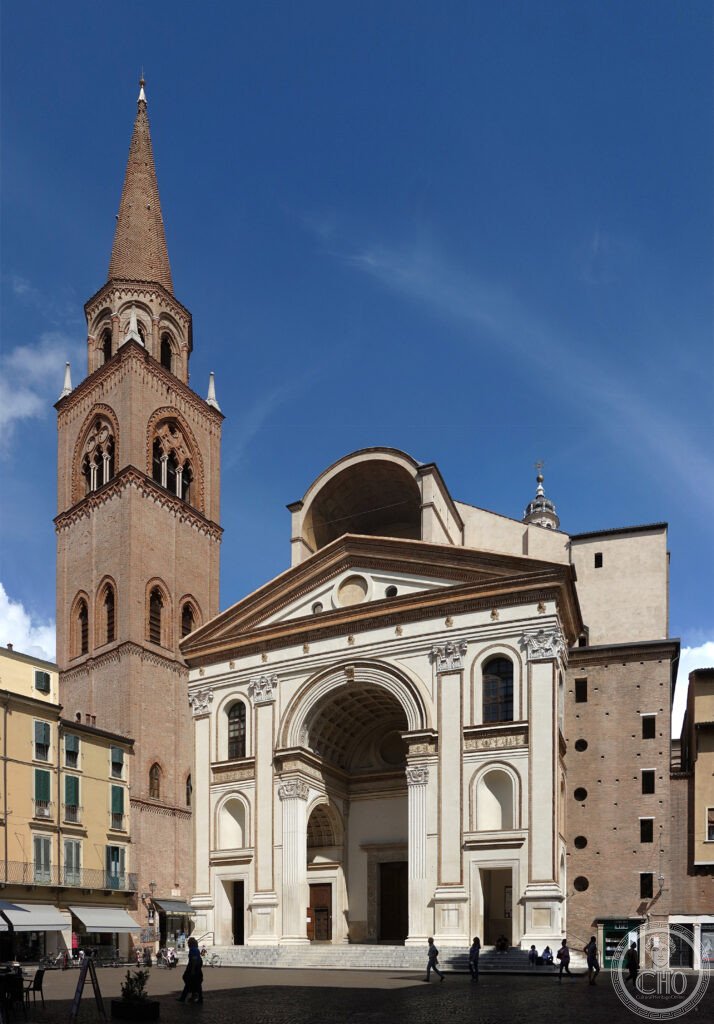
- Basilica di Sant’Andrea — 200 m west; designed by Leon Battista Alberti (1470); the largest church in Mantua; the crypt contains a reliquary with Christ’s blood, believed brought from Palestine by Longinus; the building had enormous influence on church design throughout the Italian Renaissance
Sources
- UNESCO: whc.unesco.org/en/list/1287
- Wikipedia EN: Palazzo Ducale di Mantova
- Lightbown, Ronald: Mantegna, Phaidon, 1986
- Chambers, D.S.; Martineau, Jane (eds.): Splendours of the Gonzaga, Victoria and Albert Museum, 1981
Find it on the map
See this place and what’s around it →📷 Become a Cultural Heritage Online photographer
Share your photos of places: they stay published under your name as the author. The more they're seen, the more you get noticed — and soon a contest will reward the most appreciated photos.
Log in or sign up free to add a photoIs this page about you?
This page is read by travellers and heritage enthusiasts who find it on Google. Tell us how you are connected to this place and we will take it from there.