
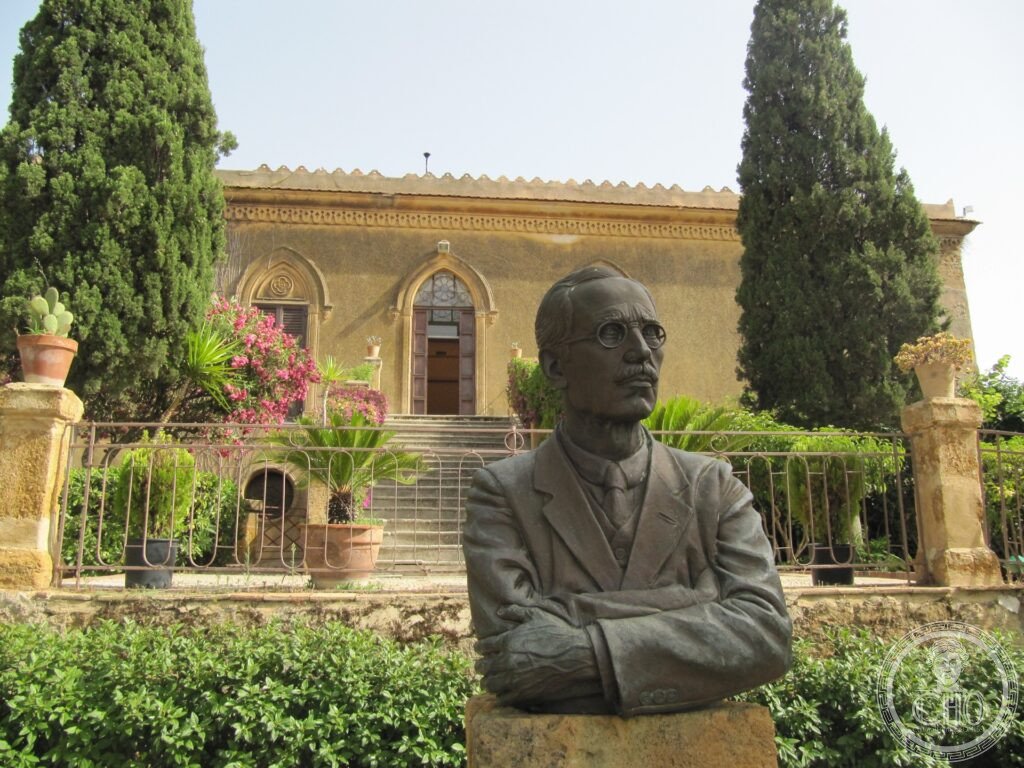
An early twentieth-century Liberty villa built by the British consul Alexander Hardcastle at the edge of the Valle dei Templi in Agrigento, its gardens merging with the ancient Greek sacred precinct and its identity inseparable from the excavations Hardcastle financed in the 1920s.
At a glance
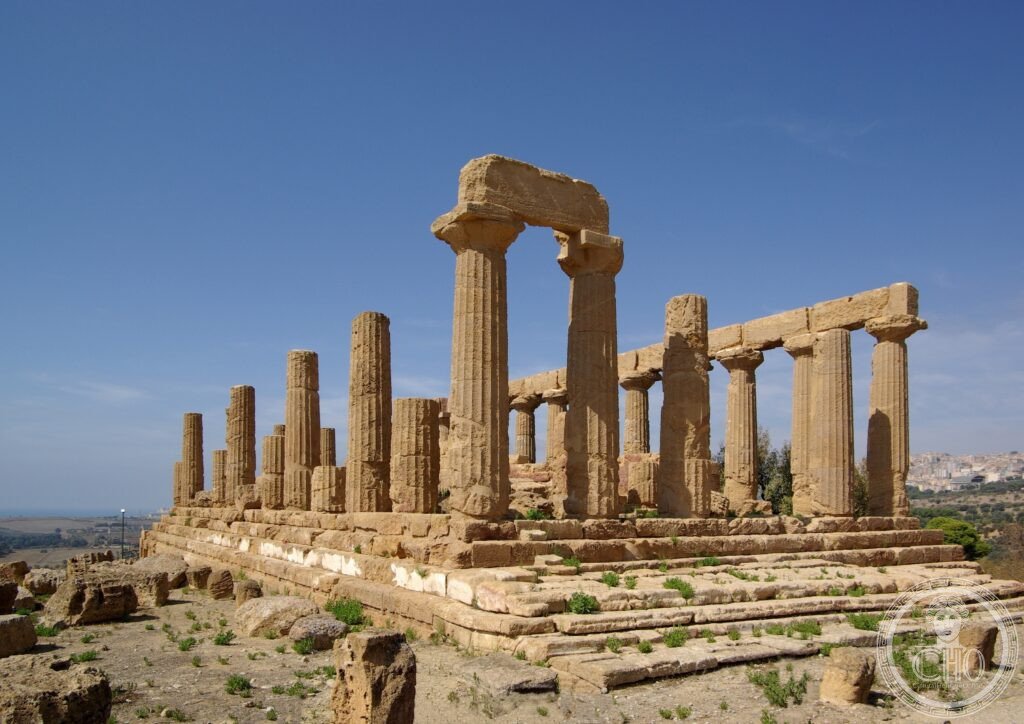
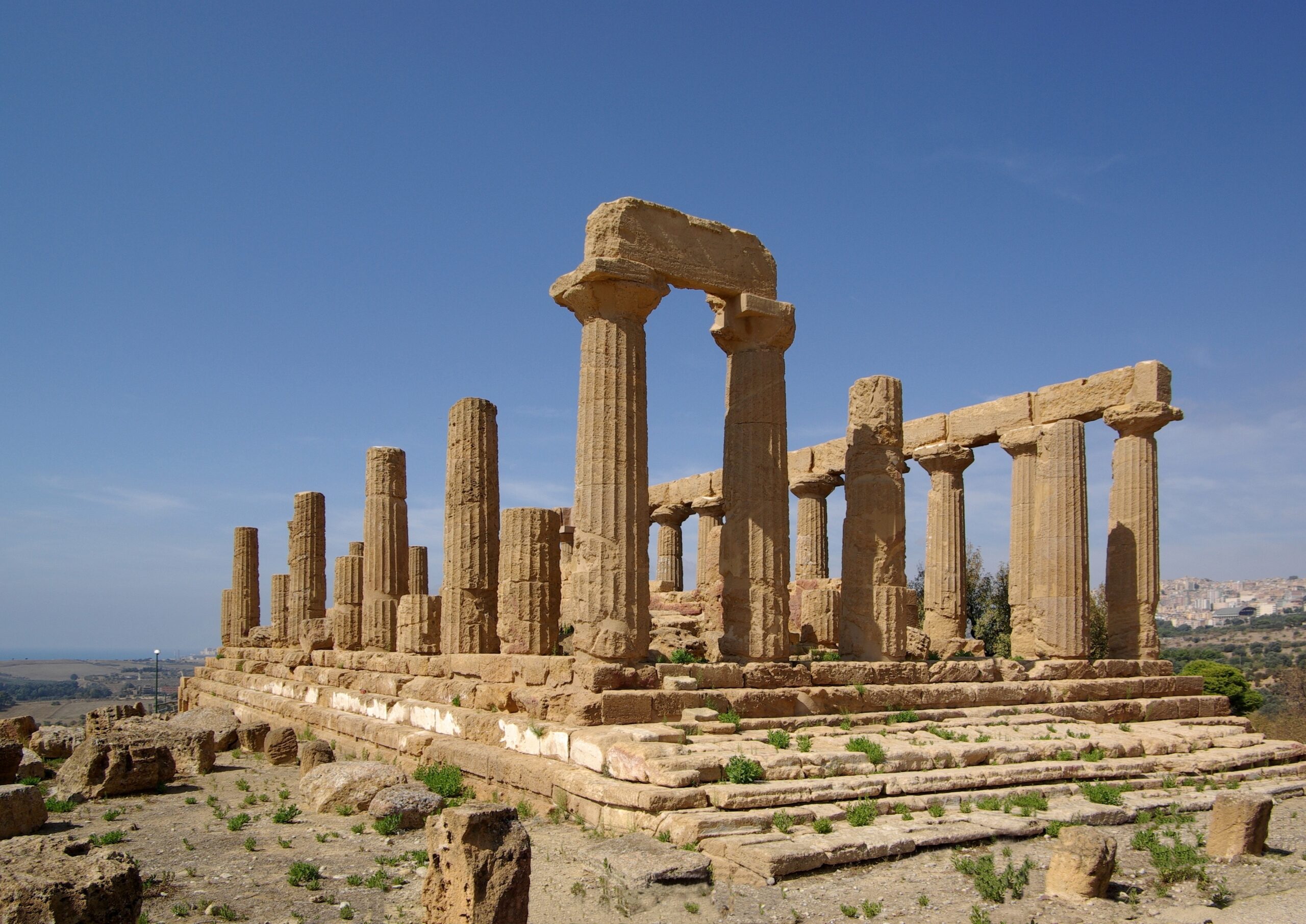
Villa Aurea stands on the Collina dei Templi — the same ridge as the temples of Concordia, Juno, and Heracles — with its south-facing terrace looking across the Valley of the Temples toward the Mediterranean. It was built in 1921 for Alexander Hardcastle, a wealthy British amateur archaeologist and former naval officer who had settled in Agrigento in 1921 and dedicated his fortune to excavating the ancient site. The FAI acquired the villa in 2008 and restored it as an interpretive centre and botanical garden, opening to the public in 2021 after completion of the garden restoration.
Key facts
- Built: 1921
- Owner/builder: Alexander Hardcastle (1872–1933), British consul and archaeologist
- Style: Liberty / Eclectic Mediterranean
- FAI acquisition: 2008
- Opening: 2021 (after garden restoration)
- Adjacent site: Valle dei Templi, UNESCO World Heritage (ref. 831)
- GPS: 37.2890, 13.5886 — Google Maps
History
Alexander Hardcastle arrived in Sicily in 1921 after selling part of his British estate and settled in Agrigento with the specific intent of financing archaeological excavations in the Valley of the Temples. Between 1921 and 1929, his funding supported the teams of Pirro Marconi that uncovered the peristyle of the Temple of Hephaestus, the stadium, and the eastern necropolis — work that materially changed scholarly understanding of Akragas.
Hardcastle spent his personal fortune on the excavations to the point of bankruptcy. By 1929 he was unable to pay his household staff; by 1931 he was hospitalized in Palermo under mental health care, reportedly from the combined pressure of financial ruin and what contemporaries described as an obsessive fixation on the site. He died there in 1933. His villa, which he had named Villa Aurea (“Golden Villa”) for the golden hue of the almond blossom visible from the terrace in February, passed through several ownership stages before the FAI acquired it in 2008.
The restoration programme completed in 2021 replanted the garden with species documented in the 1920s inventories — Mediterranean maquis, stone pine, carob, almond — and converted the outbuildings into interpretation spaces. The villa itself is maintained as a period interior, with the Hardcastle library and correspondence archive accessible to researchers.
What you see
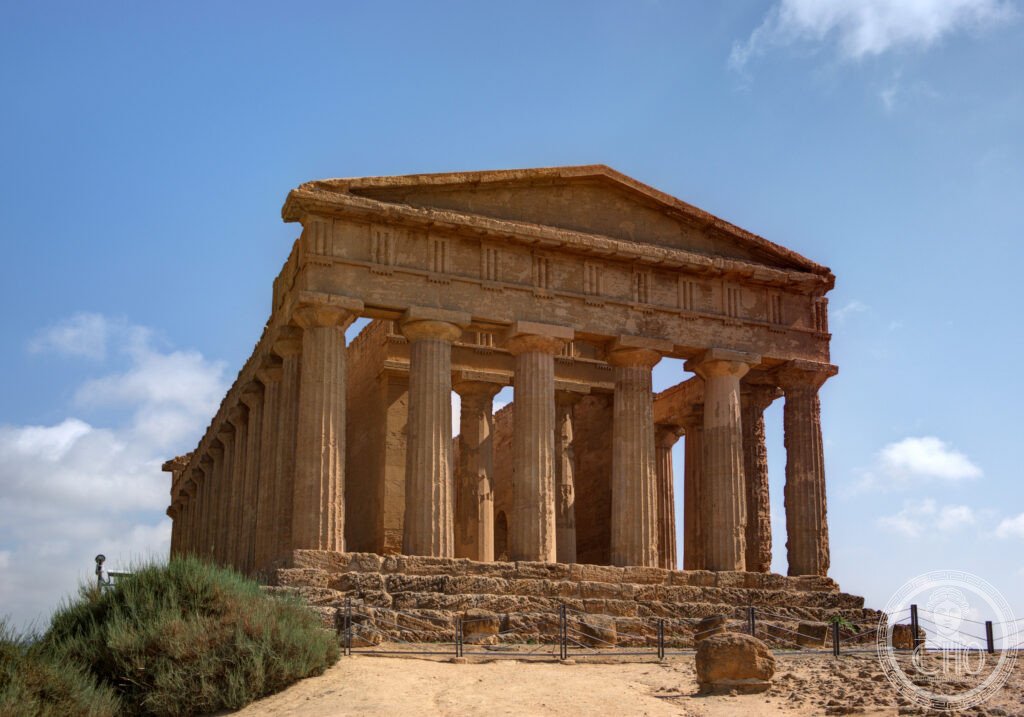
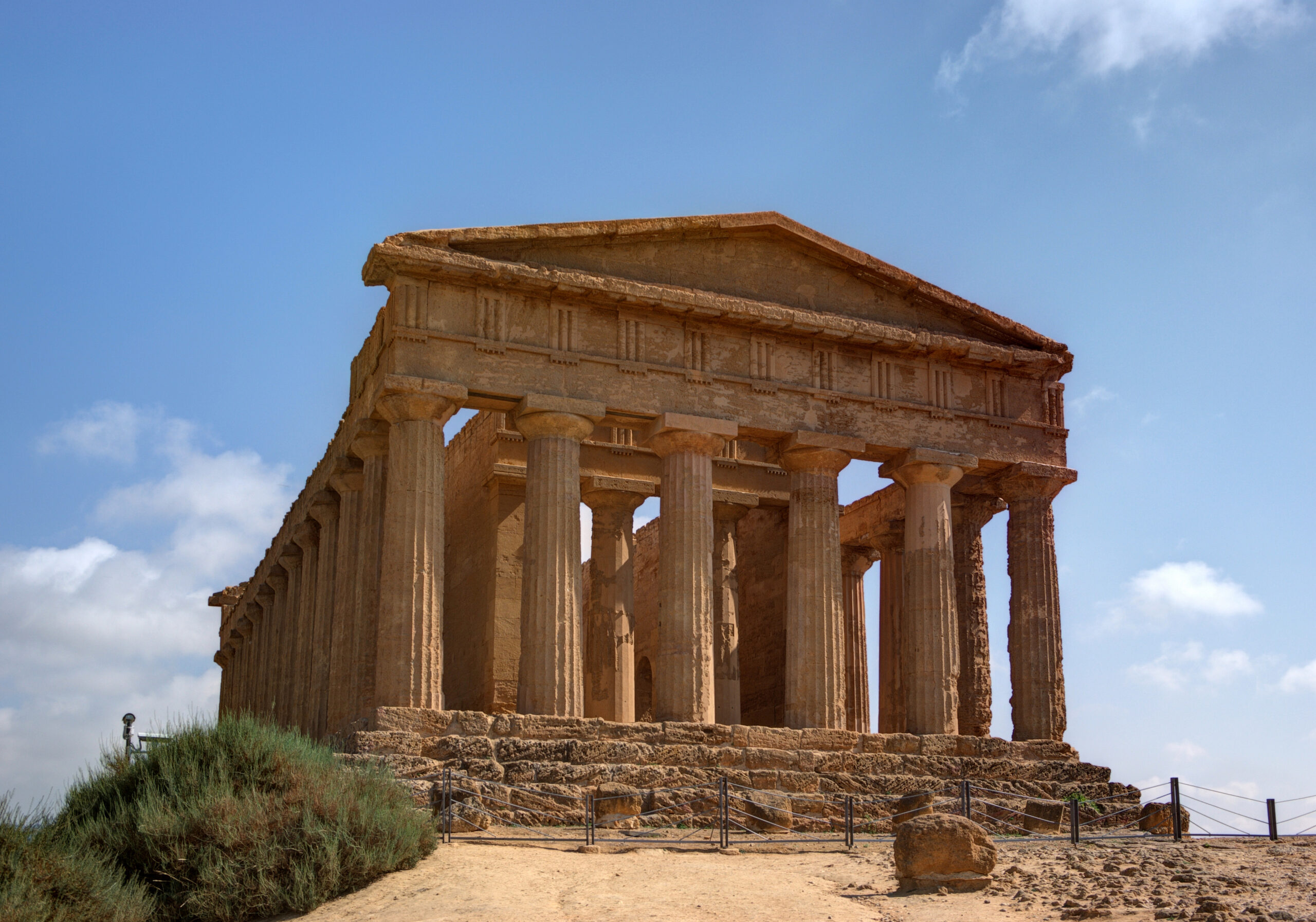
The villa is a comfortable Liberty building — pleasantly quirky rather than architecturally distinguished. Its south terrace commands the most direct private view of the Temple of Concordia available to any visitor: the peristyle rises 200 metres away, unobstructed by other buildings. This view, which Hardcastle took his morning coffee looking at, is the principal reason to visit Villa Aurea even beyond the garden.
The garden itself descends the hillside in a series of informal terraces, planted with the species characteristic of the Sicilian gariga: euphorbia, cistus, wild thyme, asphodel. Almond and carob trees provide shade; stone pines mark the boundary with the archaeological park. In February and March, when the almonds flower and the Concordia temple turns gold in the low sun, the view from the terrace is what Hardcastle spent his fortune trying to understand.
Gallery
Practical information
- Opening: Tuesday–Sunday during Valle dei Templi park hours (usually 9:00–19:00); check FAI website for specific villa times.
- Admission: Included with Valle dei Templi ticket or FAI membership.
- Duration: 30–45 minutes for garden and terrace; 60–90 with interior visit.
- Best time: February (almond blossom) or late afternoon (backlit Concordia from the terrace).
Getting there
Villa Aurea is within the Valle dei Templi archaeological park, 3 km south-west of Agrigento city centre. By car: follow signs for “Valle dei Templi” from SS115; parking at the entrance (paying). By bus: SAIS bus from Agrigento Centrale (Piazza Rosselli) to the Valle dei Templi entrance (10 min, frequent). Train from Palermo to Agrigento Centrale: 2h. Villa Aurea is approximately 800 m walk inside the park from the main entrance.
Nearby
- Tempio della Concordia — best-preserved Greek temple in the Mediterranean, 200m from the terrace
- Museo Archeologico Regionale “Pietro Griffo” — major collection of Akragas finds including the Ephebe of Agrigento
- Giardino della Kolymbethra — FAI-managed ancient Greek pool/garden below the temples, 5 min walk
Sources
- FAI – Fondo Ambiente Italiano: fondoambiente.it/luoghi/villa-aurea
- Wikipedia IT: Villa Aurea (Agrigento)
- Marconi, Pirro: Agrigento — Topografia ed Arte, Florence, 1929
- Buttitta, Antonino: Hardcastle e la Valle dei Templi, Palermo, 1988
Gallery
Find it on the map
See this place and what’s around it →📷 Become a Cultural Heritage Online photographer
Share your photos of places: they stay published under your name as the author. The more they're seen, the more you get noticed — and soon a contest will reward the most appreciated photos.
Log in or sign up free to add a photoIs this page about you?
This page is read by travellers and heritage enthusiasts who find it on Google. Tell us how you are connected to this place and we will take it from there.