
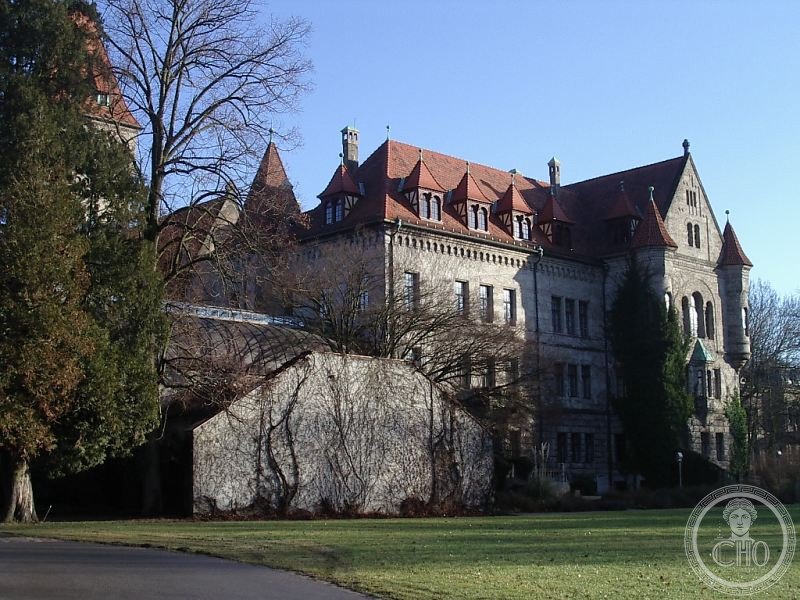
On the same site in Stein near Nuremberg where Kaspar Faber set up his pencil workshop in 1761, the world’s largest pencil manufacturer still operates today — 265 years of continuous production at a single location, overseen by nine generations of the same family and now open to visitors through the Alte Mine museum and factory experience.
At a glance
The Faber-Castell site in Stein, a municipality on the southwestern edge of Nuremberg, is one of the most unusual industrial heritage destinations in Germany: a working factory, a family castle, a museum, and a village that grew up entirely around a single manufacturing business. The company produces 2.3 billion pencils per year, making it the world’s largest pencil manufacturer, and it has operated continuously at the Stein site since 1761 — a record of industrial continuity at a single location that is exceptional anywhere in Europe. The experience combines a museum tracing the family and product history across nine generations with guided factory tours that follow a pencil from raw graphite to finished product.
History
Kaspar Faber was a cabinet-maker who began producing pencils as a sideline in 1761, selling them at the Nuremberg market. The business grew rapidly through the early 19th century under his descendants, and it was Lothar von Faber (1817–1896) who transformed what had been a prosperous regional trade into a global industrial enterprise. Lothar standardised pencil grades — inventing the H and B grading system still used worldwide — opened factories in the United States and Russia, and lobbied successfully for the family to be granted a Bavarian barony. The neo-Gothic castle (Burg Faber-Castell, completed 1903) was built by his grandson Alexander zu Castell-Rüdenhausen to express the family’s aristocratic ambitions. The Faber and Castell families formally merged in 1898, creating the double-barrelled name. The company survived two world wars, post-war partition (the Nuremberg factory was in the American zone, the Stein site remained operational), and multiple economic crises, remaining family-owned and headquartered in Stein to this day.
What you see
The neo-Gothic castle (Burg Faber-Castell, 1903) dominates the village visually, its tower visible from across the surrounding Rednitz valley. Built in the historicist style popular in late Imperial Germany, the castle was designed to resemble a medieval Franconian stronghold and serves today as the private residence of the Faber-Castell family, with some spaces open for events. The Alte Mine museum occupies the original 18th and 19th-century factory buildings — solidly built industrial architecture in local sandstone that contrasts with the neo-Gothic romanticism of the castle. Factory tour routes pass through active production halls where cedar wood slats are pre-milled, graphite cores inserted, assembled, lacquered, and stamped, giving visitors a complete view of the manufacturing process that has made this site famous for two and a half centuries.
Cultural significance
Faber-Castell in Stein represents a category of industrial heritage that is increasingly rare: a family-owned manufacturer still operating at its founding location, with an unbroken lineage connecting the present workforce to the cabinet-maker who began making pencils there in 1761. Pencils are a deceptively complex object — the result of centuries of material science refinement, from sourcing and processing graphite, to selecting cedar wood that sharpens cleanly without splinters, to developing the lacquer systems that protect the wood from moisture. The H and B grading system standardised by Lothar von Faber in the 19th century became the global reference for pencil quality and remains the industry standard today. The site also illustrates the paternalistic model of industrial capitalism that characterised 19th-century German manufacturing: the Faber-Castell family built workers’ housing, a school, and a church in the village of Stein, creating what was effectively a company town.
Key facts
- Founded: 1761 by Kaspar Faber in Stein bei Nürnberg
- Continuity: 265 years of uninterrupted production at the same site
- Scale: 2.3 billion pencils manufactured per year — world’s largest producer
- Family: nine generations of family ownership and management
- Innovation: Lothar von Faber invented the H/B pencil grading system in the 19th century
- Castle: Burg Faber-Castell, neo-Gothic, completed 1903
- Museum: Alte Mine occupies original 18th–19th century factory buildings
- Location: Stein bei Nürnberg, Bavaria, approximately 8 km south of Nuremberg city centre
Practical information
The Faber-Castell Experience in Stein offers guided factory tours and museum visits that run on a fixed schedule; pre-booking is required for groups and strongly recommended for individuals, especially during school holidays. Tours cover the Alte Mine museum galleries and an active section of the pencil factory, lasting approximately 90 minutes. Commentary is available in German and English. The on-site shop sells the full range of Faber-Castell products — from standard school pencils to professional artist ranges and luxury Castell 9000 sets — as well as limited-edition commemorative items. The castle grounds are viewable from the exterior; the castle interior is not accessible to general visitors. Photography is permitted in the museum but restricted in the active factory areas.
Getting there
Stein bei Nürnberg is located approximately 8 kilometres southwest of Nuremberg city centre, in the district of Fürth/Nuremberg. From Nuremberg Hauptbahnhof (main station), take S-Bahn line S3 towards Neumarkt and alight at Stein station; the journey takes around 20 minutes and runs at frequent intervals throughout the day. The Faber-Castell factory and museum are a 10-minute walk from the station. By car, take the A73 southbound from Nuremberg; Stein is signposted from the motorway. Nuremberg itself is served by direct ICE high-speed trains from Munich (about 1 hour), Frankfurt (approximately 2 hours), and Berlin (approximately 3 hours), making Stein an easy addition to any Franconia or Bavaria itinerary.
Sources & resources
- Faber-Castell official website: faber-castell.com
- Stadt Stein tourist information: stein.de
- Bayerisches Landesamt für Denkmalpflege — listed monuments Stein: blfd.bayern.de
Find it on the map
See this place and what’s around it →📷 Become a Cultural Heritage Online photographer
Share your photos of places: they stay published under your name as the author. The more they're seen, the more you get noticed — and soon a contest will reward the most appreciated photos.
Log in or sign up free to add a photoIs this page about you?
This page is read by travellers and heritage enthusiasts who find it on Google. Tell us how you are connected to this place and we will take it from there.