
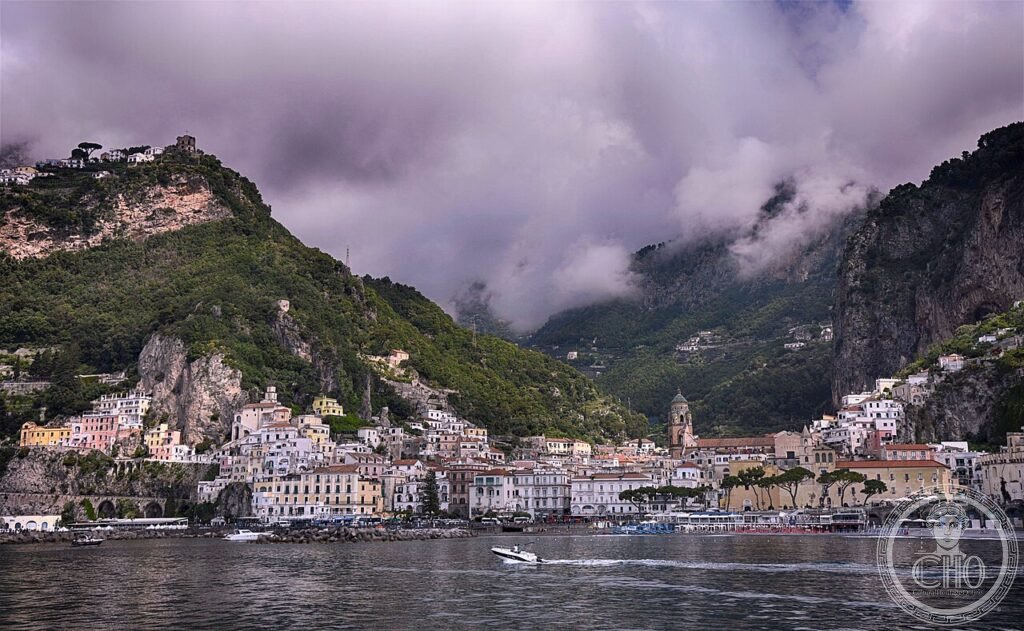
Costiera Amalfitana
La Costiera Amalfitana (UNESCO 1997, rif. 830) è un paesaggio culturale unico dove 50 km di scogliera calcarea sono stati trasformati in terrazzamenti agricoli da una piccola repubblica marinara medievale (Amalfi, 839–1131 CE) che per tre secoli fu la più importante potenza commerciale del Mediterraneo occidentale.
At a glance
Costiera Amalfitana Campania (the most precisely Costiera Amalfitana zone Amalfi Salerno Campania Italy 40.6333 N 14.6028 E UNESCO WHS 1997 reference 830 Amalfi Coast: the site (the site area: 11,231 ha (the linear extent of the coast: 50 km from Vietri sul Mare to Positano); the terrain (the Monti Lattari (the “Milk Mountains”: named after the ancient pastoral use): the mountain ridge that forms the backbone of the Sorrento Peninsula; the ridge rises to 1,443 m (the Monte Cerreto); the Tramonti Valley (the inland valley between Ravello and Amalfi: the “Via Regia” running from the coast into the interior of Campania via the Valico di Chiunzi pass (627 m)); the terraces (the citriculture terraces (the limonaia: the lemon grove terraces): built by the Amalfitans and earlier by the Saracens (9th–10th century CE); the terrace structure (the parapetti: the dry-stone retaining walls; the same technique as the Cinque Terre terraces; built without mortar; the stones taken from the local Cretaceous limestone): the production (the Sfusato Amalfitano (the “spindle-shaped” lemon): the local lemon variety; IGP-protected since 2001; harvested November–June; the fruit: 200–800 g weight; 25–50% juice content (vs. 30% for commercial lemons); the white flowers (the “zagara”): used in perfumery since the 19th century CE (the “Acqua di Colonia” formula was developed with Sfusato zagara oil in Naples in the 17th century CE)); the history (the Duchy/Republic of Amalfi (839–1131 CE): the Amalfitan Republic (the first Italian maritime republic to develop trade with the Eastern Mediterranean: the Amalfitan trading colonies in Constantinople, Alexandria, Antioch, and Jerusalem; the “Amalfitan Quarter” in Jerusalem (the Hospital of Saint John: the foundation of the Hospitaller order in 1099 CE; the Amalfitans were the founders of the precursor institution that became the Knights Hospitaller after the First Crusade)).
Key facts
- La Tavola Amalfitana (c.1000 CE): il primo codice marittimo d’Europa e come la Repubblica di Amalfi ha inventato la bussola magnetica (o no): the Tavola Amalfitana (the “Amalfi Tables”: the oldest maritime code in the Western world: dated c.1000 CE (the earliest surviving manuscript: a 16th-century CE copy; the original document: probably 10th or 11th century CE; the uncertainty: the dating is disputed between the 10th and 13th century CE in the literature); the content (the Tavola (the “Table”): the law of the sea: the rules for cargo handling, maritime insurance, navigation, and the resolution of maritime disputes; the legal principles: derived partly from Roman law (Justinian Digest) + Byzantine maritime law (the Rhodian Sea Law)); the compass legend (the “Flavio Gioia of Amalfi invented the compass” legend: the legend (found in many textbooks) attributes the invention of the magnetic compass to a mythical Amalfitan named Flavio Gioia in the early 14th century CE; the truth (the reality: (1) there is no evidence that Flavio Gioia existed; (2) the magnetic compass was used in China by the 11th century CE (the earliest Chinese description: Shen Kuo, “Dream Pool Essays” (Mengqi bitan), 1088 CE); (3) the European adoption: the magnetic compass arrived in Europe via Arab traders c.1187 CE; (4) the Amalfi compass: the Amalfitans did develop a compass “rose” with 16 or 32 points (the “bussola”: the compass-rose design originated in the Tyrrhenian Sea navigation charts (the “portolani”) of the 13th–14th century CE; but this is the design of the compass rose, not the invention of the compass)))
- GPS (Duomo di Amalfi Sant’Andrea, Piazza del Duomo): 40.6333° N, 14.6028° E; Ravello Villa Rufolo: 40.6472° N, 14.6136° E; Positano (centro): 40.6282° N, 14.4856° E
History
Da Longobardi al UNESCO 1997 (the most precisely Costiera Amalfitana zone history: the Duchy of Amalfi (the foundation: 839 CE: Amalfi declared independence from the Duchy of Naples (itself nominally Byzantine); the independence was de facto since the 6th century CE when the Byzantines abandoned the Tyrrhenian coast to the Lombards; the Duchy (839–1073 CE) and Republic (1073–1131 CE): the political history: after the Duchy became a Republic in 1073 CE, the city was conquered by the Normans in 1131 CE (Roger II of Sicily); the commercial empire (the Amalfitan trading network (9th–12th century CE): the colonies in Alexandria (the Amalfitan fondaco: the trading post in the Egyptian quarter of Alexandria; the largest non-Muslim trading community in Egypt before 1071 CE); the Duchy had a population of 70,000–100,000 at its peak (10th–11th century CE): the largest Italian city of the pre-crusade period; the Pisan attack (1135 CE: the Pisans attacked and sacked Amalfi; the Pisan fleet carried away the entire archive of Amalfi including the original Tavola Amalfitana); the Wagner connection (Richard Wagner (1813–1883 CE): he stayed at the Hotel Palumbo in Ravello in 1880 CE and composed the Parsifal Act II (the “Klingsor’s Magic Garden”) based on the view from the Villa Rufolo; the Ravello Music Festival (since 1953 CE) takes place in the Villa Rufolo gardens); the UNESCO inscription (1997 CE: reference 830).
What you see
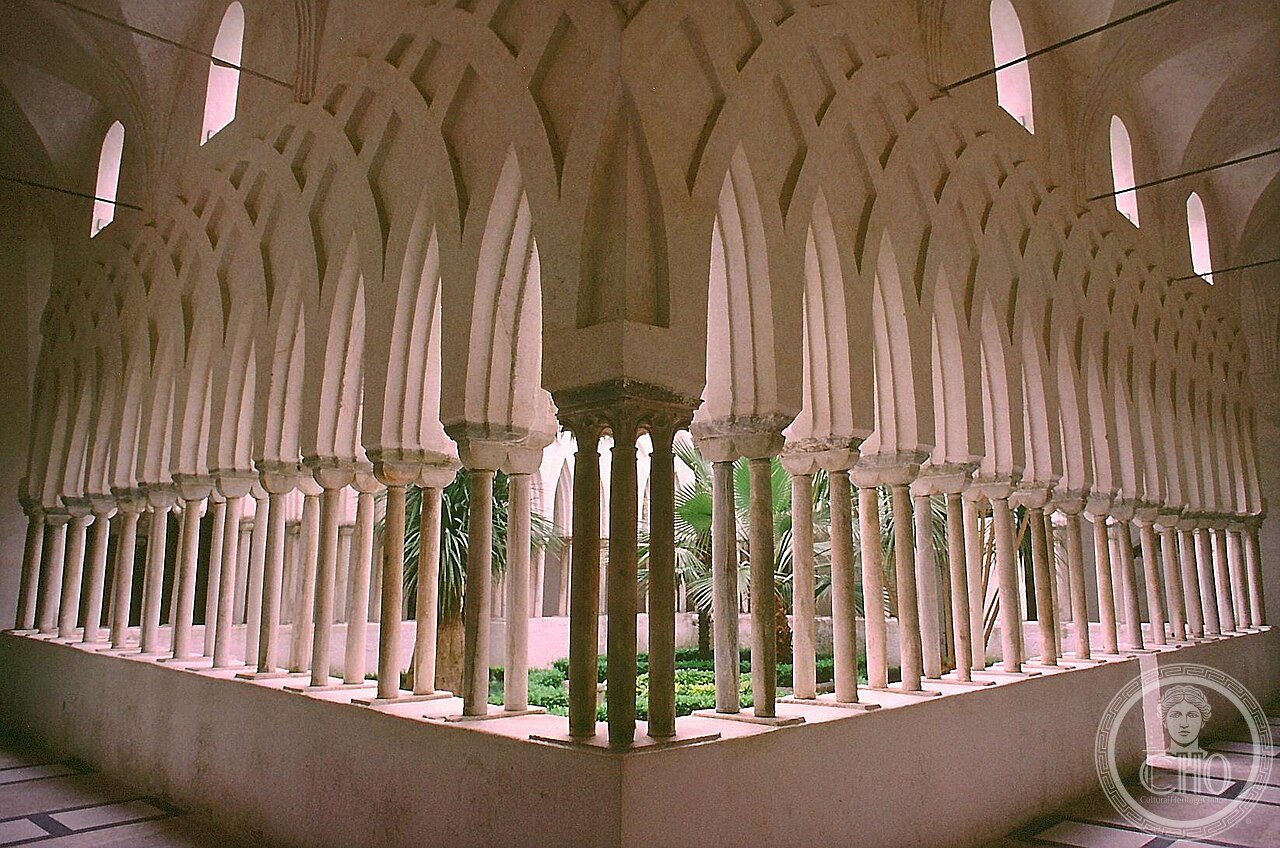
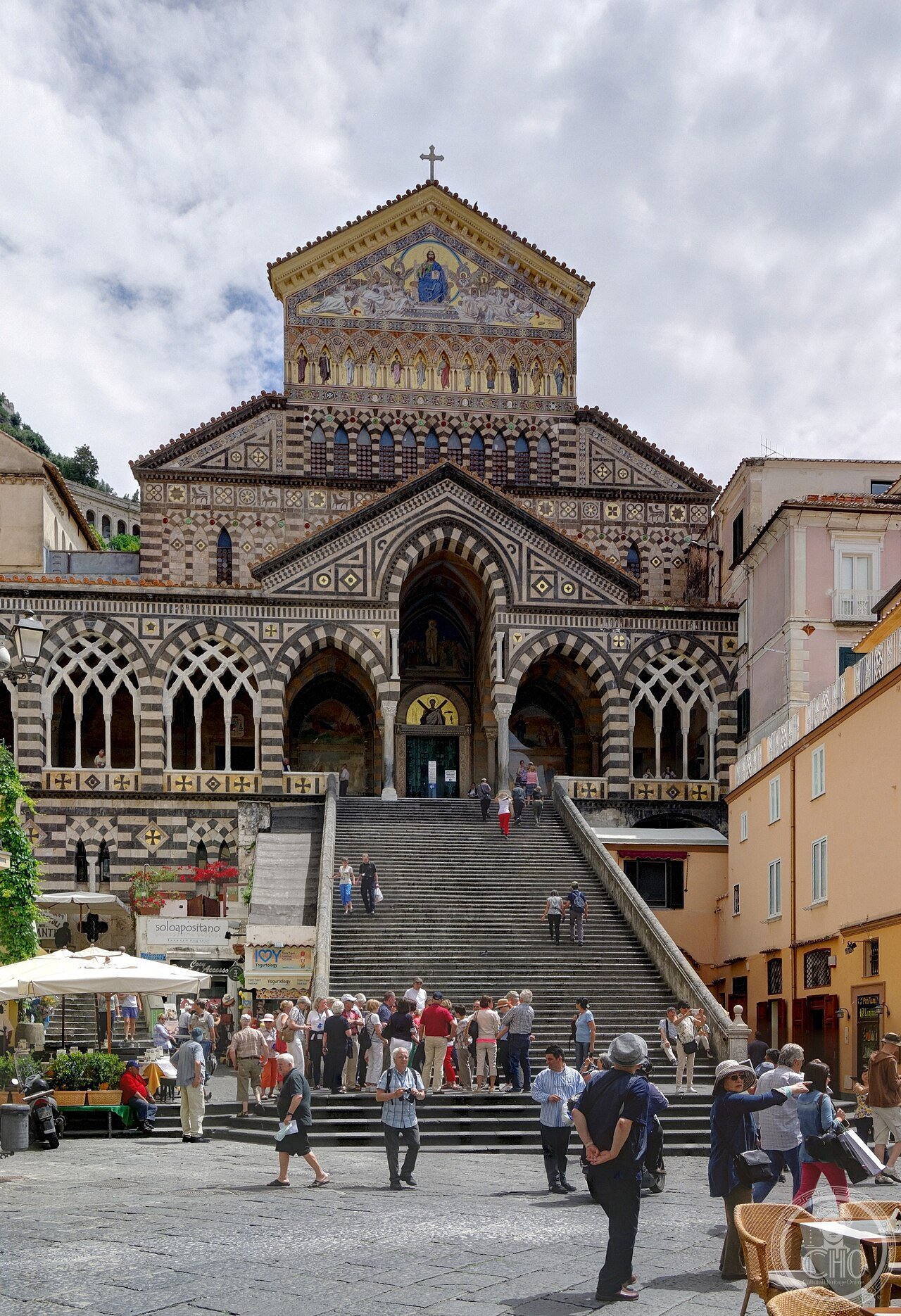
Duomo di Amalfi 1019 CE, Villa Rufolo 1270 CE Ravello, Positano scogliera, Via Nastro Azzurro (the most precisely Costiera Amalfitana zone visit (2 days for the whole coast): the Duomo di Amalfi (Piazza del Duomo; free; 9:00–19:30 (summer); the Cathedral of Sant’Andrea: the bronze doors (1066 CE: cast in Constantinople; 54 panels in silver-niello): among the same set of Byzantine bronze doors as Monte Sant’Angelo (1076 CE) and San Paolo fuori le Mura (1070 CE): all commissioned by the Amalfitan merchant Pantaleone di Mauro (see Monte Sant’Angelo card)); the Cloister of Paradise (“Chiostro del Paradiso” (1266 CE): the Gothic cloister with interlaced pointed arches and Saracenic patterns: the most beautiful cloister in southern Italy; €3); the Villa Rufolo Ravello (Piazza del Duomo, Ravello; 9:00–sunset; €7; the 13th-century CE villa (1270 CE; built by the Rufolo family: the wealthiest Amalfitan trading family of the 13th century CE); the terraced garden (the Moorish garden with the panorama of the coast; the stage (the “Terrace of Infinity” or “Terrazza Wagneriana”): the location of the Ravello Festival concerts: 80 m above the sea); Positano (the staircase village (the village: no horizontal streets: all movement is via stairs; the main stairs: the via dei Mulini (the Mills Steps: 390 steps from the beach to the top of the village)); the Sfusato lemons (the limonaia: the lemon terraces on the slopes above Positano: the COOP Agrumi Costa d’Amalfi lemon farm above the village offers guided tours in April–June)).
Practical information
- Come muoversi lungo la Costiera Amalfitana senza auto, e perché il traghetto è meglio del bus (SITA SUD) in alta stagione: il trasporto (la scelta (la SP163 Strada Statale Amalfitana: la strada a due corsie che percorre tutta la costiera da Vietri a Positano; in luglio-agosto: il traffico blocca i bus SITA SUD per ore e le corsie si riducono a 1 per il passaggio dei pullman granturismo); la soluzione: il traghetto (Napoli → Positano → Amalfi → Ravello (via Amalfi + taxi): NLG Navigazione Libero del Golfo (partenze da Napoli Molo Beverello: 9:10 e 14:30 in estate; 1h15 per Positano; €22); il Flixbus Roma-Salerno (2h30; €8) + traghetto TRAVELMAR (Salerno → Amalfi 1h; €10); la barca privata (i gozzi dei pescatori di Positano: €80–120/persona/giorno per una gita in barca alle Grotte, a Li Galli (le isole delle Sirene) e a Capri); il periodo ottimale (aprile-maggio + settembre-ottobre: la folla è 40% rispetto a luglio-agosto; le terme di Positano (le piscine termali naturali in Calabria sono lontane; le terme naturali più vicine: Terme di Agnano a Napoli (40 min) o Stufe di Nerone (20 min da Pozzuoli)))
Getting there
NLG traghetto da Napoli (1h15 Positano €22; 1h45 Amalfi €23). SITA SUD bus da Salerno (1h Amalfi €2.40). GPS Duomo Amalfi: 40.6333/14.6028. Duomo gratuito. 9:00–19:30. Chiostro del Paradiso €3. Villa Rufolo Ravello €7.
Nearby
- Isola di Capri (Villa Jovis di Tiberio 26 CE + Grotta Azzurra + Marina Grande) — 45 min (traghetto da Amalfi o 30 min da Sorrento; €20–25; la Villa Jovis (Gens Claudia): la villa imperiale di Tiberio 26–37 CE (dove regnò per 11 anni senza mai tornare a Roma); la Grotta Azzurra (il fenomeno ottico: la luce filtra da un ingresso sottomarino e illumina la grotta dal basso creando l’effetto azzurro))
- Paestum (Tempio di Nettuno 460 BCE, Basilica 550 BCE — i templi greci meglio conservati fuori dalla Grecia) — 55 km (SITA SUD + Trenitalia 1h30; €5; il Tempio di Hera I (550 BCE; il nome “Basilica” erroneo degli scavatori del XVIII sec.): il più antico tempio greco in pietra in Italia; il Tempio di Hera II / “Nettuno” (460 BCE: il più integro tempio greco dorico al mondo dopo il Theseion di Atene))
Gallery

Sources
- Wikipedia, Amalfi Coast; Republic of Amalfi; Tavola di Amalfi; Villa Rufolo, accessed June 2026
- UNESCO, Amalfi Coast, WHS reference 830, inscribed 1997
- Skinner, Patricia. Medieval Amalfi and its Diaspora, 800–1250. Oxford: Oxford University Press, 2013
Find it on the map
See this place and what’s around it →📷 Diventa un fotografo di Cultural Heritage Online
Condividi le tue foto dei luoghi: restano pubblicate con la tua firma come autore. Più vengono viste, più ti fai conoscere — e presto un concorso premierà le foto più apprezzate.
Accedi o registrati gratis per aggiungere una foto