
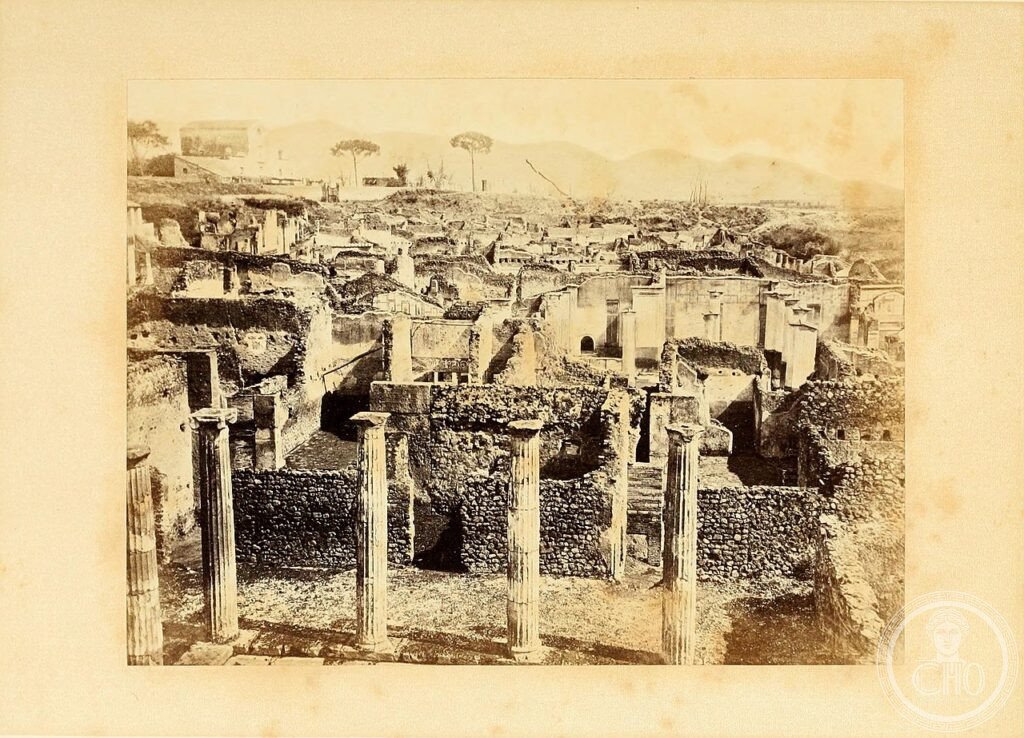
Pompei ed Ercolano
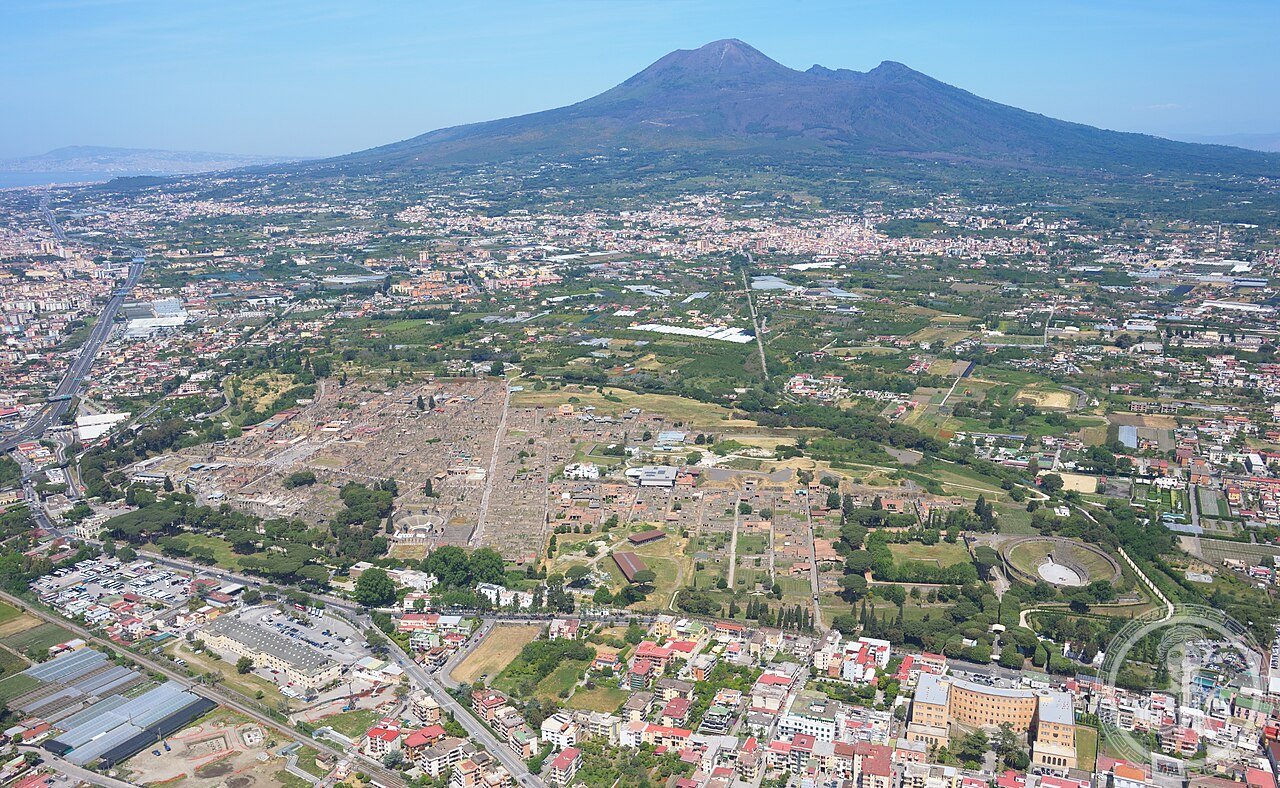
Pompei ed Ercolano (UNESCO 1997, rif. 829) sono le due città romane più intatte mai ritrovate: sepolte dall’eruzione del Vesuvio del 24 agosto 79 CE sotto 4–6 m di pomice e surge piroclastico, hanno preservato strade, affreschi, graffiti, calchi di corpi e il contenuto di ogni cucina e bottega di una città romana di prima classe.
At a glance
Pompei Ercolano Campania (the most precisely Pompei zone Pompei Ercolano Torre Annunziata Napoli Campania Italy 40.7493 N 14.4870 E UNESCO WHS 1997 reference 829 Pompeii, Herculaneum and Torre Annunziata: the site (the 3 components: (1) Pompeii (Pompei): the main site; 66 ha of excavated area (44 ha of the ancient city + 22 ha excavated including the necropolis, the villa suburbane, and the casts area); the original city area: 66 ha (estimated total, not all excavated); the population at 79 CE: estimated 11,000–20,000 residents + visitors/slaves (the “Pompeii II” model by Andrew Wallace-Hadrill (2011 CE): 11,000 ±2,000); (2) Herculaneum (Ercolano): 11 ha; smaller, better-preserved, harder to excavate (the town is under the modern city of Ercolano at 4–12 m depth: the volcanic tuff is harder than Pompeii’s pumice; the ongoing excavation: the “Herculaneum Conservation Project” (British School at Rome + Packard Humanities Institute, 2001 CE–present)); (3) the Villa of the Papyri (“Villa dei Papiri”: the suburban villa outside Herculaneum: partially excavated via tunnels in 1750–1765 CE by Roque Joaquin de Alcubierre and Karl Weber; 1,785 carbonized papyrus scrolls found (the “Herculaneum Papyri”: still being deciphered via multispectral imaging at the Institut de France in Paris; the Villa J. Paul Getty Museum in Malibu is a replica of this villa)); the eruption (the eruption of Vesuvius on August 24, 79 CE: (the date: the traditional “August 24” is from Pliny the Younger’s letter to Tacitus (written c.104 CE); the revised date (from pomegranates, chestnuts, and a silver coin with post-September 79 CE inscription found in the 2018–2019 excavations in Regio V): now the consensus of the Pompeii Archaeological Park (2019 CE) is October 24, 79 CE (±2 weeks); the eruption sequence: 01:00 PM: the “Plinian column” rises to 32 km altitude (the phreatomagmatic phase begins); 11:00 PM: the column collapses (the pyroclastic surges begin; Herculaneum is engulfed in 4 surge waves (each 300°C, 250 km/h); the 4 surges (S1-S4: 11 PM Aug 24 to 7 AM Aug 25) kill all surviving Herculaneans instantly (the “Herculaneum skeletons” (1981 CE discovery of 300+ boat arches skeletons at the ancient shoreline: all died from instantaneous thermal shock at 300°C); the pumice fall kills most Pompeians (4–6 m of pumice in Pompeii by 7 AM Aug 25); the “surge 6” (the final pyroclastic surge) hits Pompeii at 7:30 AM Aug 25 CE: the city is sealed)).
Key facts
- I calchi delle vittime di Pompei (1863 CE; Giuseppe Fiorelli) e come funziona la tecnica di ingessatura delle cavità lasciate dai corpi: the Pompeii casts (the Fiorelli method (1863 CE): Giuseppe Fiorelli (1823–1896 CE; Director of the Pompeii excavations 1860–1875 CE) noticed that the pumice deposit around buried bodies had hardened into cavities (the body decomposed completely inside the pumice; the cavity retained the exact shape of the body at the moment of death); Fiorelli invented the procedure of injecting liquid plaster of Paris (gypsum plaster) into the cavities via a small hole made with a drill → the plaster hardens around the skeleton (the skeleton is preserved inside the cast) → the pumice is carefully removed → the result is a 3D cast of the body at the exact posture of death); the casts (the 86 plaster casts currently visible in the museum and at 5 locations in the excavation area (the Garden of the Fugitives (Orto dei Fuggiaschi): the most dramatic group: 13 casts in 2 rooms of a garden, buried in the pumice while trying to escape (a family group: man, woman, 2 children); the Casa del Menandro (the cast of a dog chained to a post: the most famous image of Pompeii); the CT scans of the casts (2015 CE study by Prof. Gino Fornaciari (Univ. Pisa): CT scanning of 86 casts revealed (1) the skulls and teeth (the dental evidence: the Pompeians had excellent teeth (no refined sugar; little caries; the Pompeian diet: fish, bread, figs, olives, wine); (2) genetic sex identification: 34% of the casts are female (the initial visual identification had missed many female skeletons); (3) one cast previously classified as “a man with a woman” = 2 adult males (the rethinking of same-sex couples in Roman Pompeii)))
- GPS (ingresso Pompei Scavi, Piazza Anfiteatro): 40.7493° N, 14.4870° E; Ercolano Scavi: 40.8057° N, 14.3480° E
History
Da Osci 600 BCE al UNESCO 1997 (the most precisely Pompei zone history: the foundation (Pompei: the Oscan foundation (c.600 BCE: the Oscans (the Samnite-related italic people of Campania) founded a settlement at the mouth of the Sarno river on the lava plateau of the ancient Vesuvian eruption (the location on the lava: the lava flow from a prehistoric Vesuvian eruption (c.35,000 BCE) created a flat plateau 30 m above the Sarno plain; the Oscans built the first settlement on this plateau); the Samnite period (400–290 BCE: the city was conquered by the Samnites in 420 BCE; the Samnite city (the “tufa period”): the major temples (the Tempio di Giove, the Tempio di Apollo) were built in this period; the amphitheatre (80 BCE: the earliest surviving Roman amphitheatre in permanent stone (the Anfiteatro di Pompei: 80 BCE; capacity 20,000; pre-dates the Colosseum by 140 years)); the Roman period (80 BCE: Pompei became a Roman colonia after the Social War; the Roman urbanization: the Forum, the Basilica, the thermopolia (fast-food counters), the thermae (public baths); the Vesuvius eruption (79 CE): see above; the rediscovery (1748 CE: Roque Joaquin de Alcubierre (1702–1780 CE): a Spanish military engineer in the service of the King of Naples (Charles III de Bourbon): he was commissioned to investigate “buried structures” reported by well-diggers in the area of Torre Annunziata; his excavations (1748 CE at Pompei; 1750 CE at Herculaneum; 1763 CE: the first inscription found that identifies the site as “POMPEIS” (the standard spelling)): the UNESCO inscription (1997 CE: reference 829).
What you see
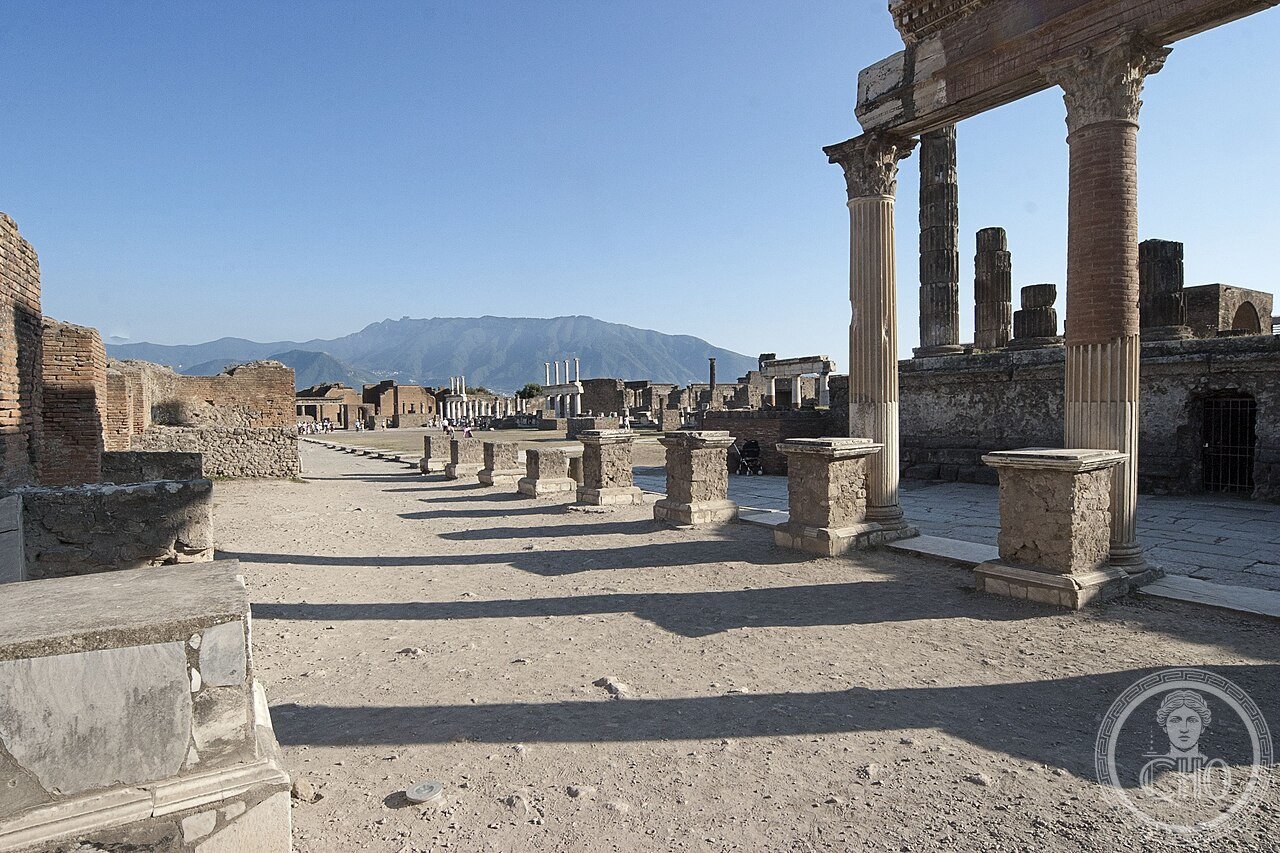
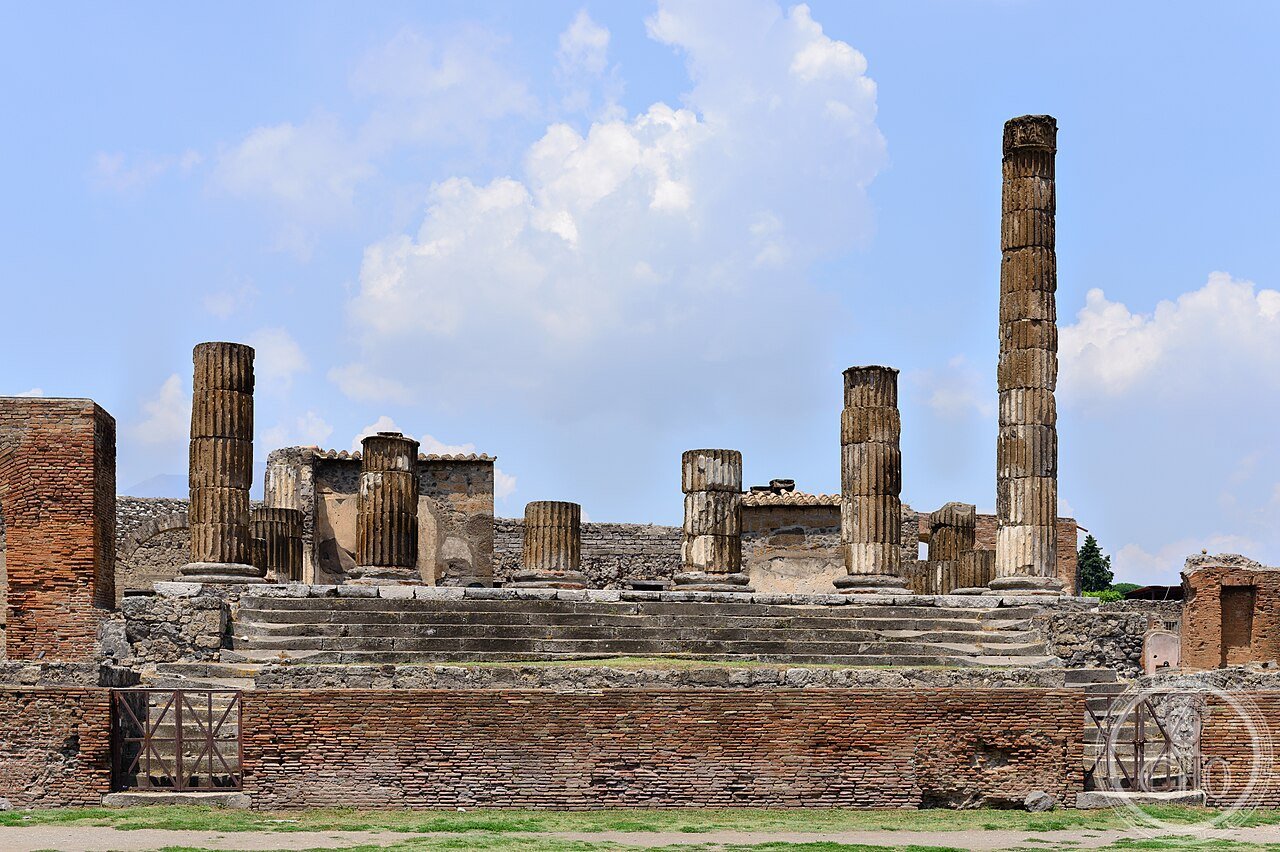
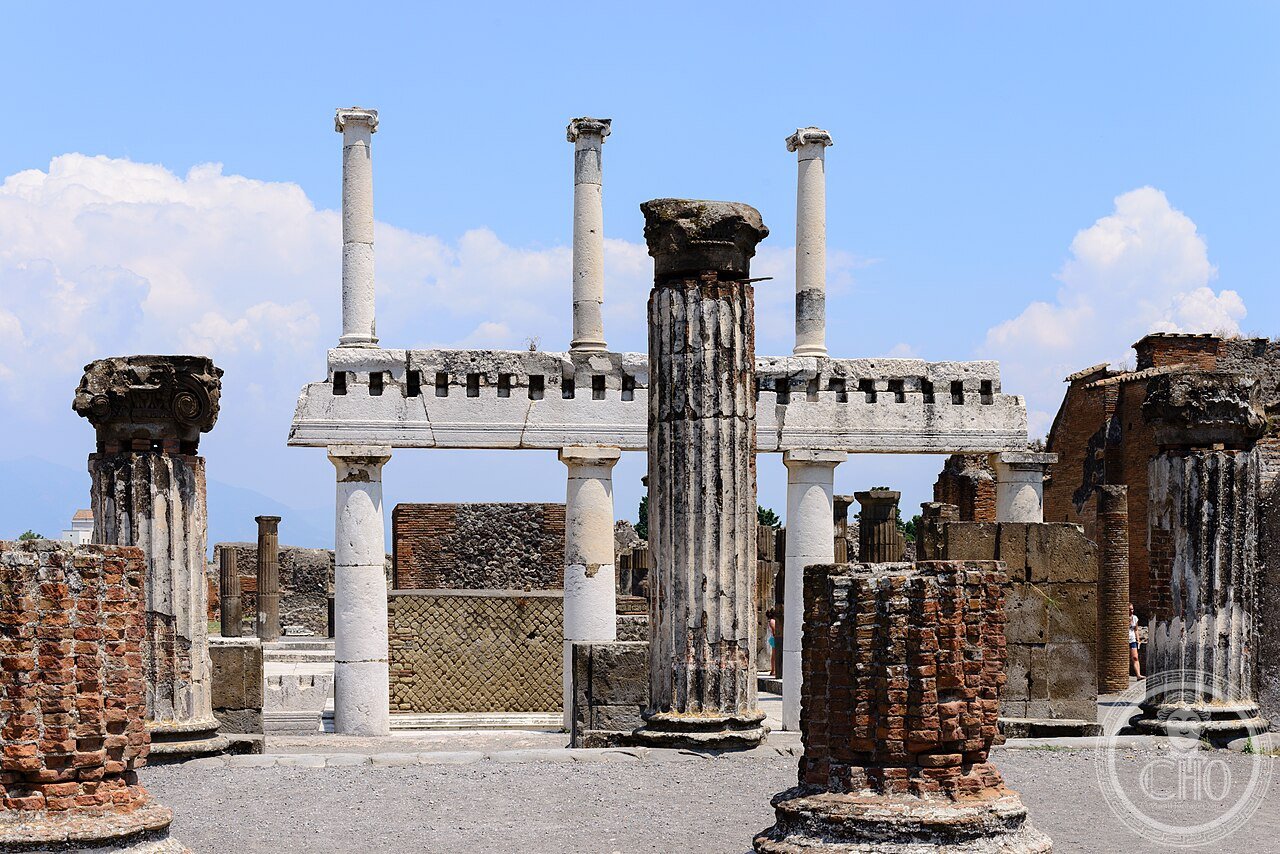
Villa dei Misteri, Terme Stabiane, Forum, Casa del Fauno, Anfiteatro 80 BCE (the most precisely Pompei zone visit: the site (the Pompeii Archaeological Park (Parco Archeologico di Pompei): the 3 entrances (Porta Marina: the main tourist entrance (facing the Forum and the Basilica) + Piazza Anfiteatro: the southern entrance (facing the Amphitheatre) + Porta Esedra: the eastern entrance (facing the Garden of the Fugitives)); the visit sequence for a half-day (3h): entrance via Porta Marina → the Basilica (the Roman law court: 120 BCE; the largest pre-Christian roofed hall in Pompei) → the Forum (the civic center: the Temple of Jupiter (Capitolium); the market (Macellum); the Arch of Caligula) → the Terme del Foro (the Forum Baths: the best-preserved of Pompei’s 7 thermal bath complexes: the frigidarium (cold room; the blue-green stucco ceiling) + tepidarium (warm room; the terracotta heating system under the floor) + caldarium (hot room; the bronze tub)) → the Casa del Fauno (the largest private house in Pompei (3,000 m²; the house of the wealthy patron of arts; the original location of the “Alexander Mosaic” (now in the National Archaeological Museum in Naples); the dancing faun (bronze; now in Naples): the copy in place); the Villa dei Misteri (2 km from the main entrance, along the Via dei Sepolcri: the most important building in Pompei: the hall of the mystery cult (II triclinium): the 29 life-size figures in the fresco cycle (I century BCE; the only complete mystery cult fresco in the Roman world; the interpretation: the frieze shows the initiation of a young woman (the “domina”) into the cult of Dionysus/Bacchus; the red background (the “Pompeian red”: sinopia + lead-based pigment + egg tempera); the faces (the “portrait realism” of the 1st century BCE: the faces are individualized, not idealized))
Practical information
- Come combinare Pompei, Ercolano e il Museo Archeologico di Napoli in due giorni, e perché il Museo di Napoli è obbligatorio PRIMA di Pompei (e non dopo): il programma ottimale (2 giorni): Giorno 1 (Napoli): il Museo Archeologico Nazionale di Napoli (MANN) (9:00–13:00; €20; acquistare il biglietto online (ticketone.it): le 4 sale fondamentali: (a) il Mosaico di Alessandro (il mosaico della battaglia di Isso 333 BCE: 582 cm × 317 cm; 1.5 milioni di tessere; il volto di Alessandro il Grande il più realistico mai trovato; trovato nella Casa del Fauno di Pompei 1831 CE); (b) la Collezione Pornografica (il “Gabinetto Segreto”: aperto dal 1822 CE in modo intermittente; dal 2000 CE accessibile a tutti; 200 oggetti erotici da Pompei e Ercolano: i falli apotropaici + le pitture erotiche + la tintinnabulum (il campanellino fallico)); (c) il Toro Farnese (230 BCE; il gruppo marmoreo più grande dell’antichità rimasta integra; trovato alle Terme di Caracalla a Roma); (d) i vasi greci (la collezione Farnese)); Giorno 2 (Pompei + Ercolano): mattina (9:00–12:00): Ercolano Scavi (€13; la Casa dei Cervi + la Casa del Bel Cortile + la Casa del Tramezzo di Legno: le case meglio conservate di tutto il mondo antico; i mobili originali in legno carbonizzato; la barca del porto); pomeriggio (13:00–18:00): Pompei Scavi (€18; la Villa dei Misteri + l’Anfiteatro 80 BCE + la Casa del Fauno)
Getting there
Circumvesuviana da Napoli: Pompei Scavi-Villa dei Misteri (35 min, €2.80, ogni 30 min). Ercolano Scavi: fermata “Ercolano Scavi” (20 min da Napoli). GPS Pompei: 40.7493/14.4870. Pompei €18, Ercolano €13. 9:00–19:30 (ultimo ingresso 18:00).
Nearby
- Museo Archeologico Nazionale di Napoli (MANN) — mosaico Alessandro 333 BCE + Gabinetto Segreto + Toro Farnese 230 BCE — 35 km (Circumvesuviana + metro 40 min; €20; la collezione più importante dell’arte greco-romana al mondo; il Mosaico di Alessandro dalla Casa del Fauno di Pompei)
- Reggia di Caserta (UNESCO 1997 rif. 549 — 1.200 stanze, parco 3 km, Cascata Diana 78 m) — 45 km da Napoli (Trenitalia 35 min; €6; il palazzo più grande del XVIII sec. d’Europa)
Gallery
Sources
- Wikipedia, Pompeii; Herculaneum; Giuseppe Fiorelli; Eruption of Vesuvius in 79 AD, accessed June 2026
- UNESCO, Pompeii, Herculaneum and Torre Annunziata Archaeological Areas, WHS reference 829, inscribed 1997
- Wallace-Hadrill, Andrew. Herculaneum: Past and Future. London: Frances Lincoln, 2011
Find it on the map
See this place and what’s around it →📷 Diventa un fotografo di Cultural Heritage Online
Condividi le tue foto dei luoghi: restano pubblicate con la tua firma come autore. Più vengono viste, più ti fai conoscere — e presto un concorso premierà le foto più apprezzate.
Accedi o registrati gratis per aggiungere una foto