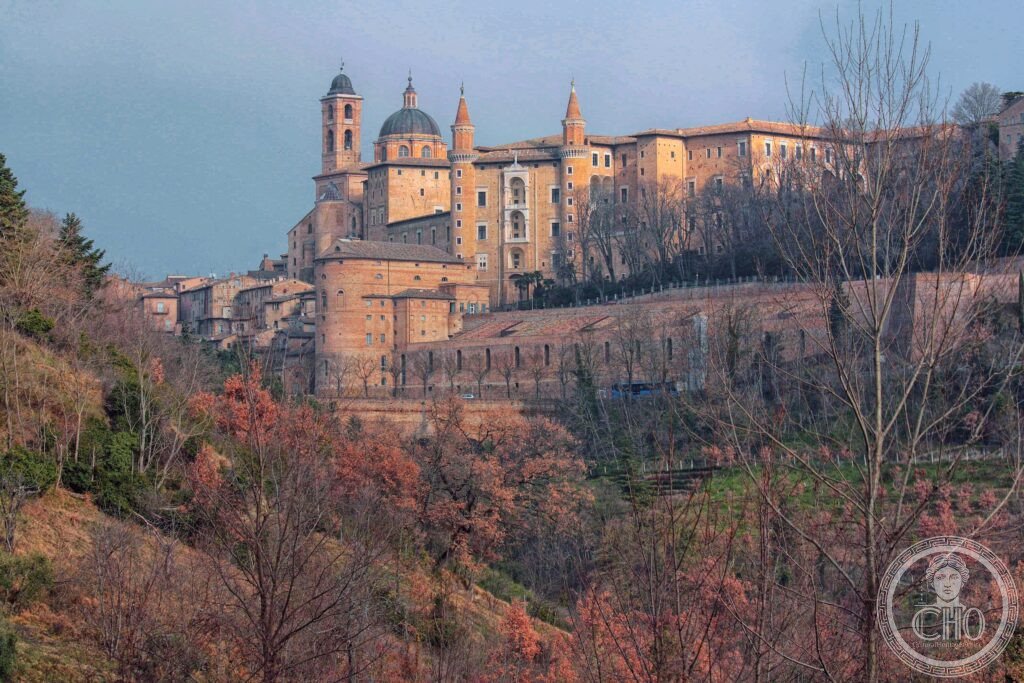
Urbino
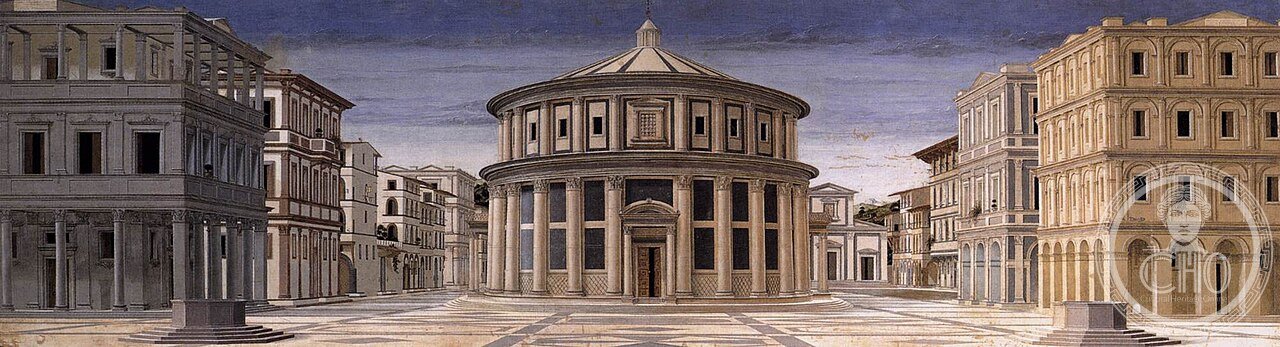
Urbino (UNESCO 1998, rif. 828) è la città del Rinascimento più intatta d’Italia — il Palazzo Ducale (1468–1482 CE) di Federico da Montefeltro assembla Piero della Francesca, Luciano Laurana e Francesco di Giorgio Martini in un cantiere che anticipa di 20 anni il pontificato di Giulio II, e la “Città Ideale” (attribuita a Piero o a Francesco: il dibattito continua) è il manifesto geometrico del Rinascimento.
At a glance
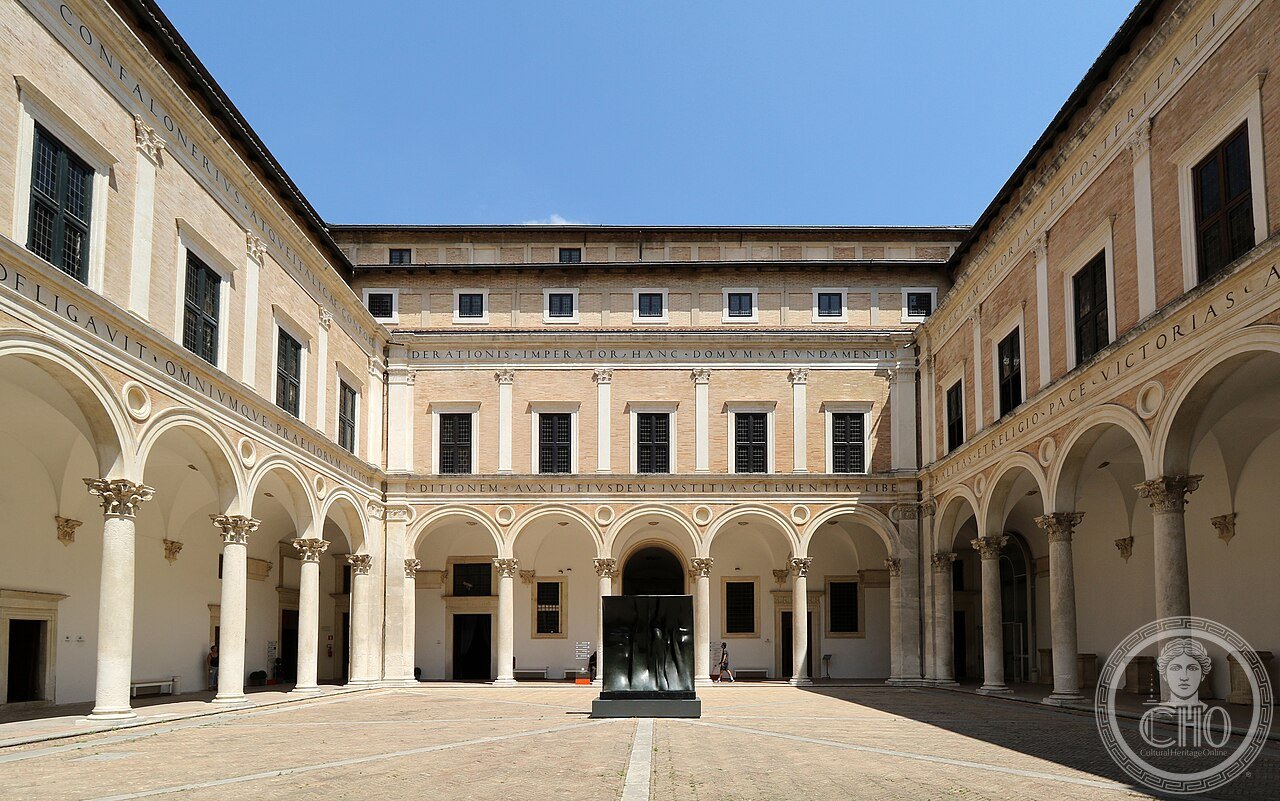
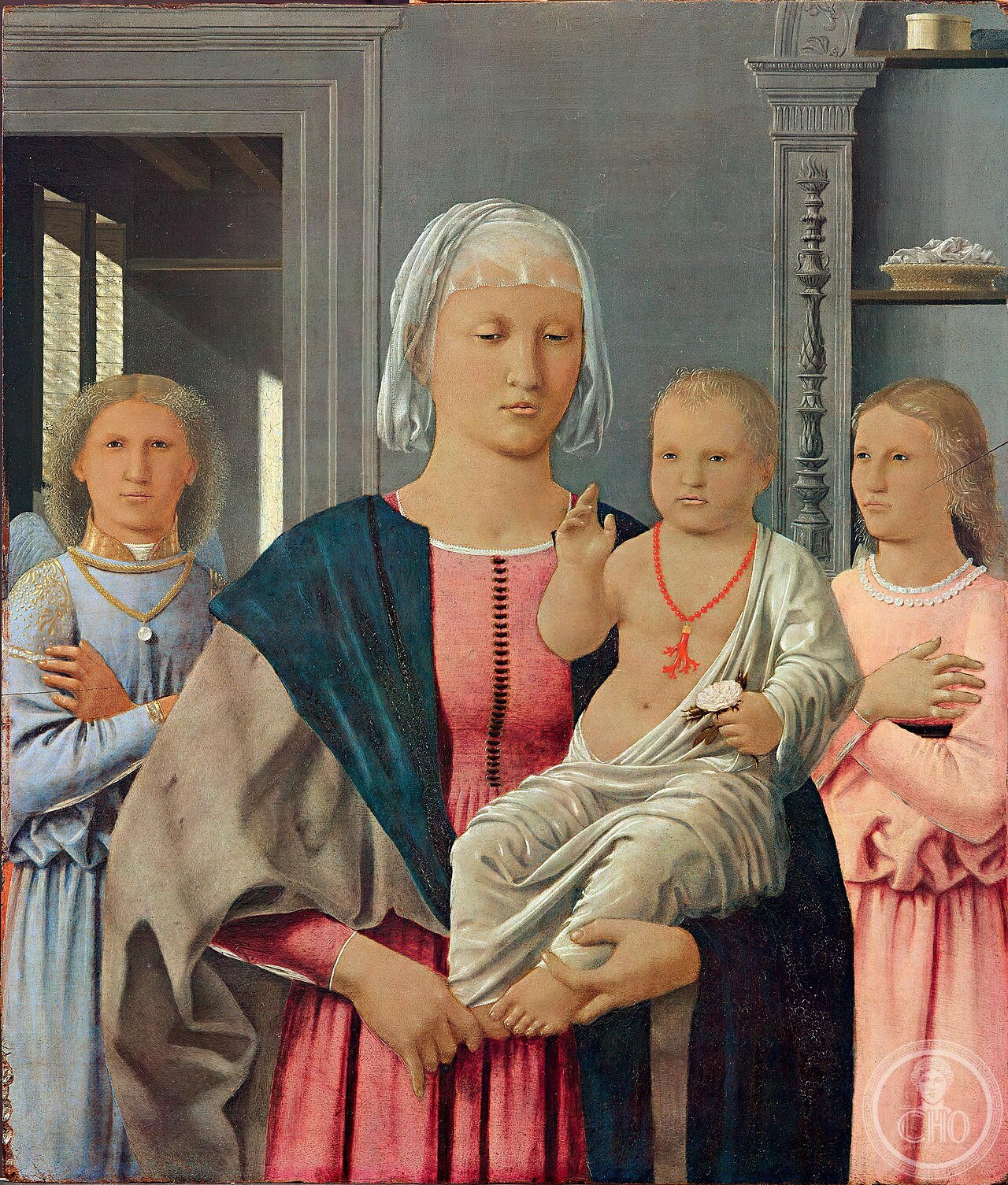
Urbino Marche (the most precisely Urbino zone Urbino Marche Italy 43.7228 N 12.6363 E UNESCO WHS 1998 reference 828 Historic Centre of Urbino: the site (the inscription covers the entire historic centre of Urbino (57.5 ha within the walls): the Ducal Palace (the “Palazzo Ducale”: 1468–1482 CE; the architect: Luciano Laurana (c.1420–1479 CE: the Dalmatian architect hired by Federico da Montefeltro in 1466 CE after the previous architect Maso di Bartolomeo died); the facade (the “facade of the torricini”: the west facade of the palace: 2 cylindrical towers (the “torricini”: 5 stories; height 32 m) flanking a 3-story loggia with the window of the Duchess above; the vertical emphasis of the towers balanced by the horizontal string courses of the loggia: the most refined facade of the Italian Quattrocento (a judgment supported by Vasari in the “Vite” (1550 CE) and by Jacob Burckhardt in “The Civilisation of the Renaissance in Italy” (1860 CE))); the studiolo (the “Studiolo di Federico”: the small study of Federico da Montefeltro: the most concentrated example of Italian Quattrocento intarsia (the trompe l’oeil marquetry panels: the walls are covered with inlaid wood panels depicting bookshelves, mathematical instruments, armour, musical instruments in perfect perspective; the panels are attributed to the Florentine woodworking workshop of Giuliano da Maiano and Benedetto da Maiano (1474–1476 CE)); the Galleria Nazionale delle Marche (the museum in the Ducal Palace: the 1st floor and mezzanine contain the national art gallery of the Marche region: the most important works: (1) Piero della Francesca, “La Flagellazione di Cristo” (c.1468–1472 CE: the most debated attribution and interpretation in Italian Renaissance art; the painting: 59 cm × 82 cm; the left side (the Flagellation of Christ in the palace of Pontius Pilate) and the right side (3 figures in a contemporary Urbino setting: their identities are the subject of 70+ academic interpretations); the perspective (the floor tiles in the Flagellation scene: each tile is rendered in perfect 2-point perspective; the column at the left edge is the exact center of the pictorial space: a compositional device not paralleled until Vermeer in the 1660s CE)); (2) Piero della Francesca, “Madonna di Senigallia” (c.1470 CE); (3) the “Città Ideale” (the “Ideal City” panel: 2 m × 0.67 m; painted c.1480–1490 CE; the attribution: disputed between Piero della Francesca, Francesco di Giorgio Martini, and Luciano Laurana: the panel depicts a perfectly receding piazza with classical buildings in perfect orthogonal perspective: the most studied exercise in Renaissance perspective geometry); (4) the portrait of Federico da Montefeltro (the “diptych of the Montefeltro” by Piero della Francesca is at the Uffizi in Florence; the Galleria Nazionale delle Marche has the “Portrait of Federico and Guidobaldo da Montefeltro” by Pedro Berruguete (c.1477 CE): Federico in full armour reading a book; his son Guidobaldo standing at his side)).
Key facts
- Lo Studiolo di Federico da Montefeltro (c.1474 CE): perché i pannelli di tarsie lignee sono il più raffinato esempio di trompe l’oeil prospettico quattrocentesco, e perché lo Studiolo di Urbino e quello del Palazzo Ducale di Gubbio (ora al Metropolitan Museum) sono praticamente identici: the Studiolo (the “Studiolo di Federico da Montefeltro”: a small room (3.6 m × 3.6 m; 2.3 m high) on the ground floor of the Ducal Palace, adjacent to the Duchess’s apartment: the room was the private study of Federico da Montefeltro (the “studiolo”: the Renaissance concept of the small private library-study where the lord could read and think in private; the 5 most famous studioli: Urbino, Gubbio (now at the Metropolitan), Isabella d’Este in Mantua, Piero de’ Medici in Florence, Alfonso d’Este in Ferrara)); the intarsia panels (the trompe l’oeil marquetry: 7,000 individual pieces of wood (28 species identified by dendrochronological analysis: walnut, pear, cherry, maple, ebony, fruitwood, chestnut and others; the colors are natural wood colors enhanced by chemical treatment (not paint): the black = ebonized walnut; the orange = pear wood treated with hot sand; the green = boxwood treated with copper sulfate); the depicted objects (the objects in the trompe l’oeil panels: a dangling laurel wreath; a shell-back armchair (empty, but with a dent from Federico’s absent buttocks); the closed door of a cupboard (the inside of the cupboard door: partially open, showing books, a mathematical compasso, a mazzocchio (the geometric torus shape used by Paolo Uccello in perspective studies), letters, a clock, armour pieces, a cittern, a carved panel); the light (the light in the studiolo: the panels simulate a light source from the upper left = from the actual window of the room: the most precise alignment of painted/inlaid light source with actual architectural light source in the Italian Quattrocento); the Gubbio replica (the “Gubbio Studiolo” now at the Metropolitan Museum of Art New York (acquired 1939 CE for $1.2 million; the largest single acquisition in the museum’s history at that date): the program is almost identical to Urbino (the same depicted objects, same illusionistic technique, same light direction): both were designed in the same workshop (Giuliano da Maiano, 1474–1482 CE))
- GPS (Palazzo Ducale, Piazza Duca Federico, Urbino): 43.7228° N, 12.6363° E; Casa di Raffaello: 43.7245° N, 12.6378° E
History
Da Federico da Montefeltro 1422-1482 CE al UNESCO 1998 (the most precisely Urbino zone history: the Montefeltro dynasty (the lords of Urbino (1213–1508 CE): the Montefeltro family; the peak (Federico da Montefeltro (1422–1482 CE): born illegitimate; trained as a condottiere at the school of Braccio da Montone in Perugia; signed the contract of lord of Urbino 1444 CE; earned the Garter from Edward IV of England and the Golden Fleece from Frederick III (the only Italian condottiere to receive both); one of only 3 men in the 15th century CE to bear the title “Duca” (from the Pope: the “Montefeltro” were the only Italian dynasty to receive the “Duca” title directly from the Pope rather than from the Emperor)); the court (Federico’s court at Urbino (1460–1482 CE): the artists and scholars in residence: Piero della Francesca (c.1464–1480 CE: the “Flagellazione” and the “Madonna di Senigallia” painted in Urbino); Luciano Laurana (1466–1472 CE: the architect of the palace); Francesco di Giorgio Martini (1472–1482 CE: the architect and military engineer; the “Trattato di architettura” written during his Urbino years); Pedro Berruguete (1475–1481 CE: the Spanish painter who painted Federico in armour); Raphael Sanzio (born in Urbino on April 6, 1483 CE: one year after Federico’s death; the son of the court painter Giovanni Santi; the Casa di Raffaello (Via Raffaello 57) is a museum with a fresco possibly by the young Raphael at age 6–8; verified as authentic by a 2020 CE infrared spectroscopy analysis)); the UNESCO inscription (1998 CE: reference 828).
What you see
Palazzo Ducale (facciata torricini + Studiolo), Galleria Nazionale Marche, Casa Raffaello, Oratorio San Giovanni (the most precisely Urbino zone visit (1 full day): the Galleria Nazionale delle Marche (the main museum in the Ducal Palace: €10; Tue-Sun 8:30–19:15; the Flagellazione (ground floor, Sala 13): the small (59 cm × 82 cm) panel on a tilted easel: visible from 1 m (binoculars not needed for the perspective floor tiles; the 3 right-side figures are visible at 2 m); the Studiolo (ground floor, through Sala 12): visit before 10:00 AM to see the studiolo without a crowd; the room fits 15 people maximum; the panels require 20 minutes to read fully)); the Casa di Raffaello (Via Raffaello 57; €3.50; daily 10:00–13:00 / 14:00–18:00; the small house where Raphael was born: the room with the fresco possibly by the young Raphael (the fresco of the Madonna: infrared 2020 CE confirmed the underdrawing matches Raphael’s style at age 6–8)); the Oratorio di San Giovanni (Via Barocci 31; €2.50; the extraordinary frescoes of Jacopo and Lorenzo Salimbeni (c.1416 CE): the Gothic cycle of the life of Saint John the Baptist in a single room: the most complete Gothic fresco cycle in the Marche; the scale (every wall of the oratory (the oratory is 12 m × 7 m) is covered floor-to-ceiling with frescoes: 280 m² of fresco (estimated) in a single continuous narrative)); the walls of Urbino (the 13th-15th century CE walls: a 2 km circuit; the best viewing angle of the Ducal Palace torricini: from the Fortezza Albornoz (the 14th century CE citadel): free access; the view from the terrace is the reference point of most Urbino photographs).
Practical information
- Come raggiungere Urbino senza auto (il problema dei trasporti nella Marche collinare), e perché il pulmino da Pesaro è la soluzione più comoda: il trasporto (la difficoltà: Urbino non ha ferrovia (la più vicina è Pesaro a 36 km; la linea che attraversava l’Appennino fino a Fabriano fu chiusa definitivamente nel 1987 CE); il bus (AutoLinee Bucci da Pesaro stazione FS: 55 min; €3.20; 8 corse/giorno (maggiori dettagli su adriabus.eu); dal terminal di Pesaro (di fronte alla stazione FS Pesaro)); da Rimini FS: cambio a Pesaro; da Bologna FS: Trenitalia Bologna → Pesaro (1h45; €12.50) + bus Pesaro → Urbino (55 min)); la piattaforma panoramica (la Via della Fortezza: dall’autoposteggio esterno alle mura, entrare in Via Raffaello e salire a Via della Fortezza: il belvedere gratuito sulle vallate circostanti e sull’Appennino; la luce migliore: ora d’oro pomeridiana (17:00–19:00 in estate)); il periodo migliore (aprile-giugno e settembre-ottobre: la Marche collinare con i campi di grano verde o mietuto; pochi turisti; l’estate (luglio-agosto) porta studenti universitari (Urbino ha un’importante università: l’Università degli Studi di Urbino “Carlo Bo”, fondata 1506 CE, con 12.000 studenti = la metà della popolazione della città))
Getting there
Bus AutoLinee Bucci da Pesaro FS (55 min, €3.20, 8 corse/giorno). Pesaro da Bologna Trenitalia (1h45, €12.50). GPS Palazzo Ducale: 43.7228/12.6363. Galleria Nazionale delle Marche €10. 8:30–19:15 (chiuso lunedì).
Nearby
- Pesaro (casa di Rossini 1792 CE + MArT Museo Arte Nuovi Temi) — 36 km bus (55 min; €3.20; la casa natale di Gioachino Rossini (1792–1868 CE): Via Rossini 34; il Museo Nazionale Rossini; il Rossini Opera Festival (agosto ogni anno); il MArT: il museo dei manifesti vintage italiani (la più grande collezione di manifesti pubblicitari italiani 1880–1970 CE: Cappiello, Dudovich, Carboni))
- Gradara (castello medievale + storia di Paolo e Francesca — Dante Inf. V) — 45 km (auto o bus da Pesaro; il castello di Gradara (XIII-XIV sec. CE): il luogo tradizionale dell’assassinio di Paolo Malatesta e Francesca da Rimini da parte di Giovanni Malatesta (il “Gianciotto”) nel 1285 CE circa: il Canto V dell’Inferno di Dante; €5))
Gallery


Sources
- Wikipedia, Ducal Palace, Urbino; Federico da Montefeltro; Studiolo of Urbino; Piero della Francesca, accessed June 2026
- UNESCO, Historic Centre of Urbino, WHS reference 828, inscribed 1998
- Clough, Cecil H. The Duchy of Urbino in the Renaissance. London: Variorum Reprints, 1981 (Federico da Montefeltro primary)
Find it on the map
See this place and what’s around it →📷 Diventa un fotografo di Cultural Heritage Online
Condividi le tue foto dei luoghi: restano pubblicate con la tua firma come autore. Più vengono viste, più ti fai conoscere — e presto un concorso premierà le foto più apprezzate.
Accedi o registrati gratis per aggiungere una foto