
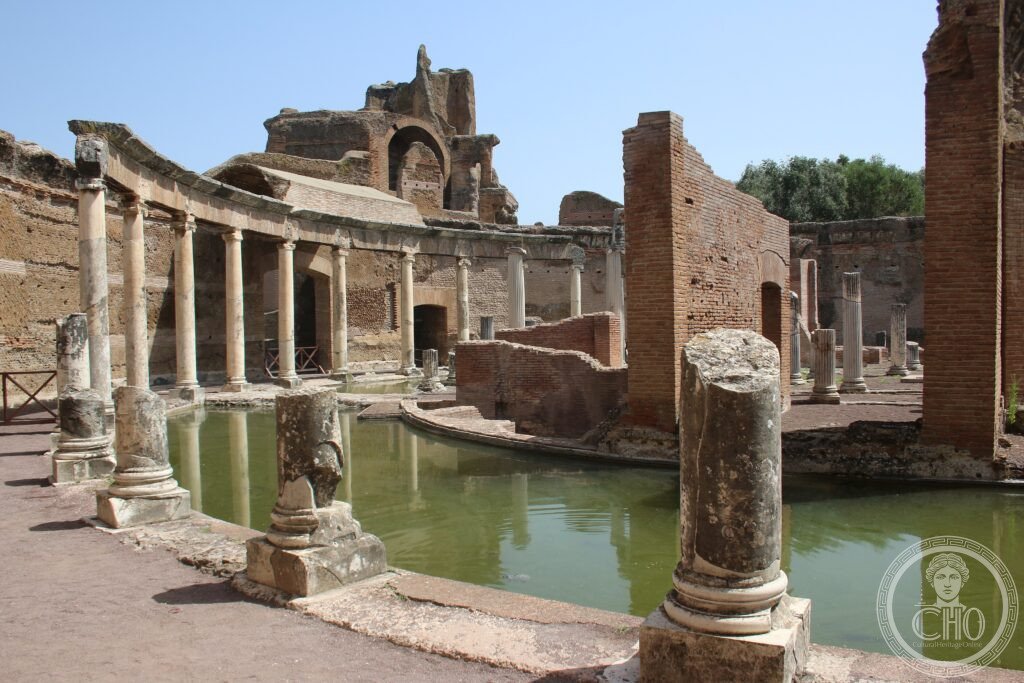
Villa Adriana
Villa Adriana (UNESCO 1999, rif. 907) è la più grande villa imperiale romana mai costruita — 120 ettari con 30+ edifici distinti costruiti dall’imperatore Adriano tra il 118 e il 134 CE come capitale amministrativa e residenza personale, ciascuno ispirato a un monumento o paesaggio che Adriano aveva visto nei suoi viaggi attraverso l’Impero.
At a glance
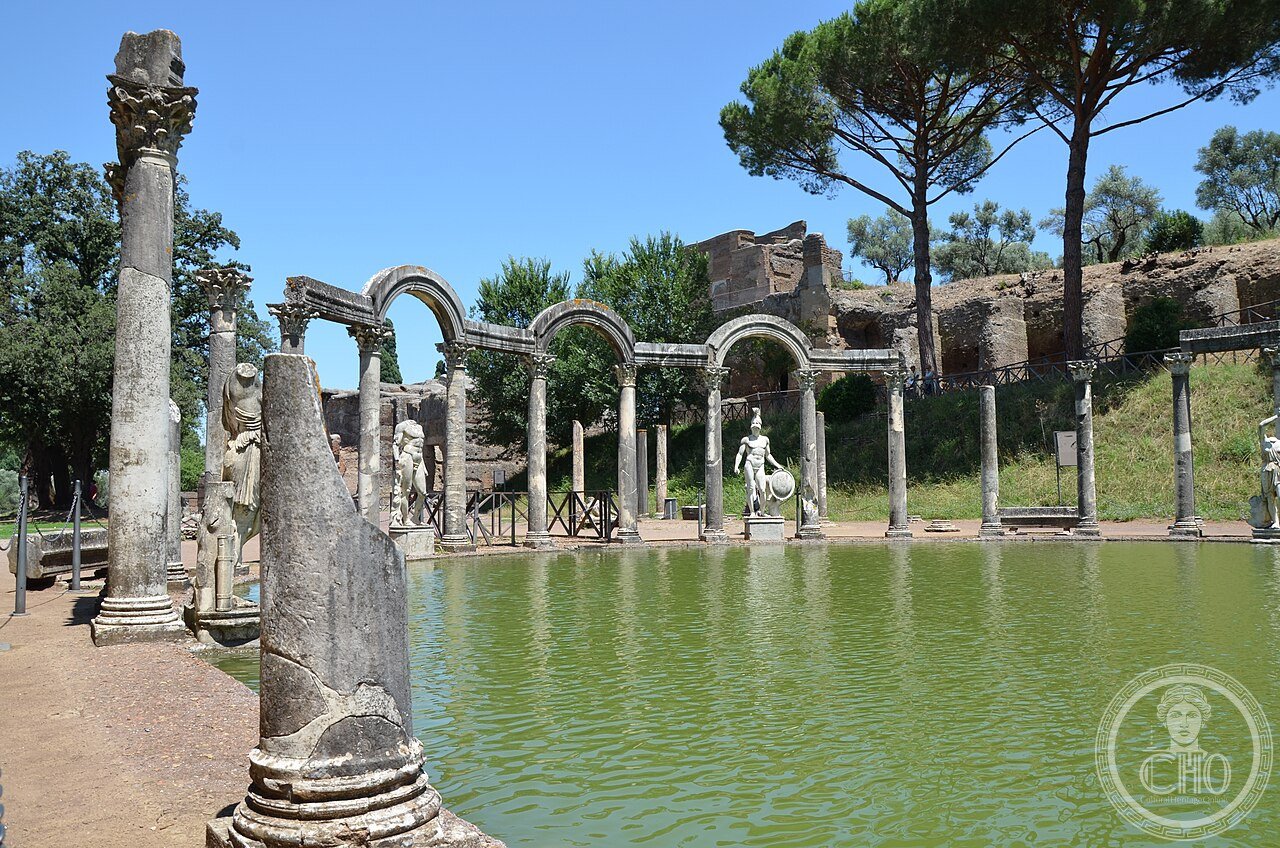
Villa Adriana Tivoli Roma Lazio (the most precisely Villa Adriana zone Tivoli Roma Lazio Italy 41.9427 N 12.7749 E UNESCO WHS 1999 reference 907 Villa Adriana (Tivoli): the site (the inscribed property: 120 ha (the total construction footprint: 300 ha including gardens and agricultural land; the core archaeological zone: 120 ha of which 40 ha are currently excavated and publicly accessible); the buildings (30+ individual architectural complexes identified in the plan; the main structures: (1) the Pecile (the Roman name for the Greek Stoà Poikile: the colonnaded courtyard replicating the Stoa Poikile of Athens (the “Painted Porch”: the portico in Athens where Zeno of Citium taught Stoic philosophy c.300 BCE); the Hadrian Pecile (118–122 CE): 232 m × 97 m; the largest single structure at Villa Adriana; the 3 m thick perimeter wall that creates the shadow/sun alternation on the ambulatio (the shaded walk) for Hadrian’s daily exercise; the garden pool at the center (80 m × 20 m)); (2) the Teatro Marittimo (the Maritime Theatre: 118–125 CE; a circular island 43 m in diameter surrounded by a ring canal (the canal: 2 m wide; 2 m deep; crossed by 2 wooden swing bridges (the only access from the island to the mainland; the bridges could be retracted at Hadrian’s discretion, making the island completely inaccessible)); the island (the island contains a complete miniature palace with atrium, tablinum, baths, portico and garden: the “philosopher’s retreat” where Hadrian could withdraw completely); (3) the Canopo (128–134 CE: the Egyptian water garden: a 119 m long × 18 m wide reflecting pool lined with a colonnade of alternating straight and curved column sequences at the south end (the “Serapeum”: a large semicircular apsidal dining pavilion at the south end with a waterfall from the stibadium (the semicircular dining couch) fed from an aqueduct hidden in the hillside); the statues (the Canopo statues: copies of 4th century BCE Greek originals: the 4 Caryatids (copies of the Erechtheion Caryatids of Athens), the 2 Sileni (the satyrs of Dionysus), the Amazon, the Ares Borghese: all originals in the Museo Nazionale Romano; the pool copies are reinforced concrete casts in situ)); (4) the Thermae (the 2 bath complexes: the Piccole Terme (118–125 CE: the private baths; 4 heated rooms (tepidarium, caldarium, sudatio, frigidarium); mosaic floors); the Grandi Terme (the public baths; 4× the size of the Piccole Terme; the 23 m high circular frigidarium (cold plunge room) with the 4 apsidal recesses and the concrete dome (the earliest surviving concrete dome at Villa Adriana, predating the Pantheon completion by 2 years)); (5) the Biblioteca (the Library complex: the Greek and Latin Libraries (2 separate halls for Greek texts and Latin texts; the widths: 9 m each; the difference (the division between Greek and Latin libraries reflects the bilingual culture of the Roman imperial court: Hadrian was personally more comfortable in Greek (he spoke Greek at home: the primary language of his private correspondence was Greek, not Latin; he composed poetry in Greek; his autobiography was in Greek))
Key facts
- Il Teatro Marittimo come metafora del potere imperiale: perché Adriano costruì un’isola privata accessibile solo a lui, e come la progettazione delle 2 ponticelle girevoli dimostra la genialità idraulica romana: the Maritime Theatre technology (the Teatro Marittimo (c.118–125 CE): the island retreat: the circular island (inner diameter: 43 m) is surrounded by a ring canal (width: 2.0 m; depth: 2.0 m) crossed by 2 wooden bridges (the bridge design: the 2 wooden bridges are “bascule bridges” (swing bridges mounted on central pivots) of which one is documented to have been retractable onto the island; the pivot mechanism is not precisely known but is inferred from the circular channel cut in the canal floor that matches the sweep radius of the bridge leaf); the island access protocol (the island access was controlled by Hadrian personally: the island contained no servant quarters (the implication: no staff could be permanently stationed on the island; food and personal service required the bridge to be lowered from outside or from the island); the island plan shows a complete residential suite (atrium 8×8 m; cubicula 3×3 m each (small private rooms); tablinum 8×4 m (the reception/study); a private garden in the southwest quadrant; a private bath suite (frigidarium + caldarium + tepidarium) in the northeast quadrant); the literary references (Pliny the Younger in a letter to Caninius Rufus (c.107 CE) mentions that Trajan had a similar private island retreat in his Campanian villa: the fashion for the “insula privata” was established before Hadrian))
- GPS (Villa Adriana, Largo Marguerite Yourcenar 1, Tivoli): 41.9427° N, 12.7749° E
History
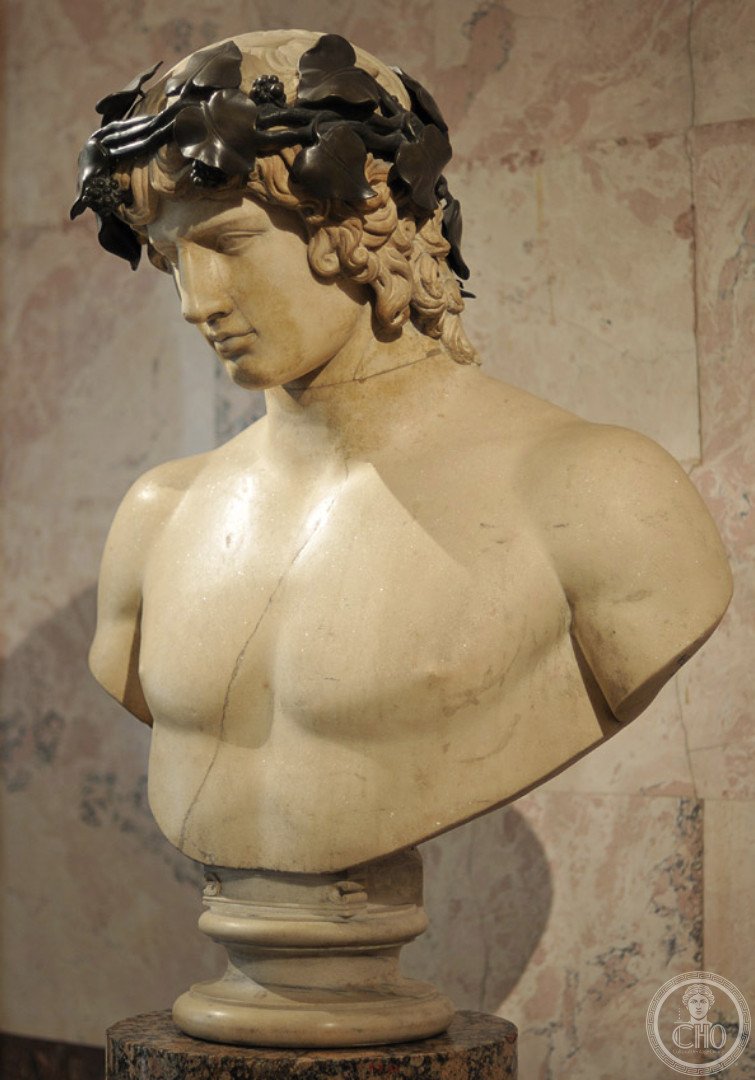
Da Adriano 118 CE al UNESCO 1999 (the most precisely Villa Adriana zone history: the construction (Hadrian (Publius Aelius Hadrianus: 76–138 CE; emperor 117–138 CE; the 5th of the “Five Good Emperors”): the construction of Villa Adriana (the timeline: 118 CE: beginning of construction on the site of a Republican villa owned by Vibia Sabina (Hadrian’s wife); 125 CE: the Pecile + Teatro Marittimo completed; 128 CE: Hadrian returns from his second Greek journey and begins the Canopo; 134 CE: the last construction phase (the Accademia + the underground service tunnels (the “cryptoporticus”: the underground galleries with cart-width corridors (2.5 m wide × 2.5 m high) running under the entire villa for service movements without crossing the garden; total length: 3.5 km)); the Antinoo episode (Antinoo: Hadrian’s companion (c.111–130 CE): a Bithynian Greek youth (from Claudiopolis, modern Bolu in Turkey); accompanied Hadrian on all his travels from c.124 CE; drowned in the Nile near Hermopolis Magna on October 30, 130 CE (the age: 18–19 years old; the circumstances: mysterious; the ancient sources give 4 theories (accidental drowning, ritual sacrifice, suicide, murder)); the deification (Hadrian deified Antinoo immediately: the most extensive posthumous deification of a private individual in Roman history (the deifications in order of extent: Julius Caesar, Augustus, Claudius, Antinoo); Hadrian founded the city of Antinoopolis in Egypt on the site of the drowning; created the Antinoo cult with temples in 80+ cities; commissioned 2,000+ portraits in all media (more portraits than any other non-emperor in the ancient world)); the Canopo at Villa Adriana was built 128–134 CE as a memoriam to Antinoo)); the post-antique (the villa was stripped of its marble and statues from the 5th century CE; 92 of the 263 identified artworks in Roman museum collections internationally are from Villa Adriana; the UNESCO inscription (1999 CE: reference 907)).
What you see
Canopo, Teatro Marittimo, Pecile, Grandi Terme (the most precisely Villa Adriana zone visit (3–4 hours minimum; 6 hours for the full site): the ticket (€9; free 18-; daily 9:00–19:30 (closes 1h earlier November–February)); the self-guided route (the recommended sequence (with the official site map available at the entrance): (1) the Pecile (5 min walk from entrance); (2) the Teatro Marittimo (adjacent to the Pecile; the best preserved structure: the ring canal is partially flooded and visible; the 2 bridge launch abutments are visible as rectangular concrete blocks on the island and mainland shores); (3) the Canopo (15 min walk from the Teatro Marittimo: the most photographed element; the colonnade reflected in the pool; the Serapeum dining pavilion at the south end; the in situ reproductions of the statues; allow 20 minutes here)); the Museo in situ (the small site museum at the south entrance: the original statues removed from the Canopo (the Hadrian-period originals moved to the museum; replaced by fiberglass casts in situ)); the tour tip (the underground cryptoporticus (the underground service tunnel): accessible on the marked route near the Pecile; 200 m of the original tunnel are open; the temperature inside: 14°C year-round (the coolest spot on the site in summer; bring a fleece in winter).
Practical information
- Come raggiungere Villa Adriana da Roma con i mezzi pubblici, e perché il biglietto combinato Villa Adriana + Villa d’Este vale la giornata intera a Tivoli: il trasporto (Roma Tiburtina → Tivoli: COTRAL (bus; 1h; €2.20; partenza da Ponte Mammolo Metro B; ogni 20 min); Tivoli → Villa Adriana: taxi (€10; 10 min) o bus CAT n.4 (verso Villa Adriana; €1.20; 20 min; 2 corse/ora)); la combinazione (Villa Adriana + Villa d’Este è la combinazione classica di 1 giorno da Roma: (1) mattina 9:00–13:00: Villa Adriana (il sito apre alle 9:00; la mattina ha la luce migliore sul Canopo e meno calore); (2) pranzo 13:00–14:30: ristorante Antico Ristoro di Tivoli (Piazza Palatina 2; €15; i “gnocchi al mosto” (la pasta locale al mosto d’uva) + abbacchio al forno); (3) pomeriggio 14:30–18:30: Villa d’Este (€8; 500 fontane; Organo Idraulico; UNESCO 2001 rif. 1025)); il biglietto MIC (il biglietto “Ministero della Cultura” combinato Villa Adriana + Villa d’Este: €20 (vs €17 separati); valido 3 giorni consecutivi; acquistabile online su coopculture.it (il preacquisto: la biglietteria ha code nei weekend di luglio-agosto))
Getting there
COTRAL da Roma Tiburtina (1h, €2.20) poi taxi (€10) o bus CAT n.4 da Tivoli (20 min, €1.20). GPS: 41.9427/12.7749. €9. 9:00–19:30 (chiude prima in inverno).
Nearby
- Villa d’Este Tivoli (UNESCO 2001 rif. 1025 — 500 fontane, Organo Idraulico 1567 CE) — 4 km dal centro di Tivoli (taxi €8; bus CAT; €8; 9:00–18:30; l’Organo Idraulico: il più antico organo a acqua ancora funzionante al mondo (1567 CE; Luigi Ippolito d’Este; Luca Clerici ingegnere; concerto a udire ogni ora precisa))
- Roma (centro storico UNESCO 1980 rif.91) — 30 km (COTRAL 1h; il Foro Romano, il Pantheon, il Colosseo; Castel Sant’Angelo 135 CE (mausoleo di Adriano trasformato in fortezza medievale))
Gallery
Sources
- Wikipedia, Hadrian’s Villa; Hadrian; Antinous; Maritime Theatre (Hadrian’s Villa), accessed June 2026
- UNESCO, Villa Adriana (Tivoli), WHS reference 907, inscribed 1999
- Yourcenar, Marguerite. Memoirs of Hadrian. Farrar Straus Giroux, 1951 (the fictional reconstruction that made Villa Adriana famous to modern readers)
Find it on the map
See this place and what’s around it →📷 Diventa un fotografo di Cultural Heritage Online
Condividi le tue foto dei luoghi: restano pubblicate con la tua firma come autore. Più vengono viste, più ti fai conoscere — e presto un concorso premierà le foto più apprezzate.
Accedi o registrati gratis per aggiungere una foto