

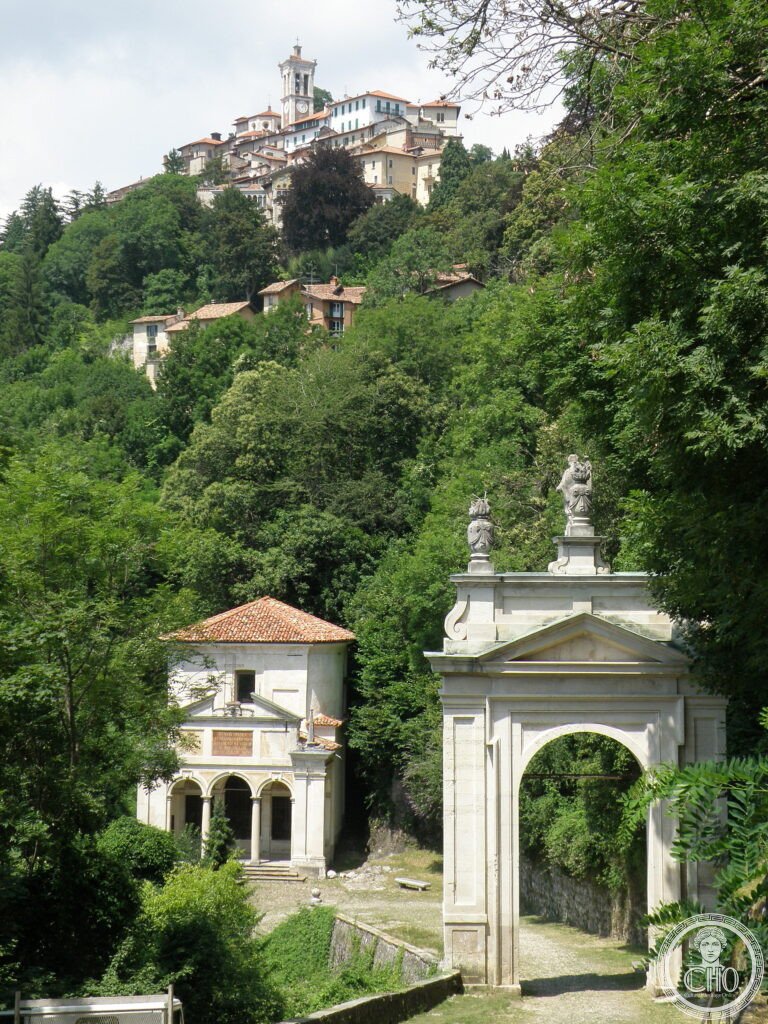
A paved sacred way of two kilometers climbs from Varese to the Santuario della Beata Vergine del Monte through fourteen Baroque chapels. Inside, more than two hundred life-size polychrome terracotta statues, largely the work of Dionigi Bussola, depict the Mysteries of the Rosary for pilgrims.
At a glance
The Sacro Monte di Varese is a devotional path that connects the base of the Via Sacra, at 450 meters elevation, to the Santuario della Beata Vergine del Monte, at 880 meters. It runs for about two kilometers, entirely paved. The elevation gain is about 430 meters, with a steep average gradient that makes the climb challenging.
Along the path there are fourteen chapels dedicated to the Mysteries of the Rosary: the five Joyful Mysteries (Gaudiosi), the five Sorrowful Mysteries (Dolorosi), and the four Glorious Mysteries. The Santuario at the top is not considered a chapel of the cycle. It is the final destination of the pilgrimage.
Key facts
- Fondazione: 1604, on the initiative of the Franciscan friar Fra Girolamo Bescapè.
- Construction: the fourteen chapels were built between 1604 and 1770.
- Statues: more than two hundred life-size polychrome terracotta figures, largely attributed to Dionigi Bussola and his workshop.
- Architect of the first phase: Giuseppe Bernascone, known as il Mancino.
- Recognition: UNESCO World Heritage Site since 2003, as part of the serial site of the Sacri Monti di Piemonte e Lombardia, which comprises nine locations.
History
On the summit of the mountain there was already a chapel dedicated to the Beata Vergine del Monte, a pilgrimage destination documented at least since 1472, as attested by a document in the Archivio Capitolare di Varese. The Sacro Monte itself was founded in 1604 by the will of the Franciscan friar Girolamo Bescapè. He proposed building a Via Sacra as a catechetical tool in the climate of the Controriforma. At that time figurative art was used to make the mysteries of faith accessible even to those who could not read.
The work proceeded in successive phases. The first chapels, between 1604 and 1630, were designed by Giuseppe Bernascone. Between 1630 and 1690 the sculptor Dionigi Bussola worked on the central chapels. The last chapel, dedicated to the Assunzione, was completed in 1770, more than a century and a half after the work began.
In 2003 the Sacro Monte di Varese became part of the UNESCO World Heritage List as a component of the serial site of the Sacri Monti di Piemonte e Lombardia, which brings together nine devotional paths, including Varallo, Orta San Giulio, Crea, Ossuccio, Ghiffa, Oropa, Domodossola, and Belmonte.
What you see
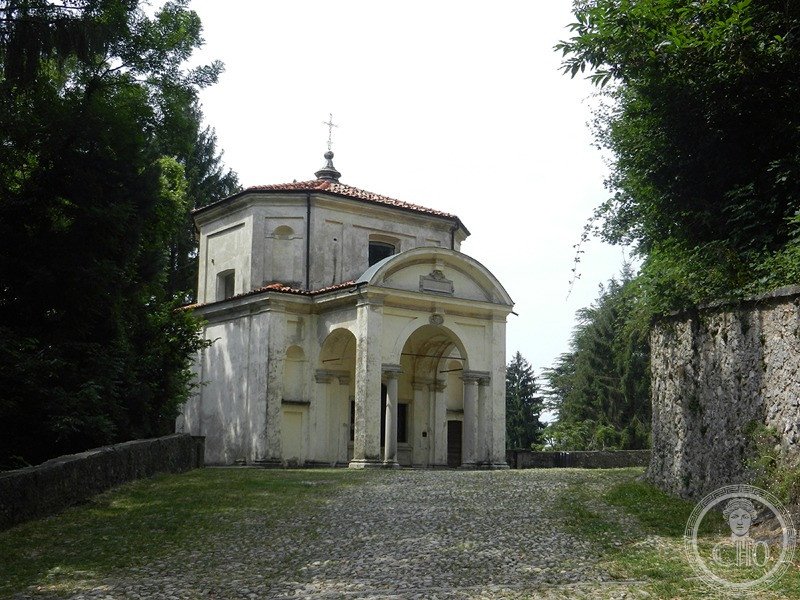
Each chapel presents itself as a small sacred theater. A brick façade, often with a Lombard Baroque portal, protects a sculptural group visible through a gate. The life-size polychrome terracotta figures represent the characters of each Gospel episode. The first chapel depicts the Cacciata di Adamo ed Eva dal Paradiso terrestre. The tenth, dedicated to the Crocifissione, brings together one of the richest and most detailed sculptural groups of the entire path, with the figure of Cristo flanked by the Virgin, Saint John, Mary Magdalene, and the Roman soldiers.
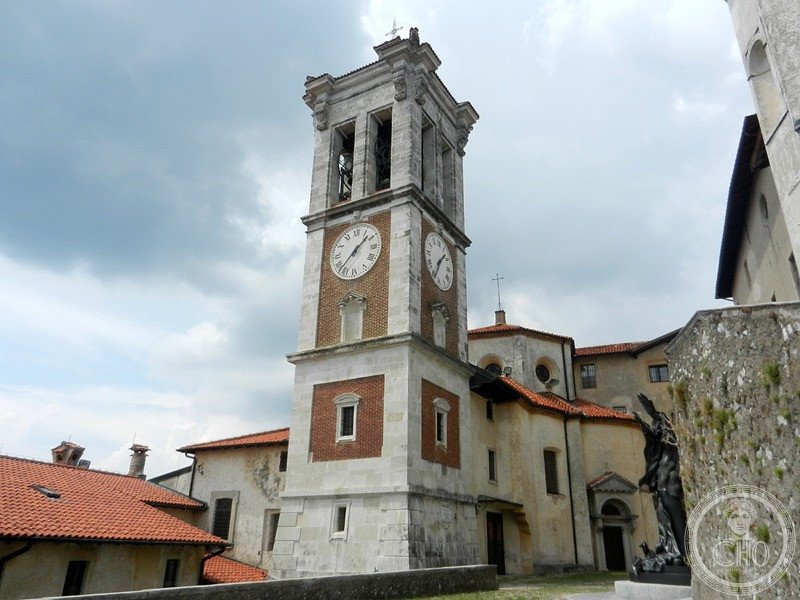
At the top of the climb stands the Santuario della Beata Vergine del Monte, which preserves seventeenth-century frescoes and a marble statue of the Madonna dating from the fifteenth century. From the square in front, the view extends over the Prealpi and, on clear days, the Alpi.
The climb can be made on foot along the Via Sacra, or by cable car connecting the center of Varese to the base of the path.
Practical information
- Accesso alle cappelle: each chapel is visible through a gate that is always open. The interior is not accessible to visitors.
- Hours: the Sacro Monte and the Santuario observe seasonal hours. It is recommended to check them on official channels before visiting.
- Cable car: connects the center of Varese to the base of the Via Sacra. Fares and departure frequency should be checked on the operator’s website.
- Refreshments: near the upper station of the cable car there is a bar with a panoramic terrace overlooking the Alpi.
Getting there
The Sacro Monte can be reached from Varese on foot, going up from Piazza del Podestà in the historic center to the first chapel and then along the entire Via Sacra. It can also be reached by cable car from the city center to the base of the path, at 880 meters elevation.
Nearby
- Santuario della Beata Vergine del Monte — at the top of the Via Sacra, the final destination of the pilgrimage, with seventeenth-century frescoes and a fifteenth-century statue of the Madonna.
- Castelseprio — mentioned as a possible stop on a day dedicated to Varese together with the Sacro Monte, although the distance is not specified.
- Lago di Varese — indicated as a destination for a stop after visiting the Sacro Monte, as part of the same day itinerary.
Sources
- UNESCO World Heritage List (riferimento 1068)
- Archivio Capitolare di Varese
Gallery
Find it on the map
See this place and what’s around it →📷 Become a Cultural Heritage Online photographer
Share your photos of places: they stay published under your name as the author. The more they're seen, the more you get noticed — and soon a contest will reward the most appreciated photos.
Log in or sign up free to add a photo