Mantova e Sabbioneta
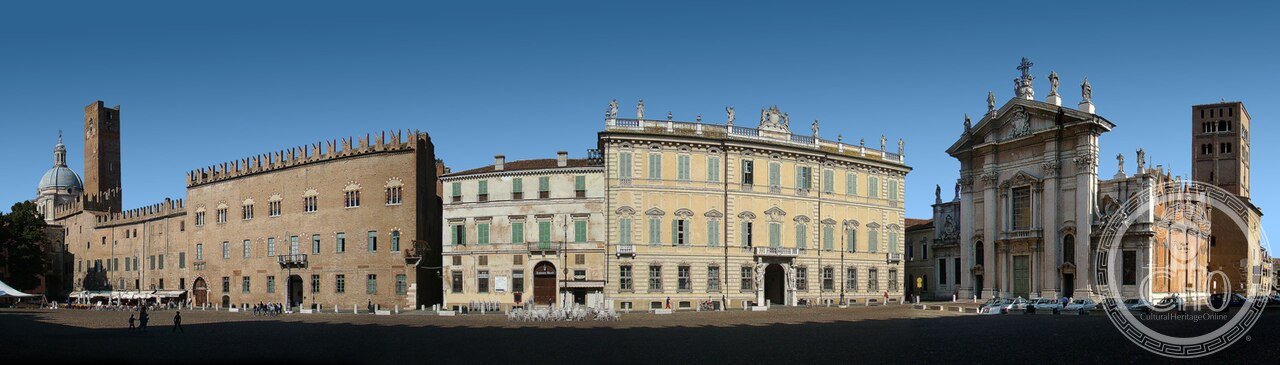
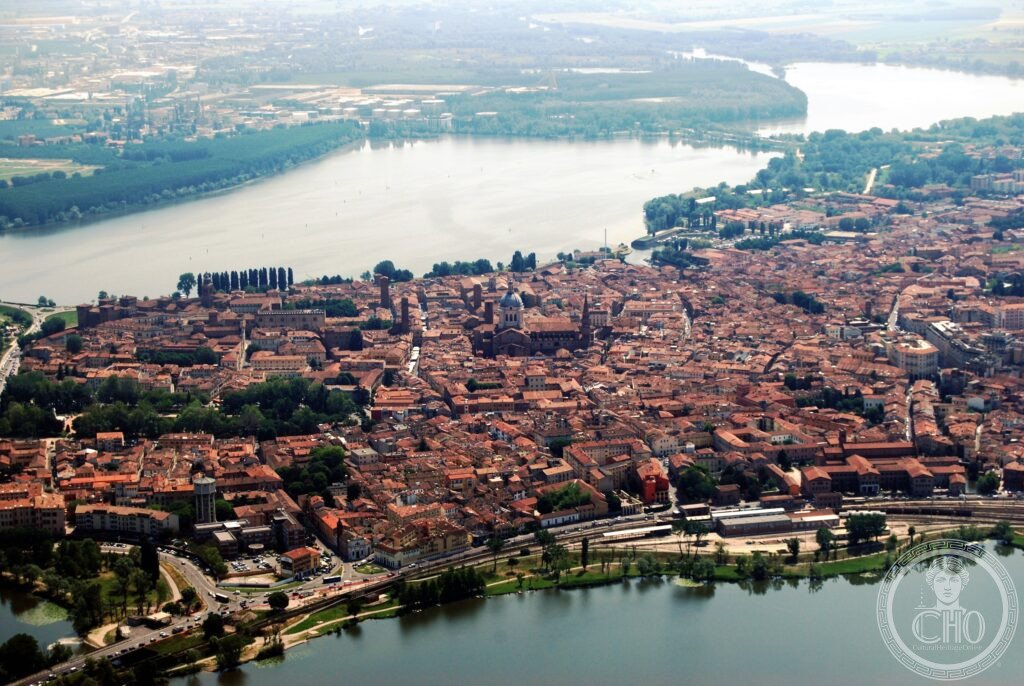
Mantova (UNESCO 2008) is the most concentrated Renaissance art and architecture city in northern Italy — a walled city on an artificial lake where the Gonzaga dynasty (1328–1708) employed Mantegna, Alberti, Pisanello, Giulio Romano, and Rubens in continuous succession for 400 years, producing a density of Renaissance masterworks per square metre that exceeds Florence and Rome — paired with Sabbioneta, the ideal city built from scratch by Vespasiano Gonzaga in the 1550s–1590s as a living textbook of Renaissance urbanism.
At a glance
Mantova e Sabbioneta (the most precisely MantovaeSabbioneta serial Mantova Lombardia Italy 45.1564 N 10.7921 E UNESCO WHS 2008 reference 1287 serial 2 cities: the serial inscription covers Mantova (the major city; 65 sq km; 50,000 inhabitants) and Sabbioneta (the planned ideal city; 18 km southeast of Mantova; the smallest of the Italian UNESCO serial inscriptions; population 4,000; the town is 400m × 300m within its hexagonal walls); the Gonzaga (the ruling family of Mantova from 1328 to 1708 CE; the Gonzaga were not the original lords of Mantova (the Bonacolsi preceded them until the 1328 coup) but they created the identity of the city through their cultural patronage; the Gonzaga began as mercenary captains (condottieri) and accumulated sufficient wealth and prestige to become Marquesses (1433 CE) and later Dukes (1530 CE) of Mantova; the Gonzaga cultural programme: the family employed a continuous sequence of the greatest artists of each generation over 4 centuries — Pisanello (court painter 1422–1448 CE; the most important Gonzaga-commissioned artist before Mantegna; the Tournament fresco in the Palazzo Ducale is his masterwork and the last major work in the International Gothic style before the Italian Renaissance superseded it); Mantegna (court painter 1460–1506 CE; the most important; the Camera degli Sposi; the Dead Christ; the Triumphs of Caesar (now at Hampton Court Palace)); Alberti (architect 1460s–1472 CE; the design of Sant’Andrea; the single most influential church design of the 15th century); Giulio Romano (architect and painter 1524–1546 CE; the Palazzo Te; the most important Mannerist building in Italy); Rubens (court painter 1600–1608 CE; 3 triptychs for the Gonzaga family chapel, now dispersed between Mantova, Brussels, and the Uffizi)).
Key facts
- The Camera degli Sposi and why it is the most important painted room in the Italian Renaissance: the Camera degli Sposi (the “Bridal Chamber” or “Chamber of the Spouses”; in the northeastern tower of the Palazzo Ducale (the Castle of San Giorgio; 1395–1406 CE); the fresco cycle by Andrea Mantegna (1465–1474 CE; 9 years of work for one room (6m × 8m); the most precisely documented fresco campaign in the entire Italian Renaissance — the preparatory drawings, the correspondence between Mantegna and Marquess Ludovico Gonzaga, and the payment records all survive in the Archivio di Stato di Mantova); the specific innovation of the Camera: it is the first room in Western art history where the entire ceiling and walls are painted with a unified illusionistic architectural system that eliminates the visual boundary between the room and an imaginary exterior space; the north wall (the Court Scene): Ludovico Gonzaga receives a message while surrounded by his court (the fresco depicts an actual historical event — probably the news of the appointment of Francesco Gonzaga as Cardinal in 1461 CE; the figures in the court are identifiable portraits (Ludovico himself; his wife Barbara of Brandenburg; the dwarf Rodolfo who appears in the far left; the dog Rubino visible beneath Ludovico’s bench; the dog Rubino is the most famous dog in Italian Renaissance painting)); the east wall (the Meeting Scene): Ludovico Gonzaga meets his son Cardinal Francesco with the Holy Roman Emperor Frederick III and the Crown Prince of Denmark — a scene from 1462 CE when Mantova was briefly host to both the Emperor and the Danish heir simultaneously; the ceiling tondo (the most famous element; the oculus — a painted round window in the ceiling center showing the sky, putti, and women looking down from above the “opening”; this is the first di sotto in su (from below upward) ceiling painting in history; the technique Mantegna invented in 1465 CE became the standard for Baroque ceiling painting from Corregio to Tiepolo 200 years later)
- GPS Palazzo Ducale: 45.1600° N, 10.7945° E
- GPS Sabbioneta: 44.9980° N, 10.4869° E
History
From Virgil to the Gonzaga to Napoleon to UNESCO (the most precisely MantovaeSabbioneta serial Virgil (Publius Vergilius Maro; 70–19 BCE; born at Andes, the ancient village now identified with Pietole di Virgilio 6 km from Mantova; the birthplace has been disputed since the 3rd century CE; the current scholarly consensus places it at the location of the modern Pietole village; the Mantovans have claimed Virgil as their civic symbol since the Roman period — the Piazza Virgiliana in Mantova has a statue of Virgil (19th century); Dante identified Virgil as the Mantovan poet in Inferno I, line 68: “fui poeta, e cantai di quel giusto figliuol d’Anchise che venne di Troia” (I was a poet and I sang of that just son of Anchises who came from Troy) — Virgil is both the Roman poet and the Mantovan civic hero in the medieval imagination); the Gonzaga cultural programme (summary of key dates; see above): Pisanello 1422–1448; Mantegna 1460–1506 (the Camera degli Sposi painted 1465–1474 CE); Alberti (Sant’Andrea design 1470 CE; construction begun 1472 CE after Alberti’s death; the facade completed 1488 CE; the interior vaulted nave completed 1732 CE by Filippo Juvara); Giulio Romano 1524–1546 CE (Palazzo Te; the Sala dei Giganti is the most technically extreme room in Mannerist architecture: the falling giants are painted on every surface including the floor and the ceiling in a continuous circular narrative; the room is 15m × 15m × 12m; the figures scale upward from human size at the base to titanic scale at the ceiling so that the room feels like it is collapsing); Rubens 1600–1608; 1628 CE sack of Mantova: Charles I of England purchased the Gonzaga collection of paintings (including Mantegna’s Triumphs of Caesar and numerous Rubens) in 1627–1628 CE; most of the purchased works are now in the British Royal Collection (Hampton Court Palace) or in British museums; 1797 CE Napoleon conquered Mantova (the only military conquest in the city’s history; defended for 8 months before surrender; the fortifications that delayed Napoleon (the Gonzaga walls and the lake system) are the same defensive system visible today); 2008 CE UNESCO inscription reference 1287; Sabbioneta: built by Vespasiano Gonzaga 1550s–1590s CE as a planned city from scratch (the hexagonal walls; the single orthogonal street grid; the Teatro Olimpico (1588–1590 CE; the most complete surviving example of a Renaissance theatre; it has 20 seats arranged in a D-shape at 1:1 scale and was used for theatrical performances for 400 years; the theatre ceiling is original 1590 CE painted wood)).
What you see
Mantova: the Palazzo Ducale, the Camera degli Sposi, Sant’Andrea, and the Palazzo Te (the most precisely MantovaeSabbioneta single visit Mantova (1 full day): 1) Palazzo Ducale (Piazza Sordello; the most complex visit; the complex (500 rooms; total floor area 34,000 sq m; built over 4 centuries) is open as a museum with a specific timed-entry route through the state apartments (2 hours minimum); book the Camera degli Sposi slot online (Coopculture; cameramagnacoopculture.it) at least 4 weeks in advance in summer (the Camera has a maximum of 15 visitors every 20 minutes; the morning slots 8:45–9:30 AM are the least crowded); the palace visit: the Sala del Pisanello (the unfinished tournament fresco by Pisanello, c.1447 CE; the largest unfinished fresco in Italian art; the underdrawing (sinopia) is visible through the thin first layer of plaster in the unfinished areas — the preparatory drawing style is visible as brown oxide outlines showing the horses and knights in full tournament action); the Camera degli Sposi (the 20-minute slot is not enough — 45 min is the minimum; binoculars for the ceiling oculus are essential)); 2) Sant’Andrea (Piazza Andrea Mantegna; free; the most influential church interior in the Italian Renaissance — the single-aisle barrel-vaulted nave (24m wide) was the model for St Peter’s (Bramante’s original nave design follows Alberti’s proportional system); the tomb of Andrea Mantegna is in the first left chapel); 3) Palazzo Te (Viale Te; 20 min walk or bicycle from the city centre; €12; the Sala dei Giganti (the most important room); the Sala di Psiche (the mythological fresco cycle); 1.5 hours); Sabbioneta (35 km from Mantova; 30 min by car; the entire town circuit (walls, Palazzo Ducale, Teatro Olimpico, Galleria degli Antichi) takes 1.5–2 hours; guided tour from the tourism office (Via Gonzaga 31; +39 0375 221044)).
Practical information
- Mantova by train from Milan, Verona, and Bologna and the practical visit circuit: transport: Mantova is on the Verona–Mantova rail line (35 min from Verona; €4.50; hourly); from Milan: change at Verona or Brescia (total 1h45min–2h); from Bologna: change at Modena (2h30min); the city centre (Piazza Sordello to Sant’Andrea) is 15 min walk from the station; bicycle rental available at the station (€10/day); the Palazzo Ducale ticket (€10 + Camera degli Sposi supplement €2.50; combined ticket with Palazzo Te €15); advance booking Camera degli Sposi: mandatory in summer (cameramagnacoopculture.it; book 4 weeks in advance; the 8:45 AM English language slot is the best for lighting conditions in the Camera); Mantua Chambers Music Festival (the Festival Internazionale della Camera di Mantova; September; one of the best chamber music festivals in Italy; performances in the Camera degli Sposi (closed to normal visitors during the festival) and the Palazzo Ducale state apartments; program at camusa.it); the mantovana food circuit (the traditional Mantovano cuisine is the most distinct in Lombardia: tortelli di zucca (pasta filled with pumpkin, mostarda, and Parmigiano — a sweet-savory combination unique to Mantova; the dish is documented in the Gonzaga court kitchen records of 1455 CE); sbrisolona (the local almond-flour crumble cake; the name means “crumbly” in Lombard dialect; served with Moscato passito or grappa)); accommodation: the Hotel San Lorenzo (near Piazza Sordello; the best hotel for walking access; from €95/night))
Getting there
Train from Verona (35 min, €4.50; hourly). From Milan: change at Verona/Brescia (1h45-2h). Palazzo Ducale: €10 (+€2.50 Camera degli Sposi; book ahead: cameramagnacoopculture.it). Palazzo Te: €12. Sabbioneta: 35 km by car (30 min). GPS: 45.1564, 10.7921.
Nearby
- Verona — 35 min by train (UNESCO WHS 2000; the Arena di Verona (Roman amphitheater; the summer opera season; the best-preserved Roman arena in Italy); the Romeo and Juliet sites; Casa di Giulietta; the Castelvecchio Scarpa museum)
- Cremona — 50 km northwest (the violin-making capital of the world; Stradivari, Amati, Guarneri workshops; the Museo del Violino (Piazza Marconi; €15; the most complete collection of antique violins in existence; includes a Stradivarius acoustic testing room where you can hear the difference between a 1700 CE and a 1720 CE instrument))
Gallery


Sources
- Wikipedia, Mantua; Camera degli Sposi; Palazzo Te; Sabbioneta; House of Gonzaga, accessed June 2026
- UNESCO, Mantua and Sabbioneta, WHS reference 1287, inscribed 2008
- Chambers, D.S. A Renaissance Cardinal and his Worldly Goods: The Will and Inventory of Francesco Gonzaga (1444–1483). London: Warburg Institute, 1992
Find it on the map
See this place and what’s around it →📷 Diventa un fotografo di Cultural Heritage Online
Condividi le tue foto dei luoghi: restano pubblicate con la tua firma come autore. Più vengono viste, più ti fai conoscere — e presto un concorso premierà le foto più apprezzate.
Accedi o registrati gratis per aggiungere una foto