Bosco di San Francesco

Bosco di San Francesco Assisi FAI Franciscan forest medieval watermill Umbria nature reserve trail
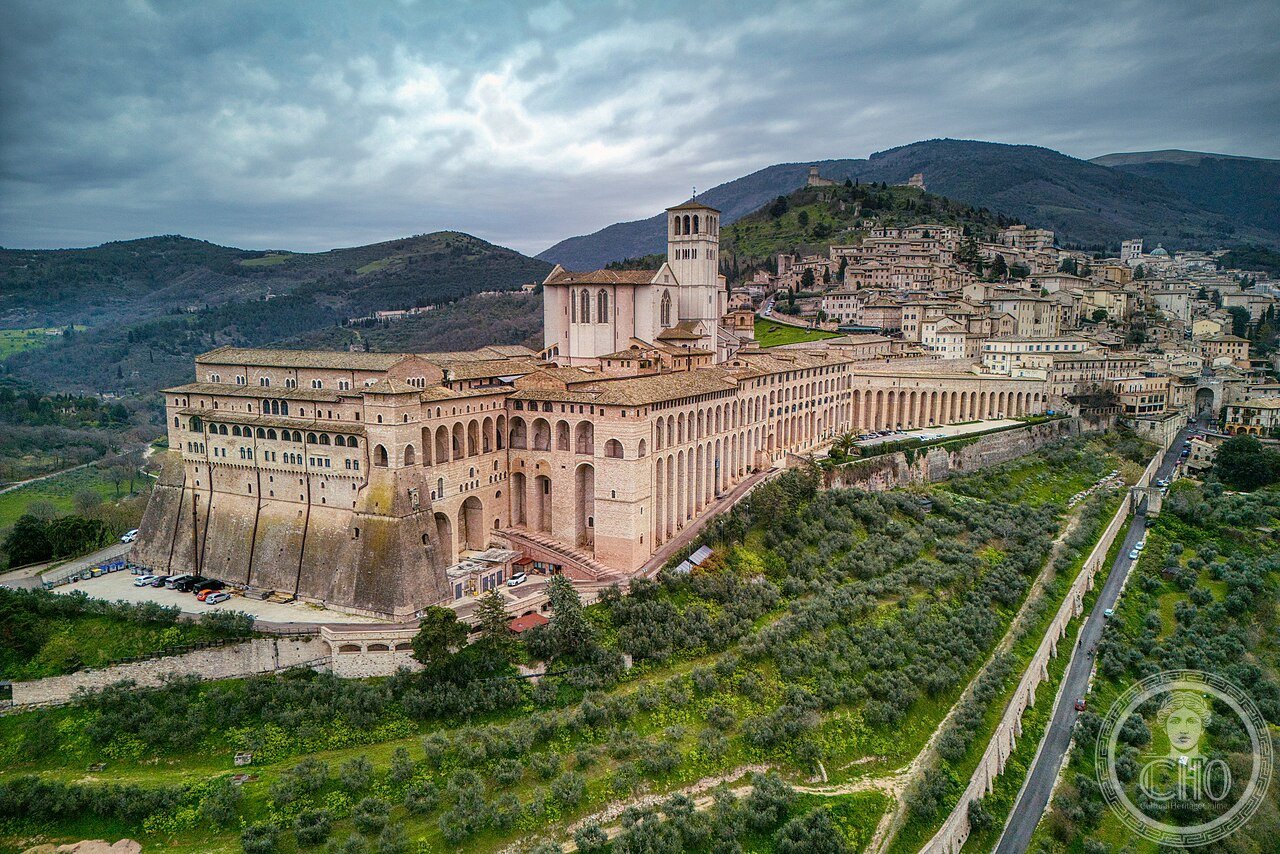
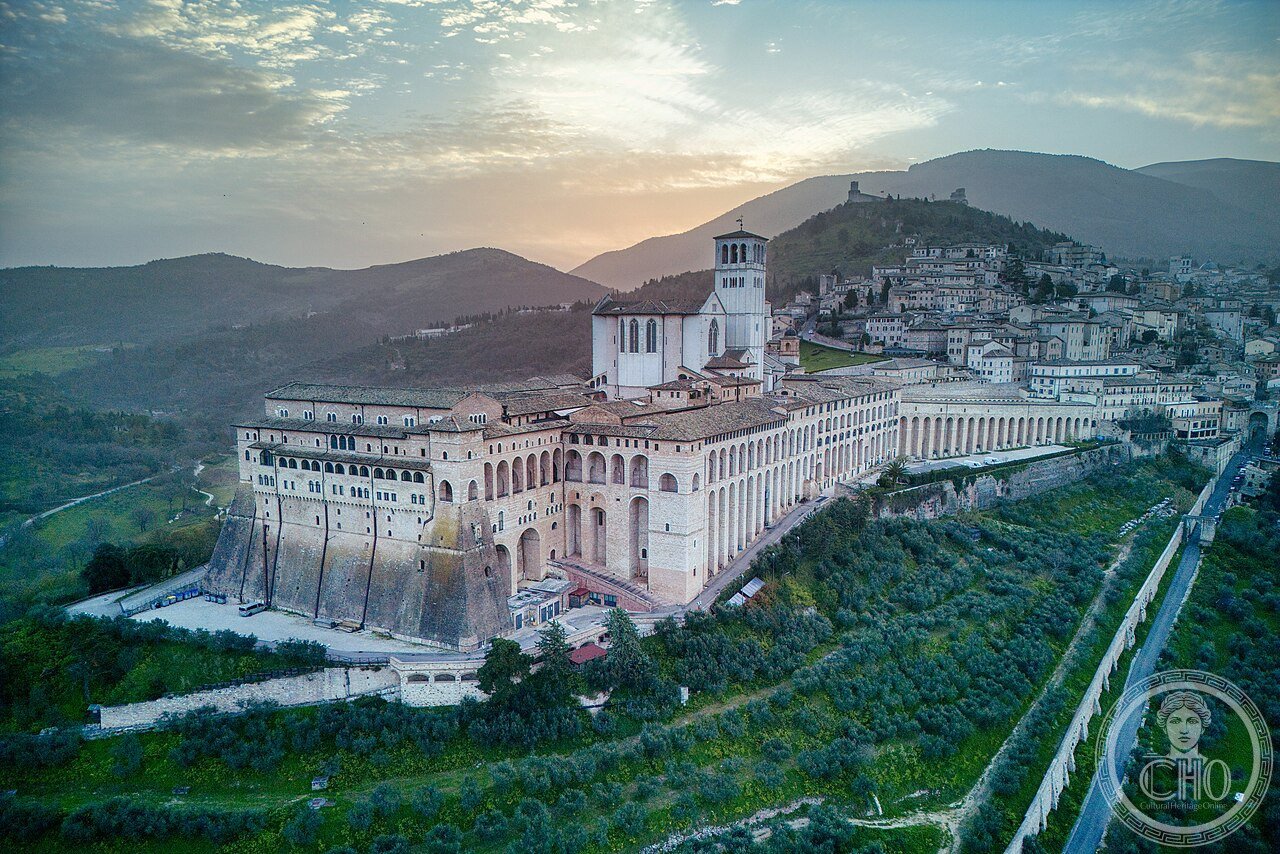
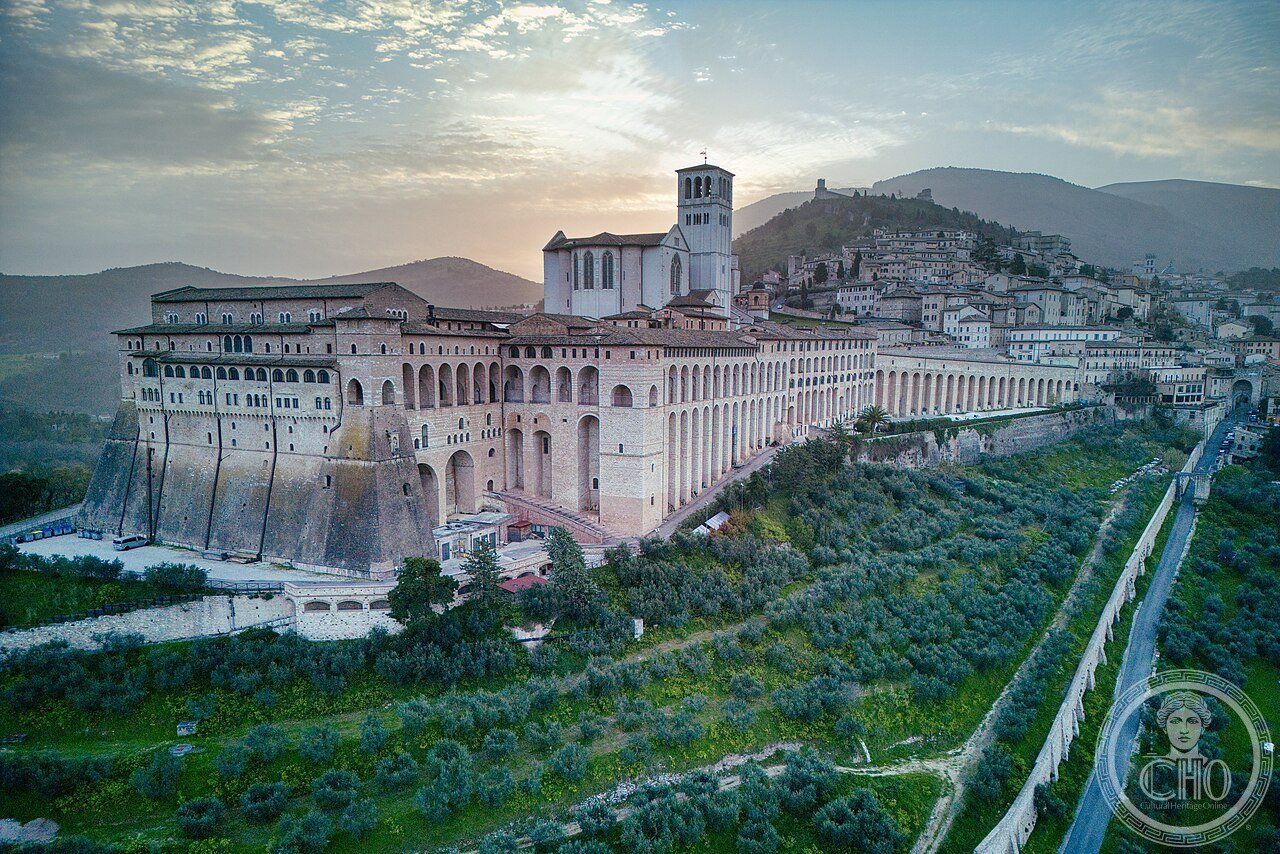
The Bosco di San Francesco from the upper trail (the specific view: the oak and holm-oak woodland fills the valley bottom between the 13th-century Franciscan complex and the 17th-century Rivotorto sanctuary below; the tree canopy is largely native oak (Quercus pubescens) and holm-oak (Quercus ilex) with some hornbeam and hazelnut; the valley floor along the creek (the Rio Tescio) is visible as a darker green stripe at the bottom of the woodland; the restored medieval watermill is in the valley floor at the junction of the creek trail; this view is approximately from the “Terrazza” viewpoint on the FAI trail, at 420m elevation, looking west towards the Tiber plain), Assisi, Province of Perugia, Umbria, Italy. Property FAI — Fondo Ambiente Italiano. Photo via Wikimedia Commons.
Assisi, Province of Perugia, Umbria, Italy · 64 hectares woodland + meadow; 12th-13th century Franciscan landscape; medieval watermill (Molino delle Braci) restored 2011; FAI property since 2010; free entry

Bosco di San Francesco

The Bosco di San Francesco (FAI since 2010; 64 hectares of medieval Franciscan woodland immediately below the Basilica di San Francesco di Assisi) is the only surviving example of the natural landscape that Francis of Assisi knew as his daily walking ground, with the restored 13th-century watermill and the creek trail that Franciscan friars maintained from 1226 CE to the present — a place where the contrast between the medieval city above and the uninterrupted oak forest below is immediate and complete.

At a glance

Bosco di San Francesco (the most precisely BoscoSanFrancesco single Assisi Province Perugia Umbria Italy 43.0730 N 12.6014 E FAI Fondo Ambiente Italiano since 2010: the property (64 ha; the FAI acquired the Bosco di San Francesco property from the Friars Minor (the Franciscan order) in 2010 CE; the purchase was funded by a public fundraising campaign and by a major donation from the Fondo Ambiente Italiano principal donors; the property includes the main oak woodland (the bosco — approximately 50 ha) and the meadow areas and creek terraces of the Rio Tescio valley (14 ha)); the geographical setting: the Bosco di San Francesco occupies the north-facing slope of the hill on which the Basilica di San Francesco (1228–1253 CE) is built; the city of Assisi is on the southern slopes of Monte Subasio; the northern slopes below the city wall descend directly into the valley of the Rio Tescio (a tributary of the Chiascio, which is a tributary of the Tiber); the bosco fills this north-facing valley from the city wall to the valley floor (elevation range: approximately 380–500m); the visit: free entry (the FAI has managed the property since 2010 with free admission — one of the few FAI properties with no entrance fee; donations are accepted); the main circuit (the “Sentiero del Bosco” (the Forest Path) + the “Sentiero del Mulino” (the Mill Path)): 3 km total; 1.5 hours at easy pace; largely flat in the valley floor, with a short ascent to the upper viewpoint).

Key facts

  • The Molino delle Braci and the history of Franciscan water management: the Molino delle Braci (the Mill of the Embers; the name derives from a local legend about the Franciscan friars carrying burning embers from the mill to light the monastery fires; the mill is positioned at the bottom of the valley on the Rio Tescio creek; the mill is documented in Franciscan historical records from the 13th century (the first documentary reference is in a land register of the Sacro Convento (the Basilica di San Francesco monastery) dated 1253 CE; the mill was a working agricultural mill producing flour for the monastery through the 15th century); the FAI restoration (2011–2013 CE): the mill was restored by FAI architects and specialists in medieval hydraulic technology; the restoration process documented the original wheel type (a horizontal waterwheel — the simplest and oldest type; the waterwheel axis is vertical and the buckets receive water from a side channel; this type was common in Umbrian mills from the 8th–15th century CE and was replaced by the more efficient vertical waterwheel from the 15th century onwards); the restored mill now operates as a working demonstration; visitors can see the millstones grinding during guided visits (every Sunday morning April–October; the FAI provides a miller in period costume; the milling demonstration produces stone-ground emmer wheat flour (farro) which is sold at the mill entrance); the mill was the subject of a public crowdfunding campaign in 2011 CE that raised €150,000 from 3,000 individual donors — one of the earliest successful public crowdfunding campaigns for heritage restoration in Italy
  • GPS Bosco di San Francesco: 43.0730° N, 12.6014° E (entrance below the Sacro Convento walls)

History

From Francis’s daily walk to Franciscan agricultural estate to FAI recovery (the most precisely BoscoSanFrancesco single 1206 CE the Franciscan foundation: Francis of Assisi (Giovanni di Pietro di Bernardone; c.1181–1226 CE) was born in Assisi and grew up on the slopes of Monte Subasio; the specific valley now occupied by the Bosco di San Francesco is documented in the earliest Franciscan sources as one of Francis’s regular walking and meditation areas (the “fonti del Clitunno” area near Bevagna; the “Porziuncula” (the small chapel on the valley floor 3 km from Assisi — the original Franciscan chapel, now enclosed within the Basilica di Santa Maria degli Angeli) is in the same general area of the Rieti valley floor where Francis began his community); the bosco itself is mentioned in the early Franciscan chronicles (notably in Tommaso da Celano’s “Vita Prima” of Francis (1228 CE) and in Bonaventura da Bagnoregio’s “Legenda Maior” (1263 CE)) as the area where Francis preached to the birds (the specific “Predica agli uccelli” (Sermon to the Birds) episode is narrated in the “Fioretti di San Francesco” (the “Little Flowers”; c. 1327 CE) as occurring “near Bevagna,” but local tradition (from the 14th century onwards) places it in the valley below Assisi, which is the Bosco di San Francesco area); Sacro Convento land ownership: from 1228 CE (the beginning of Basilica construction) to 2010 CE, the valley was part of the agricultural estate of the Sacro Convento (the monastery complex attached to the Basilica di San Francesco); the valley was used as agricultural and forestry land by the Franciscan friars for 8 centuries; the FAI acquisition: 2010 CE; FAI restoration and opening to public: 2011–2012 CE.

What you see

The forest trail, the mill, the creek, and the relationship with the Basilica skyline (the most precisely BoscoSanFrancesco single visit sequence: the Bosco di San Francesco is accessed from the Via Antonio Cristofani (the road that runs along the north face of the Assisi city wall, below the Sacro Convento complex; the FAI entrance is at 43.0730 N, 12.6014 E; the entry is marked with FAI green signs and is free); the trail circuit: Trail 1 (the Sentiero della Radura — the Clearing Path; 1.2 km; flat; through the oak woodland canopy; the oak trees here are primarily pubescent oak (Quercus pubescens; the dominant deciduous oak of the Apennines; the leaf pubescence (tiny hairs on the leaf underside) is visible at close range; the tree canopy in this part of the bosco is approximately 80 years old — the current trees grew after the old-growth trees were felled in the late 19th century for timber; the oldest individual trees in the bosco are the holm-oaks (Quercus ilex; the southern Mediterranean evergreen oak; leaves are glossy, dark green above and pale below; the holm-oaks are approximately 150–200 years old based on girth measurements); the sound environment in the bosco in the morning (7–9 AM): blackbirds (Turdus merula; the most audible; the Bosco di San Francesco has one of the densest blackbird populations in the Assisi area due to the combination of dense woodland and the adjacent agricultural fields for feeding), nightingales (April–June), woodpeckers (the green woodpecker (Picus viridis) and the great spotted woodpecker (Dendrocopos major) are both documented in the bosco; the green woodpecker’s “yaffle” call is the most distinctive sound in the spring bosco)); Trail 2 (the Sentiero del Mulino — the Mill Path; 1.8 km; from the woodland to the valley floor and the Molino delle Braci; the final descent to the mill is on a stone-paved path that is the original Franciscan monk track; the paving stones are Subasio limestone (the local cream-yellow stone that was used for all medieval Assisi buildings including the Basilica di San Francesco)); the view from the Terrazza (the upper viewpoint; accessible from the main path junction; the view north to the Tiber plain; the Basilica di San Francesco rises to the right (east) above the city walls; this is the best view of the relationship between the Franciscan complex and its natural landscape setting; the Basilica’s lower church apse is visible at the same level as the forest canopy below it).

Practical information

  • Visiting the Bosco in combination with the Assisi Franciscan circuit (a 1-day walking itinerary): the Assisi Franciscan walking circuit (7 km total; largely downhill from the city walls to the bosco and back via the Via delle Fonti; possible without a car in 4–5 hours): start at the Basilica di San Francesco (the best visit for the Cimabue frescoes (Upper Church; the “Fall of St Francis from his Horse” fresco, c.1288 CE, attributed to Cimabue; the most powerful single image in the Upper Church; the large nave frescoes attributed to Giotto (1296–1304 CE; the 28 scenes from the Life of St Francis; the scene “Giotto,” because it is the most detailed sequence of 13th-century Italian daily life in any painted cycle; the scenes include a market, a city square, a tavern, and a building site — all documented in specific architectural detail)); the Lower Church (narrower; semi-underground; the earliest part (1228 CE); the most sacred area: the tomb of Francis in the Crypt (direct access from the Lower Church nave; the stone sarcophagus is visible behind an iron grate; the crypt is at the lowest point of the complex; the light is poor; the atmosphere is extremely solemn)); after the Basilica, descend via the Via del Frate along the city wall to the FAI Bosco entrance (10 min walk; the route is signposted); walk the Bosco circuit (1.5 hours); visit the Molino delle Braci (30 min); return to the city via the Porta San Francesco (the main city gate below the Basilica); lunch at the Osteria della Piazzetta (Vicolo dei Nepis 5; Assisi; the most characterful restaurant in the old town; the Umbrian lunch: tagliatelle al tartufo nero (black truffle; the Norcia black truffle (Tuber melanosporum) is the local variety in Umbria; the Norcia-style truffle pasta uses grated fresh truffle (in season October–February) or preserved truffle paste; the pasta is dressed with extra-virgin olive oil from the Monte Subasio olive groves above Assisi — the oil is pressed at the Frantoio Sociale di Assisi in November; it has a slightly bitter-peppery finish that pairs specifically well with the truffle aroma))

Getting there

Free entry. From the Basilica di San Francesco: follow the north wall of the Sacro Convento downhill 10 min (signposted FAI). From Santa Maria degli Angeli train station: bus to Assisi (15 min) then walk. Open daily dawn-dusk. Mill demonstrations: Sundays 10-12 April-October. GPS entrance: 43.0730, 12.6014.

Nearby

  • Basilica di San Francesco, Assisi — 5 min walk (UNESCO WHS 2000 as part of “Assisi, the Basilica of San Francesco and Other Franciscan Sites”; the Giotto Life of St Francis cycle (Upper Church; 28 scenes 1296–1304 CE); the Cimabue apse fresco; the crypt with Francis’s tomb)
  • Rocca Maggiore — 20 min walk (the medieval fortress above Assisi; 14th century Galeotto Malatesta construction; the panorama of the Chiascio valley and Monte Subasio; visible from the Bosco trail looking east)

Sources

  • Wikipedia, Bosco di San Francesco; Francis of Assisi; Assisi, accessed June 2026
  • FAI Fondo Ambiente Italiano, Bosco di San Francesco visitor guide, 2023
  • Tommasini, Matteo da Celano. Vita Prima Sancti Francisci, 1228 CE (digital edition: Corpus Franciscanum, 2020)

Hero image: Bosco di San Francesco, Assisi, Umbria, Italy, Wikimedia Commons. Editorial text © Cultural Heritage Online, 2026.

📷 Diventa un fotografo di Cultural Heritage Online

Condividi le tue foto dei luoghi: restano pubblicate con la tua firma come autore. Più vengono viste, più ti fai conoscere — e presto un concorso premierà le foto più apprezzate.

Accedi o registrati gratis per aggiungere una foto
📋 Copy & share on social
Scroll to Top