
Arab-Norman Palermo e le Cattedrali di Cefalù e Monreale

Palermo Cathedral Arab-Norman architecture 12th century Swabian tombs Sicily UNESCO 2015
Palermo Cathedral (Cattedrale di Palermo; begun 1185 by Archbishop Walter Ophamil; the exterior of the apse shows the Arab-Norman geometric decoration: interlaced blind arches, diamond-pattern stonework, and pointed horseshoe arches that synthesize Fatimid geometric ornament with Romanesque structural logic; the pointed arch seen here is Islamic in origin (the horseshoe arch), while the scale and the dressed ashlar construction is Norman; the blind arcade registers are inlaid with Arabic Kufic inscriptions repurposed from earlier Islamic buildings — the most explicit physical evidence of the Arab-Norman synthesis: the Normans did not just tolerate Islamic aesthetics but actively embedded Arabic script into Christian sacred architecture), Piazza Cattedrale, Palermo, Sicily, Italy. UNESCO World Heritage Site 2015. Photo via Wikimedia Commons.
Palermo, Cefalù, Monreale, Sicily, Italy · Norman period (1072–1194 CE); 9 monuments across 3 cities; Islamic geometric ornament + Byzantine mosaics + Norman Romanesque structure; UNESCO WHS 2015 (reference 1487 serial)

Arab-Norman Palermo and the Cathedrals of Cefalù and Monreale

The most extraordinary example of medieval cultural pluralism in Europe — the Arab-Norman serial UNESCO site (2015) encompasses nine buildings across three Sicilian cities, each built during the 12th-century Norman Kingdom of Sicily by craftsmen who simultaneously mastered Islamic geometric ornament, Byzantine gold mosaic, and Norman Romanesque stone carving: an architectural synthesis with no parallel anywhere in the medieval world.

At a glance

Arab-Norman Palermo (the most precisely ArabNorman serial Sicily 9 monuments UNESCO 2015 reference 1487: the serial nomination includes monuments in 3 cities: Palermo (7 monuments: Palazzo dei Normanni/Cappella Palatina; La Zisa palace; La Cuba palace; Palermo Cathedral; Church of San Giovanni degli Eremiti; Church of San Cataldo; Church of Santa Maria dell’Ammiraglio (La Martorana)) + Cefalù (1 monument: Cefalù Cathedral) + Monreale (1 monument: Monreale Cathedral); the UNESCO criterion: the serial site is inscribed under criteria (i), (ii), and (vi) — criterion (i) for the unique achievement of Arab-Norman architecture; criterion (ii) for the transmission of Islamic architectural forms and Byzantine mosaic tradition into Christian Norman culture; criterion (vi) for the testimony of exceptional cultural exchange); the Kingdom of Sicily under the Norman Hauteville dynasty (1130–1194 CE) was the most culturally diverse state in medieval Europe: a court where Arabic, Greek, Latin, and Norman French were all official languages; where Muslim, Christian, and Jewish subjects lived under the same administration; and where the king’s personal chapel (the Cappella Palatina) was decorated by Byzantine Greek mosaicists, its ceiling was designed by Fatimid Egyptian artisans, and its structure was built by Norman masons — the three skills meeting in a single space with no historical precedent.

Key facts

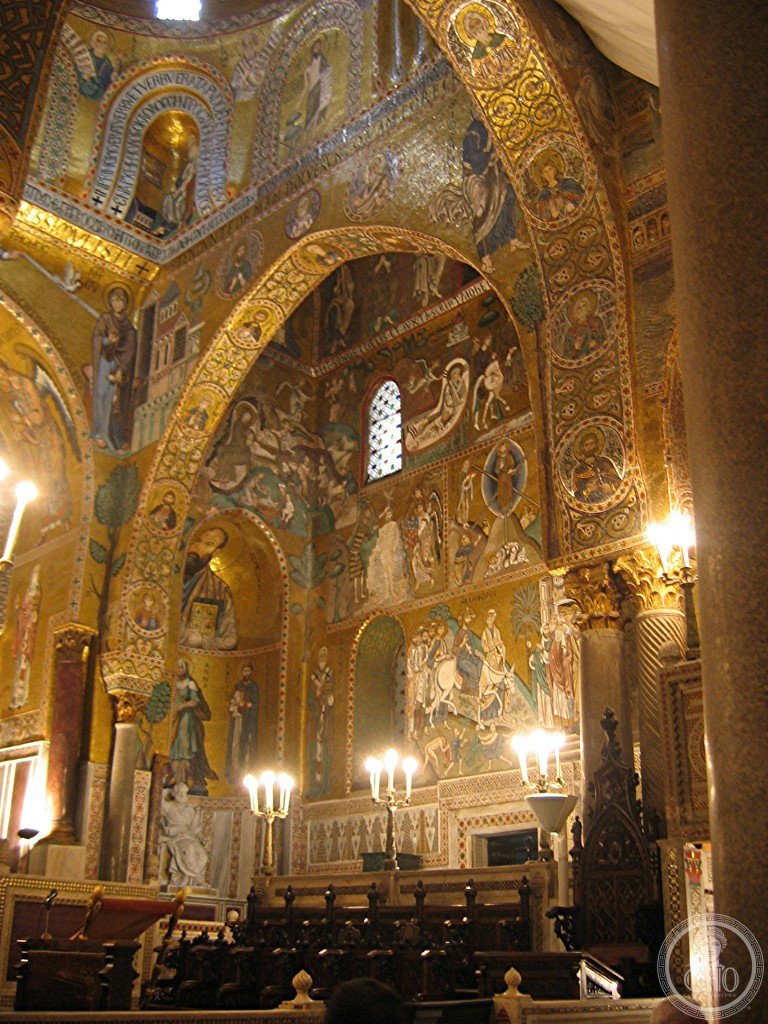
  • The Cappella Palatina and why its ceiling is the most important Islamic artwork north of Egypt: the Cappella Palatina (Palace Chapel; in the Palazzo dei Normanni; consecrated 1143 CE; 33m × 13m; the interior height 17m) is the most concentrated synthesis of Arab-Norman art in a single space; the ceiling: a stalactite muqarnas ceiling (muqarnas = the 3-dimensional geometric honeycomb system invented in 10th century Islamic architecture to dissolve the visual weight of a flat ceiling into a cascading sequence of miniature vaults; in Arabic “muqarnas” derives from the word for “horn”); the specific ceiling of the Cappella Palatina is the largest surviving Fatimid-period painted muqarnas ceiling in existence (the Fatimid Caliphate, 909–1171 CE, based in Cairo, produced the most elaborate muqarnas ceilings; the Cappella Palatina ceiling has approximately 3,000 individual muqarnas cells; each cell was painted with figural and ornamental scenes that include the only surviving Fatimid-period depictions of court life: processions, musicians, hunting scenes, and animals painted in an Egyptian/Arab pictorial style; these scenes were produced for a Christian king by Islamic artists from Egypt or Sicily working in the Islamic tradition but with no theological prohibition against figural representation in this secular-coded ceiling space); the floor and lower walls: Byzantine polychrome marble cosmati mosaic (the same technique as in the Lateran Basilica in Rome); the upper walls and apse: Byzantine gold tesserae mosaic of Christ Pantocrator and the apostles (the same workshop tradition as Hagia Sophia); the result: a chapel where you can see simultaneously a Fatimid muqarnas ceiling, Byzantine gold mosaics, and Norman Romanesque structural arches — a physical impossibility in any other building in the world
  • GPS Palazzo dei Normanni: 38.1110° N, 13.3528° E
  • GPS Monreale Cathedral: 38.0803° N, 13.2914° E
  • GPS Cefalù Cathedral: 38.0398° N, 14.0230° E

History

From Arab Emirate to Norman Kingdom to Hohenstaufen decline (the most precisely ArabNorman serial 827 CE Arab conquest of Sicily: the Aghlabid Emirate of Sicily (827–1072 CE) was one of the most culturally productive Islamic polities in the Mediterranean; Palermo (Arabic: Balarm; the Arabs renamed it from the Latin Panormus) became a major center of learning, trade, and population (estimated at 300,000 inhabitants in the 10th century — larger than Paris, London, or Rome at the same period; the largest city in Europe after Constantinople); the Arab Palermo had 300+ mosques (the Palermo Cathedral is built on the site of the city’s Friday mosque — the largest; the Church of San Giovanni degli Eremiti incorporates domes that are possibly the oldest standing dome structures in Palermo, originally from an Arab period building); the Norman conquest (1072 CE): Robert Guiscard’s Norman forces captured Palermo in 1072 CE; his nephew Roger I (count; r. 1072–1101 CE) began the Norman consolidation of Sicily; crucially, Roger I did NOT expel the Arab population or abolish Arab institutions; Arabic remained an official court language; Arab bureaucrats continued to administer Norman financial affairs; Arab architects, engineers, and craftsmen continued to build for Norman patrons; the Norman court: Roger II (king; r. 1130–1154 CE; the first king of Sicily) was the patron of the Cappella Palatina, La Zisa palace (begun), San Giovanni degli Eremiti, and La Martorana church; the geographer Muhammad al-Idrisi (c.1099–1165 CE) dedicated his world map to Roger II and called him “the most powerful monarch in the world” — the map was the most accurate world map produced in the medieval period; William I (r. 1154–1166 CE) completed La Zisa; William II (r. 1166–1189 CE) built Monreale Cathedral (1174–1182 CE) and Cefalù Cathedral (completed 1267 CE); the Hohenstaufen succession (1194 CE): Henry VI Hohenstaufen (Holy Roman Emperor) inherited Sicily through his wife Constance; the cultural synthesis continued under Frederick II (r. 1194–1250 CE) whose court at Palermo was the most intellectually productive in 13th-century Europe (Fibonacci published his Liber Abaci at Palermo; the Sicilian School of poetry (the first Italian vernacular poetry school) was established at Frederick’s court; Dante cited it as the origin of Italian literary language); 1282 CE the Sicilian Vespers: the uprising against French Angevin rule effectively ended the most creative period of Sicilian cultural production 2015 CE UNESCO inscription reference 1487 serial.

What you see

The nine monuments, their specific features, and the visiting sequence (the most precisely ArabNorman serial 9 monuments: 1) Palazzo dei Normanni + Cappella Palatina (the most important visit; Piazza del Parlamento 1, Palermo; 8:15 AM–5:15 PM Mon–Sat, 8:15 AM–1 PM Sun; €12–16 depending on whether the royal apartments are open (they are used by the Sicilian Regional Government and not always accessible)); the Cappella Palatina is the centrepiece: spend 30–45 minutes here; look at the sequence ceiling→walls→floor to understand the three cultural traditions simultaneously present; binoculars strongly recommended for the ceiling detail; 2) La Zisa (Arabic: al-‘Aziza = “the magnificent”; Piazza Guglielmo II, Palermo; 9 AM–6 PM; €6; a pleasure palace built by William I and II; the ground-floor room (Sala della Fontana) has a three-tiered muqarnas hood above a fountain that creates a perpetual water-cooling system — the first air-conditioning system in Europe; the Arabic inscription on the hooded niche identifies the builders and date; the palace was Islamic in design and function but built for a Christian king; the collection of Islamic objects from Norman-period Sicily (bronze water basins, ivories, silk) on display in the ground floor is the best surviving assemblage of Arab-Norman moveable art); 3) San Giovanni degli Eremiti (Via dei Benedettini, Palermo; 9 AM–6 PM; €6; the most visually iconic of the Palermo monuments — 5 red domes (the only red domes in Palermo; the colour is the original terracotta finish) against a background of palm trees and citrus; the building was constructed 1130–1148 CE over an Arab-period structure (possibly a mosque or a pre-existing Christian building); the domes are the purest Arab form in the series — they do not derive from Byzantine church design but from the North African/Fatimid pointed dome tradition); 4) La Martorana (Church of Santa Maria dell’Ammiraglio; Piazza Bellini, Palermo; free; the only monument among the 9 still in full liturgical use as a church (it is also the seat of the Greek Catholic Eparchy of Piana degli Albanesi — the Albanian-rite Catholic community that has maintained the Byzantine liturgy in Sicily since the 15th century); the most significant interior element: the mosaic of Roger II being crowned by Christ (1143 CE; in the north apse; the only surviving image of Roger II as king; he is shown with a halo and in Byzantine imperial vestments — this self-representation as Byzantine emperor in a Norman church commissioned by his own admiral (George of Antioch; a Greek from Antioch who converted from Orthodox Christianity to become the Norman king’s admiral) is the densest single example of Arab-Norman identity construction in any visual artwork); 5) Cefalù Cathedral (60 km from Palermo; train 1h; the apse mosaic of Christ Pantocrator (1148 CE; 8.17m tall — the largest surviving Christ Pantocrator mosaic in the world; pre-dating the Monreale version by 30 years and considered the iconographic source); the cloister with 216 double-column capitals each carved with different foliage and figural scenes); 6) Monreale Cathedral (8 km from Palermo; bus from Piazza Indipendenza; the most extensive Byzantine mosaic cycle in the world: 6,340 square metres of gold mosaic covering the entire interior; created 1174–1182 CE; the narrative programme: the entire Old and New Testament in sequence, including an unusual Nativity scene where Mary is shown reclining after birth rather than kneeling — a detail from the Byzantine Protoevangelium of James; the cloister with 216 double-column capitals (identical count to Cefalù — a deliberate parallel); the cloister is Romanesque but 26 of the capitals show Islamic geometric interlace ornament on their necking rings).

Practical information

  • Planning a 2-day Arab-Norman itinerary from Palermo: day 1 Palermo (morning: Palazzo dei Normanni + Cappella Palatina — book tickets in advance at federicosecondo.it; allow 2.5–3 hours; afternoon: La Zisa (30 min walk or taxi); San Giovanni degli Eremiti (10 min walk from La Zisa); La Martorana (15 min from San Giovanni; free and quick; 30 min); end with an aperitivo in Piazza Bellini; day 2: morning train to Cefalù (1h; Trenitalia; first train 6:30 AM; arrive for the cathedral at opening 8 AM before tour groups; the morning light in the apse is from the east and the Pantocrator mosaic is best lit 8–10 AM); return to Palermo early afternoon; afternoon bus to Monreale (bus 389 from Piazza Indipendenza; 20 min; €1.40; every 15 min); Monreale is best in late afternoon when the side windows light the north nave mosaics; the visit circuit (the cathedral + cloister) takes 1.5–2 hours; budget approximately €40 for all 9 sites); the Palermo food itinerary for the Arab-Norman day: street food in the Ballarò market (the oldest market in Palermo; the name is Arabic from the medieval market name; the street food — panelle (chickpea fritters), pane con le milze (spleen sandwich) — is directly descended from Arab-period Sicilian food traditions; the chickpea is a legume grown in Sicily since Arab period; the spleen preparation with lard and citrus reflects a post-Reconquista Jewish-influenced street food tradition)

Getting there

Palermo airport: 30 min to city centre (bus Prestia e Comandè €6.30 direct to Politeama). Palazzo dei Normanni: Piazza del Parlamento (15 min walk from Centrale). Book Cappella Palatina in advance (federicosecondo.it). Cefalù: 1h train from Palermo. Monreale: bus 389 from Piazza Indipendenza (20 min, €1.40). GPS Cappella Palatina: 38.1110, 13.3528.

Nearby

  • Valle dei Templi, Agrigento — 130 km south (UNESCO WHS 1997; Temple of Concordia 440 BCE; the best-preserved Greek Doric temple outside the Athens Acropolis)
  • Val di Noto Late Baroque — 200 km south-east (UNESCO WHS 2002; Noto Cathedral, Ragusa Ibla, Modica chocolate)
  • Segesta — 70 km west (Doric temple c.420 BCE; the unfinished column drums allow you to see how a Doric temple was constructed; amphitheatre with view of the Gulf of Castellammare; the site is the territory of the ancient Elymian people — possibly of Trojan origin, according to Thucydides)

Sources

  • Wikipedia, Arab-Norman Palermo; Cappella Palatina; La Zisa; Monreale Cathedral; Cefalù Cathedral; Kingdom of Sicily, accessed June 2026
  • UNESCO, Arab-Norman Palermo and the Cathedrals of Cefalù and Monreale, WHS reference 1487, inscribed 2015
  • Borsook, Eve. Messages in Mosaic: The Royal Programmes of Norman Sicily, 1130–1187. Oxford: Clarendon Press, 1990

Hero image: Palermo Cathedral, Sicily, Italy, Wikimedia Commons. Editorial text © Cultural Heritage Online, 2026.

📷 Diventa un fotografo di Cultural Heritage Online

Condividi le tue foto dei luoghi: restano pubblicate con la tua firma come autore. Più vengono viste, più ti fai conoscere — e presto un concorso premierà le foto più apprezzate.

Accedi o registrati gratis per aggiungere una foto
📋 Copy & share on social
Scroll to Top