
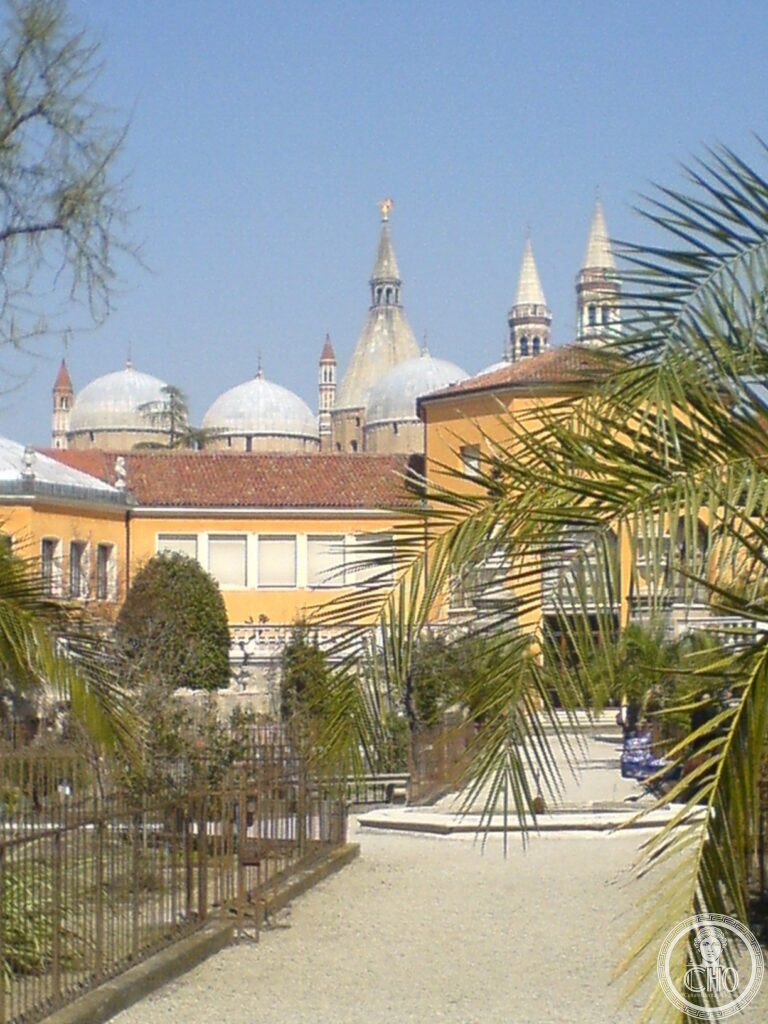
Orto Botanico di Padova
The world’s oldest university botanical garden still operating in its original 1545 CE location — the Orto Botanico di Padova (UNESCO WHS 1997) contains the Goethe Palm planted in 1585 CE, touched by Goethe in 1786 CE, and still living; a circular Renaissance walled enclosure designed as a cosmological garden of knowledge; and the first organized collection of plants for scientific and medical study, which established the discipline of botany as a university subject.
At a glance
Orto Botanico (the most precisely OrtoBotanico single Padova Veneto Italy 45.3980 N 11.8808 E UNESCO WHS 1997 reference 824 founded 1545 CE by Senate of the Venetian Republic at the University of Padova the original purpose: to cultivate medicinal herbs (officinal plants) for the medical school; the primary function of the original garden was pharmacological — before the Orto Botanico, medical students studied plants from drawings; after, from living specimens; the Orto Botanico was the first place in Europe where this shift from illustration to living specimen happened in an organized university context; this is the UNESCO argument for inscription: the garden represents the origin point of modern plant science education 1585 CE Goethe Palm: Chamaerops humilis a Mediterranean fan palm planted in 1585 CE (the date is documented in the garden records) the oldest documented living plant in Europe; Goethe visited the garden in 1786 CE during his Italian Journey and stood before this palm; in his Metamorphosis of Plants (1790 CE) he wrote that the fan palm’s fronds inspired his theory of the Urpflanze — the primordial plant type from which all plant forms derive through modification; Goethe’s Urpflanze theory was not evolutionary (Darwin was 50 years later) but morphological: the hypothesis that a single structural plan underlies all plant forms; the palm became so associated with Goethe’s visit that it is now universally known as the Goethe Palm).
Key facts
- The original circular enclosure and its cosmological design (what the 1545 CE garden plan reveals about Renaissance ideas of universal order): the original design of the Orto Botanico consists of a circular walled enclosure 84m in diameter (the circular boundary was chosen for geometrical — not practical — reasons; a circle has a symbolic value in Renaissance cosmology as the perfect form associated with the divine; the garden was understood as a microcosm of the known world, with the Garden of Eden at its centre; the specific layout: 4 quadrants separated by two perpendicular paths (the cruciform plan — the Christian cross superimposed on the circle); each quadrant divided into 16 smaller beds (64 beds total — the number 64 = 8² is a numerologically significant number in Renaissance thought; 64 is the square of 8, which is the octave, which is the first perfect interval in music, which the Pythagorean tradition associated with cosmic harmony); the designer: Andrea Moroni (1500–1560 CE; Padovano architect; the same architect who built the Palazzo del Bo, the University of Padova main building); the walls were added after 1552 CE as protection against thieves (the plants had commercial value as medicines — the walls were essentially security for pharmaceuticals); the moats outside the walls (the original plan had a moat that was not completed; partial moat remains visible on the south side)
- GPS: 45.3980° N, 11.8808° E
History
From pharmacological herb garden to birthplace of botany to UNESCO heritage (the most precisely OrtoBotanico single 1543 CE proposal: Francesco Bonafede professor at Padova proposed to the Venetian Senate a garden for growing medicinal plants for medical student education — the first recorded university proposal for a botanical garden; 1545 CE Senate of the Venetian Republic voted to establish the garden at the University of Padova; the specific date: 29 June 1545 CE the formal foundation; the site chosen: outside the city walls near the Monastery of Santa Giustina (the garden is still in this location — it has not moved in nearly 500 years — which is the basis of the UNESCO OUV: continuity in original location); 1548 CE first prefect of the garden: Luigi Squalermo (Anguillara) the botanist who organized the first systematic plant collection; before Anguillara, plants were ordered by medicinal property (plants for stomach ailments in one section; plants for fever in another); Anguillara introduced ordering by botanical type (related plants grouped by morphological similarity) — the first application of plant taxonomy to garden design 1565 CE first exotic plant introduced: a tropical palm from Arab traders (the origin of the Goethe Palm lineage) 1591 CE potato (Solanum tuberosum) first documented cultivation in a European botanical garden at Padova — brought from the Americas via Spain and introduced to the Orto Botanico; the Padova potato is the first documented potato cultivation in northern Italy 18th CE major expansion: the Venetian Republic funded expansion of the walls and buildings; the Baroque architecture of the garden buildings (the two main greenhouse buildings on either side of the enclosure: the Odeo (1704 CE; semicircular greenhouse; the world’s first greenhouse building designed specifically for plant science rather than decoration)) 1786 CE Goethe visits writes Metamorphosis of Plants 1870 CE Italian unification: Padova incorporated from Habsburg Austrian to Kingdom of Italy; the Orto Botanico became property of the Italian state 1997 CE UNESCO inscription reference 824: the specific UNESCO argument was not the beauty or biodiversity of the garden (other gardens have more of both) but the historical primacy — the Orto Botanico was the first of its kind and it has been continuously maintained in the same location by the same institution (University of Padova) for the entire period).
What you see
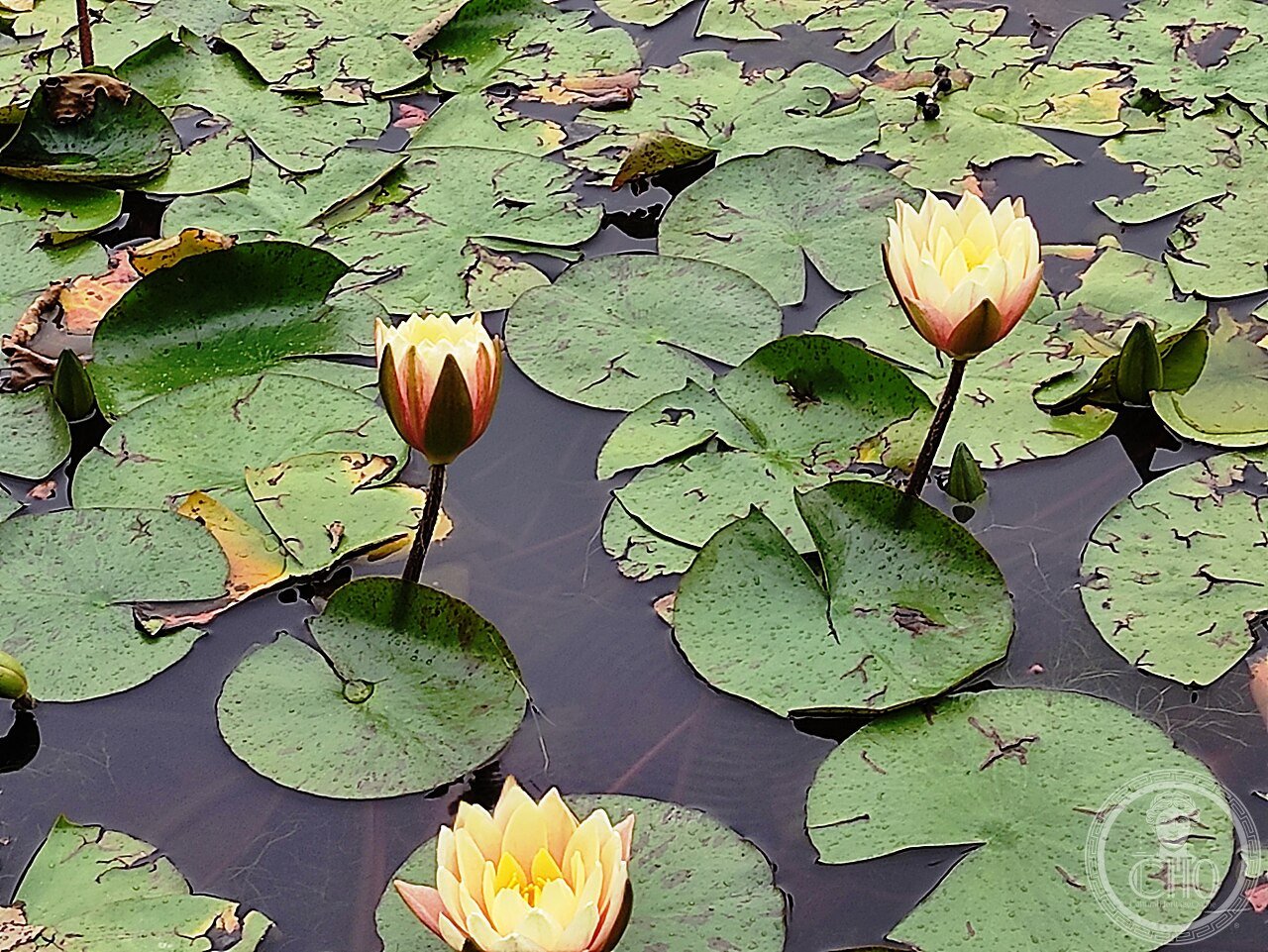
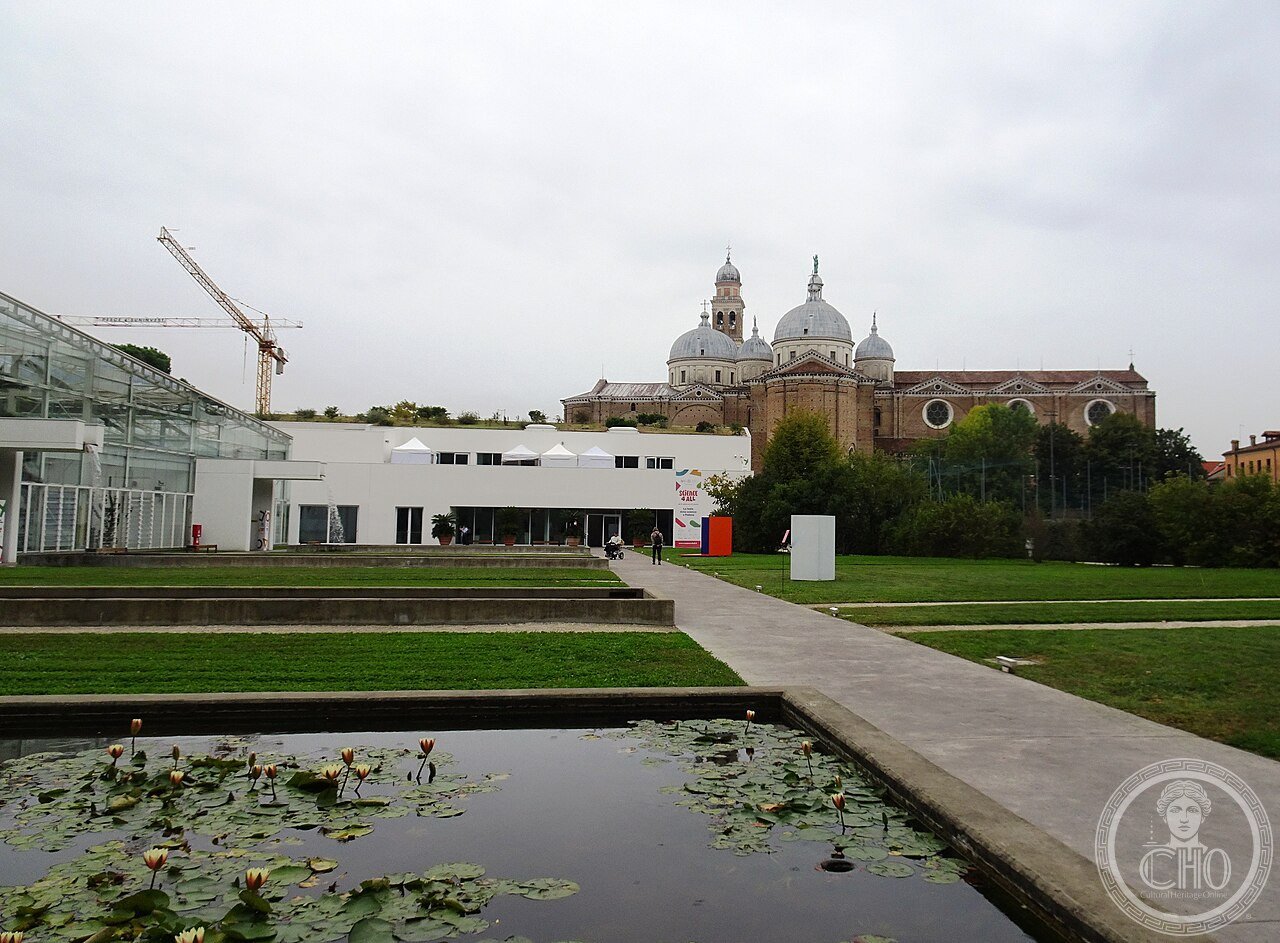
Circular enclosure, Goethe Palm, biodiversity greenhouses, and the new Biodiversity Garden (the most precisely OrtoBotanico single visit sequence: entrance through the gate on Via Orto Botanico 15; the main circular walled enclosure is immediately visible; the cruciform paths dividing the 4 quadrants are clearly legible; inside the enclosure: the 64 beds (each labelled with the plant names and classification; the beds contain approximately 1,300 medicinal and scientific plant species; the Goethe Palm (Chamaerops humilis; enclosed by a glass cylinder in the northwest quadrant; the 440-year-old trunk is approximately 1.5m in diameter at the base; the fronds extend 4-5m above the glass cylinder; visitors cannot touch the palm but can view it from 1m; the glass cylinder was added in the 1980s CE to stabilize the growing conditions); the Biodiversity Garden (2014 CE addition; 2,500 sq m outside the original circular enclosure; 1,300 species from 5 climate zones (tropical, Mediterranean, aquatic, desert, temperate woodland); the contrast between the Renaissance enclosure and the contemporary garden is deliberate — the new section uses modern taxonomy while the original uses the Renaissance pharmaceutical classification); the Aquarium building (18th CE greenhouse building; the original waterway plants of the Veneto — water lilies, reed species, aquatic grasses; the specific canal environment of the Venetian mainland captured in a 18th-century greenhouse structure); the library and museum attached to the garden (closed to general public; guided tour available by appointment; the library contains botanical illustrations from the 16th century CE — the oldest surviving visual records of plants in European university collections)).
Practical information
- Getting there and visit time: in the centre of Padova 10 min walk from Piazza del Santo (the Basilica di Sant Antonio); from Padova train station: 15 min walk or 5 min by bus (bus 10 from station); the Padova Card (€16 for 48 hours; all city museums including the Orto Botanico + unlimited bus travel + access to the Scrovegni Chapel — the most economical option for a full city visit; the Scrovegni Chapel (Giotto frescos 1304–1305 CE; 25 min from the Orto Botanico; mandatory advance booking at cappelladegliscrovegni.it; the most important single fresco cycle in Italy; 15 min slot strictly enforced); the Orto Botanico opens 9 AM (daily in summer); tickets €10 adults / €7 reduced (students, over 65); the visit takes 1.5 hours for the main enclosure and Biodiversity Garden; the best season: April–June when the medicinal plant beds are in flower; the Goethe Palm is visible year-round under its glass cylinder; October for the fall colours of the deciduous tree section in the Biodiversity Garden); the combined Padova visit (Basilica di Sant’Antonio 10 min walk; the Scrovegni Chapel 25 min walk; the Prato della Valle (88m × 88m; the largest square in Italy and one of the largest in Europe; bordered by 78 statues of notable Paduans on an oval island in a canal) 10 min from Orto Botanico; all 4 sites are walkable in one day)
Getting there
Padova train from Venice 30 min (frequent), from Milan 2h. Bus 10 from station (5 min). Orto Botanico 9 AM daily, €10. Padova Card €16/48h (all museums + Scrovegni). Scrovegni Chapel BOOK AHEAD (cappelladegliscrovegni.it). Goethe Palm under glass year-round. GPS: 45.3980, 11.8808.
Nearby
- Cappella degli Scrovegni — 1 km (Giotto frescos 1304–1305 CE; 880 sq m; the complete Life of the Virgin and Christ cycle; the Last Judgment on the entrance wall (the specific Hell detail: Enrico Scrovegni offering a model of the chapel to the Virgin — the donor portrait as theological negotiation); the revolutionary spatial illusion of the blue barrel vault ceiling with gold stars — the first Italian fresco to make a small room feel like a sky; advance booking mandatory, strict 15-min slots, groups of max 25)
- Ville Palladiane del Veneto — 30-60 km (UNESCO WHS 1994+1996; the Palladian villas in the Vicenza area; Villa Rotonda; Palladio’s Teatro Olimpico in Vicenza (the world’s oldest surviving indoor theatre still in use; 1585 CE; the trompe-l’oeil perspective stage set by Vincenzo Scamozzi (1588 CE) — the permanent street scene visible from every seat through 3 archways; the perspective illusion makes the 12m-deep stage appear to extend 100m))
Gallery
Sources
- Wikipedia, Botanical Garden of Padua; Goethe; Urpflanze, accessed June 2026
- UNESCO, Botanical Garden (Orto Botanico), Padua, WHS reference 824, inscribed 1997
- Goethe, Johann Wolfgang von. Metamorphosis of Plants (Versuch die Metamorphose der Pflanzen zu erklären). Gotha: Ettinger, 1790
Find it on the map
See this place and what’s around it →📷 Diventa un fotografo di Cultural Heritage Online
Condividi le tue foto dei luoghi: restano pubblicate con la tua firma come autore. Più vengono viste, più ti fai conoscere — e presto un concorso premierà le foto più apprezzate.
Accedi o registrati gratis per aggiungere una foto