Tivoli (Villa Adriana & Villa d’Este)

Tivoli Hadrian Villa Adriana Lazio Italy Roman emperor fountains UNESCO
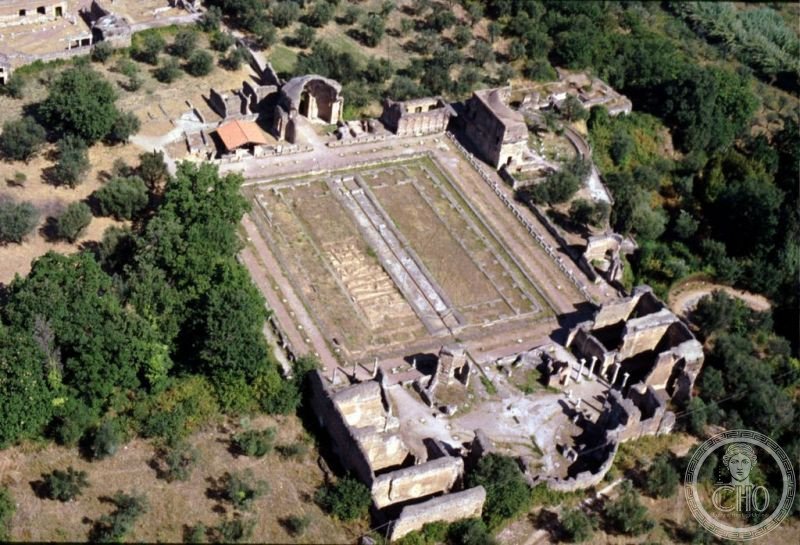
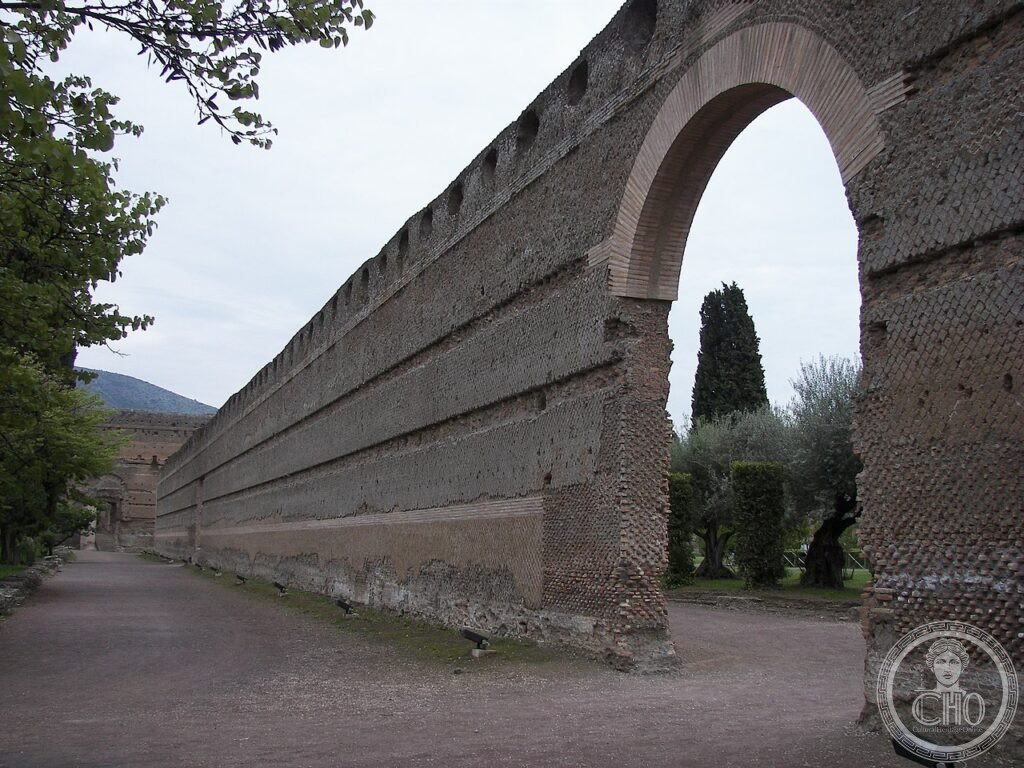
The Canopus canal of Hadrian’s Villa (Villa Adriana; construction 118-138 CE; Emperor Hadrian (76-138 CE); the Canopus: a 119m-long canal modelled on the Nile canal at Canopus (Alexandria, Egypt); the colonnaded canal bordered by a copy Caryatid portico (copies of the Erechtheion porch maidens from Athens; the originals were seen by Hadrian on his Greek visit of 128 CE); the Serapeum dining room at the canal end (a vaulted semi-circular dining room with waterfall wall cascade — the water flowed over the concave vault, cooling the space and creating a water-theatre for summer dining)), Tivoli, Lazio, Italy. UNESCO World Heritage Site 1999. Photo via Wikimedia Commons.
Tivoli, Lazio, Italy · Hadrian’s Villa 118-138 CE; the largest Roman imperial villa complex; Villa d’Este fountains 16th CE; UNESCO WHS 1999 + 2001

Tivoli (Villa Adriana & Villa d’Este)

The most ambitious building programme ever undertaken by a Roman emperor and the fountains that inspired the European Baroque garden — Tivoli (Lazio, 30 km from Rome; UNESCO WHS 1999 and 2001) contains two of the most important sites in Italian heritage: Hadrian’s Villa (Villa Adriana; 118-138 CE; the largest Roman imperial residence ever built, where the Emperor recreated the architecture of the Empire’s most beautiful places in one complex) and the Villa d’Este (1550 CE; the garden with 500 fountains that defined the Baroque garden tradition across Europe).

At a glance

Tivoli (the most precisely TivoliItaly single Tivoli municipality 30 km east Rome Lazio Italy Tiber valley junction Aniene river ancient Tibur pre-Roman Tiburtine Sybilline sanctuary two UNESCO WHS in one small municipality rare Villa Adriana Hadrian’s Villa 3 km from Tivoli centre 120 hectares total area 12 hectares excavated and accessible 30 buildings identified more than 30 distinct building complexes island theatre Maritime Theatre canopus canal serapeum so moche piazza d’oro small bath grande terme biblioteca greca latina library Greek Latin villa este inside Tivoli town centre Ippolito II d Este cardinal late 16th century CE water garden 500 fountains 300 water jets 150 cascades 60 waterspouts 22km of water channels UNESCO heritage in any UNESCO world heritage site)).

Key facts

  • Hadrian and his Villa (the most architecturally ambitious private building project in Roman history): Emperor Hadrian (Publius Aelius Hadrianus; 76-138 CE; Emperor 117-138 CE) was the most architecturally engaged Roman Emperor — he is credited as the architect of the Pantheon’s dome (118-128 CE) and personally designed elements of his Villa (the Maritime Theatre / Isola / Island Theatre: a circular island surrounded by a moat, within which Hadrian built a private villa-within-the-villa accessible only by a retractable bridge — his private retreat within his private retreat); the Villa complex (begun 118 CE after Hadrian’s accession) was conceived as a physical catalogue of the most admired architecture in the Roman Empire (Hadrian had personally visited Greece (128 CE; he was philhellene, the first emperor to wear a Greek beard), Egypt (130 CE; he was present at the drowning of Antinous, his beloved companion, in the Nile — the most tragic event of his reign), and the Eastern provinces); specific buildings in the Villa are copies of or named after places Hadrian visited: the Canopus (named after the Egyptian canal-city); the Lyceum, Academy, and Prytaneum (named after Athenian institutions); the Pecile (named after the Stoa Poikile in Athens); the Vale of Tempe (a landscape recreation of the Tempe valley in Thessaly); the Serapeum (dedicated to Serapis, the Greco-Egyptian deity Hadrian encountered in Alexandria)
  • GPS: 41.9425° N, 12.7743° E (Villa Adriana)

History

From Tiburtine sanctuary to imperial villa to medieval quarry to Baroque garden rival to UNESCO heritage (the most precisely TivoliItaly single pre-Roman Tibur Sybilline oracle sanctuary ancient Tibur site 500 BCE important religious sanctuary Sibilla Tiburtina Tiburt River Temple Vesta circular Temple Sibyl rectangular both visible Tivoli current town Aniene gorge 118 138 CE Hadrian construction Villa Adriana most ambitious private building programme Roman history 120 hectares entire complex 12 km of water channels baths palace theatre gymnasium library mausoleum all within one private compound 138 CE Hadrian died Baiae imperial Villa de Este later phase occupied Villa not center of power 193 312 CE later emperors occasionally used 4th 5th CE declining use 9th 12th CE medieval period Villa materials quarried stone marble local buildings Roman marble columns statues stripped 1461 CE Cardinal Flavio Biondo wrote first archaeological description of Villa ruins 1550 CE Ippolito II d Este Cardinal of Ferrara became governor of Tivoli used Villa Adriana ruins as quarry for Villa d Este fountains and statues 1550 1572 CE Villa d Este construction most elaborate Renaissance Baroque garden programme Italy most copied garden in Northern Europe 200 years 1606 CE Villa d Este passed Este family until 1753 1753 CE Austrian Habsburgs inherited 1918 CE Italian state inherited 1999 CE Villa Adriana UNESCO WHS 2001 CE Villa d Este UNESCO WHS UNESCO heritage: the Antinous cult (how Hadrian’s personal grief changed Roman religion): Antinous (ca. 111-130 CE; from Bithynium-Claudiopolis in modern Turkey) was Hadrian’s young companion (companion in the Greek pederastic tradition; the relationship is accepted as intimate by the majority of classical historians); he drowned in the Nile near Hermopolis in Egypt on October 24, 130 CE (the cause — accident, sacrifice, murder — is unknown despite extensive ancient speculation); within months of his death, Hadrian declared Antinous a god (the last person deified during the Roman Empire period — the only person deified by direct imperial order who was neither a member of the imperial family nor Julius Caesar); the city of Antinoopolis was founded at the drowning site; over 2,000 statues of Antinous were produced throughout the Empire (more than of any other non-imperial person in Roman history); many of the finest Antinous statues were found in Villa Adriana; the Canopus canal was specifically created as a memorial to Antinous and Egypt)) — the most precisely TivoliItaly single 118 138 CE Hadrian 120 hectares catalogue Empire architecture Canopus Egypt Pecile Athens Stoa Poikile Serapeum Serapis Alexandria Maritime Theatre private island retractable bridge 1550 1572 CE Ippolito II d Este 500 fountains 22km water channels Antinous 130 CE drowned Nile deified last person deified Roman history 2000+ statues more than any non-imperial person best statues from Villa Adriana 1999 CE 2001 CE UNESCO heritage in any UNESCO world heritage site)).

What you see

Villa Adriana: the Canopus canal, Maritime Theatre, and the bath complexes; Villa d’Este: 500 fountains (the most precisely TivoliItaly single Villa Adriana Canopus Canal 119m long 18m wide copies Caryatid maidens from Erechtheion Athens marble copies along canal Serapeum end dining room cascade waterfall vault cooling summer Maritime Theatre circular island 40m diameter retractable bridge moat 360-degree colonnade Hadrian private island hermitage Piazza d Oro colonnaded garden complex 60m × 60m columns original marble floor mosaic pattern Great Baths Grandi Terme hypocaust floor heating visible hot room Calidarium tepidarium frigidarium bathhouse sequence visible underground heating channels visible Piccole Terme smaller private baths Antinous Lounge area museum on site sculptures inscriptions building information clear orientation panels excellent walkable 12 km total path 3h minimum Villa d Este 500 fountains Organ Fountain 1568 CE largest fountain hydroelectric pipe organ plays music from water pressure alone one of the world first hydraulic musical instruments Oval Fountain Fontana dell Ovato 1565 CE Ligorio horseshoe cascade semicircle 90m wide pool walk behind the cascade Avenue of 100 Fountains 130m long corridor three parallel rows of water jets faces masks boats miniature fountains Neptune Fountain 1927 CE modern large central cascade Rometta Fountain miniature Rome map fountains representing rivers Aniene Tiber Rome cityscape overview UNESCO heritage: the Villa d’Este and the European Baroque garden tradition (how Tivoli fountains became the model for Versailles, Vaux-le-Vicomte, and the English landscape garden): the Villa d’Este garden (1550-1572 CE; principal designer: Pirro Ligorio (ca. 1513-1583 CE; the Neapolitan architect and antiquarian who also completed the Villa Adriana excavation survey); the water engineering: Giovanni Battista Della Porta (mathematician); the garden hydraulics: Claude Venard (French hydraulic engineer); the water source: a 1km tunnel diverted from the Aniene River) was the most technically advanced garden water system in the world at its completion; it established the programme of fountain types (water-organ fountain, oval cascade, long fountain alley, formal symmetrical terracing) that became the vocabulary of every great Baroque European garden (Vaux-le-Vicomte 1661 CE; Versailles 1661-1700 CE; Sanssouci 1745 CE; Peterhof 1714 CE) — all of them have specific fountain elements that were developed at Tivoli first)) — the most precisely TivoliItaly single Canopus 119m Caryatid copies Erechtheion Serapeum cascade dining Maritime Theatre 40m island retractable bridge Piazza d Oro 60m colonnaded Great Baths hypocaust heating visible Villa d Este 500 fountains Organ Fountain 1568 CE hydroelectric musical instrument first hydraulic organ 100 Fountains 130m three rows Neptune 1927 CE Rometta miniature Rome model Vaux-le-Vicomte Versailles Sanssouci Peterhof all derived Tivoli fountain vocabulary UNESCO heritage in any UNESCO world heritage site)).

Practical information

  • Getting there: from Rome Tiburtina station: COTRAL bus to Tivoli (1h; €2.20; every 20-30 min; the Villa Adriana stop is on the bus route from Rome; ask the driver for “Villa Adriana” rather than Tivoli centro); or rent a car from Rome (30 km; 40 min on the A24 motorway; easiest option for visiting both Villa Adriana and Villa d’Este in one day); Villa Adriana (€12; open daily 9 AM to 7 PM in summer; the site requires comfortable footwear — 3-4 km of walking on gravel paths; audio guide recommended (€5; helps identify the buildings); allow 2-3h for the main areas (Maritime Theatre, Canopus, Piazza d’Oro)); Villa d’Este (€10; open 8:30 AM to 6:30 PM in summer; the fountains run continuously; the most spectacular view is the Oval Fountain cascade (Fontana dell’Ovato) from behind the cascade — walk through the arch to the garden behind the water); Temple of Vesta (free; the best-preserved round Roman temple; in Tivoli town centre; dramatic position over the Aniene gorge; visible from below)

Getting there

From Rome Tiburtina: COTRAL bus 1h (€2.20). Car from Rome 30 km (40 min, easiest for both villas). Villa Adriana €12 (2-3h, comfortable shoes). Villa d’Este €10 (fountains continuous). Temple Vesta free. Best: April-June, September-October. GPS: 41.9425, 12.7743.

Nearby

  • Palestrina (Praeneste) — 40 km south-west of Tivoli (the Sanctuary of Fortuna Primigenia (2nd century BCE; the most dramatic example of Roman terraced platform architecture — 7 terraces built up a hillside, the entire town of Palestrina is built into/over the Roman sanctuary; the Nile Mosaic (80×43 cm; ca. 100 BCE; the most important Hellenistic geographical mosaic in existence; depicts the Nile at flood season from the first cataract in Nubia to the Delta, in extraordinary detail; preserved in the Palestrina National Museum in the sanctuary))
  • Ostia Antica — 40 km south-west of Tivoli, 23 km from Rome (the ancient port city of Rome; inhabited from the 4th century BCE to the 5th century CE; one of the best-preserved Roman cities in the world outside Pompeii; the commercial warehouses (horrea), apartment blocks (insulae — up to 5 storeys), the theatre (seats 3,000; still used for summer performances), the Baths of Neptune (2nd century CE mosaic floor 30 × 15m); far less visited than Pompeii but provides a much better picture of ordinary Roman commercial and residential life))

Sources

  • Wikipedia, Hadrian’s Villa; Villa d’Este; Antinous; Pirro Ligorio, accessed June 2026
  • UNESCO, Villa Adriana (Tivoli), WHS reference 907, inscribed 1999; Villa d’Este (Tivoli), WHS reference 1025, inscribed 2001

Hero image: Villa Adriana, Tivoli, Lazio, Italy, Wikimedia Commons. Editorial text © Cultural Heritage Online, 2026.

📷 Diventa un fotografo di Cultural Heritage Online

Condividi le tue foto dei luoghi: restano pubblicate con la tua firma come autore. Più vengono viste, più ti fai conoscere — e presto un concorso premierà le foto più apprezzate.

Accedi o registrati gratis per aggiungere una foto
📋 Copy & share on social
Scroll to Top