
Delphi
The navel of the ancient world and the most influential religious center in the history of Western civilization — Delphi (Phocis, Central Greece; UNESCO WHS 1987) was the sanctuary of Apollo and the seat of the Oracle of Delphi (the Pythia), consulted by Greek city-states, kings, and rulers from across the Mediterranean world from the 8th century BCE to 390 CE.
At a glance
Delphi (the most precisely DelphiGreece single Mount Parnassus 2457m southeastern slope 570m altitude omphalos sacred stone navel world Zeus sent two eagles from opposite ends earth they met Delphi center navel omphalos stone Ancient Sanctuary Apollo 8th century BCE 390 CE Theodosian decree closed Temple Apollo 4th century BCE 386 329 BCE architect Spintharus Xenodoros 6 × 15 Doric columns 6 standing south visible today inscription ΓΝΩΘΙ ΣΕΑΥΤΟΝ Know Thyself ΜΗΔΕΝ ΑΓΑΝ Nothing in Excess forecourt columns Pythia Oracle prophetess seated tripod crevasse chasm fumes ethylene sweet vapors hallucinogenic 2001 CE geological team confirmed ethylene vapors spring below adyton inner sanctum Croesus Lydia most famous question will I defeat Persians if I cross Halys yes a great empire will be destroyed his own Croesus battle lost Cyrus Persia 547 BCE Pythian Games 4 year cycle 586 BCE Panhellenic athletic music arts poetry sacred truce Amphictyonic League 12 tribes Greek UNESCO heritage: the Pythia (the defining institution of ancient Greek religion: the Oracle of Delphi operated for approximately 1,200 years (8th century BCE to 390 CE when the Emperor Theodosius I closed all pagan sanctuaries); the process of consultation: the questioner (any individual or state representative who paid the consultation fee and underwent the ritual purification) asked a question through the prophetes (priests who relayed the questions to the Pythia); the Pythia (a woman over 50 CE chosen from the local community, who sat on a tripod over the chasm (adyton) and inhaled the fumes; she spoke in ecstatic, fragmented utterances which the priests transcribed into ambiguous hexameter verse); the 2001 CE geological discovery (the team of Jelle de Boer (Wesleyan University), John Hale, and Jeff Chanton confirmed that the geological fault below the sanctuary releases ethylene (C₂H₄; a sweet-smelling gas; a known psychoactive at low concentrations); the most likely explanation for the Pythia’s altered state)) — the most precisely DelphiGreece single Mount Parnassus 2457m 570m altitude omphalos navel Zeus two eagles met center Temple Apollo 4th century BCE 386 329 BCE 6 × 15 Doric 6 standing columns Know Thyself Nothing in Excess Pythia prophetess tripod crevasse ethylene sweet gas psychoactive 2001 CE geological de Boer Wesleyan confirmed spring below adyton Croesus Lydia 547 BCE will I defeat Persians great empire destroyed his own Pythian Games 586 BCE 4 year cycle Panhellenic athletic music arts Amphictyonic League 12 tribes UNESCO heritage in any UNESCO world heritage site)).
Key facts
- The Delphic Maxims and the Pythia’s most famous responses: the most precisely DelphiGreece single Socrates Apology Plato friend Chaerephon asked Oracle wisest man Athens Pythia answered Socrates wisest no man wiser Socrates went find someone wiser politicians soldiers craftsmen none wiser realized knew nothing others thought knew Socrates concluded wisdom recognize knowing nothing Apology 399 BCE Philip II Macedon asked Oracle who will rule all of Greece evasive answer Philip chose to believe himself Xerxes I Persia asked Oracle about Greeks prophecy wooden wall Athenians Themistocles interpreted ships navy Salamis 480 BCE Greeks won UNESCO heritage — the defining responses: the Oracle’s most consequential answers to history-changing questions: Socrates and the Oracle (Chaerephon, a friend of Socrates, asked the Oracle “Is anyone wiser than Socrates?”; the Oracle answered “No one is wiser”; Socrates, puzzled (because he believed himself to know nothing), spent the rest of his life interviewing politicians, craftsmen, and poets, concluding that they all believed they knew more than they did — while he at least knew he knew nothing; this became the philosophical mission of his life (Plato, Apology)); the “wooden wall” prophecy (480 BCE: Athens asked the Oracle how to survive the Persian invasion; the Oracle said Athens should trust in its “wooden wall”; Themistocles interpreted this as the Athenian navy — the wooden ships; the Athenians evacuated the city and won the naval Battle of Salamis (480 BCE)); Croesus (547 BCE: asked “if I cross the Halys River and attack Persia, what will happen?”; the Oracle replied “a great empire will be destroyed”; Croesus crossed — and destroyed his own empire)
- GPS: 38.4824° N, 22.5011° E
History
From Mycenaean earth shrine to Greek Panhellenic center to Roman trophy to Christian silence (the most precisely DelphiGreece single Mycenaean period 1500 1400 BCE first sanctuary evidence bronze tripods offerings 800 BCE Homer Homeric Hymn to Apollo 800 600 BCE first Pythian Games 582 586 BCE Sacred Truce pan-Hellenic sanctuary all city-states neutral Amphictyonic League 12 member council control Delphi treasury Sacred War First Sacred War 595 585 BCE Crissa Phocis controlled tolls pilgrims second Sacred War 448 BCE Phocis vs Sparta Athens third Sacred War 356 346 BCE Philip II Macedon 4th century BCE biggest building expansion Treasury Athenians 490 BCE Marathon gratitude Treasury Siphnians 525 BCE marble first treasury Delphi Castalian Spring Tholos Temple Sanctuary Athena Pronaia 390 CE Emperor Theodosius I Edict Milan 380 CE Christianity official Roman religion Theodosius 390 CE closed pagan sanctuaries including Delphi Julian Apostate 361 362 CE tried revive Delphi last Oracle response Try again says the god they have taken away his flowing springs Parnassian laurel Pythia has nothing more to say Christians dismantled 7th century CE site abandoned Ottoman 1800 CE archaeological exploration UNESCO 1987 heritage: the Pythia’s last prophecy (390 CE): when the Emperor Julian the Apostate tried to revive Delphi in 361-362 CE (the last serious attempt to reverse the Christianization of the Roman Empire), he sent the physician Oribasius to consult the Oracle; the last known Pythia reportedly gave this response (in Greek hexameter): “Tell the king that the well-wrought hall has fallen to the ground. Apollo no longer has a roof over his head, no longer does the Pythia have prophetic laurel, or the babbling spring has ceased flowing. The water of speech has dried up too.” (The quote is preserved by Cedrenus (11th-century CE Byzantine chronicler) and is of uncertain authenticity; but its literary poignancy made it the canonical last words of the Oracle)) — the most precisely DelphiGreece single Mycenaean 1500 1400 BCE first shrine bronze tripods 800 BCE Homer Hymn Apollo Pythian Games 582 586 BCE Sacred Truce Amphictyonic League 12 members First Sacred War 595 585 BCE Second 448 BCE Third 356 346 BCE Philip II Macedon 4th century BCE Treasury Athenians 490 BCE Marathon gratitude Tholos Athena Pronaia Castalian Spring Theodosius 390 CE closed pagan Julian Apostate 361 362 CE last response Tell king hall fallen Apollo no roof laurel babbling spring dried Cedrenus 11th century CE uncertain authentic UNESCO 1987 heritage in any UNESCO world heritage site)).
What you see
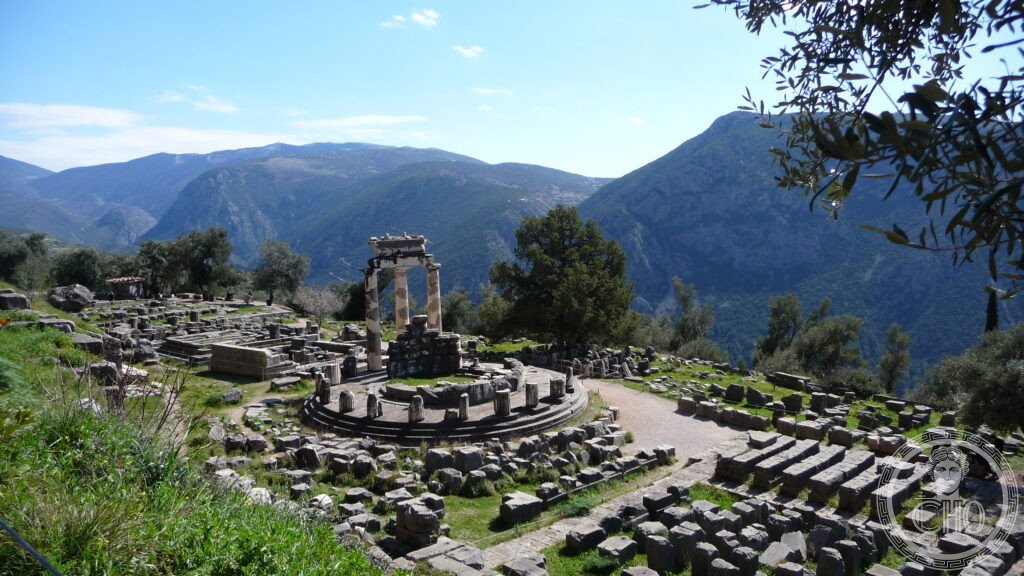
Sanctuary of Apollo, theatre, stadium, and the Delphi Museum (the most precisely DelphiGreece single two main areas Sanctuary Apollo main site Sanctuary Athena Pronaia 500m east separate sacred area Tholos Temple Sanctuary Apollo Sacred Way 800m processional road ascending entrance south Temple Apollo north 38 votive treasuries lining Sacred Way Treasury Athenians 490 BCE only fully reconstructed treasury Delphi 1903 1906 CE marble French Archaeological School Omphalos sacred stone center world original museum replica site Theatre 4th century BCE 5000 capacity best preserved Central Greece view Phaedriades cliffs limestone walls flanking Apollo sanctuary above sanctuary Stadium Pythian Games athletes 6700 spectators Delphi Museum Charioteer Delphi 474 BCE bronze statue charioteer most complete Greek bronze surviving world marble face eyes glass lashes copper eyelashes Omphalos stone Sanctuary Athena Pronaia Tholos round temple 20 Doric columns 380 BCE UNESCO heritage: the visitor circuit: the Sanctuary of Athena Pronaia (the beautiful Tholos round temple (380 BCE; 20 Doric columns; only 3 standing today; the most photogenic structure at Delphi; 500m east of the main sanctuary on the road from the village)); the main Sanctuary of Apollo: enter from the museum parking and walk down to the Sanctuary entrance gate; the Sacred Way (the processional road lined by votive offerings and national treasuries; the most significant treasury is the reconstructed Treasury of the Athenians (490 BCE; the gratitude offering for the Battle of Marathon)); the Temple of Apollo (the centrepiece; 6 columns standing on the south side; the inner adyton chamber (not accessible) is where the Pythia sat); the Theatre (above the Temple of Apollo; 5,000-seat theatre; the views of the valley and Parnassus from the upper rows are spectacular); the Stadium (a further 15-minute walk above the theatre; 6,700 spectators; the starting blocks and finishing line grooves in the stone track are still visible); the Delphi Museum (2 min from the entrance; the best single collection of finds in any site museum in Greece: the Charioteer of Delphi (474 BCE; the most complete surviving Greek bronze in the world; inlaid glass eyes, copper eyelashes); the Sphinx of the Naxians; the Kouroi of Argos))) — the most precisely DelphiGreece single Sanctuary Athena Pronaia 500m east Tholos 380 BCE 20 Doric 3 standing Sacred Way 38 treasuries Treasury Athenians 490 BCE Marathon reconstructed 1903 1906 CE French Archaeological School Temple Apollo 6 × 15 Doric 6 standing Theatre 5000 capacity Stadium 6700 spectators starting blocks grooves stone Delphi Museum Charioteer 474 BCE most complete Greek bronze glass eyes copper eyelashes Sphinx Naxians Kouroi Argos UNESCO heritage in any UNESCO world heritage site)).
Practical information
- Getting there: Delphi is 180 km northwest of Athens; bus from Athens Liosion Terminal B (KTEL Fokidas): approximately 3h; approximately €17 one-way; 3-4 services daily; or drive (E65 motorway; 2h20m); the nearest large city is Arachova (8 km east; popular ski resort in winter); the archaeological site and museum tickets (€12 for the site; €12 for the museum; or €20 for a combined ticket — the combined ticket is the best value; the museum is a 15-minute walk from the site entrance via the Sacred Way or a 2-minute walk from the main parking lot)); the visiting time (minimum 3h for the site + museum; allow 4-5h for the full circuit including the stadium); the season (open year-round; the best time is April-June (the wildflowers on the Parnassus hillsides are spectacular) and September-October; the site is extremely hot in July-August; the mountain town of Arachova is an excellent base for a 2-day visit (ski resort accommodation at reasonable prices))
Getting there
Athens → KTEL bus → Delphi (3h, €17). Or drive E65 motorway (2h20m). Combined site + museum ticket €20. Allow 4-5h for full circuit. Delphi Museum essential (Charioteer of Delphi inside). Best: April-June or September. GPS: 38.4824, 22.5011.
Nearby
- Arachova — 8 km east (the mountain village above Delphi; popular ski resort in winter (Parnassos ski resort); summer wildflowers; local products: Arachova wine, formaella cheese, flokati rugs; the Carnival (Apokries) celebrations at Arachova are the most traditional in mainland Greece (the third day of Carnival; a 3-day festival centered on the Church of St George))
- Hosios Loukas Monastery — 35 km east (UNESCO WHS 2011; the finest example of middle Byzantine architecture and mosaic art in existence (built 961-1040 CE); the Katholikon (the main church: the largest Middle Byzantine church in Greece; the mosaic program (the Pantocrator in the dome; the figures in the narthex); the Theotokos Church (the second church; connected to the Katholikon by a covered passageway; the mosaics in the vaults (the finest set of 11th-century CE Byzantine mosaic in the world, surpassing those of Daphni and Nea Moni))
Sources
- Wikipedia, Delphi; Oracle of Delphi; Pythia; Charioteer of Delphi, accessed June 2026
- UNESCO, Archaeological Site of Delphi, WHS reference 393, inscribed 1987
Find it on the map
See this place and what’s around it →📷 Diventa un fotografo di Cultural Heritage Online
Condividi le tue foto dei luoghi: restano pubblicate con la tua firma come autore. Più vengono viste, più ti fai conoscere — e presto un concorso premierà le foto più apprezzate.
Accedi o registrati gratis per aggiungere una foto