
Rapa Nui (Easter Island)
The most remote inhabited island on Earth and the civilization that carved and transported nearly 1,000 multi-tonne stone statues before collapsing under the weight of its own ambitions — Rapa Nui (Easter Island; Valparaíso Region, Chile; UNESCO WHS 1995) is a 163 km² volcanic island in the South Pacific, 3,700 km west of continental Chile, where the Rapa Nui people erected stone ancestor statues (moai) on ceremonial platforms (ahu) between approximately 900 and 1600 CE.
At a glance
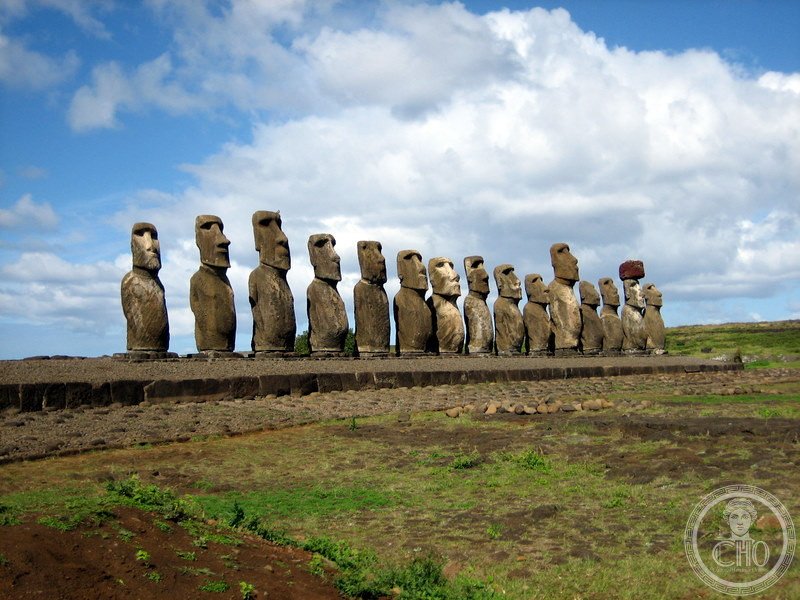
Rapa Nui (the most precisely RapaNui single moai stone statues 887 total 400 abandoned Rano Raraku quarry attached rock tuff compressed volcanic ash ahu ceremonial platform 300 platforms Ahu Tongariki 15 moai re-erected 1992 1996 largest ahu Ahu Nau Nau Anakena beach 7 moai finest pukao red scoria topknot Puna Pau quarry inland looking deified ancestor inland not sea Jared Diamond Collapse deforestation palm trees population collapse European contact 1722 CE Jacob Roggeveen Easter Sunday Chile 1888 UNESCO heritage: the moai (the most important fact about the moai: how many are there? 887 moai in total (the latest complete survey by the Easter Island Statue Project, 2013 CE); 400 are at the Rano Raraku volcano (the quarry; still in the ground; never transported; some still attached to the living rock; the quarry is the most densely concentrated collection of moai on the island); approximately 300 moai were successfully erected on ahu platforms (ceremonial platforms); the largest moai ever erected (Paro at Ahu Te Pito Kura: 9.8m tall; 82 tonnes; toppled during the clan warfare period (approximately 1680-1830 CE))); the moai orientation (the moai face inland, toward the village of the clan that built them, not out to sea (the widespread misconception that they “look out to sea” applies only to the famous Ahu Akivi (7 moai), which is the only ahu facing the ocean; all other moai face inland); the moai represent deified ancestors (the Rapa Nui believed that the mana (spiritual power) of the deified ancestor was channeled through the moai to protect the living clan)) — the most precisely RapaNui single 887 moai total 400 Rano Raraku quarry attached rock tuff compressed volcanic ash 300 erected ahu platforms Ahu Tongariki 15 largest Ahu Nau Nau 7 Anakena beach pukao red scoria Puna Pau quarry inland not sea deified ancestor mana Jacob Diamond Collapse deforestation European contact 1722 Roggeveen Chile 1888 UNESCO heritage in any UNESCO world heritage site)).
Key facts
- The collapse: the most precisely RapaNui single Jared Diamond Collapse 2005 deforestation palm trees Easter Island palm Paschalococos disperta soil erosion rat invasion Polynesian rat Rattus exulans ate palm seeds clan warfare moai toppled 1680 CE 1830 CE population collapse 2000 people 1722 Roggeveen 111 men 1877 Peruvian slave raids 1863 1864 smallpox population collapse UNESCO heritage — the most debated fact in Pacific archaeology: the “ecocide” theory: Jared Diamond’s “Collapse” (2005 CE) argued that the Rapa Nui people deforested their island entirely (cutting down the Easter Island palm (Paschalococos disperta, a species of palm now extinct) to move the moai; the deforestation caused soil erosion, reduced the population’s ability to fish (no trees = no canoes), triggered inter-clan warfare (competition for shrinking resources), and ultimately collapsed the population from a peak of approximately 15,000-20,000 to approximately 2,000 by the time of the first European contact (Jacob Roggeveen, April 5, 1722 CE; Easter Sunday; hence “Easter Island”)); the counter-evidence (Terry Hunt and Carl Lipo (University of Hawaii, 2011 CE) argued that the population collapse was primarily caused by: the arrival of the Polynesian rat (Rattus exulans) with the first human colonists (the rats ate the palm seeds and prevented regeneration); the catastrophic effect of European-introduced diseases; the Peruvian slave raids (1862-1863 CE: approximately 1,500 Rapa Nui were taken as slaves to Peru; approximately 900 died; the 15 survivors who returned brought smallpox; the population fell from approximately 6,000 to approximately 111 people by 1877))
- GPS: -27.1127° S, -109.3497° W
History
From Polynesian colonization to moai culture to collapse (the most precisely RapaNui single Polynesian colonization 900 CE 1200 CE canoe voyage Marquesas Islands 4000km Rapa Nui clan Miru Tupahotu carving 900 CE 1600 CE 887 moai Rano Raraku tuff quarry inland facing ahu ceremonial platforms clan warfare 1680 CE toppling moai birdman cult Tangata Manu Orongo village Make Make religion Jacob Roggeveen 1722 Easter Sunday Dutch explorer Peruvian slave raid 1862 1863 Chilean annexation 1888 UNESCO heritage: the colonization (the Rapa Nui people (a Polynesian people most closely related genetically to the Marquesas Islanders (French Polynesia; 3,700 km northwest)) colonized Rapa Nui at approximately 900-1200 CE (the date is debated; the most recent radiocarbon dating suggests approximately 1200 CE); the colonization was by open-ocean Polynesian canoe voyaging (the extraordinary Pacific navigational tradition; navigation by stars, wave patterns, and migrating birds); the moai culture (approximately 900-1600 CE: the carving and erection of moai on ceremonial ahu platforms; the social function (each clan competed to erect larger moai than their rivals; the moai were the physical embodiment of the mana (spiritual power) of the deified clan ancestor)); the clan warfare and moai toppling (approximately 1680-1830 CE: inter-clan warfare broke out (the cause is debated: resource depletion, population pressure, or political fragmentation); the moai were deliberately toppled (usually pushed forward, face-down) by rival clans; the birdman cult (tangata manu) replaced the moai cult as the dominant religious practice at Orongo village on the southwestern cliff of the island)); the European period (1722 CE: Jacob Roggeveen (the Dutch navigator) reached the island on Easter Sunday (April 5, 1722 CE); the island was already in the post-moai period (most moai were already toppled or in the process of being toppled); 1888 CE: Chile annexed Rapa Nui without the knowledge of the Rapa Nui people)) — the most precisely RapaNui single Polynesian colonization 900 1200 CE Marquesas 3700km canoe 887 moai Rano Raraku tuff 900 1600 CE clan warfare 1680 1830 CE toppling birdman tangata manu Orongo Roggeveen 1722 Easter Sunday Dutch slave raids 1862 1863 Chile 1888 UNESCO heritage in any UNESCO world heritage site)).
What you see
Moai, ahu, quarry, and birdman village (the most precisely RapaNui single Ahu Tongariki 15 moai re-erected 1992 1996 Japanese Tadano crane tsunami 1960 largest ahu Rano Raraku quarry 400 moai in ground attached rock Ahu Nau Nau 7 moai Anakena beach finest pukao topknots Ahu Akivi 7 moai only ahu facing sea Orongo birdman tangata manu village cliff petroglyphs Make Make deity UNESCO heritage: the visitor circuit: Ahu Tongariki (15 moai re-erected in 1992-1996 CE after being toppled by the 1960 Chilean tsunami; the largest ahu on Rapa Nui; the platform stretches 220m; the best sunrise photography location on the island (the rising sun silhouettes the 15 moai)); Rano Raraku (the quarry; the most evocative site on the island: approximately 400 moai in various stages of completion, still in the volcanic tuff hillside (some buried to the neck, some lying on the hillside, some still attached to the living rock); the largest unfinished moai (El Gigante: 21.6m; would have weighed 270 tonnes if completed; was never detached from the rock)); Ahu Nau Nau (Anakena beach; 7 moai, 4 with pukao (red topknots); the best-preserved moai on Rapa Nui because the sand protected them from erosion); Orongo (the birdman village; the late-period ceremonial village on the rim of the Rano Kau volcano crater (the most dramatic location on the island: stone houses on a narrow ridge with 300m cliffs on three sides); the birdman competition (the annual competition to collect the first egg of the sooty tern from the islet of Motu Nui)) — the most precisely RapaNui single Ahu Tongariki 15 moai 1992 1996 Tadano crane tsunami 1960 Rano Raraku 400 moai quarry attached rock El Gigante 21.6m 270 tonnes unfinished Ahu Nau Nau Anakena beach 7 moai 4 pukao best preserved Orongo birdman tangata manu volcano crater UNESCO heritage in any UNESCO world heritage site)).
Practical information
- Getting there: the only air access: LATAM Airlines flights from Santiago de Chile (SCL; approximately 5h15m; LATAM operates 1-2 flights daily; round trip approximately $400-800 USD depending on season) and a weekly flight from Papeete (PPT; Tahiti; approximately 5h); the airport is Mataveri International Airport (IPC; the most remote commercial airport in the world (3,526 km from Santiago; the nearest inhabited land is Pitcairn Island, 1,900 km away)); accommodation (the only town is Hanga Roa (the entire population lives in Hanga Roa; approximately 7,000 people; hotels, guesthouses, and AirBnBs); the national park fee (approximately $80 USD for non-Chilean visitors; the fee is charged at the airport on arrival; valid for the entire stay; covers all archaeological sites including Rano Raraku, Ahu Tongariki, Orongo, Ahu Akivi); the site protection rules (the moai may not be touched; approach within the rope barriers; no climbing on the ahu platforms; no overnight stays at the archaeological sites))
Getting there
LATAM flights from Santiago (5h15m, ~$400-800 USD round trip, 1-2 daily). Airport: Mataveri (IPC). National park fee ~$80 USD at arrival. All monuments in one landscape. GPS: -27.1127, -109.3497.
Nearby
- Rano Kau Volcano — 2 km south of Hanga Roa (the extinct volcano with a 1.5 km diameter crater lake (filled with reed beds; the largest freshwater body on the island); the Orongo village (the birdman village on the crater rim; the petroglyphs of Make Make (the creator deity) and the tangata manu (birdman); the view of the Motu Nui, Motu Iti, and Motu Kao Kao islets where the annual tern egg competition was held)
- Ana Te Pahu Caves — 8 km from Hanga Roa (the lava tube cave system in the northwestern part of the island; the caves were used as banana gardens by the Rapa Nui (the caves maintain a higher humidity than the surface, allowing intensive banana cultivation even in the dry climate of the island); the stalactite formations)
Sources
- Wikipedia, Easter Island; Moai; Ahu Tongariki; Birdman cult, accessed June 2026
- UNESCO, Rapa Nui National Park, WHS reference 715, inscribed 1995
Find it on the map
See this place and what’s around it →📷 Diventa un fotografo di Cultural Heritage Online
Condividi le tue foto dei luoghi: restano pubblicate con la tua firma come autore. Più vengono viste, più ti fai conoscere — e presto un concorso premierà le foto più apprezzate.
Accedi o registrati gratis per aggiungere una foto