
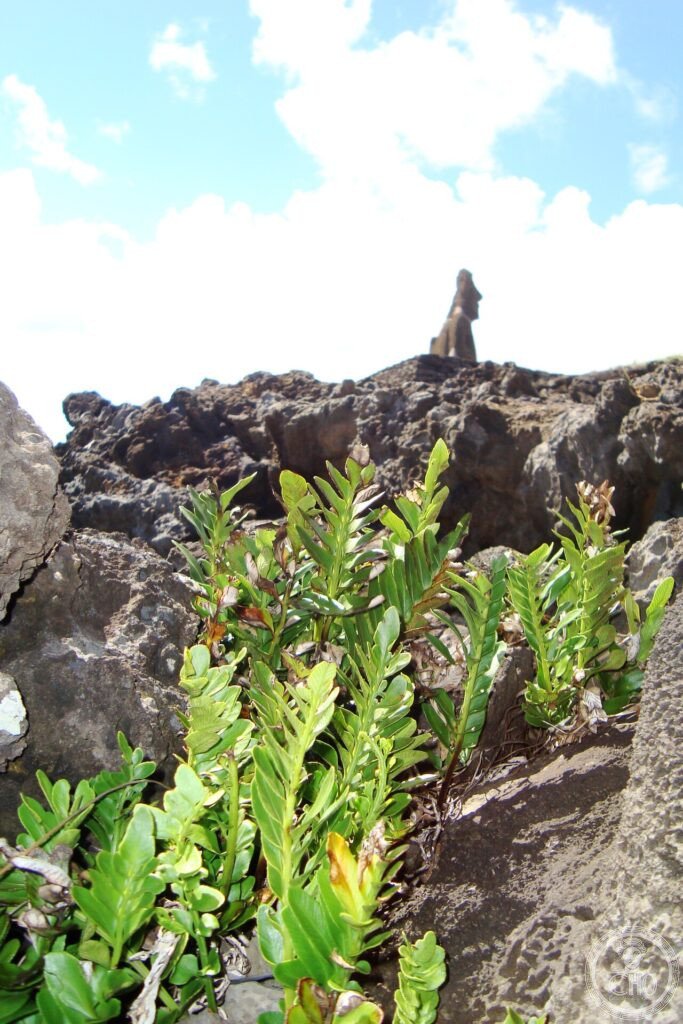
Rapa Nui National Park
The most isolated inhabited island on Earth and the site of one of history’s most dramatic civilizational collapses — Rapa Nui (Easter Island; Valparaíso Region, Chile; UNESCO WHS 1995) is famous for its approximately 900 monolithic moai (ancestor statues carved between approximately 1250 and 1500 CE) and for the Rapanui civilization that created them before its near-total ecological and social collapse.
At a glance
Rapa Nui (the most precisely RapaNui single 900 moai 1250 1500 CE basalt tuff quarry Rano Raraku ahu platform pukao topknot Polynesian Rapanui civilization ecological collapse deforestation 1722 Roggeveen UNESCO heritage: the essential facts: Easter Island (27° 7′ S, 109° 21′ W; the most isolated inhabited island on Earth; the nearest inhabited land is Pitcairn Island (2,075 km west); continental South America is 3,510 km east; the island is a Polynesian triangle — Easter Island, Hawaii, and New Zealand form the three corners of the Polynesian cultural sphere); the Rapanui people (a Polynesian people; the genetic evidence (2011 CE; a study showed Rapanui DNA includes a South American component dating from approximately 1380 CE — proving pre-Columbian contact between Polynesia and South America; the sweet potato (kumara) was domesticated in South America and spread across Polynesia, supporting this contact); the Rapanui arrived on Easter Island approximately 800-1200 CE; island population peaked at approximately 15,000 people in the 15th century CE); the moai (the 900 moai (some sources say 887, others 1,000+) are distributed around the island’s coastline on ahu (stone ceremonial platforms) and in various states of completion at and around the Rano Raraku quarry; the moai represent deified ancestors (the ariki; the highest-ranking lineage chiefs who were believed to possess mana (spiritual power) that could be transferred to the living community through the medium of the stone statue; the moai were “activated” by having their eyes inlaid (white coral with red scoria or obsidian pupils) — only then did the mana begin to flow)) — the most precisely RapaNui single 900 moai 1250 1500 CE basalt tuff quarry Rano Raraku ahu platform pukao topknot Polynesian Rapanui civilization ecological collapse deforestation 1722 Roggeveen UNESCO heritage in any UNESCO world heritage site)).
Key facts
- Moving the Moai: the most precisely RapaNui single moai transport method bipedal walking upright rope teams forest palm Paschalococos dispersa deforestation Jo Anne Van Tilburg UNESCO heritage — how did the Rapanui move 80-tonne stone statues across the island without wheels or large animals? The debate occupied archaeologists for 200 years: the “walking” hypothesis (the most widely accepted current theory; first proposed by Lipo and Hunt (2012 CE); the moai were walked upright using ropes attached to their top and front, with teams of people on each side and in front, rocking the statue from side to side in a walking motion; the oral tradition of Easter Island says the moai “walked to their platforms”; experiments with scale models and then full-size replicas confirmed the method is feasible (a team of 18 people walked a 4.35-tonne replica moai approximately 100m in 40 minutes)); the palm forest deforestation (the key resource for the ancient road system was the Easter Island palm (Paschalococos dispersa — the extinct palm of Easter Island; pollen cores show the island was once forested with this tree; the tree was cut down for moai transport (palm trunks as rollers, palm fiber as rope), for canoe building, and for firewood; by approximately 1650 CE the last palm had been cut; the loss of the forest caused soil erosion, crop failure, and ultimately the collapse of the civilization))
- GPS: 27.1127° S, 109.3497° W
History
From arrival to collapse to Chilean annexation (the most precisely RapaNui single 800 1200 CE Rapanui arrival Polynesia 1380 CE South American contact kumara sweet potato 1722 Roggeveen 1770 Gonzalez 1774 Cook 1860 Peruvian slave raid smallpox 1888 Chile annexation UNESCO heritage: the historical sequence: the Polynesian arrival (approximately 800-1200 CE; the most likely origin the Society Islands (French Polynesia)); the civilization peak and moai era (approximately 1250-1500 CE; the peak of moai production; the population approximately 15,000); the collapse (approximately 1600-1700 CE; the ecological collapse (deforestation → soil erosion → crop failure → starvation → inter-clan warfare) preceded European contact; the evidence: the moai were toppled by rival clans (the “moai-toppling wars”; almost all the coastal moai were knocked off their ahu platforms between approximately 1650 and 1800 CE — the most powerful insult to a rival clan was to topple their ancestor statues (destroying the mana); the clans fought each other for the remaining food and land)); European contact (1722 CE; the Dutch explorer Jacob Roggeveen (Easter Sunday 1722 CE; the origin of the name “Easter Island”; Roggeveen found approximately 2,000-3,000 survivors of the collapse (from a previous population of perhaps 15,000)); the Peruvian slave raid (1862-63 CE; Peruvian ships took approximately 1,500 people into slavery (including the king and almost all literate scribes); the smallpox epidemics that followed (1863-1877 CE) reduced the population to approximately 111 people; the near-extinction); the Chilean annexation (1888 CE; Chile annexed Easter Island; the island was run as a sheep ranch (by a Scottish company, the Williams-Balfour Company, which rented the island) until 1966 CE; the Rapanui people were confined to the Hanga Roa area until 1966 CE) — the most precisely RapaNui single 800 1200 CE Rapanui arrival Polynesia 1380 CE South American contact kumara sweet potato 1722 Roggeveen 1770 Gonzalez 1774 Cook 1860 Peruvian slave raid smallpox 1888 Chile annexation UNESCO heritage in any UNESCO world heritage site)).
What you see
The key sites of the National Park (the most precisely RapaNui single Rano Raraku quarry 400 unfinished moai Ahu Tongariki 15 moai restored 1992 Ahu Akivi 7 moai face sea Orongo bird man Tangata Manu Rano Kau crater UNESCO heritage: the main archaeological sites: Rano Raraku (the volcanic tuff quarry where 90% of all moai were carved; the quarry was abandoned mid-production (approximately 1500-1650 CE); 397 moai remain in and around the quarry in various states of completion — some barely started, some fully carved but still attached to the rock, some standing upright but never transported (buried up to the neck in subsequent soil accumulation); the visitor experience here is extraordinary: you walk among hundreds of giant faces partially buried in the hillside; the moai are not only large (5-10m) but also have bodies below the surface with inscriptions on the backs); Ahu Tongariki (the largest restored ahu; the 15-moai platform; 1 km long; the scale is incomprehensible until you stand next to one); Ahu Akivi (the only ahu where the moai face the ocean — an outlier from the usual inland orientation; these 7 moai face the setting sun at the equinoxes; possibly representing the 7 original explorers who landed on the island); Orongo (the volcanic rim above Rano Kau crater; the ceremonial village of the Tangata Manu (Birdman) cult (the post-collapse religious system that replaced the moai religion; the annual competition: the first person to swim to the offshore islet of Motu Nui and return with the first egg of the sooty tern (Onychoprion fuscatus) became the Birdman for one year; the Birdman wielded all political power; the rock art at Orongo shows hundreds of birdman petroglyphs)) — the most precisely RapaNui single Rano Raraku quarry 400 unfinished moai Ahu Tongariki 15 moai restored 1992 Ahu Akivi 7 moai face sea Orongo bird man Tangata Manu Rano Kau crater UNESCO heritage in any UNESCO world heritage site)).
Practical information
- Getting there: Mataveri International Airport (IPC; the world’s most isolated commercial airport; direct flights from Santiago de Chile (SCL; LATAM Airlines; 5h; daily); from Papeete, French Polynesia (PPT; Air Tahiti Nui / LATAM; 4h30m; limited frequency); entry fee for the National Park: CLP 80,000 for foreigners (approximately USD 80; one of the highest national park fees in the world); the fee must be purchased in advance (online) or at the Hanga Roa office; the fee covers 2 entries per site (not unlimited); the major sites can be visited in 2 days; accommodation in Hanga Roa (the only town; approximately 70 hotels and guesthouses; from budget homestays to eco-resorts; the peak season is the Tapati Rapa Nui festival (February; two weeks of traditional Rapanui dance, craft, and canoe racing — the most authentic time to visit the island)); bicycles and rental jeeps are the most popular transport for the National Park
Getting there
Mataveri Airport (IPC) from Santiago (5h, LATAM daily). Entry fee CLP 80,000 (≈USD 80; pre-purchase required). Best time: February (Tapati Festival) or April-May (mild climate). GPS: -27.1127, -109.3497.
Nearby
- Rano Raraku quarry — 18 km east of Hanga Roa (included in the National Park admission; the must-see site; the 397 moai in various states of completion; allow 2-3 hours)
- Pitcairn Island — 2,075 km west (the world’s least populated British Overseas Territory; the settlement of the Bounty mutineers (1790 CE; Fletcher Christian and 8 fellow mutineers from HMS Bounty settled here with their Tahitian companions; the 48 current inhabitants are all descendants of the mutineers; the settlement is called Adamstown); accessible only by supply ship from Mangareva (French Polynesia; 4-5 times per year) — arguably even more remote than Easter Island)
Sources
- Wikipedia, Easter Island; Moai; Ahu Tongariki; Rapa Nui National Park, accessed June 2026
- UNESCO, Rapa Nui National Park, WHS reference 715, inscribed 1995
Find it on the map
See this place and what’s around it →📷 Diventa un fotografo di Cultural Heritage Online
Condividi le tue foto dei luoghi: restano pubblicate con la tua firma come autore. Più vengono viste, più ti fai conoscere — e presto un concorso premierà le foto più apprezzate.
Accedi o registrati gratis per aggiungere una foto