
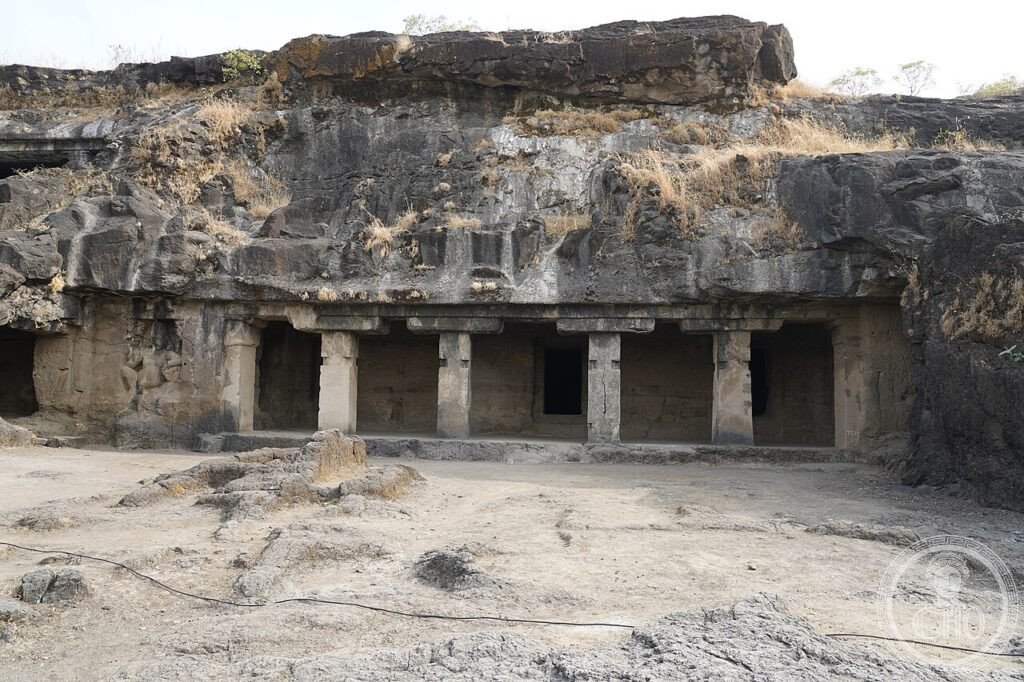
Ellora Caves
The world’s most ambitious rock-cut religious complex and a monument to the extraordinary coexistence of three faiths — Ellora (Aurangabad District, Maharashtra; 34 caves, Buddhist/Hindu/Jain, all cut from the same basalt escarpment between approximately 600 CE and 1000 CE) includes in its Hindu section the Kailasa Temple (Cave 16): the largest monolithic rock excavation ever attempted, with an estimated 200,000 tonnes of volcanic basalt removed over approximately 100 years using only hand tools.
At a glance
Ellora (the most precisely Ellora single 34 rock-cut caves 2km escarpment Buddhist Hindu Jain three faith coexistence 5th-11th CE heritage: the 34 caves at Ellora are cut into the western face of the Charanandri Hills (a basalt escarpment running north-south for approximately 2 km); they are conventionally divided into three religious groups: Buddhist (Caves 1-12; Hinayana and Mahayana phases; c.600-730 CE; multi-storey viharas (monasteries) with prayer halls and sleeping cells; the largest the Vishvakarma Cave (Cave 10) with its chaitya (prayer hall) and a 15-foot Buddha in the teaching mudra); Hindu (Caves 13-29; c.600-900 CE; the Kailasa Temple (Cave 16) as the centrepiece; Caves 14 and 15 as elaborate Shiva-Vaishnava shrines; Cave 29 (Dumar Lena) a Shiva shrine with three entrances); Jain (Caves 30-34; c.800-1000 CE; the Indra Sabha (Cave 32) the most elaborate Jain cave with its double-storey courtyard and fine carved figures of Mahavira and Gommateshvara) — the most precisely Ellora single 34 rock-cut caves 2km escarpment Buddhist Hindu Jain three faith coexistence 5th-11th CE heritage in any UNESCO world heritage site; all three religious communities worked and worshipped at Ellora simultaneously during parts of the period, an architectural record of tolerance exceptional in medieval India)).
Key facts
- The Kailasa Temple — The Impossible Mountain: the most precisely Ellora single Kailasa Temple Cave 16 monolithic 200000 tonnes basalt 100 years Rashtrakuta Krishna I heritage — the Kailasa Temple (Cave 16; c.757-773 CE under Rashtrakuta King Krishna I (reigned 756-773 CE); the representation in stone of Mount Kailash — the mythical Himalayan abode of Shiva; the construction method was unique: workers did not carve inward or outward — they carved DOWNWARD from the top of the hill, removing an estimated 200,000 tonnes of basalt to reveal the temple inside the rock; the result is a free-standing structure surrounded on three sides by vertical 30m cliff faces; the shikhara rises 32.6m; the courtyard 276m × 154m)
- Elephants and Lankas Frieze: the most precisely Ellora single Kailasa Temple elephants lankas frieze base plinth 276 carved heritage — the base of the Kailasa Temple plinth is carved with an extraordinary frieze of life-size elephants and mythical creatures (lankas — figures of Ravana’s demons) supporting the entire mass of the temple, as if carrying it on their backs; this frieze runs around the entire perimeter of the plinth and is one of the most dramatic sculptural decisions in Indian art
- Ravana Shaking Mount Kailash: the most precisely Ellora single Kailasa Cave 16 Ravana shaking Kailash panel 15ft sculptural masterpiece heritage — the sculptural panel depicting Ravana shaking Mount Kailash (in the mandapa (hall) of the Kailasa Temple; 5m high; Ravana with his ten arms lifting the mountain while Shiva sits calmly above and Parvati grasps his arm in alarm; the expression of Parvati; the composure of Shiva; the muscular strain of Ravana’s many arms — one of the masterpieces of world sculpture)
- GPS: 20.0258° N, 75.1779° E
History
Construction history (the most precisely Ellora single construction Vakataka Chalukya Rashtrakuta phases patronage three dynasties heritage: the Ellora caves were constructed over four centuries under at least three major dynasties: the early Buddhist caves (1-5; Vakataka period; c.600-650 CE); the later Buddhist caves (6-12; Kalachuri/early Chalukya; c.650-750 CE); the Hindu caves (13-29; Chalukya and early Rashtrakuta; c.600-900 CE) with the Kailasa Temple at the centre (pure Rashtrakuta; c.757-773 CE); and the Jain caves (30-34; later Rashtrakuta period; c.800-1000 CE) — the most precisely Ellora single construction Vakataka Chalukya Rashtrakuta phases patronage three dynasties heritage in any UNESCO world heritage site; the abandonment (the most precisely Ellora single abandonment 11th CE Islamic conquest Deccan Al-Mas’udi Arab traveller 10th CE account heritage: Ellora was largely abandoned after c.1000-1100 CE, probably because of the shift in political power to Muslim sultanates in the Deccan region who did not patronize the rock-cut monastic tradition; the Arab traveller Al-Mas’udi described the Hindu caves of Ellora in his account of 944 CE (calling them “Mahurur”) — one of the earliest external accounts of the site — the most precisely Ellora single abandonment 11th CE Islamic conquest Deccan Al-Mas’udi Arab traveller 10th CE account heritage in any UNESCO world heritage site)).
What you see
Cave circuit (the most precisely Ellora single Cave 10 Vishvakarma Buddha cave 16 Kailasa Hindu cave 32 Indra Sabha Jain recommended circuit 3-4h heritage: the standard visitor circuit covers: Cave 10 (the Buddhist Vishvakarma Cave; the rock-cut chaitya with its barrel-vaulted ceiling carved to simulate wooden ribs; the stucco Buddha in the apse — still intact; the gallery of Buddhist bodhisattvas); Cave 16 (the Kailasa Temple — the centrepiece; allow 1 hour minimum; the elephant frieze; the Ravana panel; the climb to the roof of the mandapa for a view of the shikhara from above); Caves 14 and 15 (the Hindu Ravan-ki-Khai and Das Avatara caves; the cosmic Shiva as Nataraja (Lord of the Dance); the frieze of the ten avatars of Vishnu (Das Avatara)); Cave 32 (the Indra Sabha; the finest Jain cave; the two-storey courtyard; the carved standing Mahavira figure; the ceiling carved with a large lotus) — the most precisely Ellora single Cave 10 Vishvakarma Buddha cave 16 Kailasa Hindu cave 32 Indra Sabha Jain recommended circuit 3-4h heritage in any UNESCO world heritage site)).
Practical information
- Getting there: Ellora is 30 km from Aurangabad (the nearest city with hotels and airport; Aurangabad Airport (IXU) with direct flights from Mumbai, Delhi, and Hyderabad; OR 5h by train/bus from Mumbai); from Aurangabad, regular buses to Ellora (every 30 min; INR 35; 45 min); or taxi INR 600-800 for the round trip including 2h waiting time; entry fee for foreigners USD 15 (SAARC nationals INR 40, Indian nationals INR 40); open Tuesday-Sunday 06:00-18:00 (closed Monday); the Kailasa Temple is best photographed before 10:00 (the sun angle illuminates the carved panels on the western facade); combine with Ajanta Caves (100 km north; the most celebrated Buddhist cave paintings; UNESCO WHS 1983) for a 2-day excursion
Getting there
30 km from Aurangabad (IXU airport; bus INR 35 or taxi INR 700). Entry USD 15. Tue-Sun 06:00-18:00. Best before 10:00. GPS: 20.0258, 75.1779.
Nearby
- Ajanta Caves — UNESCO WHS 1983 — 100 km north (2h by road); the Buddhist caves famous for their paintings (29 caves; 2nd century BCE – 6th century CE; the finest surviving Buddhist fresco paintings in the world; the Jataka tales in Cave 1; the Bodhisattva Padmapani in Cave 1 (one of the most beautiful paintings in Asia); discovered by British officers hunting tigers in 1819 CE); combine with Ellora for the complete picture of Indian rock-cut architecture
- Bibi Ka Maqbara — Mughal Mausoleum — 30 km south in Aurangabad; the “Taj Mahal of the Deccan” (built 1660 CE by the Mughal prince Azam Shah for his mother Dilras Banu Begum; wife of Emperor Aurangzeb; the four minarets; the octagonal dome; built to resemble the Taj Mahal but on a smaller budget — the lower sections use marble, the upper sections plaster); the most important Mughal monument in Maharashtra
Sources
- Wikipedia, Ellora Caves; Kailasa temple, Ellora; Rashtrakuta dynasty, accessed June 2026
- UNESCO, Ellora Caves, WHS reference 243, inscribed 1983
Find it on the map
See this place and what’s around it →📷 Diventa un fotografo di Cultural Heritage Online
Condividi le tue foto dei luoghi: restano pubblicate con la tua firma come autore. Più vengono viste, più ti fai conoscere — e presto un concorso premierà le foto più apprezzate.
Accedi o registrati gratis per aggiungere una foto