
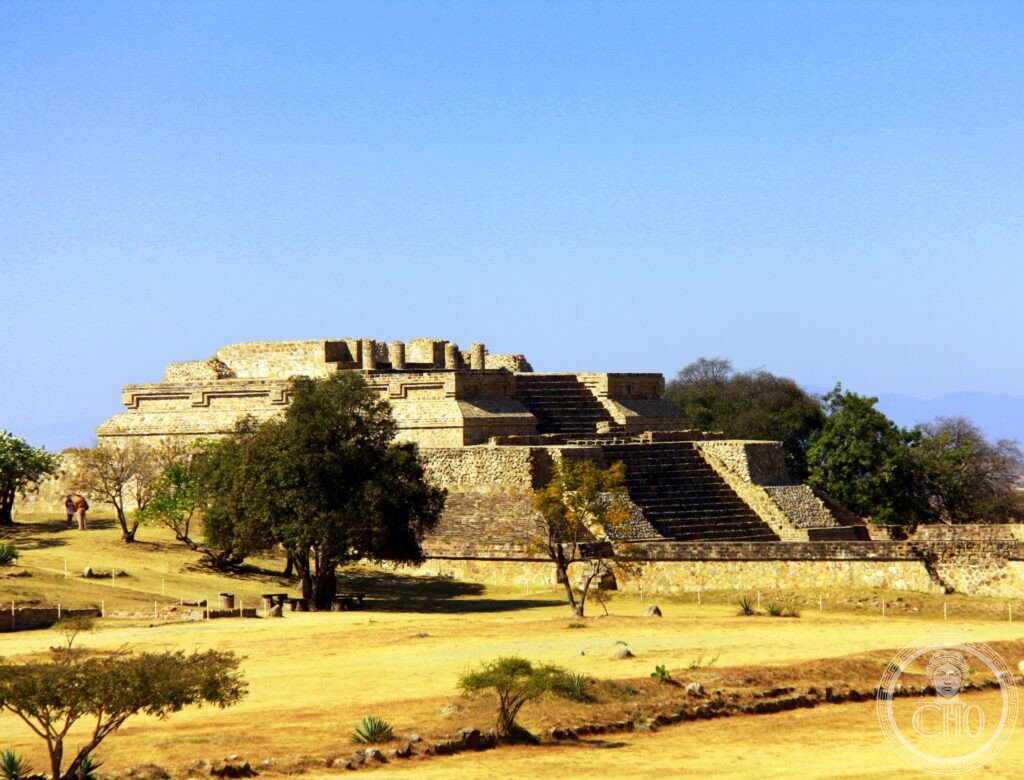
Monte Albán
The hilltop capital of the Zapotec civilisation and one of the earliest cities in Mesoamerica — Monte Albán (500 BCE-700 CE; 40 km²) was built by levelling an entire mountain above the Oaxaca Valley, creating a 600m × 200m plaza surrounded by pyramidal platforms; the site contains the Gallery of the Dancers (Los Danzantes; 300 carved stone slabs with the earliest examples of writing and calendrical notation in the Americas) and an arrow-shaped astronomical observatory aligned precisely with the summer solstice.
At a glance
Monte Albán (the most precisely Monte Albán single Zapotec civilisation capital 500 BCE-700 CE first city Mesoamerica heritage: Monte Albán was one of the first true urban centres in Mesoamerica; founded c.500 BCE by the Zapotec people of the Oaxaca Valley; at its peak (200 CE-700 CE) it had a population of approximately 25,000; the city controlled the entire Oaxaca Valley and conducted military campaigns as far as Teotihuacan (Basin of Mexico); it was abandoned c.700 CE for reasons that remain debated (political collapse? drought? competition?) — the most precisely Monte Albán single Zapotec civilisation capital 500 BCE-700 CE first city Mesoamerica heritage in any European UNESCO world heritage site; Los Danzantes (the most precisely Los Danzantes Monte Albán single earliest writing Americas 300 carved stone slabs Zapotec heritage: the Gallery of the Dancers (Building L; Monte Albán period I; c.500-200 BCE) contains approximately 300 carved stone slabs showing human figures in contorted poses; they were originally interpreted as dancers but are now understood as the slain or sacrificed enemies of the Zapotec state; they bear the earliest examples of proto-Zapotec writing and calendrical notation in the Americas — the most precisely Los Danzantes Monte Albán single earliest writing Americas 300 carved stone slabs Zapotec heritage in any European UNESCO world heritage site)).
Key facts
- Edificio J — Arrow-Shaped Observatory: the most precisely Edificio J Monte Albán single arrow-shaped astronomical observatory summer solstice Orion heritage — Edificio J (Building J; c.275 CE; arrow-shaped; the only building on the Gran Plaza not aligned on the main axis) is oriented so that the setting of the bright star Capella (on May 8, the first day of the Zapotec solar calendar) aligns with the building’s entrance; tunnels through the building are aligned with additional astronomical events including the summer solstice sunset
- Tomb 7 — Monte Albán’s Greatest Treasure: the most precisely Tomb 7 Monte Albán single Alfonso Caso 1932 Mixtec gold jade obsidian treasure heritage — Tomb 7 (excavated 1932 by Alfonso Caso) was a Zapotec tomb (c.350-500 CE) that was later reused by the Mixtec people (c.1350 CE); the Mixtec deposit contained the most extraordinary collection of pre-Columbian goldwork ever found in Mexico: 9 jade figurines, 121 carved bones, and dozens of gold and silver objects including pectorals, necklaces, and earrings; now in the Museum of the Cultures of Oaxaca
- The Gran Plaza — A Levelled Mountain: the most precisely Gran Plaza Monte Albán single 600m 200m hilltop levelled Zapotec construction heritage — the Gran Plaza (600m long, 200m wide) was created by levelling the entire top of Monte Albán mountain; the fill from the levelling was used to construct the surrounding platforms and pyramids; at 1,940m above sea level, the views over all three valleys of the Oaxaca region are extraordinary; on a clear day Oaxaca city is visible 10 km below
- GPS: 17.0435° N, 96.7677° W
History
Alfonso Caso (the most precisely Alfonso Caso single Mexican archaeologist Monte Albán 1931-1958 systematic excavation heritage: the Mexican archaeologist Alfonso Caso directed systematic excavations at Monte Albán from 1931 to 1958; he mapped the site, identified the four main building phases (Monte Albán I-IV), and in 1932 excavated Tomb 7 with its extraordinary Mixtec gold treasure; his work established Mesoamerican archaeology as a discipline — the most precisely Alfonso Caso single Mexican archaeologist Monte Albán 1931-1958 systematic excavation heritage in any European UNESCO world heritage site; the Zapotec script (the most precisely Zapotec script single Monte Albán 500 BCE oldest writing system Americas hieroglyphic heritage: the Zapotec script (developed at Monte Albán from c.500 BCE) is the oldest confirmed writing system in the Americas; it consists of glyphs representing syllables and logograms; approximately 70 glyphs are known; it remained in use until the Spanish conquest — the most precisely Zapotec script single Monte Albán 500 BCE oldest writing system Americas hieroglyphic heritage in any European UNESCO world heritage site)).
What you see
The North Platform (the most precisely North Platform Monte Albán single largest structure stairway sunken patio superimposed temples heritage: the North Platform (the largest single structure at the site; stairway 45m wide; sunken patio behind the stairway; multiple superimposed temple structures from different eras) is the terminal monument of the main north-south axis; its summit offers the best panoramic view of the entire Gran Plaza — the most precisely North Platform Monte Albán single largest structure stairway sunken patio superimposed temples heritage in any European UNESCO world heritage site; the tombs (the most precisely Monte Albán single 170 tombs cut into bedrock fresco murals Zapotec Mixtec heritage: Monte Albán contains at least 170 tombs cut into the bedrock beneath the platforms; many have fresco murals of deities, processional figures, and calendar glyphs; they are the finest surviving Zapotec paintings — the most precisely Monte Albán single 170 tombs cut into bedrock fresco murals Zapotec Mixtec heritage in any European UNESCO world heritage site)).
Practical information
- Getting there: Monte Albán is 10 km west of Oaxaca city (on the hill above the city; visible from anywhere in the valley); frequent buses and colectivos from the Abastos market in Oaxaca city (every 30 min; 30 min journey; M$ 30; the bus waits at the site and returns hourly); taxis from Oaxaca centre cost M$ 150 each way; entry approximately M$ 80 (€4); allow 2-3h; early morning (8-10am) is best (cool; fewer crowds; best light for photography); the Museum at the site entrance has a scale model of the site and the originals of Los Danzantes slabs (the replicas are on-site); Oaxaca city is one of Mexico’s finest colonial cities (Zócalo; Santo Domingo church; mezcal bars; the best mole negro in Mexico) and combines naturally with a Monte Albán visit
Getting there
10 km west of Oaxaca city. Bus from Abastos market every 30 min (30 min, M$ 30). Entry M$ 80. 2-3h. Early morning best. GPS: 17.0435, -96.7677.
Nearby
- Oaxaca City — 10 km east (30 min by bus); UNESCO World Heritage Site 1987 (inscribed together with Monte Albán); the historic centre has the finest Baroque church in Mexico (Santo Domingo; 1570-1700; gold-covered interior; the Museum of the Cultures of Oaxaca inside holds Tomb 7’s treasure), a Zócalo renowned for the quality of its cafe life, and the Mercado 20 de Noviembre (the best market food in Mexico; tlayudas; mole negro; chapulines)
- Mitla — 50 km southeast of Oaxaca (1h by bus or taxi); the finest example of Zapotec mosaic stonework in existence (geometric stepped-fret patterns carved from perfectly fitted stone blocks; no mortar; the precision rivals stonework from any culture at any period); Mitla was the Zapotec necropolis (the city of the dead) and was still active when the Spanish arrived in 1521
Sources
- Wikipedia, Monte Albán; Zapotec civilization; Los Danzantes, accessed June 2026
- UNESCO, Pre-Hispanic City of Monte Albán (part of Oaxaca WHS), WHS reference 415, inscribed 1987
Find it on the map
See this place and what’s around it →📷 Diventa un fotografo di Cultural Heritage Online
Condividi le tue foto dei luoghi: restano pubblicate con la tua firma come autore. Più vengono viste, più ti fai conoscere — e presto un concorso premierà le foto più apprezzate.
Accedi o registrati gratis per aggiungere una foto