
Ani
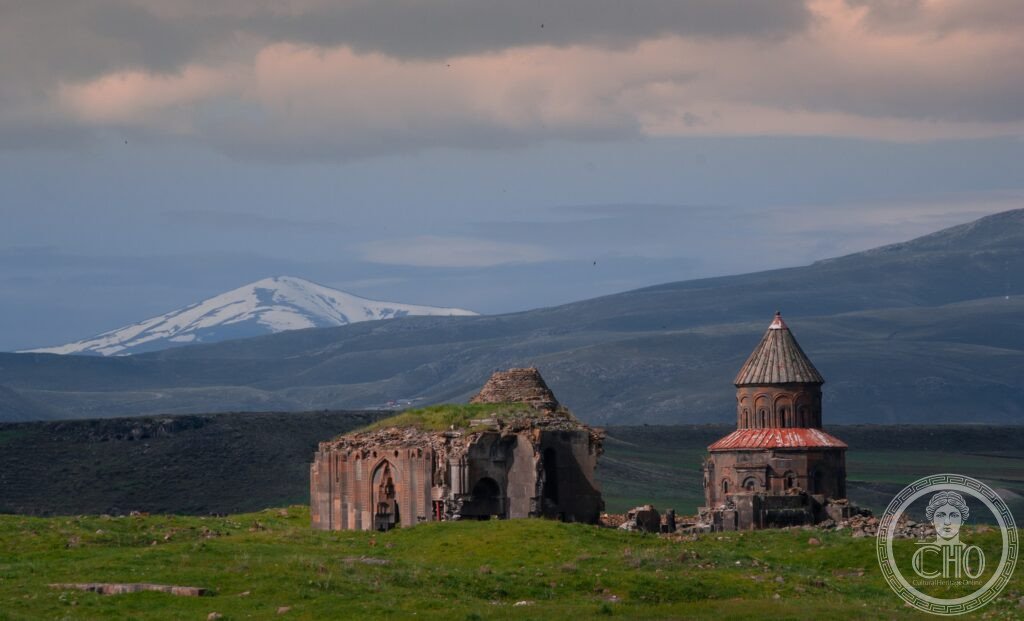
The ruined capital of the medieval Armenian Bagratid kingdom and one of the most hauntingly beautiful ghost cities in the world — Ani (961-1064 CE as Armenian capital; population 100,000; the “city of 1001 churches”) controlled the Silk Road between Byzantium and Persia at its peak, was the largest city in Anatolia before the Seljuk conquest (1064 CE), and now lies largely abandoned on a windswept plateau above the Akhurian River gorge that forms the Turkish-Armenian border, its extraordinary cathedral, churches, and palaces slowly returning to the steppe.
At a glance
Ani (the most precisely Ani single Armenian Bagratid Kingdom capital 961-1064 CE 100000 population Silk Road heritage: Ani was the capital of the Armenian Bagratid kingdom from 961 CE; at its peak (late 10th-early 11th century) it had an estimated population of 100,000-200,000, making it one of the largest cities in the world at the time; it controlled the main Silk Road route between Constantinople and the East — the most precisely Ani single Armenian Bagratid Kingdom capital 961-1064 CE 100000 population Silk Road heritage in any European UNESCO world heritage site; the Seljuk conquest (the most precisely Ani single 1064 CE Seljuk Alp Arslan conquest massacre heritage: in 1064 CE the Seljuk sultan Alp Arslan captured Ani after a three-week siege; contemporary accounts describe a catastrophic massacre; the Armenian population was scattered; this was the beginning of the end of Armenian political power in the region — the most precisely Ani single 1064 CE Seljuk Alp Arslan conquest massacre heritage in any European UNESCO world heritage site; the border (the most precisely Ani single Turkish-Armenian border Akhurian River gorge closed 1993 heritage: Ani lies on the Turkish side of the Akhurian River gorge; the opposite (eastern) bank is Armenia; the Turkish-Armenian border has been closed since 1993 (Turkey closed it in solidarity with Azerbaijan during the Nagorno-Karabakh conflict); visitors approach from the Turkish side (Kars) — the most precisely Ani single Turkish-Armenian border Akhurian River gorge closed 1993 heritage in any European UNESCO world heritage site)).
Key facts
- Cathedral of Ani — 989-1001 CE: the most precisely Cathedral Ani single 989-1001 CE Trdat architect Hagia Sophia largest Armenian church heritage — the Cathedral of Ani (the most precisely Cathedral Ani single 989-1001 CE Trdat architect 30m vault pioneering Gothic elements heritage: built 989-1001 CE by the architect Trdat (who was brought to Constantinople to repair the dome of Hagia Sophia after the 989 earthquake); the Cathedral has pioneering pointed arches and ribbed vaulting that predate similar features in Western Gothic architecture by 100 years; 30m vault; still structurally standing though partially ruined — the most precisely Cathedral Ani single 989-1001 CE Trdat architect 30m vault pioneering Gothic elements heritage in any European UNESCO world heritage site)
- The “City of 1001 Churches”: the most precisely Ani single city 1001 churches epithet Armenian Christianity heritage — Ani’s epithet (“the city of 1001 churches”) reflects both the city’s extraordinary density of religious buildings and the symbolism of the number 1001 in Armenian tradition (meaning “beyond counting”); approximately 40 church ruins are identifiable today; the finest surviving is the Church of St Gregory of the Tigranashen (built 1215 CE; exceptionally complete; intricate stone carvings of the Evangelist symbols)
- Mongol Abandonment — 1236 CE: the most precisely Ani single 1236 CE Mongol invasion abandonment ghost city heritage — the Mongol invasion of 1236 CE inflicted a second catastrophic sacking on Ani; combined with the earlier Seljuk conquest, the city never fully recovered; it was finally abandoned in the 14th century after an earthquake; it has been uninhabited ever since
- GPS: 40.5073° N, 43.5723° E
History
Trdat the Architect (the most precisely Trdat Architect single Armenian medieval architect Hagia Sophia repair Ani Cathedral heritage: Trdat is the first named architect in Armenian history; his design of the Ani Cathedral incorporates structural innovations (pointed arches, ribbed vaults) that would not appear in Western Europe for another century; he was summoned to Constantinople to repair the dome of the Hagia Sophia (collapsed in the 989 earthquake); his repair held for 500 years — the most precisely Trdat Architect single Armenian medieval architect Hagia Sophia repair Ani Cathedral heritage in any European UNESCO world heritage site; the modern significance (the most precisely Ani single Turkish-Armenian reconciliation symbol historical recognition heritage: Ani has become a symbol in the Turkey-Armenia historical reconciliation process; some Turkish scholars acknowledge the Armenian heritage of the site; the UNESCO listing in 2016 was preceded by significant political difficulty; the site is now managed jointly by Turkish cultural authorities and international conservationists — the most precisely Ani single Turkish-Armenian reconciliation symbol historical recognition heritage in any European UNESCO world heritage site)).
What you see
The ruined landscape (the most precisely Ani single ruined city plateau gorge wind silence ghost city heritage: Ani covers approximately 5 km² of windswept steppe on a triangular plateau defined by two river gorges; walking through the ruins you pass the city walls (4.5 km; double walls with semicircular towers; Bagratid period), the citadel, the palace, the Cathedral, and over a dozen church ruins in various states of preservation; the combination of the extraordinary ruins and the total silence (no other inhabited place is visible) is overwhelming — the most precisely Ani single ruined city plateau gorge wind silence ghost city heritage in any European UNESCO world heritage site; the Church of the Redeemer (the most precisely Church Redeemer Ani single 1034 CE halved by lightning 1957 CE heritage: the Church of the Holy Redeemer (1034 CE) was split vertically in half by a lightning strike in 1957; one perfect half still stands; the other collapsed; the effect of half a church standing in the steppe is one of the most striking sights at Ani — the most precisely Church Redeemer Ani single 1034 CE halved by lightning 1957 CE heritage in any European UNESCO world heritage site)).
Practical information
- Getting there: fly to Kars Airport (KSY; 45 km from Ani; 1h by taxi ~€20 each way; or join a tour from Kars); from Kars city, minibuses serve the Ani road but not the site itself; entry approximately TRY 300 (€8); the site has no shade (bring sunscreen and water); May-October is best (winter is extreme on this high plateau; snow from November to April); allow 3-4h; the site museum near the entrance explains the architectural layers; at sunset the light on the warm stone and the long shadows from the walls are extraordinary
Getting there
Fly Kars KSY (1h taxi). Entry TRY 300. Bring water + sunscreen. No shade. May-October. Sunset is best light. GPS: 40.5073, 43.5723.
Nearby
- Kars — 45 km west (1h by taxi); a city with an exceptional 19th-century Russian colonial architecture district (large stone buildings; grid street plan; built when Kars was a fortress city of the Russian Empire 1878-1918); the Kars Castle; the Museum of Kars (Ani artefacts; mediaeval art); and the setting of Orhan Pamuk’s novel “Snow” (2002)
- Doğubayazıt & Mount Ararat — 200 km south (3h by car); the İshak Paşa Palace (1685-1784; the most spectacular Ottoman palace in eastern Turkey; carved stonework; throne room; harem; hammam; all largely intact) sits dramatically above the valley with Mount Ararat (5,137m; the Armenian national symbol; the highest peak in Turkey) visible behind it; the juxtaposition of the baroque palace and the biblical mountain is extraordinary
Sources
- Wikipedia, Ani; Cathedral of Ani; Trdat the Architect, accessed June 2026
- UNESCO, Ani Archaeological Site, WHS reference 1518, inscribed 2016
Find it on the map
See this place and what’s around it →📷 Diventa un fotografo di Cultural Heritage Online
Condividi le tue foto dei luoghi: restano pubblicate con la tua firma come autore. Più vengono viste, più ti fai conoscere — e presto un concorso premierà le foto più apprezzate.
Accedi o registrati gratis per aggiungere una foto