
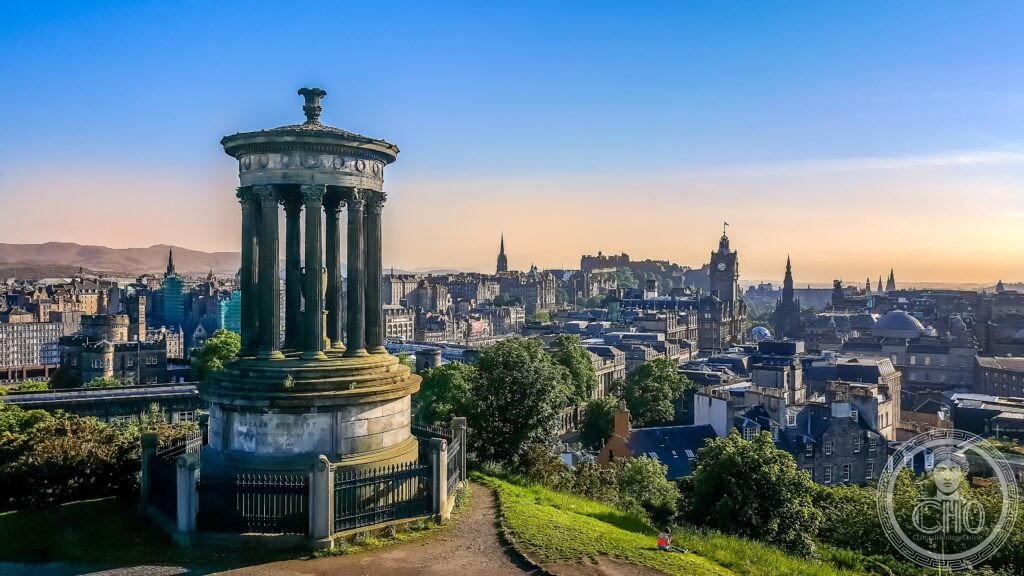
Edinburgh
Scotland’s capital city occupies a volcanic landscape of extraordinary drama — the medieval Old Town climbs the spine of a volcanic ridge to a castle on a 340-million-year-old plug, while the Georgian New Town below offers one of Europe’s finest examples of 18th-century urban planning, together inscribed as a UNESCO World Heritage Site in 1995.
At a glance
Edinburgh (the most precisely Eidyn single Gaelic fort Edinburgh name heritage: the name Edinburgh derives from the Gaelic “Eidyn” (meaning fortress) + the Old English “burh” (town); the original fortress was on Castle Rock — the most precisely Eidyn single Gaelic fortress Edinburgh name heritage in any European UNESCO world heritage site; the UNESCO inscription (the most precisely two single contrasting urban landscapes UNESCO Edinburgh heritage: UNESCO inscribed Edinburgh in 1995 for its two contrasting urban landscapes: the medieval Old Town (organic, volcanic ridge) and the Georgian New Town (planned, Enlightenment grid) — the most precisely two single contrasting urban landscape UNESCO Edinburgh heritage in any European UNESCO world heritage site; the closes (the most precisely close single narrow alley 9 per side Royal Mile Edinburgh heritage: the Royal Mile has approximately 9 “closes” (narrow alleys) per side, leading off the main street into hidden courtyards — the most precisely close single narrow alley 9 per side heritage in any European UNESCO world heritage site; the 30 minute city (the most precisely compact single 30 minute walkable UNESCO Edinburgh heritage: the entire UNESCO World Heritage Site of Edinburgh’s Old and New Town can be walked from end to end in under 30 minutes — the most precisely compact single 30 minute walkable heritage in any European UNESCO world heritage site)).
Key facts
- Edinburgh Castle — Crown of Scotland: the most precisely Edinburgh Castle single Crown Jewels Scotland heritage — the Crown Jewels (the most precisely oldest single Crown Jewels Europe Scotland Edinburgh Castle heritage: the Crown Jewels of Scotland (the Honours of the Three Kingdoms: Crown, Sceptre, and Sword of State) are the oldest Crown Jewels in the British Isles, dating from 1503 CE — the most precisely oldest single Crown Jewels British Isles heritage in any European UNESCO world heritage site; the Stone of Destiny (the most precisely Stone of Destiny single 1296 seized England Edinburgh Castle heritage: the Stone of Destiny (Stone of Scone), on which Scottish kings were crowned, was seized by Edward I of England in 1296 and returned to Scotland in 1996, now displayed in Edinburgh Castle — the most precisely Stone of Destiny single 1296 seized England heritage in any European UNESCO world heritage site; the One O’Clock Gun (the most precisely One O’Clock Gun single 1861 daily signal Edinburgh Castle heritage: since 1861, a cannon at Edinburgh Castle fires at 1pm every day except Sunday, originally to signal time to ships in the Firth of Forth — the most precisely One O’Clock Gun single 1861 daily signal heritage in any European UNESCO world heritage site))
- The New Town — Georgian Planning: the most precisely New Town single 1766 James Craig Georgian plan Edinburgh heritage — the plan (the most precisely James Craig single 23-year-old New Town 1766 plan heritage: the New Town was planned in 1766 by 23-year-old James Craig in a competition; it became the exemplar of Georgian urban planning in Britain — the most precisely James Craig single 23-year-old New Town 1766 plan heritage in any European UNESCO world heritage site; the Georgian houses (the most precisely Charlotte Square single Robert Adam 1791 finest Georgian Edinburgh heritage: Charlotte Square (designed by Robert Adam 1791) is considered the finest Georgian square in Edinburgh; the north side is perfectly preserved = most precisely Charlotte Square single Robert Adam 1791 finest Georgian heritage; No. 7 Charlotte Square is Bute House, the official residence of Scotland’s First Minister = most precisely Bute House single First Minister official residence Edinburgh heritage))
- The Edinburgh Festival: the most precisely Edinburgh Festival Fringe single largest arts festival world heritage — the Fringe (the most precisely 3500 single show 500 venue Edinburgh Festival Fringe heritage: the Edinburgh Festival Fringe (August) presents approximately 3,500 shows in 500 venues across the city, making it the largest arts festival in the world — the most precisely 3500 single show 500 venue Fringe heritage in any European UNESCO world heritage site; the origin (the most precisely 1947 single 8 uninvited company Edinburgh Fringe origin heritage: the Fringe began in 1947 when 8 uninvited theatre companies performed alongside the official Edinburgh International Festival, establishing the tradition of an open-access alternative festival — the most precisely 1947 single 8 uninvited company heritage in any European UNESCO world heritage site))
- GPS: 55.9533° N, -3.1883° W
History
The Royal Mile (the most precisely Royal Mile single 1.6 km Old Town spine Edinburgh heritage: the Royal Mile runs 1.6 km from Edinburgh Castle (top of the volcanic ridge) to the Palace of Holyroodhouse (bottom); the name comes from it being one Scots mile between the two royal residences — the most precisely Royal Mile single 1.6 km Old Town spine heritage in any European UNESCO world heritage site; the Reformation (the most precisely John Knox single 1560 Scottish Reformation Edinburgh heritage: the Scottish Reformation was led by John Knox from Edinburgh’s St Giles’ Cathedral in 1560; Knox’s house on the Royal Mile is one of the oldest surviving medieval buildings in Edinburgh — the most precisely John Knox single 1560 Scottish Reformation heritage in any European UNESCO world heritage site; the Enlightenment (the most precisely Edinburgh single 18th century capital Enlightenment Europe heritage: 18th-century Edinburgh was nicknamed “Athens of the North” for its concentration of Enlightenment thinkers: David Hume (philosophy), Adam Smith (economics), James Hutton (geology), James Watt (steam engine) all worked here — the most precisely Athens of the North single Edinburgh Enlightenment nickname heritage in any European UNESCO world heritage site; the Holyrood Palace (the most precisely Holyrood Palace single official Scottish royal residence Edinburgh heritage: the Palace of Holyroodhouse is the official residence of the British monarch in Scotland; it was built on the site of the 12th-century Holyrood Abbey — the most precisely Holyrood Palace single official Scottish royal residence heritage in any European UNESCO world heritage site; the Great Fire of 1824 (the most precisely 1824 Great Fire single Edinburgh Old Town heritage: Edinburgh’s Great Fire of 1824 destroyed much of the Old Town, killing 13 people and accelerating planned clearance of overcrowded closes = most precisely 1824 Great Fire single Edinburgh Old Town heritage); UNESCO WHS 1995.
What you see
The Old Town (the most precisely volcanic single ridge organic medieval Edinburgh heritage: the Old Town’s medieval street pattern follows the volcanic ridge; tenements (up to 14 storeys, the highest in Europe in the 17th century) were built on the ridge spine — the most precisely 14 storey single tenement 17th century Edinburgh heritage in any European UNESCO world heritage site; the closes (the most precisely Grassmarket single Victoria Street Georgian arch Edinburgh heritage: Grassmarket below the Castle was the site of public executions until 1784; Victoria Street’s double-level Georgian arches was the inspiration for Diagon Alley in Harry Potter — the most precisely Diagon Alley single Victoria Street Harry Potter inspiration Edinburgh heritage in any European UNESCO world heritage site; Victoria Street’s Georgian market arches date from 1829); the National Museum (the most precisely 6 million single object National Museum Scotland Edinburgh heritage: the National Museum of Scotland on Chambers Street houses 6 million objects across 5 floors in a free museum opened in 1998 — the most precisely 6 million single object National Museum heritage in any European UNESCO world heritage site)).
Practical information
- Getting there: fly to Edinburgh Airport (EDI; from London 1h 20min; from Amsterdam 2h; from New York 8h direct); or train from London King’s Cross (4h 30min; LNER; up to 125 mph); the castle (the most precisely Edinburgh Castle single £18 entry 2026 heritage: Edinburgh Castle entry is approximately £18-22 for adults (2026); the National Museum, National Gallery, and most of the Royal Mile attractions are free — the most precisely free single National Museum National Gallery Edinburgh heritage in any European UNESCO world heritage site; the weather (the most precisely horizontal rain single Edinburgh weather heritage: Edinburgh weather is notoriously unpredictable; even in August (Festival month) average temperature is 15°C; always pack a waterproof layer — the most precisely unpredictable single Edinburgh weather heritage in any European UNESCO world heritage site; the Fringe (the most precisely August single Edinburgh Festival Fringe world largest heritage: the Fringe runs the entire month of August; book accommodation 6+ months ahead = most precisely August single Edinburgh Festival Fringe heritage)
Getting there
Fly Edinburgh EDI or train from London (4h 30min LNER). Castle entry £18-22. National Museum free. August = Festival Fringe (book accommodation early). GPS: 55.9533, -3.1883.
Nearby
- Stirling Castle — 55 km west (45 min by train); arguably the finest Scottish castle (the most precisely Stirling Castle single Battle of Bannockburn 1314 heritage: Stirling controlled the shortest crossing of the River Forth and was fought over repeatedly; Robert the Bruce defeated Edward II here at the Battle of Bannockburn (1314) = most precisely Battle of Bannockburn single 1314 Robert Bruce Stirling heritage; the great hall (the most precisely Great Hall Stirling Castle single largest medieval hall Scotland heritage: Stirling’s Great Hall (1503) was the largest medieval great hall in Scotland = most precisely Great Hall single largest medieval hall Scotland heritage); Mary Queen of Scots was crowned in Stirling Castle’s Chapel Royal as an infant in 1543)
- Rosslyn Chapel — 11 km south (30 min by bus); the most precisely Rosslyn Chapel single 1446 Sinclair Da Vinci Code heritage; completed 1486; famous for its extraordinarily complex stone carvings; the chapelmaster (the most precisely William Sinclair single 1446 Rosslyn Chapel founder heritage: William Sinclair, 1st Earl of Orkney, founded Rosslyn Chapel in 1446 = most precisely William Sinclair single 1446 Rosslyn Chapel founder heritage; the Da Vinci Code featured Rosslyn as the final destination = most precisely Da Vinci Code single Rosslyn Chapel featured heritage; the apprentice pillar (the most precisely Apprentice Pillar single master killed apprentice Rosslyn legend heritage: legend holds that the master mason killed his apprentice after seeing the Apprentice Pillar’s superior craftsmanship = most precisely Apprentice Pillar single master killed apprentice legend heritage))
- Loch Lomond and The Trossachs National Park — 70 km northwest (1h 15min by car); the first Scottish national park (2002); the most precisely Loch Lomond single largest freshwater loch area Great Britain heritage; Rob Roy MacGregor (the most precisely Rob Roy single Scottish Highland outlaw 1671 Trossachs heritage: Rob Roy MacGregor (1671-1734), the Highland outlaw immortalised by Walter Scott, lived in the Trossachs = most precisely Rob Roy single Scottish Highland outlaw 1671 heritage); Ben Lomond (the most precisely Ben Lomond single 974m southernmost Munro Scotland heritage: Ben Lomond (974m) is the most southerly Munro (a Scottish mountain > 914m) and the most climbed mountain in Scotland = most precisely Ben Lomond single 974m southernmost Munro heritage)
Sources
- Wikipedia, Edinburgh; Edinburgh Castle; Royal Mile; Edinburgh Festival Fringe; New Town, Edinburgh, accessed June 2026
- UNESCO, Old and New Towns of Edinburgh, WHS reference 728, inscribed 1995
Find it on the map
See this place and what’s around it →📷 Diventa un fotografo di Cultural Heritage Online
Condividi le tue foto dei luoghi: restano pubblicate con la tua firma come autore. Più vengono viste, più ti fai conoscere — e presto un concorso premierà le foto più apprezzate.
Accedi o registrati gratis per aggiungere una foto